How to Prepare and Send a Package in the USA
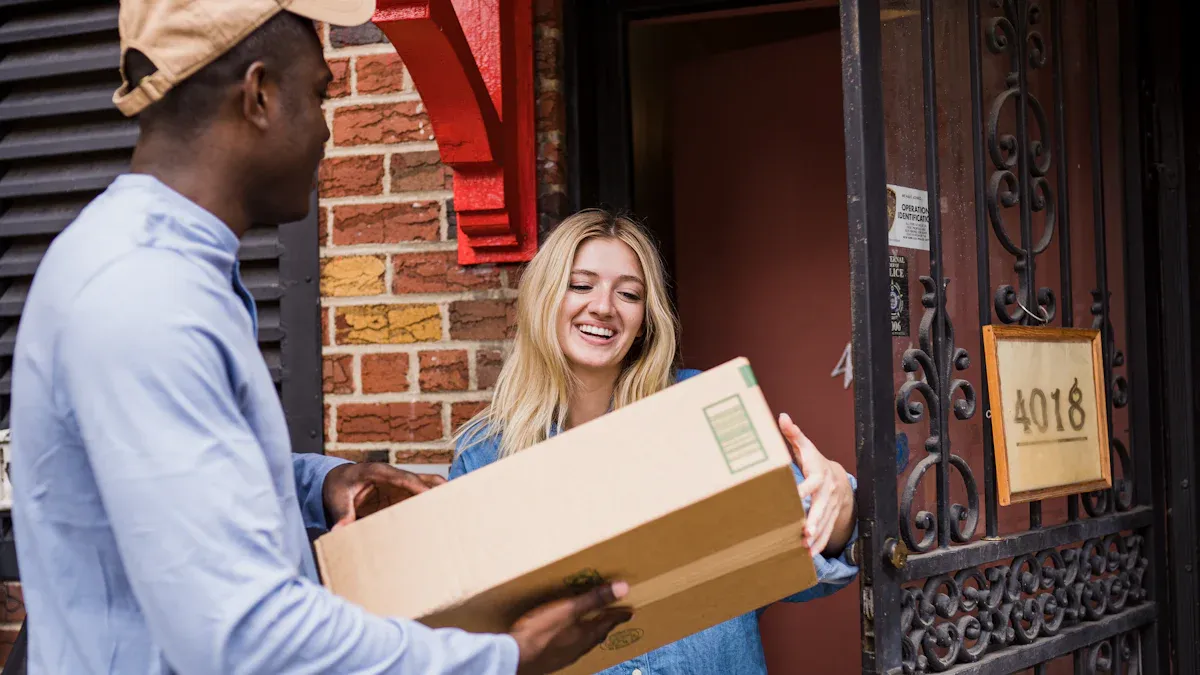
You want to send a package in the USA? First, check if your items can be shipped. Use sturdy boxes and follow packing tips to protect everything. Create a clear shipping label with all details. Following domestic shipping best practices helps you avoid common mistakes and keeps your package safe.
Key Takeaways
Always check shipping guidelines before packing. Ensure your items are allowed for shipping to avoid legal issues.
Use sturdy packaging materials to protect your items. Choose the right box size and include cushioning to prevent damage.
Accurately measure and weigh your package. This helps avoid extra fees and ensures timely delivery.
Preparing Your Package
Check Shipping Guidelines
Before you start packing, make sure your items are allowed for domestic shipping. Some things are strictly prohibited or need special handling. If you try to ship restricted items, you could face legal trouble or big fines. Here are some examples of items you cannot send:
Airbags
Alcoholic beverages
Ammunition
Explosives
Gasoline
Marijuana (with some exceptions for seeds and CBD)
Mercury or anything containing mercury
Other items, like flammable aerosols, lithium batteries, and certain cosmetics, have strict rules. Shipping hazardous or prohibited items can lead to serious legal consequences for both you and the person receiving the package.
Tip: Always check the latest rules from your chosen carrier. USPS, UPS, and FedEx each have their own lists of restricted and prohibited items.
Here’s a quick look at some items FedEx does not allow:
Prohibited Items by FedEx |
|---|
Flammables with a flash point of 140°F or less |
Auto parts with fluids |
Fine art and jewelry |
Furs |
Precious metals (gold, silver, platinum) |
Weapons and accessories |
Cash, coins, and currency |
Live animals and insects |
Hazardous waste |
Tobacco and related products |
Marijuana and related products |
If you’re unsure, ask your carrier or check their website. Following domestic shipping best practices means you avoid problems and keep your shipment safe.
Select Packaging Materials
Choosing the right packaging keeps your items safe and can save you money. Start by picking a box or envelope that fits your item. For most shipments, a sturdy corrugated box works best. If you’re sending documents or small, flat items, a padded envelope or thick flexible packaging is a good choice.
Here are some common packaging materials:
Corrugated boxes for heavy or fragile items
Bubble wrap for cushioning and shock absorption
Packing peanuts to fill empty spaces and prevent shifting
Foam inserts for snug protection, especially for electronics or glassware
Air pillows for lightweight protection
Pressure-sensitive plastic tape for sealing
Note: Using the right materials helps prevent damage and avoids extra costs from broken shipments. It’s also part of domestic shipping best practices usa.
When you pick your packaging, think about size and weight. Heavier boxes cost more to ship. Oversized packages may get extra fees. Try to use a box that fits your item well, with just enough room for padding.
Pack and Protect Items
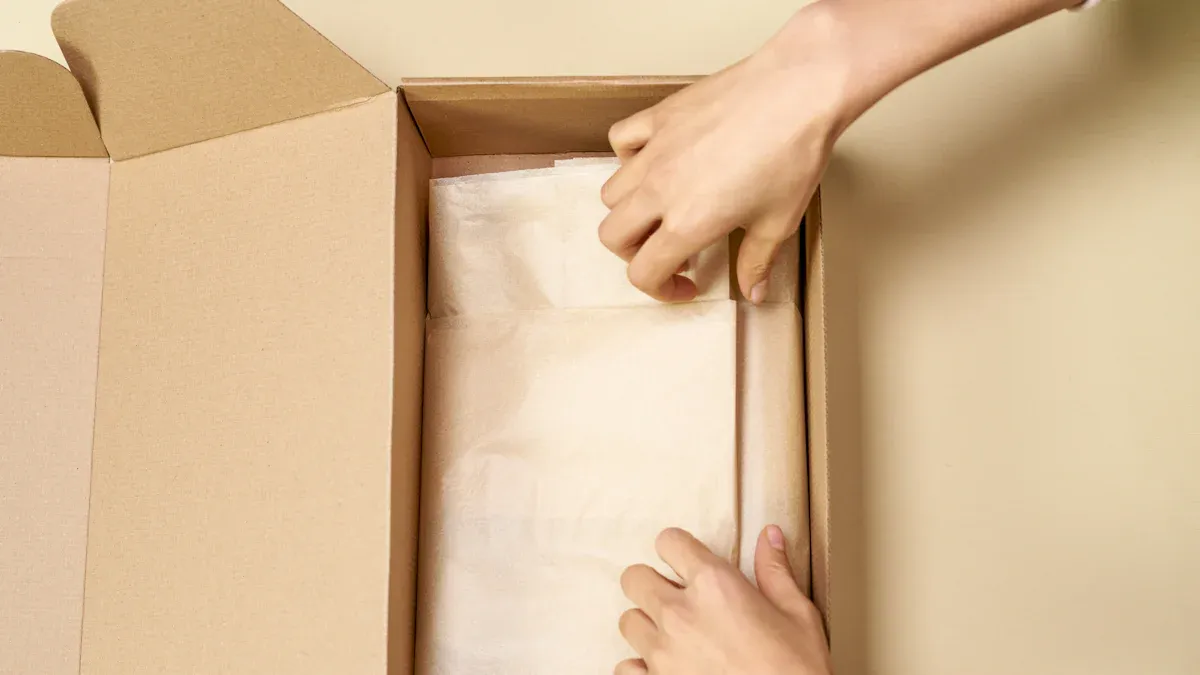
Now it’s time to pack your items. Start by wrapping each item with bubble wrap or foam. Place heavier items at the bottom of the box. Fill any empty spaces with packing peanuts or air pillows so nothing moves around.
For fragile or valuable items, use advanced packing techniques:
Double-boxing: Place your item in a smaller box with padding, then put that box inside a larger one with more padding.
Suspension method: Use foam or air cushions to keep the item from touching the sides of the box.
Seal the box with 2-inch wide packing tape in an H-pattern for extra strength.
Use strapping tape for heavy boxes.
Add “Fragile” stickers if needed.
Before sealing, shake the box gently. If you hear anything move, add more padding. Take photos and make a packing list for expensive items. Avoid using old or damaged boxes, as they can break during shipping.
Packing Material | Key Features | Example Use Case |
|---|---|---|
Heavy-Duty Boxes | Withstand pressure and rough handling | Heavy or fragile items |
Bubble Wrap | Absorbs shocks and vibrations | Delicate items |
Packing Peanuts | Fills empty spaces, absorbs impacts | General void fill |
Foam Inserts | Custom fit, snug protection | Electronics, glassware |
Air Pillows | Lightweight, fills voids | General cushioning |
Tip: Don’t use original retail packaging or reused boxes for shipping. They may not protect your items well.
Measure and Weigh
Accurate measurements help you avoid extra fees and delays. Use a ruler or tape measure to check the length, width, and height of your package. Weigh your package with a digital shipping scale, like the Rollo Digital Shipping Scale. This tool gives you precise readings and helps you pick the right postage.
If you guess the size or weight, you might face:
Delays in shipment processing
Extra fees from the carrier
Delivery delays or missed deadlines
Note: Carriers use both weight and size to set shipping prices. Oversized or overweight packages can cost much more.
Here’s a quick table to show how packaging affects shipping costs:
Factor | Impact on Shipping Costs |
|---|---|
Weight of Packaging | Heavier materials increase costs |
Size of Packaging | Larger packages may get higher fees |
Distance | Longer trips cost more |
Shipping Method | Faster options usually cost extra |
Following domestic shipping best practices means you always measure and weigh your package before sending it. This step saves you money and keeps your shipment on track.
Domestic Shipping Best Practices USA
Choose a Carrier (USPS, UPS, FedEx)
Picking the right carrier can make a big difference in your shipping experience. You want your package to arrive on time and in good shape, but you also want to save money. Here’s how the main carriers stack up:
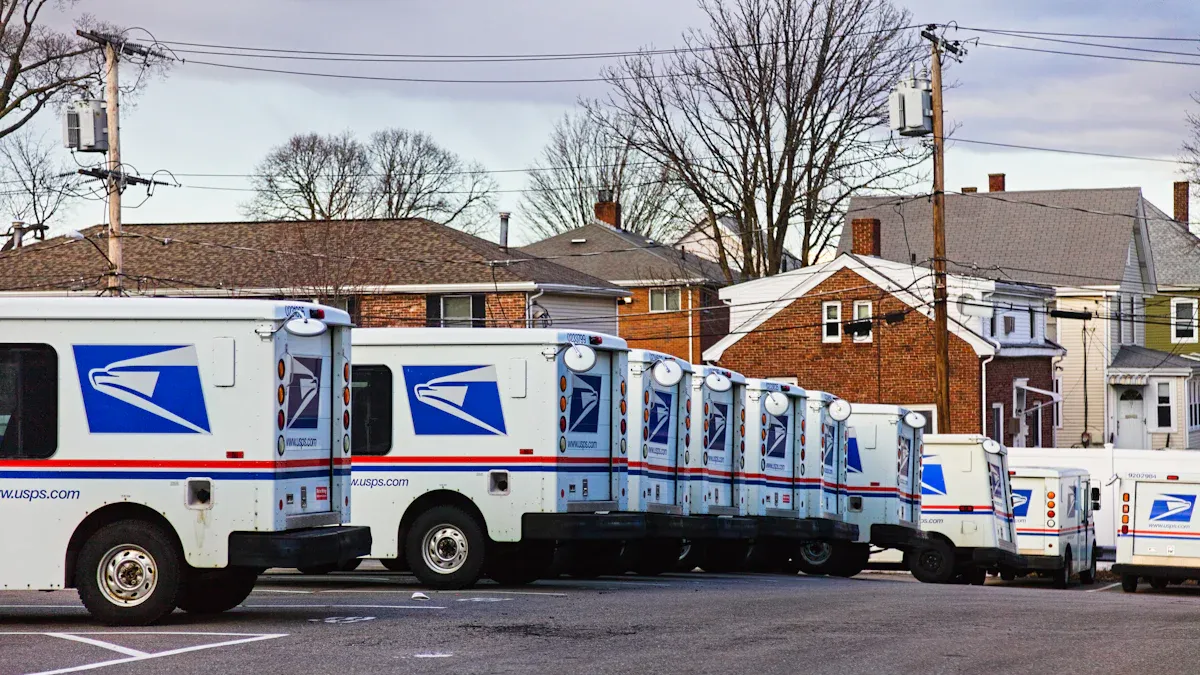
USPS works well for small and lightweight packages. It usually costs less than the others for these items. USPS also handles letters and postcards with ease.
UPS often gives you cheaper rates for ground shipping. It has a strong reputation for reliability and customer service, especially for ground deliveries. UPS also offers fast shipping and great tracking.
FedEx is known for speedy express shipping. It’s a good choice for time-sensitive or large packages. FedEx also handles special shipments, like healthcare items or hazardous materials.
Tip: If you want the best tracking, UPS stands out. If you need fast express service, FedEx is a solid pick. For everyday letters, postcards, or small parcels, USPS is usually the most cost-effective.
Here’s a quick comparison:
Carrier | Cost | Speed | Reliability | Best For |
|---|---|---|---|---|
USPS | Low for small/light | Standard | Good | Letters, postcards, small packages |
UPS | Low for ground | Fast ground | Excellent | Reliable ground, tracking |
FedEx | Higher for express | Fastest express | Good for express | Large, urgent, special shipments |
When you follow domestic shipping best practices, you always match your needs to the right carrier.
Create and Attach Shipping Label
A clear and accurate shipping label helps your package get to the right place without delays. Here’s what you need to include:
Sender information: Your full name or business name, complete street address, city, state, ZIP code, and phone number.
Recipient information: Full name, delivery address, city, state, ZIP code, and phone number.
Package details: Weight, dimensions, shipping service level, and any special handling instructions.
Don’t forget these extra details:
Double-check all addresses for typos or missing info
Note: Many shipping mistakes happen because of incomplete or incorrect addresses. Use address validation tools or Google Maps autocomplete to catch errors before you print the label.
Common labeling mistakes include:
Smudged or damaged labels that can’t be scanned
Wrong or missing ZIP codes
Old labels left on reused boxes
Make sure you print labels on the right material and stick them flat on the package. Never cover old labels—this can confuse the carrier.
Add Insurance or Extra Services
Sometimes, you need extra peace of mind. If your package is valuable or fragile, consider adding insurance or other services. Here’s when you should think about it:
The item’s value is over $100 (most carriers include $100 coverage for free)
The item is fragile or hard to replace
The destination is known for theft or delivery problems
The package will travel a long distance or through many hands
You can also add services like signature confirmation or delivery area surcharges. Here’s a quick look at some common extras:
Service Type | Carrier | Cost Range |
|---|---|---|
Residential Surcharge | UPS | Varies |
Fuel Surcharge | FedEx/UPS | Changes weekly |
Delivery Area Surcharge (DAS) | FedEx/UPS | $3.70 - $12.00 |
Return Label Fee | FedEx | $1.05 per label |
Signature Required Surcharge | FedEx | $6.35 - $7.65 |
If you ship a lot, third-party insurance might save you money and offer better coverage than the carrier’s basic plan.
Drop Off or Schedule Pickup
You have options for getting your package on its way. You can drop it off at a local post office, UPS Store, or FedEx location. If you’re busy, you can schedule a pickup. Here’s how the main carriers handle pickups:
Carrier | Service Type | Details |
|---|---|---|
USPS | Free Pickup | Free with premium service; heavy packages need a pickup label |
USPS | Pickup on Demand | Specific time for $25 fee |
UPS | One-time or recurring pickup | Charges may apply unless you use shipping software |
FedEx | Schedule Pickup | Requires account; saves on shipping costs |
FedEx | Drop-off | Free at retail locations |
FedEx | On-call/Regular Pickup | Flexible or daily options for frequent shippers |
USPS offers free pickups for many packages, but charges for special requests.
UPS lets you hand packages to a driver or schedule pickups, sometimes for a fee.
FedEx needs you to schedule online, but offers both flexible and regular pickups.
Tip: If you’re sending a letter or postcard, just drop it in a mailbox or at the post office. You don’t need to schedule a pickup.
Track Your Shipment
Tracking keeps you and your recipient in the loop. All major carriers offer tracking, but the level of detail can vary.
Carrier | Tracking Options | Pros | Cons |
|---|---|---|---|
USPS | Basic tracking | Low cost, wide coverage | Fewer real-time updates |
UPS | Real-time tracking | Advanced tech, reliable updates | Higher cost |
FedEx | Comprehensive tracking | Many services, strong international | Less rural coverage |
To track your package:
Go to the carrier’s website (like usps.com).
Enter your tracking number in the search bar.
Click “Track” to see updates.
Sign up for email or text alerts if you want instant notifications.
Tracking helps you spot delays from weather, traffic, or missed deliveries. It also gives you proof if a package goes missing.
Special Note: Letters and Postcards
Sending a letter or postcard is simple. Just write a neat, complete address and stick on a First-Class Mail Forever stamp. Drop it in any mailbox or at the post office. You don’t need a shipping label or tracking for regular mail, but you can add extra services if you want.
Aspect | Letters/Postcards | Packages |
|---|---|---|
Addressing | Neat, complete address | Clear shipping label |
Postage | Forever stamp usually enough | Based on size, weight, destination |
Packaging | Envelope or postcard | Box with padding and sealing |
Drop-off | Mailbox or post office | Post office or scheduled pickup |
Following domestic shipping best practices means you always check your carrier’s rules, use clear labels, and pick the right services for your needs. This keeps your packages safe and your shipping stress-free.
You can ship packages in the USA with confidence when you follow these steps:
Use clear, secure labels.
Follow carrier rules and add special instructions.
Include all shipping documents.
Benefit | What You Get |
|---|---|
Lower shipping expenses | |
Dependability | Packages arrive on time |
Tracking | Easy delivery updates |
Check carrier websites for new rules, since shipping regulations change often.
FAQ
What should you do if your package gets lost?
Contact your carrier right away. Give them your tracking number.
Tip: Save your receipt and photos of your package for faster help.
Can you reuse boxes for shipping?
You can reuse boxes if they are sturdy and clean. Remove old labels and tape.
Check for holes or weak spots before packing.
How do you know which shipping service is best?
Think about your budget and how fast you want delivery.
Carrier | |
|---|---|
USPS | Small packages |
UPS | Reliable ground |
FedEx | Fast express |
See Also
Key LCL Shipping Steps for Exporting to Panama
Streamlined FCL Export Solutions for Businesses in the U.S.
LCL Shipping to Puerto Rico: Small to Large Solutions
A Guide to Panama's LCL Export Process Explained
Choosing the Right Warehousing and Fulfillment Solutions for You
