Freight Charges Meaning in FCL and LCL Shipping: Complete Guide
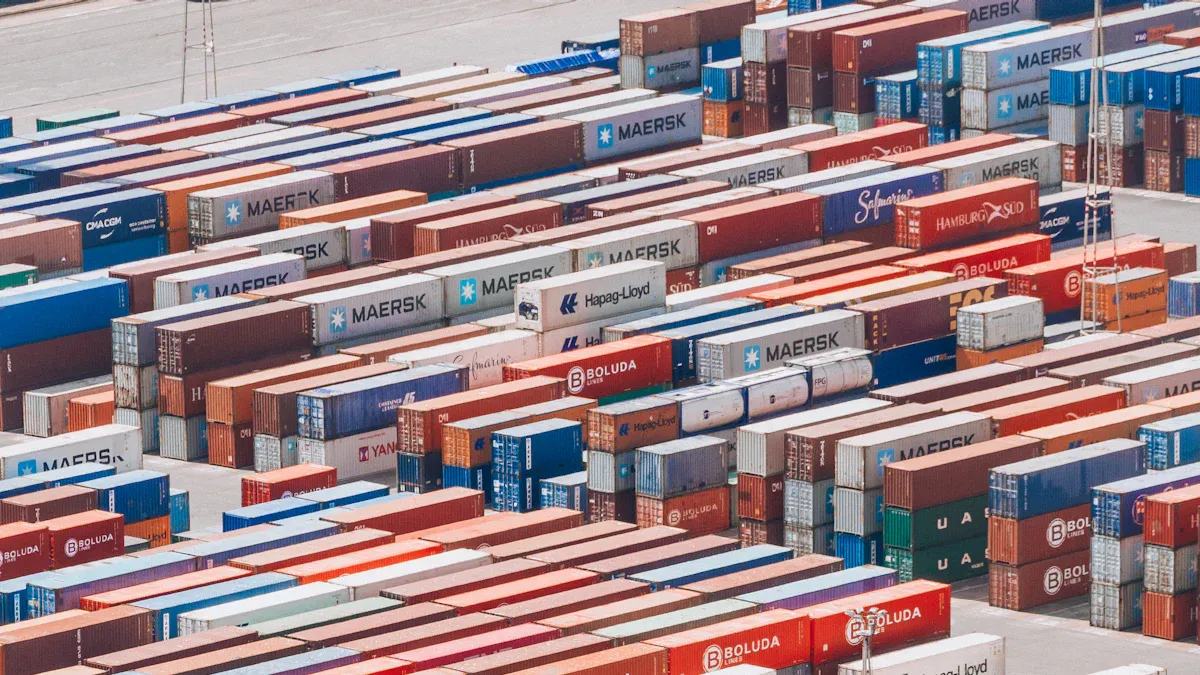
Imagine you want to send things to another country. You have two choices. You can pay for a whole container or share space with other people. Knowing about freight charges meaning fcl lcl helps you avoid surprise costs. It also helps you control your shipping money. FCL is good if you have a lot to ship. It gives you steady costs. LCL is better for small shipments. But it can have more steps and extra fees. When you know your costs, you can plan your budget. If you know the difference, you can make better plans.
Freight Type | Flexibility | |
|---|---|---|
FCL | Predictable, economical | Less flexible for small loads |
LCL | Lower upfront, variable | Flexible for small shipments |
Key Takeaways
Learn how FCL and LCL shipping are not the same. FCL works well for big shipments. LCL is better for small loads.
Find out what makes up freight charges. These are things like transport fees, fuel surcharges, and handling charges. Knowing this helps you not get surprise costs.
Make your shipping budget by adding up costs early. You can use freight calculators to guess costs for FCL and LCL.
Pick the best shipping method for your needs. FCL gives steady costs for large shipments. LCL lets you be flexible with small ones.
Look at Incoterms before you book. Knowing who pays for each part of shipping helps you not get confused or pay extra fees.
Freight Charges Meaning FCL LCL
What Are Freight Charges?
It is important to know about freight charges meaning fcl lcl before you pick a shipping method. Freight charges are the money you pay to move things from one place to another. These costs change depending on if you use FCL or LCL. FCL means Full-Container Load. LCL stands for Less-than-Container Load. Each way has its own cost rules.
FCL is used when you have enough cargo to fill a 20’ or 40’ container. With LCL, shipments share space in one container. FCL shipments use the whole container by themselves.
Here is a table that shows how FCL and LCL shipping are different:
Shipping Method | Definition | Cost Structure |
|---|---|---|
FCL (Full-Container Load) | One shipper fills a whole container. The container is sealed and sent straight to the receiver. | You pay one price for the whole container, no matter how much space you use. |
LCL (Less-than-Container Load) | Many shippers share space in one container. You pay for only the space your goods take up. | The cost depends on how much space your cargo uses, measured in cubic meters (CBM). |
When you look at freight charges meaning fcl lcl, you see FCL gives you one set price for the whole container. LCL lets you pay for just the space you need. This helps you pick the best shipping choice for your goods and your budget.
Key Components of Freight Charges
Freight charges meaning fcl lcl have many parts. You should know what makes up the total cost. Here are the main things included:
Transportation fees: The basic cost to ship your goods by sea.
Fuel surcharges: Extra money added when fuel prices go up.
Handling charges: Money for loading and unloading your cargo.
Documentation charges: Fees for paperwork like bills of lading.
Customs duties: Payments for getting goods through customs.
Warehousing: Money for storing goods before or after shipping.
Packaging: Costs for getting cargo ready for safe travel.
Surcharges: Extra fees for special times, like busy seasons or crowded ports.
Each shipping method uses these parts in its own way. FCL usually has one price for the container. LCL splits costs by space and handling steps. When you compare freight charges meaning fcl lcl, you see how each part changes your final cost. Knowing these things helps you plan your shipping and avoid surprise fees.
FCL Shipping Freight Charges
How FCL Charges Are Calculated
If you pick full-container load shipping, you pay for a whole container. This way, you can control your cargo and costs better. It is important to know how the charges are figured out. This helps you plan your budget and avoid surprises.
Here is how full-container load shipping charges are figured out:
Pick the container type and size. You choose a 20-foot or 40-foot container for your cargo.
Figure out the base freight rate. This is the main cost to move the container from one port to another.
Add fuel surcharges. These cover changes in fuel prices and can change often.
Include terminal handling charges. Ports charge these fees for loading and unloading your container.
Look for peak season surcharges. Shipping companies may add extra fees during busy times.
Add customs and documentation fees. These pay for paperwork and clearing your goods through customs.
Think about extra services. You might need insurance, special handling, or inland transport.
You pay for the whole container, even if it is not full. This makes full-container load shipping easier to predict for big shipments.
FCL Charge Components
Many things can change your final cost for a full-container load. The most important ones are:
Container size: Bigger containers cost more.
Shipping route: Longer or less common routes can cost more.
Handling costs: Ports charge for moving and storing containers.
Fuel prices: High fuel costs make your total go up.
Surcharges: Extra fees may be added during busy times or for special services.
Here is a table that shows the main parts of full-container load shipping charges:
Component | Description |
|---|---|
Base Rate | The main cost to move the container from port to port. |
BAF (Bunker Adjustment Factor) | Covers changes in marine fuel prices. |
THC (Terminal Handling Charge) | Fees for handling the container at the port. |
CAF (Currency Adjustment Factor) | Changes for currency differences between countries. |
Documentation Fees | Pays for paperwork and processing. |
Surcharges | Extra fees for busy times, crowded ports, or special handling. |
Documentation and handling fees can change depending on your shipping company and how complex your shipment is. You should check these details before you ship. If you know each part of the full-container load charge, you can manage your shipping costs better and avoid surprise fees.
LCL Shipping Freight Charges
How LCL Charges Are Calculated
If you pick lcl shipping, you share a container with others. You pay for the space your cargo takes up. Shipping companies look at both volume and weight. They use the bigger number to set the price. This makes sure you pay for what you use.
Let’s say you ship a pallet. It is 2.16 CBM and weighs 550 kg. You pay by volume, which might cost $172.80. If you ship a crate that is 2.59 CBM but weighs 2,900 kg, you pay by weight. That could cost $232. This way, lcl shipping works well for small shipments. But sometimes it costs more for each item.
On busy trade routes, lcl shipping costs $50 to $80 per CBM. You can use these numbers to guess your shipping costs. You can also compare lcl with other choices.
Tip: Always check your cargo’s volume and weight before booking lcl shipping. This helps you avoid surprise fees.
LCL Charge Components
Lcl shipping has many fees. You should know each one to plan your costs. Here are the main parts:
Container shipping rates: The basic fee for moving your goods.
Pickup and delivery charges: Fees for getting cargo to and from the port.
Documentation fees: Money for paperwork like bills of lading.
Terminal handling charges: Costs for loading and unloading at the port.
Customs clearance fees: Payments for getting goods through customs.
Fuel surcharges: Extra fees when fuel prices go up.
Security fees: Charges for keeping your shipment safe.
Warehousing and storage fees: Costs for storing goods before or after shipping.
Lcl shipping often has higher paperwork and consolidation fees than full-container shipping. For shipments under 15 CBM, paperwork fees are $45 to $125 per shipment. Consolidation fees are $35 to $80 per CBM. Destination handling charges are $120 to $250. Hidden fees can be 18–34% of your total costs.
Cost Type | LCL Shipping (under 15 CBM) | FCL Shipping |
|---|---|---|
Documentation Fees | $45—$125 per shipment | Usually lower |
Consolidation Fees | $35—$80/CBM | Not needed |
Destination Handling | $120—$250 | Usually lower |
Hidden Fees Percentage | 18—34% of total costs | Lower overall |
You need to know these fees. They show why lcl shipping can cost more for small loads. If you understand each fee, you can make smart choices and control your shipping money.
FCL vs LCL Freight Charges Comparison
Calculation Methods Compared
When you look at fcl and lcl, you notice big differences. FCL shipping has a set price for the whole container. You pay the same amount, even if it is not full. This way works best for large shipments. LCL shipping uses a different way to set prices. You pay based on how big or heavy your cargo is. The company checks your goods by cubic meters or weight. Then they decide the price. If your shipment is bigger or heavier, the cost goes up.
Aspect | FCL Calculation | LCL Calculation |
|---|---|---|
Cost Basis | Fixed cost per container | Based on size or weight of cargo |
Additional Fees | THC applies, but no CFS fee | THC and CFS fees apply |
Variability | Cost is constant for a 20-foot container | Costs vary based on cargo dimensions |
Break-even Point | Fixed, based on container size | Depends on cargo size and forwarder’s quote |
LCL shipping has extra steps and charges. You pay for pickup, handling, ocean shipping, destination fees, and delivery. These steps make the total cost higher. FCL shipping is simpler. You pay for the container and basic fees. There are fewer surprises.
Tip: LCL is good for small shipments. You pay only for the space you use. FCL is better for big loads. You get a lower price for each unit.
Cost Predictability and Best Use Cases
FCL shipping gives you steady costs. You know the price before you ship. This helps you plan your budget. FCL also moves faster. Your container goes straight to the receiver. You do not wait for other shippers. LCL shipping can change in price. Your goods share space with others. Delays can happen when combining shipments or during customs checks. Sometimes, LCL takes 2–4 weeks longer than FCL.
Risk Type | Description |
|---|---|
Storage charges at consolidation facilities can quickly escalate, especially in congested ports. | |
Pricing Volatility | Currency adjustment factors (CAF) and bunker adjustment factors (BAF) can significantly impact costs. |
Demurrage and Detention | Delays in cargo clearance can lead to shared charges among shippers, complicating liability. |
Insurance Costs | LCL shipments often incur higher insurance premiums due to increased handling and risk exposure. |
Customs Inspection Delays | LCL shipments face more frequent inspections, leading to potential delays and added uncertainty. |
FCL shipping is best for big shipments. If your cargo is over 15–20 CBM, you save money with a whole container. FCL is good for moving homes or cars. You pay less for each item and have fewer risks. LCL shipping fits small loads. You pay only for the space you need. LCL helps businesses that ship small or regular orders. It is also good if you send goods to many places.
Shipment Size/Cargo Type | Cost-effectiveness of FCL |
|---|---|
Shipments over 15–20 CBM | More cost-effective |
High-volume shipments | More cost-effective |
Entire household moves including vehicles | More cost-effective |
Time-sensitive or highly fragile shipments | Less suitable for FCL |
Use Case | Description |
|---|---|
Smaller Shipments | LCL is ideal when goods do not require a full container. |
Cost Efficiency | Businesses can pay only for the space they use, aligning with budget needs. |
Frequent Shipments | Suitable for companies needing smaller, frequent shipments. |
Multiple Destinations | Good for shipping to many locations without needing a full container. |
FCL is usually cheaper for big shipments.
LCL is good for small shipments, but can cost more for each item.
LCL lets you ship without waiting to fill a container.
Note: Always check your shipment size before picking fcl or lcl. This helps you choose the best way and control your shipping costs.
Managing Freight Charges in FCL and LCL
Incoterms and Payment Responsibility
Incoterms are rules that show who pays for each shipping step. These rules also tell when the risk moves from seller to buyer. You must know which Incoterm fits your shipment, whether you use FCL or LCL. This helps you avoid mistakes and extra costs.
Here is a table with common Incoterms and who pays for what:
Incoterm | Description | Payment Responsibility |
|---|---|---|
FAS | Seller puts goods next to the ship. | Buyer pays and takes risk after delivery. |
FOB | Seller puts goods on the ship. | Buyer pays and takes risk once loaded. |
CFR | Seller pays to move goods to the port. | Buyer takes risk at loading, but seller pays for shipping. |
CIF | Seller pays for shipping and insurance. | Buyer gets insurance, but risk moves at loading. |
If you pick FOB, you pay for shipping and other costs after loading. With CIF, the seller pays for shipping and insurance, but you take the risk once the goods are on the ship.
Tips to Control Costs
You can lower freight charges by using smart ideas. Here are some easy tips:
Ship when it is not busy to get better prices.
Try different routes if you want to save money, even if it takes longer.
Use transloading to skip extra fees from late containers.
Fill FCL containers all the way to get the best price per item.
You can save money if you plan early and use online tools. Freight calculators help you guess costs for FCL and LCL. Tools like Freight Calculator and Freightos LCL Calculator let you check prices and plan your shipping budget.
Here is a table that shows how using containers well can help you save:
Shipping Method | Cost Dynamics | Savings Potential |
|---|---|---|
FCL | Lower cost per item for big loads | Big savings for shipments over 15 CBM |
LCL | Higher cost per item for big loads | Good for small shipments, but extra fees can happen |
If you follow these tips, you can keep your shipping costs low and avoid surprise charges.
Knowing about freight charges in FCL and LCL shipping helps you make good choices. You can save money and avoid extra fees if you understand these costs. When you know the fees, you can plan your budget better.
Here are some things you should do:
Look at how often you ship and what you need.
Find out about incoterms and who pays for what.
Keep track of all costs so you do not get surprised.
If you want better results, ask a freight forwarder for help or use a freight calculator. These ideas help you plan and control your shipping costs.
Description | |
|---|---|
BAF | Bunker Adjustment Factor changes when fuel prices go up or down. |
PSS | Peak Season Surcharge is added during busy times. |
CAF | Currency Adjustment Factor helps with money risks from different countries. |
FAQ
What is the main reason to choose FCL shipping?
Pick FCL shipping if you have enough goods for a whole container. This way, your costs are steady and easy to guess. FCL also helps keep your items safer from damage. It is best for big shipments or when you want full control.
Why do LCL shipments sometimes cost more per item?
LCL shipping has extra steps like more handling and paperwork. You pay for each step your goods go through. These extra costs can make LCL more expensive for each item than FCL when shipping small loads.
Why do freight charges change during peak seasons?
Freight charges go up when shipping is busy. More people want to ship, so prices rise. Ports get crowded, and companies add extra fees. You might pay more if you ship during holidays or busy times.
Why should you check Incoterms before booking a shipment?
Incoterms tell you who pays for each shipping step. If you know your Incoterms, you will not get confused or surprised by fees. You can plan your money and know what you must pay before your goods move.
Why is cargo insurance important for ocean shipping?
Ocean shipping can be risky because of bad weather or theft. Cargo insurance keeps your goods and money safe. You should get insurance so you do not lose a lot if something bad happens.
See Also
Comprehensive Ocean Export Solutions for U.S. FCL and LCL Shipments
Key LCL Shipping Steps for Panama Exports by Premier Global Logistics
PGL Offers Comprehensive Services from Bulk Freight to FBA on the West Coast
Streamlined FCL Export Solutions Nationwide by Premier Global Logistics
Navigating the LCL Export Process to Panama with Premier Global Logistics
