How to Document a Freight Claim the Right Way

You need to document a freight claim with care and attention. Start by inspecting your shipment as soon as it arrives. Take clear photos of any damage and keep the packaging and damaged items as proof. Gather all necessary paperwork, such as the bill of lading, invoice, and packing list. Make sure you notify the carrier and submit your claim within the required deadlines. Accurate freight claims documentation helps you resolve issues faster. Carriers often set specific timeframes for claims, as shown below:
Deadline Type | Timeframe |
|---|---|
Filing Cargo Claims | No less than 9 months |
Acknowledgment of Cargo Claims | Within 30 days |
Investigation of Cargo Claims | Promptly, within 120 days |
Payment, Declination, or Settlement | Within 120 days |
Filing Lawsuits for Cargo Claims | No less than 2 years |
Stay organized and persistent to improve your chances of a successful claim.
Key Takeaways
Inspect your shipment immediately upon delivery. Document any damage with photos and notes to support your claim.
Gather all necessary paperwork, including the bill of lading and invoices. Complete documentation speeds up the claims process.
Submit your claim within the required deadlines. Missing deadlines can lead to denied claims and lost revenue.
Follow up regularly with the carrier after submitting your claim. Consistent communication helps keep your claim moving forward.
Stay organized and use digital tools to manage your claims. Automation reduces errors and improves your chances of success.
Freight Claims Documentation Basics

What Is a Freight Claim
A freight claim is a formal request you make to a carrier when your shipment arrives damaged, lost, or short. You file this claim to recover the value of goods that did not arrive as expected. The main purpose of a freight claim is to help you get compensated for losses caused by mishandling during shipping. When you file a claim, you protect your business from financial loss and hold the carrier accountable for their service.
Compensates for losses from damaged or missing shipments
Acts as a financial safety net for your business
Measures how well a carrier handles shipments
You need to submit your claim in writing. The Carmack Amendment requires you to file within nine months of the incident. This rule applies across the United States, so you must pay close attention to deadlines.
Why Proper Documentation Matters
Freight claims documentation plays a key role in getting your claim approved. When you collect and organize the right documents, you make it easier for the carrier to process your claim quickly. You should always include the original bill of lading, a paid freight bill, and an invoice that shows the value of your goods. Inspection reports and clear photos of any damage also help prove your case.
Tip: Keep all damaged items and packaging until your claim is resolved. This evidence can speed up the process.
Thorough freight claims documentation helps you track your shipment’s journey and prove that the damage happened during transit. When you provide clear evidence, you prevent delays and increase your chances of a successful claim. Supporting documents like tracking data and delivery receipts with damage notes show exactly what happened to your shipment. If you stay organized and submit complete paperwork, you help ensure a smooth and fair resolution.
Steps for Effective Freight Claims Documentation
Inspect Freight Before Signing POD
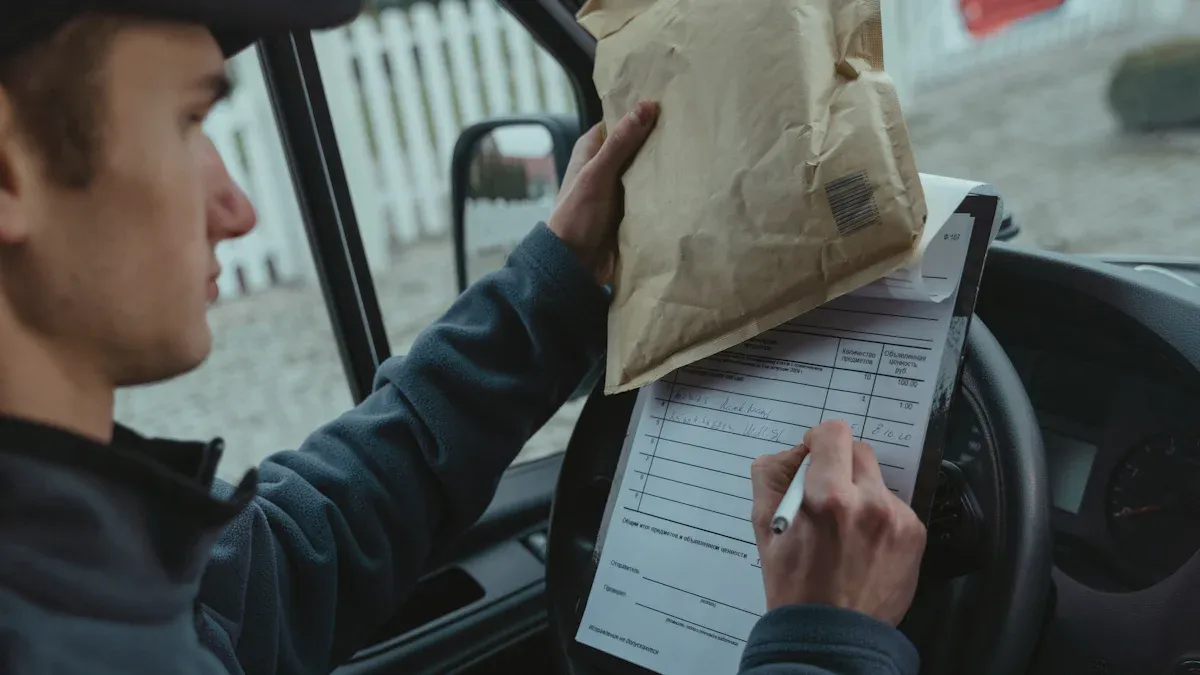
You should always inspect your freight before you sign the Proof of Delivery (POD). This step is the first line of defense in freight claims documentation. If you skip this inspection, you risk losing your chance to file a successful claim. Here is a step-by-step guide to help you:
Check all sides of the shipment for any visible damage, including the pallet and packaging.
Take pictures and write notes about any damage you see.
If you notice damage, open the package in front of the driver and look inside.
Write down detailed descriptions of what you find.
If the outside is damaged but the inside is fine, make a note of that.
Ask the driver to initial next to your notes on the delivery receipt.
After moving the cargo to your facility, inspect it again.
If you find damage, do not send the driver away. Accept the freight and keep documenting.
Keep a record of everything you do during this process.
Failing to inspect your freight can lead to denied claims. Carriers often deny claims if you report shortages late or if you file for concealed damage after five days.
Record Damages and Save Evidence
When you find damage, you need to act fast. Take clear and complete photos of the damaged items. Use your phone to capture the damage from different angles. Get close-up shots of the problem areas and wide shots to show the whole scene. Good lighting helps make the damage easy to see.
These visual records are invaluable for claims adjusters.
You should also keep all damaged goods and packaging until your claim is finished. If you throw away damaged items or packaging, you may lose your chance to recover your costs. Always note "Damaged" on the delivery receipt, but do not assign blame.
Document damage as soon as you find it.
Sign the delivery receipt with detailed notes.
Save all original packaging and damaged goods until the claim is resolved.
Compile Required Documents
You need to gather all the right paperwork for your freight claims documentation. Missing documents can slow down your claim or cause it to be denied. Here is a list of what you should collect:
Bill of Lading
Signed Proof of Delivery with damage notes
Invoice for the damaged or lost goods
Photos of the damage
Paid freight bill
Inspection report (especially if the damage is over $500)
Repair invoice, if you fixed the goods
Weight certificate, if needed
You may also need extra documents like police reports, quality control reports, or affidavits, depending on your situation.
Note Damages on POD or Bill of Lading
You must write down any damage or shortage on the Proof of Delivery or Bill of Lading. This step is a key part of freight claims documentation. Make sure you include the following information:
Document Type | Required Information |
|---|---|
Bill of Lading (BOL) | Shipper’s and consignee’s information, piece and pallet counts, shipment weight, accurate shipment details, verification of package counts |
Proof of Delivery (POD) | Date and time of delivery, name and signature of the recipient, notations for damages or shortages, accuracy of delivery address and load/pro numbers |
Notations serve as critical evidence in determining the condition of the shipment at the time of delivery. If you do not note damage on the delivery receipt, you will have a harder time proving your case.
Submit Claim Within Deadlines
You need to submit your claim within the legal timeframes. The Carmack Amendment gives you nine months from the delivery date to file a claim. If you miss this deadline, your claim will likely be denied. Here is a quick reference table:
Action | Minimum Time Limit Allowed |
|---|---|
Shipper Files Initial Claim | 9 months from date of delivery |
Carrier Acknowledges Claim | 30 days from receipt of claim |
Carrier Makes Final Decision | 120 days from receipt of claim |
Shipper Files Lawsuit After Denial | 2 years and 1 day from denial |
Missing deadlines can lead to lost revenue, unrecovered costs, and extra work for your team. Always keep track of your claim dates and submit everything on time.
Follow Up with Carrier
After you submit your claim, you should follow up with the carrier regularly. Timely follow-up helps keep your claim moving. Stay in touch with the carrier, claims adjusters, or any third-party claims managers. Open communication can speed up the process and improve your chances of a fair outcome.
Check in with the carrier often to track your claim status.
Keep records of all your communications.
Use a system to manage your claims and make sure you meet all deadlines.
Staying organized and persistent with your freight claims documentation will help you resolve claims faster and protect your business.
Tips and Mistakes in Freight Claims Documentation
Accuracy and Organization Tips
You can improve your freight claim process by staying organized and using the right tools. Digital solutions, such as automated systems and real-time tracking, help you keep accurate records and speed up your claims. These tools also make it easier to store and find documents when you need them. When you use digital documentation, you reduce mistakes and make your claims stronger.
Here are some features that help you manage your freight claim documentation:
Feature | Description |
|---|---|
Centralized dashboards | Keep all claims in one place for easy access and updates. |
Automated claim filing workflows | Automate tasks to cut down on errors and save time. |
Document management tools | Store and organize all types of documents for quick retrieval. |
Carrier-specific rules engine | Follow each carrier’s rules to avoid rejections. |
Notifications & SLA tracking | Get alerts for deadlines and track claim progress. |
Audit trails and compliance tools | Keep records of all claim activities for audits and risk management. |
Tip: Always include proof of delivery, damage photos, and accurate shipment details in your claim file. This helps you prove your case and meet regulatory requirements.
Common Errors to Avoid
Many freight claims get rejected because of simple mistakes. Up to 50-60% of claims fail due to missed deadlines or incomplete paperwork. If you forget to include invoices, delivery receipts, or inspection reports, your claim may be denied. Filing after the deadline almost always leads to rejection.
Not reporting damage right away.
Submitting incomplete or inaccurate documents.
Missing key details like delivery, billing, or contact information.
Leaving out NMFC numbers, piece counts, or weights on the Bill of Lading.
Failing to follow up with the carrier.
Relying only on manual processes instead of using automation tools.
Incomplete documents can cause shipment delays, extra costs, and even legal trouble. You may also lose the chance to recover your losses or damage your customer relationships. To avoid these problems, double-check your paperwork and use digital tools to help you stay on track.
To document a freight claim the right way, follow these steps:
Gather detailed evidence, including annotated bills of lading, photos, and invoices.
Notify the carrier right away and meet all deadlines.
Timely and accurate documentation helps you resolve claims faster and improves your success rate. Consistent follow-up ensures your claim moves forward.
Respond quickly to carrier requests
Keep detailed records of all communication
Benefit | Description |
|---|---|
Real-time tracking and communication reduce claim issues. | |
Improve Customer Relationships | Timely handling builds trust and loyalty. |
Reduce Financial Losses | Early detection and staff training limit shipping-related costs. |
FAQ
What should you do if you find concealed damage after delivery?
You should report concealed damage to the carrier within five days. Take photos and keep all packaging. Write a detailed note about the damage. Quick action helps your claim.
Can you file a freight claim without photos?
You can file a claim, but photos make your case stronger. Photos show proof of damage. Carriers trust claims with clear evidence. Always take pictures if you can.
How long does it take to resolve a freight claim?
Most claims take 30 to 120 days to resolve. The carrier reviews your documents and investigates the damage. You should follow up often to speed up the process.
What happens if you miss the claim deadline?
Missing the deadline usually means your claim gets denied. Always track important dates and submit your claim on time. Deadlines protect your right to compensation.
See Also
Rely On PGL For Safe HAZMAT Freight Solutions
Navigating Panama's LCL Export Process With Premier Global Logistics
Key LCL Shipping Steps For Panama Exports By PGL
Simplifying Cross-Border Freight From The West Coast With PGL
Crucial Strategies For Effective Global Logistics Management
