Freight Fees in Ocean Shipping: A Complete Guide to Costs and Charges
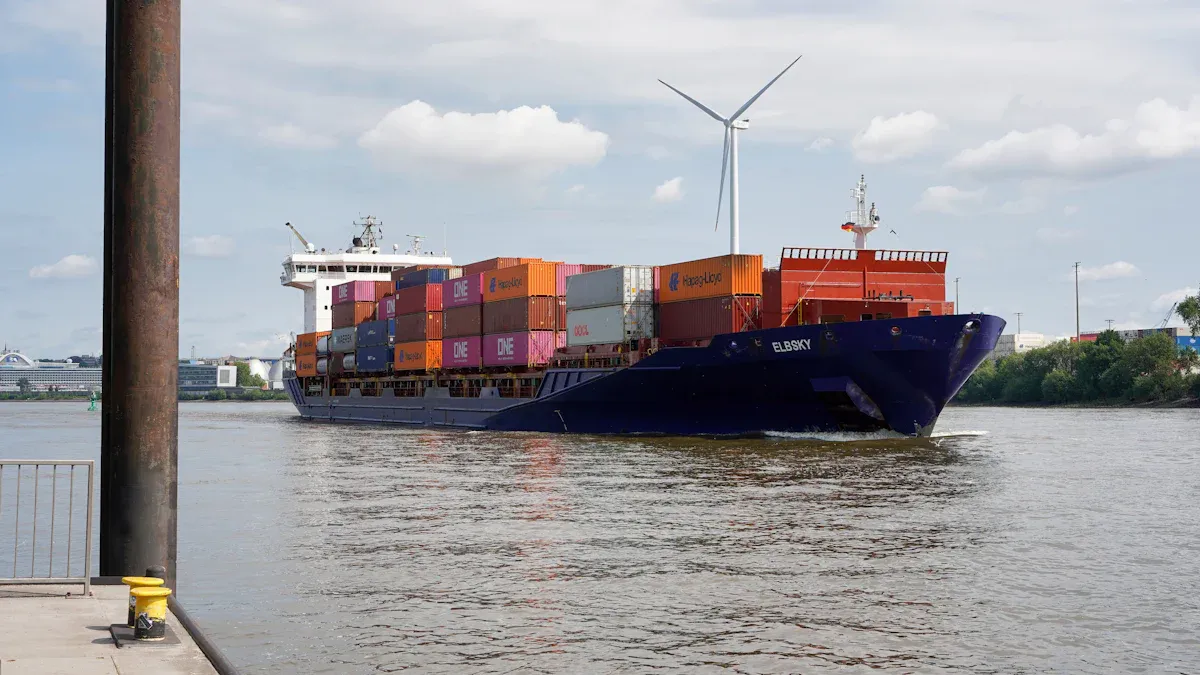
You might ask why freight fees ocean shipping are so hard to understand. Many shippers get a quote and think it covers all costs. But, there are many extra charges that can surprise you. These fees can change based on your shipment, the route, and your choices. If you know about these costs, you can manage your shipping budget. You can also avoid costs you did not expect.
Key Takeaways
Make sure you know all freight fees before you ship. These include base rates, surcharges, and handling charges. If you know these, you will not get surprise costs.
Pick the best shipping method for your needs. Compare Full Container Load (FCL) and Less than Container Load (LCL). This helps you find what works for your budget and cargo size.
Look at your Incoterms. Knowing who pays each fee stops confusion. It also helps you control your shipping costs.
Ask your freight forwarder for a full cost breakdown. This lets you see every charge. You can then compare different shipping choices.
Ship your goods when it is not peak season. Shipping during off-peak times can save you a lot of money. You will not have to pay extra surcharges.
Understanding Freight Fees Ocean Shipping
What Are Freight Fees?
When you send goods by sea, you pay more than just shipping. Freight fees ocean shipping have many different charges. These start when your cargo leaves the first port. They end when it gets to the last port. You should know about these fees. This helps you plan your money and avoid surprises.
Here are the main parts of freight fees ocean shipping:
Base freight rate: This is the main cost to move your goods on a ship.
Bunker Adjustment Factor (BAF): This fee covers changes in fuel prices.
Currency Adjustment Factor (CAF): This fee is for currency exchange changes.
Terminal Handling Charges (THC): These are costs for loading and unloading at ports.
Surcharges: These are extra fees for things like dangerous goods, busy times, or crowded ports.
Origin fees: These are for handling, paperwork, and port services before your cargo leaves.
Destination fees: These cover customs, port work, and delivery at the end.
Demurrage and detention: You pay these if containers stay too long at the port or outside.
Insurance and documentation fees: These pay for cargo protection and paperwork.
You need to know all the freight fees ocean shipping. This shows why your total cost is higher than just the main price.
Who Pays the Fees? (Incoterms Explained)
Incoterms tell who pays which freight fees ocean shipping. These rules say what buyers and sellers must do. If you pick the wrong Incoterm, you might pay more money.
Here is a simple table that shows how Incoterms split costs:
Incoterm | Seller's Responsibilities | Buyer's Responsibilities |
|---|---|---|
CFR | Seller moves the cargo, pays for shipping, handles export, and pays for loading and unloading. The risk goes to the buyer when the cargo is on the ship. | Buyer pays for the goods and takes the risk after the cargo is on the ship. |
CIF | Seller does the same as CFR, but also pays for cargo insurance. | Buyer pays for the goods and takes the risk after the cargo is on the ship. |
Tip: Always check your Incoterm before you ship. This helps you know your costs and stops confusion.
FCL vs LCL Charges
You can ship as Full Container Load (FCL) or Less than Container Load (LCL). Your choice changes your freight fees ocean shipping.
Shipment Type | Cost Structure | Key Features |
|---|---|---|
FCL | Higher starting cost but lower cost for each item | You get the whole container, and pay less for handling |
LCL | Lower cost for small shipments | You share space, and pay by cubic metres (CBM) |
FCL: You book a whole container. You pay one price. Your goods stay together the whole trip.
LCL: You share a container with others. You pay for the space you use. The shipping company puts shipments together and takes them apart.
You should compare FCL and LCL charges. This helps you pick the best way for your cargo and budget. This is why freight fees ocean shipping can change based on what you choose.
Main Ocean Freight Rates and Surcharges
When you send goods by sea, you pay many fees. Each fee changes your total shipping cost. It is important to know why these fees are charged. This helps you plan your money and avoid surprises.
Base Ocean Freight Rates
The base ocean freight rate is the main price to move your cargo on a ship. Carriers set this price by looking at the route, container size, and how many people want to ship. You pay this fee for both FCL and LCL shipments. The price can change a lot. It depends on supply, demand, fuel prices, and world events.
Here is a table with average base ocean freight rates for a 40-foot container on big routes:
Route | Container Size | Average Rate Range |
|---|---|---|
China → U.S. West Coast | 40 ft | $2,500 – $5,500 |
Europe → U.S. East Coast | 40 ft | $3,000 – $6,000 |
Asia to North America (West Coast) | 40 ft | $2,800 – $3,200 |
Asia to North America (East Coast) | 40 ft | $3,500 – $4,000 |
Asia to Europe | 40 ft | $3,000 – $3,500 |
Transatlantic (Europe to North America) | 40 ft | $2,500 – $3,000 |
Europe to US | 40 ft | $3,500 – $6,000 |
You can see that ocean freight rates are not always the same. This is why you should check the newest rates before you ship.
Bunker Adjustment Factor (BAF)
Carriers add the bunker adjustment factor to cover fuel price changes. This fee helps them pay for fuel when prices go up or down. BAF is important because fuel is a big cost for ships.
Carriers use this formula to set BAF:
BAF = Fuel price × Trade factor.
The fuel price is the average at big ports.
The trade factor depends on cargo weight, container size, ship type, distance, and time.
Carriers may charge BAF as a set amount per container or as a percent of the base rate.
If fuel prices rise, BAF goes up too. This means your total sea freight cost can get higher fast. You should watch this fee because it can change quickly.
Currency Adjustment Factor (CAF)
The currency adjustment factor protects carriers from losing money if exchange rates change. If you pay in a different currency than the carrier uses, they may add this fee. CAF helps cover the risk of money value changes during shipping.
Here is a table showing when CAF is charged:
Trigger Situation | Description |
|---|---|
Non-Inclusive Freight Charges | CAF is added if the freight charges do not include currency changes. |
Carrier’s Discretion | Carriers may add CAF if they think exchange rates are not stable. |
You should ask your carrier if the ocean freight rate has CAF included. This helps you avoid extra fees later.
Terminal Handling Charges (THC)
Ports charge terminal handling fees for loading and unloading containers. These fees pay for cranes, workers, and machines at the port. You pay THC at both the starting and ending ports. The fee depends on the port and container size.
Here is a table with usual THC ranges at big ports:
Port | Region | 20ft THC (USD) | 40ft THC (USD) |
|---|---|---|---|
Shanghai, China | Asia | 150–200 | 250–300 |
Los Angeles/Long Beach, USA | North America | 300–400 | 400–500 |
Rotterdam, Netherlands | Europe | 220–275 | 330–385 |
Singapore | Asia | 180–220 | 270–330 |
Santos, Brazil | South America | 250–300 | 350–420 |
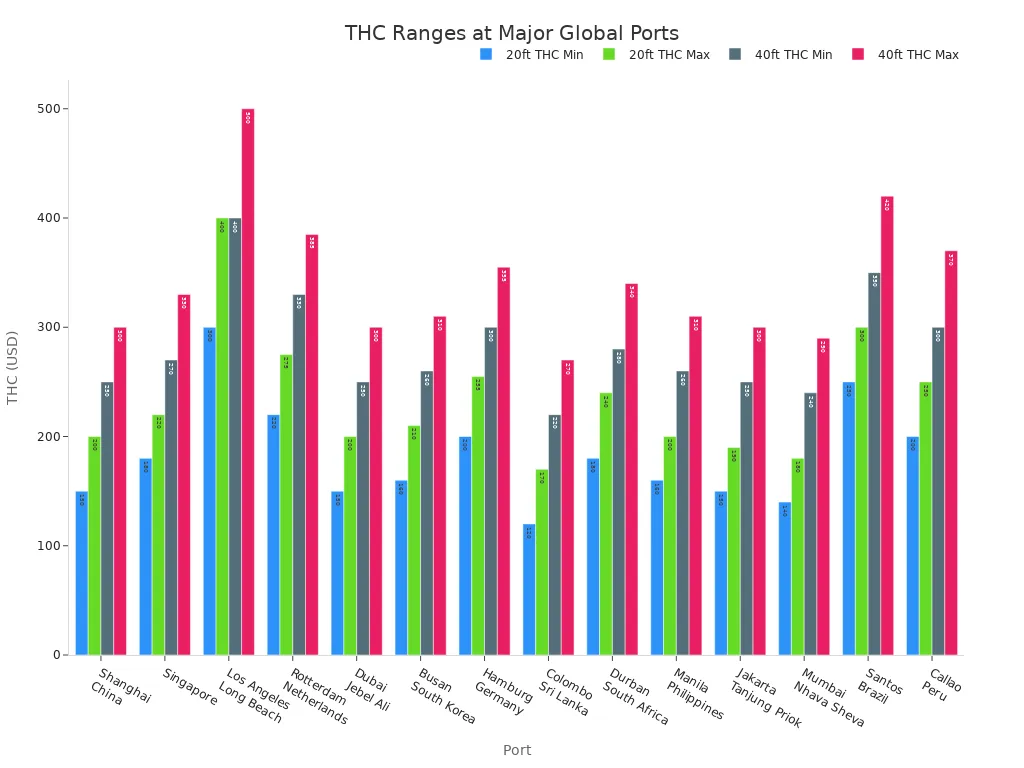
THC can be higher at busy ports. You need to add these fees to your budget because they can add up fast.
Documentation and Equipment Fees
You pay documentation and equipment fees for paperwork, customs, and special containers. Many people forget about these fees, but they can be expensive. You may pay these fees for customs checks, document checks, or using special containers.
Here is a table of common documentation and equipment fees:
Fee Type | Cost Range |
|---|---|
Customs broker fees | $150-500 per shipment |
Entry filing fees | $25-75 per entry |
Harbor maintenance fees | 0.125% of cargo value |
Merchandise processing fees | 0.3464% of cargo value |
X-ray examination | $200-500 |
Intensive examination | $500-2,000+ |
Storage during examination | $25-100 per day |
Certificate of Origin | $50-100 |
Legalization fees | $75-300 per document |
You should ask your forwarder for a full list of these fees before you ship. This helps you avoid surprise costs.
Peak Season and Congestion Surcharges
Carriers add peak season surcharges and congestion surcharges when demand is high or ports are crowded. These fees help carriers pay for higher costs during busy times, like before holidays or when ports are slow.
Here is why these surcharges are charged:
Reason for PSS | Explanation |
|---|---|
Increased Demand | More shipments during holidays or events raise costs for everyone. |
Port Congestion | Busy ports slow down ships, so carriers pay more for waiting and storage. |
Operating Costs | Higher fuel and ship rental costs during peak times lead to extra surcharges. |
Tip: You can save money by shipping before or after busy seasons. Planning ahead helps you avoid these extra fees.
Peak season and congestion surcharges can change fast. You need to ask your carrier for the latest rates.
Demurrage and Detention
Demurrage and detention are penalty fees for keeping containers too long. Demurrage is charged when your container stays at the port past the free time. Detention is charged when you keep the container outside the port longer than allowed.
Average daily demurrage and detention fees are $100 to $150 per container.
In North America, the average is about $138 per container per day.
Some ports may charge up to $300 per container per day.
These fees can get very high. You should plan your pickup and return times to avoid big costs.
LCL-Specific Fees and Surprising Surcharges
If you ship LCL, you pay extra fees for putting shipments together, taking them apart, and handling at container freight stations. These fees are based on the size or weight of your cargo. LCL shipments often cost more per unit because you share space with others.
Aspect | FCL Shipping | |
|---|---|---|
Cost Basis | Volume (CBM) or weight | Flat-rate per container |
Extra Charges | Consolidation, CFS, handling | Fewer extra charges |
Cost-Effectiveness | Higher per-unit cost | Better for large shipments |
Common surcharges that surprise shippers include:
Fuel surcharge (BAF, LSF, ECA)
Currency adjustment surcharge
Destination delivery charge for LCL
Container service charge
Deviation surcharge if the ship changes route
You need to ask your forwarder about all possible surcharges. This helps you avoid surprise costs and manage your sea freight rates.
Note: Ocean freight rates and surcharges change often. Always get a full cost breakdown before you book your shipment.
Factors Affecting Freight Shipping Rates
Understanding why freight shipping rates change helps you make better decisions. Many factors shape the final cost you pay for freight. If you know what drives these changes, you can plan your shipments and avoid surprises.
Cargo Type and Volume
The type and amount of cargo you ship play a big role in your freight costs. Different goods need different containers and handling. Here are some common container options you might use:
Standard dry containers (20-foot or 40-foot)
High cube containers for taller cargo
Reefer containers for cold goods
Flat rack containers for heavy or odd-shaped items
Open top containers for easy loading
Tank containers for liquids
Ventilated and insulated containers for special needs
If you ship a full container load (FCL), you get a sealed container for your goods. This lowers the risk of loss or damage. If you choose less than container load (LCL), you share space with others. LCL saves money for small shipments but may add handling fees. The right choice depends on your cargo and budget.
Route, Distance, and Port Pair
Where your freight travels and how far it goes will change your costs. The route, distance, and port pair affect service, speed, and price. See the table below for details:
Factor | Impact on Shipping Costs |
|---|---|
Route Selection | Changes service reliability and efficiency |
Distance | Affects transit time and total cost due to fuel and time charges |
Port Pair | Sets rates, handling options, and limits |
Total Landed Cost | Includes all charges like terminal, port, and paperwork fees |
Service Frequency | Impacts schedule and space availability |
Transit Time | Driven by distance and route, affects delivery time |
Cost Drivers | Include ocean rates, handling, drayage, and time-related charges |
You should check all these points before you pick a route.
Seasonality and Market Demand
Freight rates go up and down during the year. You see higher prices in busy seasons, like before holidays. When demand drops, rates often fall. In 2025, rates dropped by 51% because fewer shipments moved and carriers managed their space. Spot rates may stay low if demand does not rise. If carriers cut too much space, rates can jump for a short time. You need to watch market trends to ship at the best time.
Container Size and Type
The size and type of container you pick will change your freight cost. Larger or special containers cost more. Here is a quick look at common container prices:
Container Type | Used Price Range | New Price Range |
|---|---|---|
20 ft container | $1,500–$3,000 | $2,500–$5,000 |
40 ft container | $2,000–$4,500 | $3,500–$6,500 |
40 ft high cube container | $2,500–$5,000 | $4,000–$7,000 |
You should match your cargo to the right container to avoid paying too much.
Carrier and Forwarder Choices
Your choice of carrier or freight forwarder can change your final price. Some carriers offer better service or more reliable schedules. Forwarders help you find the best rates and manage paperwork. If a forwarder cannot see real-time prices, you might pay more. Carriers also set prices based on how easy you are to work with and current market conditions. You should compare options and ask for clear quotes to get the best deal.
Tip: Always ask for a full breakdown of all freight charges before you book. This helps you avoid hidden costs and keeps your budget on track.
Calculating Ocean Freight Quotes

It is important to know how ocean freight quotes work. This helps you avoid paying more than you expect. Each step matters and affects your final bill. If you look at each part, you can see where your money goes. You can also find hidden costs before they show up.
Step-by-Step Calculation
You should follow simple steps when you ask for a freight quote. Each step helps you control your shipping budget and avoid errors.
Get a Detailed Quote
First, contact your freight forwarder or carrier. Give them all the details about your shipment. Tell them the cargo type, weight, volume, origin, destination, and shipping dates. This helps you get a correct ocean freight quotation.Understand Your Quotation
Look at the quote you get. Check if it covers every part of the trip. See if it includes both FCL and LCL choices. Find the base rate, surcharges, and special fees. You need to know why each charge is on your quote.Perform the Calculation
For FCL shipments, add the base ocean freight rate. Add surcharges like BAF and CAF. Include terminal handling charges and documentation fees. For LCL shipments, figure out the cost by volume or weight. Then add all extra fees. This shows you the real cost of your shipment.Verification & Key Reminders
Check the quote to make sure it is right. Confirm the Incoterms and know who pays each fee. Ask your forwarder to explain any charges you do not understand. This helps you avoid paying for things you do not need.
Tip: Always ask for a written list of all charges in your ocean freight quotation. This keeps you safe from hidden fees and helps you compare offers from different forwarders.
Example Ocean Freight Quote Breakdown
It is smart to break down an ocean freight quotation. Each fee has a reason and changes your total cost. Here is a sample table that shows the main parts of a normal quote:
Fee Type | Description |
|---|---|
Freight Charges | Main cost for moving goods by sea. This is usually the largest part of the quote. |
Drayage | Trucking cost from your warehouse to the port and from the port to the final destination. |
Bunker Adjustment Factor (BAF) | Fee for changes in fuel prices. This can change often and impact your total cost. |
Surcharges | Extra fees for things like currency changes, peak season, or special cargo. |
Container Charges | Fees for using, handling, or cleaning containers. |
Costs for loading and unloading at the port. | |
Documentation Fees | Charges for preparing and processing shipping documents. |
Insurance Costs | Cost to protect your goods during transit. |
Port Charges and Taxes | Local fees and taxes charged by ports at origin and destination. |
When you look at your ocean freight quotes, check each line. This helps you see why your total cost is more than just the base freight charge.
Hidden and Miscellaneous Charges
Many shippers wonder why their final bill is higher than the first freight quotation. The reason is often hidden or extra charges. You need to know what these are so you can plan ahead.
Common hidden and extra charges include:
Terminal Handling Charges (THC) for port services
Bunker Adjustment Factor (BAF) for fuel price changes
Demurrage and Detention for late container return
Pre-Shipment Inspection (PSI) fees
Customs Examination Fees if your cargo is picked for inspection
Currency Adjustment Factor (CAF) for exchange rate changes
Peak Season Surcharge (PSS) during busy shipping times
International Ship & Port Security (ISPS) fees
War Risk and Congestion Surcharges for delays or risks
Emergency Surcharges for unexpected events
You should always ask your forwarder to list all possible charges in your ocean freight quotation. This helps you avoid surprises and keeps your shipping budget safe.
Note: You can avoid many hidden costs by talking clearly with your forwarder, reading contracts, and comparing quotes from different companies. Trusted advice from experts can help you pick good partners.
When you know why each fee is on your ocean freight quotes, you can make better choices and avoid costly mistakes.
Managing and Reducing Sea Freight Rates
You want to know why managing and reducing sea freight rates matters. High shipping costs can hurt your business. If you understand the reasons behind each charge and surcharge, you can make better choices and avoid surprises.
Requesting All-In Cost Breakdowns
You should always ask for an all-in cost breakdown from your freight shipping service. This gives you a clear view of every fee and surcharge. When you see each cost, you can compare ocean freight services and spot hidden charges. Here is a table that shows what you should look for in a breakdown:
Cost Component | Description |
|---|---|
Base Costs | Main charges for freight shipping by sea. |
Rate Drivers | Factors like demand that change the price. |
Historical Rates | Past prices to help you negotiate. |
Fuel Surcharges | Extra fees for fuel price changes. |
Detention Time | Charges for delays in loading or unloading. |
Accessorial Charges | Fees for extra services you might need. |
Tip: Clear pricing helps you make smart decisions and avoid surprise fees.
Comparing FCL vs LCL Landed Costs
You need to compare FCL and LCL landed costs before you choose a freight shipping service. FCL can lower your per-unit shipping costs if you fill a container. LCL works for small shipments but often adds more surcharges and handling charges. You should look at the total landed cost, not just the base rate, to see which option saves you more.
Avoiding Peak Seasons
Shipping during peak seasons means you pay more surcharges and fees. If you ship before or after busy times, you can save a lot on shipping costs. Some shippers save up to 50% by avoiding peak periods. Using shipping software can also help you track surcharges and plan better.
Avoiding peak seasons leads to big cost reductions.
Planning ahead helps you skip extra fees.
Working with Experienced Forwarders
You should work with experienced freight forwarders. They know how to manage risks and keep your cargo safe. They also help you find the best ocean freight services and lower your shipping costs. Forwarders can negotiate better rates, handle paperwork, and connect you with a global network. This means fewer delays and more reliable freight shipping by sea.
Monitoring Free Time to Prevent Demurrage
You need to watch your free time at ports. If you go over the limit, you pay demurrage charges. Real-time tracking and alerts help you avoid these fees. Monitoring free time improves your operations and cuts unnecessary costs. You can act fast and prevent extra surcharges.
Common Mistakes to Avoid
Many shippers make mistakes that raise their freight shipping by sea costs:
Focusing only on the lowest rate and ignoring surcharges.
Not checking destination charges.
Guessing shipment weight or size.
Sending incomplete paperwork.
Not planning for customs or port delays.
Note: Careful planning and clear communication with your freight shipping service help you avoid these costly errors.
By understanding why each fee and surcharge exists, you can control your shipping costs and keep your business strong.
You can control your freight fees in ocean shipping when you know what each charge means. Clear pricing, smart planning, and trusted partners help you avoid surprises. Try these best practices:
Combine small shipments to save money.
Ship during off-peak times.
Check your routes for better deals.
Pack cargo to use space well.
Return containers on time to avoid extra fees.
When you follow these steps, you keep costs low and your supply chain strong.
FAQ
Why do ocean freight rates change so often?
You see ocean freight rates change because fuel prices, demand, and world events shift quickly. Carriers adjust prices to cover their costs and keep up with market trends.
Why do I pay extra charges beyond the base freight rate?
You pay extra charges because ports, customs, and carriers add fees for handling, paperwork, and special services. These costs cover things not included in the main freight price.
Why is it important to know my Incoterms before shipping?
You need to know your Incoterms because they decide who pays each fee. This helps you avoid confusion and surprise costs when your shipment arrives.
Why does LCL shipping sometimes cost more per unit than FCL?
LCL shipping can cost more per unit because you share space and pay for extra handling. FCL gives you a whole container, which lowers the cost for each item if you fill it.
Why should I work with an experienced freight forwarder?
You should work with an experienced forwarder because they help you avoid mistakes, find better rates, and manage paperwork. This keeps your shipping process smooth and cost-effective.
See Also
PGL's Ocean Freight Solutions for Breakbulk and Oversized Cargo
PGL Offers Comprehensive Ocean Freight Services Nationwide
Maximize Savings with Premier Global Logistics' FTL Shipping
