Freight RFP Best Practices: How to Optimize Your Shipping Procurement

You can make shipping procurement a smart advantage if you use freight rfp best practices. Many companies have changing prices, limited space, and risk of problems. You also handle tricky data and supplier relationship management. These problems often make the rfp shipping process slower and affect freight success. Using good strategies helps you cut mistakes, make better choices, and get better results.
Key Takeaways
Use a freight RFP to pick good shipping partners. Say what you need so you get correct bids.
Make your RFP templates the same to save time. This stops confusion and helps carriers know what you want.
Set clear rules to judge proposals fairly. Look at price, reliability, and service quality.
Work with many carriers to make competition. This gives you better prices and more reliable shipping choices.
Check key performance indicators often. This lets you find problems and make your shipping better.
Freight RFP Best Practices for Transportation Procurement
What Is a Freight RFP?
A freight request for proposals helps you find good shipping partners. This is a formal paper you send to carriers and logistics providers. You ask them to give you bids that fit your needs. You tell them what you need, like how much you ship, where it goes, and what service you want. Carriers answer with their offers. The rfp shipping process lets you look at all the choices. You can pick the one that works best for you. You use a request for proposal to choose carriers by price, trust, and space. This way, you make smart choices for freight procurement and sourcing.
Why Freight RFPs Matter in Shipping
Freight rfp best practices help you make better choices in transportation procurement. RFPs are good for tricky shipping jobs. You can change them for special shipments or when the market changes. RFPs help you keep things steady and match your buying goals with your business plans. You get everyone involved and make your carrier plan better. You also use tech and data to run the process. RFPs are important for shippers who need full logistics solutions. Dynamic ways, like RFPs, give you more choices and real-time data.
Tip: Talk a lot with your team and carriers to make sure everyone knows who won and what to expect. This stops confusion and helps you do well.
Suitability | Key Characteristics | |
|---|---|---|
RFP | Complex and strategic needs | Adaptable, detailed proposals, suitable for unique shipments |
RFQ | Straightforward needs | Ideal for well-defined requirements, less complexity |
Key Benefits for Transportation Procurement
Freight rfp best practices help you make fewer mistakes and better choices. You use good data to get the right prices and strong promises. You set clear rules for service and how to measure it, like how fast things ship and if they arrive on time. This setup helps you stop fights and get better results. You can use a scorecard to check things like price, past service, tech, and being green.
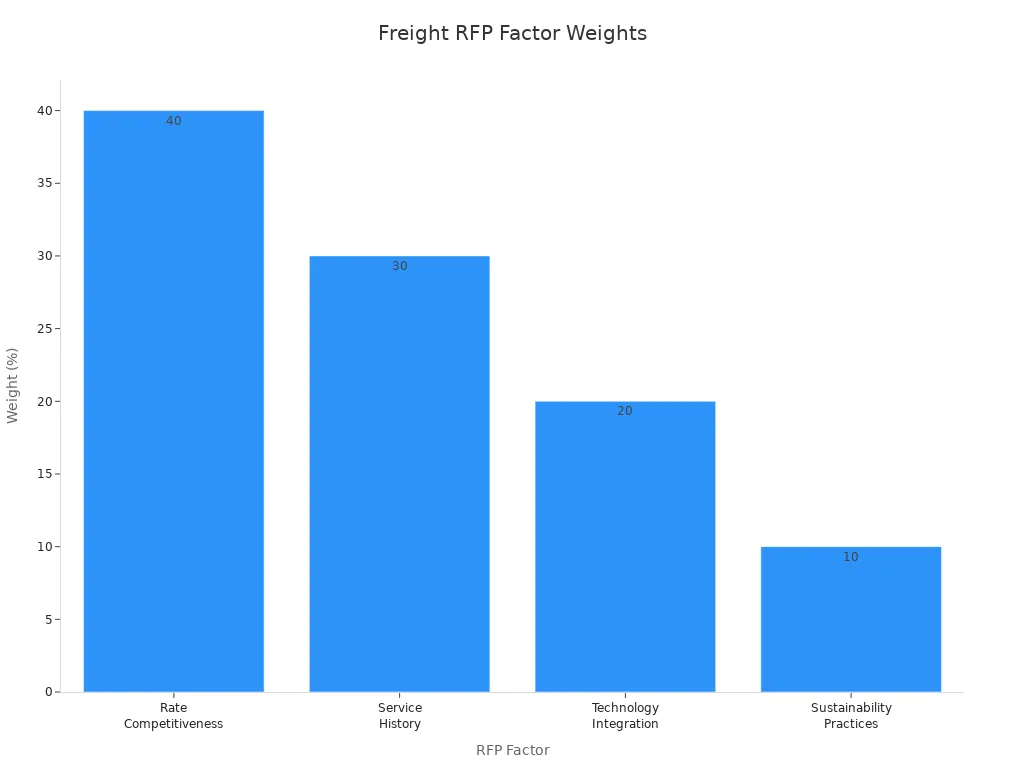
You get many good things from using freight RFPs in shipping:
You save money because carriers compete.
You build long-term carrier relationships that fit your goals.
You get custom logistics solutions for your needs.
You lower risk by checking if carriers follow rules and are reliable.
Freight RFPs help you work faster, pick better routes, and make your supply chain stronger. You build better partnerships and get better shipping results.
Preparing and Standardizing the RFP Shipping Process

Defining Shipping Objectives and Data Accuracy
You need to set clear goals before starting the rfp shipping process. Goals help you focus on what is important. You can use a Request for Information to collect broad data. This step lets you see the big picture and find ways to save money. You should tell carriers your needs so they understand what you want. Ask carriers to share their plans for servicing lanes. Request performance metrics and referrals to learn about their reliability.
Accurate data is key for shipping optimization. You must gather past shipping costs and trends. This information helps you set benchmarks and negotiate better rates. Carrier performance metrics show which partners deliver on time. Freight volume and lane density help you get better rates and service guarantees. You need to check accessorial charges and extra fees to avoid going over budget. Knowing shipment transit times and service levels helps you match carriers to your delivery needs.
Tip: Accurate shipping data helps you make better choices and succeed in transportation procurement.
Standardizing RFP Formats and Templates
Standardizing your RFP templates makes the shipping process easier. You save time and reduce confusion when every carrier gets the same format. A good template covers scope of work, timeline, budget rules, response format, and evaluation criteria. You should add placeholders for your organization's information and project needs. Customizing each section helps you meet your unique needs.
A standardized template helps carriers understand your expectations. You stop companies that cannot meet your needs from wasting time on bids. Spending time upfront on standardization makes procurement faster and improves supply chain effectiveness.
Making a standardized RFP template speeds up the process.
It covers all important details, like shipment volumes and service expectations.
Standardization helps carriers understand requirements clearly and reduces confusion.
Being specific about needs makes it easier to find suitable companies.
Note: Standardization makes vendor selection fair and clear and helps your team work together.
Setting Clear Evaluation Criteria
You need clear evaluation criteria to compare carrier proposals. This step helps you make fair decisions and supports freight rfp best practices. You should set criteria like pricing competitiveness, reliability, compatibility, volume allocations, participant criteria, and custom calculations. These factors help you judge carriers based on your business needs.
Criteria | Description |
|---|---|
Pricing Competitiveness | Transparent and competitive pricing models that show partnership. |
Reliability | Ability to meet schedules and deliver goods on time. |
Compatibility | Communication, technology, and adaptability between shippers and carriers. |
Volume Allocations | Capacity to handle expected shipment volumes well. |
Participant Criteria | Financial stability and industry experience. |
Custom Calculations | Tailored metrics that fit business needs and procurement strategies. |
You can use a scorecard or weighted evaluation matrix to compare proposals. This method helps you focus on what matters most for your shipping needs.
Using RFP Management Tools and Analytics
RFP management tools and analytics are important for shipping optimization. These tools make workflows easier and help you decide faster. Automation saves time, so you can focus on growth. Benchmarking tools give you market data and spending analysis. AI algorithms check vendor proposals against performance metrics and market benchmarks. Predictive analytics help you plan long-term outcomes and make smart decisions.
Modern RFP processes save time and resources. Tools like BidSmart® make bidding easier and help you compare options. You get data-driven insights that boost efficiency and support success in transportation procurement.
Tip: Using RFP management tools and analytics helps you improve every step of the shipping process.
Why Standardization and Preparation Matter
You get better results when you use good rfp strategies. Clear goals, accurate data, standardized templates, and defined criteria help you avoid mistakes and delays. You build stronger partnerships and improve your freight operations. These steps make your procurement process more efficient and reliable.
Evaluating, Selecting, and Negotiating with Carriers

Engaging Multiple Carriers for Competition
You should include several carriers in the rfp shipping process. This gives you more choices and helps you learn about the market. When you ask many carriers to join, they compete with each other. This competition helps you get better prices and service. You do not have to depend on just one carrier. If one carrier has trouble, others can help you. Shipping problems happen often today. Having more carriers lets you adjust fast and keep your freight moving.
You have more options to pick from.
You learn more about the market.
You can get better prices.
You make shipping more reliable.
You lower risks by not relying on one carrier.
Analyzing Proposals and Scoring Methods
You need to compare carrier proposals carefully. Use scoring systems and clear rules to help you decide. This makes things fair and helps you focus on what matters. Set rules for how your team will check each proposal. Make sure your team knows the process and avoids conflicts. Look at price and service quality. The lowest price may have hidden costs, like extra fees. Make pricing data easy to compare. How fast carriers answer is important too. Carriers who reply quickly often give better service.
Tip: Use a scorecard or matrix to keep your review fair and organized.
Negotiating Terms and Finalizing Agreements
You need good negotiation skills to get the best deals. Try to make deals where both sides win. Know your goals, targets, and limits before you start. Stay organized and write down important notes. Be creative and open to new ideas during talks. Build strong relationships with carriers for long-term success. Set clear rules for service, price, and performance. Use KPIs to track how things go. Good negotiations build trust and teamwork. Keep talking and checking performance to make sure agreements work well.
Key Points | Explanation |
|---|---|
Collaboration | Negotiations help you and carriers work together better. |
Trust | Trust makes both sides feel safe and respected in deals. |
Continuous Efforts | Keep talking and reviewing to keep agreements working well. |
Performance | KPIs help you see success and fix problems early. |
By using freight rfp best practices, you make smarter choices, improve shipping, and build strong partnerships in procurement.
Continuous Improvement and Avoiding Common Mistakes
Monitoring KPIs and Performance
You must check key performance indicators to keep shipping strong. On-time delivery performance is very important. It shows if shipments arrive when expected. This helps you find delays and fix route issues fast. You should also check cost per mile, freight damage ratio, tender acceptance, and bounce rate. These numbers show how well carriers do and where you can get better.
On-time delivery performance
Cost per mile
Freight damage ratio
Tender acceptance
Bounce rate
Compliance tracking
Watching these KPIs helps you see if your supply chain meets goals. Many top teams use real-time dashboards. These tools help you fix compliance problems faster than manual ways. Some companies improved their on-time, in-full rates by five percent in six months. They saved millions by doing this. When you use data, you make smarter choices and work more efficiently.
Common Pitfalls in the RFP Shipping Process
You can avoid many mistakes in the rfp shipping process by learning from others. The table below shows why these problems happen and how to fix them:
Pitfall | Problem | Solution |
|---|---|---|
Vague Scope and Requirements | Leads to inaccurate bids and poor service quality due to lack of details. | Provide detailed shipment data and outline service expectations. |
Overemphasis on Price Alone | Can result in overlooked critical factors leading to costly issues. | Use a weighted evaluation model and request references to assess total value. |
Unrealistic Timelines for Responses | Results in rushed, low-quality bids and may deter qualified providers. | Allow sufficient time for submissions and include a Q&A period for clarifications before submission. |
You should make sure your teams work together and talk clearly. A central content library helps you answer questions quickly and keeps responses the same. Using collaboration tools lets your team work together and stops confusion.
Leveraging Technology and Feedback for Optimization
You can use technology to make your shipping process better. Real-time visibility platforms show accurate pickup and delivery times. Digital freight matching helps you cover loads faster. Data analytics lets you show performance metrics and win more bids. Automation saves time and lowers costs, making operations more efficient.
Technology Type | Description |
|---|---|
Real-time visibility platforms | Provide accurate pickup and delivery times, improving shipper KPIs. |
Digital freight matching | Allow for faster load coverage compared to traditional methods. |
Data analytics | Present performance metrics to enhance credibility in bids. |
Automation of manual processes | Reduce manual tasks and optimize operations for efficiency. |
You should ask for feedback from carriers and stakeholders. Regular check-ins and reviews help you find problems early and improve service. Open talks with partners build trust and lead to better results. These steps help you keep your shipping and supply chain strong for a long time.
You can get better shipping results by using freight RFP best practices. These steps help you work faster and build strong partnerships. Try these actions:
Use technology like GPS tracking and TMS platforms to see shipments.
Negotiate contracts based on transport mode and service needs.
Pick sustainable options to meet compliance goals.
Key Findings | Description |
|---|---|
Need for Improved Models | Better strategies give you improved results than old ways. |
Economic Impacts | Local procurement changes costs and benefits. |
Future-Proofing | Changing strategies helps you handle new freight needs. |
Check your procurement strategies often. You will get better results and stronger supply chains.
FAQ
What is the best way to collect accurate shipping data for an RFP?
Start by gathering old shipment records and delivery times. Write down how much you paid for freight. Use digital tools to watch your shipments move. Look at your past data before you begin the RFP. For more help, check the part about Defining Shipping Objectives and Data Accuracy.
How many carriers should you invite to your shipping RFP?
Invite at least three carriers to your RFP. This gives you more choices and lets you compare offers. More carriers means more competition and better shipping results.
What are the most important criteria when evaluating shipping proposals?
Check the price, how reliable the carrier is, and service quality. Look at how long shipping takes and if things get damaged. Check the carrier’s history too. Use a scorecard to compare each offer. For more help, see the part about Setting Clear Evaluation Criteria.
How can technology improve your shipping RFP process?
Use RFP management tools and real-time tracking to help you. Analytics platforms help you organize bids and watch shipments. These tools help you make faster choices. Automation saves time and helps you avoid mistakes.
What should you do after awarding a shipping contract?
Watch how well the carrier does using KPIs like on-time delivery and cost per mile. Meet with carriers often to review how things are going. Ask for feedback and change your process for the next RFP. For more tips, see the part about Monitoring KPIs and Performance.
See Also
Key Strategies for Effective Management of Global Logistics
Enhancing International Operations Through Innovative Logistics Solutions
Selecting LTL, FTL, Or Drayage for Your Trucking Requirements
Streamlined Supply Chain Solutions for USA Logistics Optimization
Boosting Global Efficiency with Point-to-Point Logistics Systems
