How Retail Distribution Warehouses Power Retail Operations: A Behind-the-Scenes Look
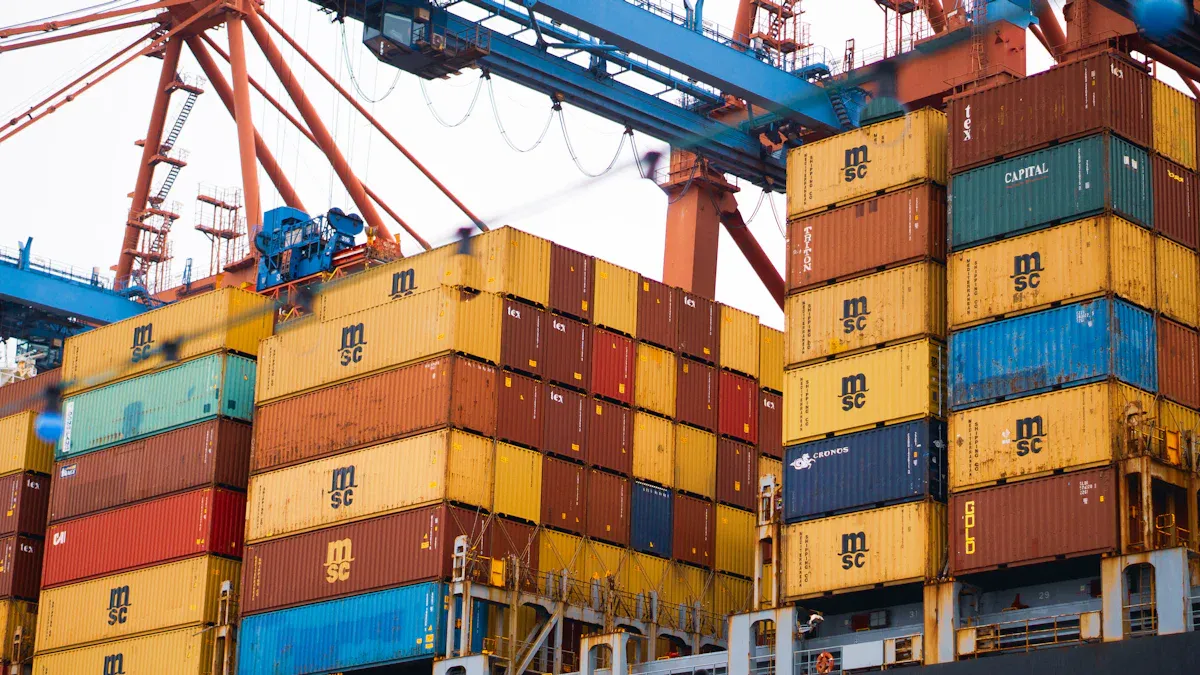
When customers purchase products from a retail store or place an order online, the visible part of the transaction is only the final step of a much larger supply chain. Behind the scenes, retail distribution warehouses coordinate the movement of products from suppliers to stores, ecommerce fulfillment operations, and customers.
A modern retail distribution warehouse is more than a building filled with inventory. It is an operational hub where inbound shipments are received, products are inspected and organized, inventory is tracked, orders are processed, and outbound shipments are prepared for transportation.
The efficiency of these facilities can have a direct effect on retail operations. If inventory arrives late, cannot be located, or is not processed accurately, the resulting disruption can eventually affect product availability and customer orders.
Understanding how retail distribution warehouses operate provides useful insight into the logistics systems supporting modern retail.
What Is a Retail Distribution Warehouse?
A retail distribution warehouse is a facility designed to receive products from suppliers and distribute them to downstream destinations.
These destinations may include retail stores, regional distribution centers, ecommerce fulfillment facilities, or direct customers.
Unlike a conventional storage warehouse, a distribution warehouse focuses heavily on inventory movement. Products may remain in storage for different lengths of time depending on demand, replenishment schedules, and supply chain requirements.
Typical functions include:
Inbound receiving
Shipment inspection
Inventory storage
Inventory control
Order processing
Product picking
Sorting
Packing
Shipment consolidation
Cross-docking
Outbound loading
Returns processing
Transportation coordination
The exact workflow depends on the type of retail operation and the design of the distribution network.
How Products Enter a Retail Distribution Warehouse
The process begins with inbound transportation.
Products may arrive by truck, container, rail, or other transportation methods. Warehouse personnel unload the shipments and compare the received inventory with shipping documentation.
During receiving, employees may verify:
Product quantities
SKU numbers
Carton counts
Pallet information
Packaging condition
Shipping documentation
Any discrepancies can be recorded and investigated before the inventory enters normal warehouse operations.
Accurate receiving is important because warehouse inventory records often become the foundation for subsequent replenishment and fulfillment decisions.

Inventory Storage and Product Organization
Once products are received, they need to be placed in appropriate storage locations.
Large distribution warehouses may contain thousands of SKUs, meaning that product organization must be systematic.
Warehouse management systems can assign inventory to specific locations based on product characteristics, demand, available space, and operational requirements.
Fast-moving products may be positioned in locations that allow employees to retrieve them quickly. Larger or slower-moving inventory may be stored in other areas.
The goal is to balance available storage capacity with efficient product movement.
The Role of Warehouse Management Systems
Technology is at the center of many modern distribution warehouse operations.
A warehouse management system can track inventory quantities, locations, receiving activities, picking tasks, and outbound shipments.
When an order or replenishment request enters the system, the warehouse management platform can determine which products need to be retrieved and where they are located.
This reduces dependence on manual paperwork and gives warehouse managers greater visibility into inventory.
Warehouse technology may also integrate with transportation and order management systems, creating better communication between different parts of the supply chain.
How Retail Stores Receive Inventory
Retail stores depend on regular inventory replenishment.
A distribution warehouse can consolidate products from multiple suppliers and organize them into shipments intended for specific store locations.
Instead of individual suppliers delivering numerous small shipments directly to every store, a distribution center can centralize part of the process.
This approach can improve coordination and provide greater visibility into inventory movement.
Store replenishment may occur according to scheduled delivery cycles, inventory levels, sales data, seasonal demand, or other planning requirements.
Order Picking in Distribution Warehouses
Picking is the process of retrieving products from storage according to a specific order or replenishment requirement.
For retail distribution, a picking task may involve collecting products for a particular store or downstream facility.
Picking methods vary according to warehouse design and order volume.
Common methods include:
Single-order picking
Batch picking
Zone picking
Wave picking
Automated picking
The objective is to retrieve the correct products in the correct quantities while minimizing unnecessary warehouse movement.
Sorting and Consolidating Shipments
After products are picked, they may need to be sorted according to destination.
A single distribution warehouse may prepare shipments for dozens or hundreds of locations at the same time.
Products therefore need to be accurately grouped before loading.
Shipment consolidation can also help improve transportation efficiency by combining multiple products into a coordinated delivery.
Automated sorting equipment, barcode scanning, conveyors, and warehouse management systems can help support this process.

Cross-Docking and Rapid Inventory Movement
Some retail distribution warehouses use cross-docking to minimize storage time.
With cross-docking, inbound products are transferred from receiving areas toward outbound shipments with limited or no long-term storage.
This approach can be useful when demand is predictable and transportation schedules are well coordinated.
For example, products arriving from suppliers may already be allocated to specific retail locations. Instead of placing them into storage, warehouse personnel can move them directly toward outbound staging.
Cross-docking can reduce handling and storage requirements, but it requires reliable scheduling and accurate inventory information.
Transportation Coordination
Transportation is closely connected to warehouse operations.
Inbound trucks need to arrive according to receiving schedules, while outbound transportation needs to be available when shipments are ready.
Warehouse managers may coordinate:
Truck appointments
Dock assignments
Loading schedules
Shipment documentation
Carrier pickups
Delivery requirements
Poor coordination can create congestion at loading docks and increase shipment delays.
Efficient warehouse operations therefore require communication between warehouse teams and transportation providers.
How Distribution Warehouses Support Ecommerce
The growth of ecommerce has expanded the role of retail distribution warehouses.
Traditional retail distribution often involves larger shipments intended for physical stores. Ecommerce fulfillment may require individual orders to be picked, packed, labeled, and shipped directly to customers.
This creates additional operational requirements.
Ecommerce-related warehouse activities can include:
Individual item picking
Carton selection
Protective packaging
Shipping label generation
Parcel sorting
Carrier coordination
Order tracking
Returns processing
Some distribution networks use dedicated ecommerce fulfillment centers, while others process ecommerce orders through facilities supporting multiple channels.
Managing Inventory Accuracy
Inventory accuracy is one of the most important performance factors in distribution warehousing.
If the warehouse system shows that 100 units are available but only 60 can actually be located, downstream operations may be disrupted.
Inventory discrepancies can result from receiving errors, picking mistakes, misplaced products, damaged inventory, returns, or incorrect data entry.
Regular cycle counting and inventory audits can help identify discrepancies.
Barcode scanning and automated inventory tracking can also reduce manual errors.
Managing Seasonal Retail Demand
Retail demand can change dramatically throughout the year.
Holiday periods, promotional campaigns, seasonal products, and changes in consumer purchasing behavior can create significant increases in warehouse activity.
Distribution warehouses need to prepare for these peaks.
Preparation may involve:
Increasing warehouse labor
Adjusting work schedules
Pre-positioning inventory
Expanding staging areas
Increasing transportation capacity
Reviewing inventory forecasts
Testing warehouse systems
Effective preparation can help reduce congestion when order and replenishment volumes increase.
Warehouse Labor and Operations
Although automation is becoming more common, employees remain essential to distribution warehouse operations.
Workers may be responsible for receiving, inventory control, picking, packing, equipment operation, maintenance, shipping, and supervision.
Different positions require different skills.
Warehouse associates may focus on physical product handling, while inventory specialists manage stock accuracy. Equipment operators may work with forklifts or other material-handling systems, and supervisors coordinate employees and daily operations.
Training is particularly important because distribution warehouses can involve heavy cargos, moving equipment, loading docks, and complex workflows.
Automation and Robotics
Automation can improve efficiency in high-volume warehouse environments.
Conveyor systems can move products between areas, automated sorting systems can organize shipments, and robotic equipment can assist with repetitive picking or transportation tasks.
Automated guided vehicles can also move products between designated warehouse locations.
The appropriate level of automation depends on warehouse volume, product characteristics, available capital, and expected long-term demand.
Automation should be evaluated based on measurable operational needs rather than simply adopting technology because it is available.
Returns and Reverse Logistics
Retail operations also involve products moving back through the supply chain.
Returned products may arrive at distribution facilities for inspection and processing.
Warehouse personnel may determine whether returned products should be:
Returned to inventory
Transferred to another location
Repaired
Repackaged
Liquidated
Recycled
Disposed of according to applicable procedures
Effective reverse logistics can help businesses recover product value while maintaining accurate inventory records.
Warehouse Safety
Safety is a major consideration in large distribution warehouses.
Forklifts, pallet racks, conveyors, loading docks, heavy products, and high employee activity can create workplace hazards.
Warehouse operators typically establish procedures covering equipment operation, loading dock safety, pedestrian movement, lifting techniques, emergency procedures, and other operational risks.
Employee training and consistent enforcement of safety procedures are important parts of maintaining a safe warehouse environment.
Supply Chain Visibility
Modern distribution warehouses increasingly depend on real-time or near-real-time information.
Businesses want to know where inventory is located, how much stock is available, which shipments have been received, and what products are scheduled for outbound transportation.
Better visibility can help supply chain managers respond more quickly to disruptions.
For example, if an inbound shipment is delayed, inventory managers may be able to identify alternative stock or adjust replenishment plans before stores experience shortages.
Choosing a Distribution Warehouse Strategy
Businesses designing a retail distribution network need to determine how many facilities are necessary and where they should be located.
A centralized model may use fewer warehouses with larger inventories, while a distributed model may position inventory across multiple regional facilities.
Each approach has different cost and service implications.
Important considerations include:
Customer geography
Store locations
Supplier locations
Transportation infrastructure
Inventory levels
Labor availability
Warehouse costs
Delivery requirements
Seasonal demand
Future growth
There is no universal warehouse network that works for every retail business.
Outsourced Distribution Warehousing
Businesses do not always need to build and operate their own distribution facilities.
Third-party logistics providers can offer outsourced warehousing, fulfillment, inventory management, transportation coordination, and related services.
Outsourcing may allow businesses to access existing warehouse infrastructure and labor resources without making the same level of investment required for an internal distribution network.
It can also provide flexibility for companies entering new markets or experiencing changing inventory volumes.
Sustainability in Distribution Warehousing
Large distribution facilities can consume substantial amounts of energy and generate significant packaging and transportation activity.
Warehouse operators may improve sustainability through:
Energy-efficient lighting
Improved insulation
Renewable energy
Electric warehouse equipment
Packaging optimization
Recycling
Transportation consolidation
Efficient facility layouts
Some sustainability improvements can also support operational efficiency by reducing unnecessary energy use, product movement, and packaging.
The Future of Retail Distribution Warehouses
Retail distribution warehouses are becoming increasingly automated, connected, and data-driven.
Artificial intelligence and predictive analytics may help businesses forecast demand, optimize inventory placement, plan warehouse labor, and identify potential bottlenecks.
Robotics and automated material-handling systems may also become more common in high-volume facilities.
However, the fundamental purpose of a distribution warehouse will remain unchanged: products must move reliably from suppliers to their intended destinations.
Technology can make that process faster and more visible, but it does not eliminate the need for physical infrastructure, skilled employees, transportation, and effective operational planning.
Conclusion
Retail distribution warehouses are the hidden infrastructure supporting much of modern retail. They receive products from suppliers, organize inventory, process replenishment requirements, support ecommerce fulfillment, and coordinate outbound transportation.
Their performance depends on many interconnected factors, including warehouse layout, inventory accuracy, technology, labor, transportation, and supply chain planning.
For businesses managing large retail inventories, an efficient distribution warehouse can provide the operational foundation needed to maintain product availability and respond to changing market demand.
As retail continues to evolve across stores and ecommerce channels, distribution warehouses will remain a critical part of the supply chain. The facilities may become increasingly automated and technology-driven, but their core mission remains simple: move the right products to the right destination at the right time.
See Also
Rely On PGL For Safe HAZMAT Freight Transportation
Key Strategies For Effective Global Logistics Operations
Important LCL Shipping Guidelines For Panama Exports By PGL
Streamlined Freight Services Throughout The Southeast By PGL
Reliable Trucking Solutions In California And Surrounding Areas

