Short Term Warehousing Solutions for Seasonal Ecommerce Demands and Inventory Fluctuations
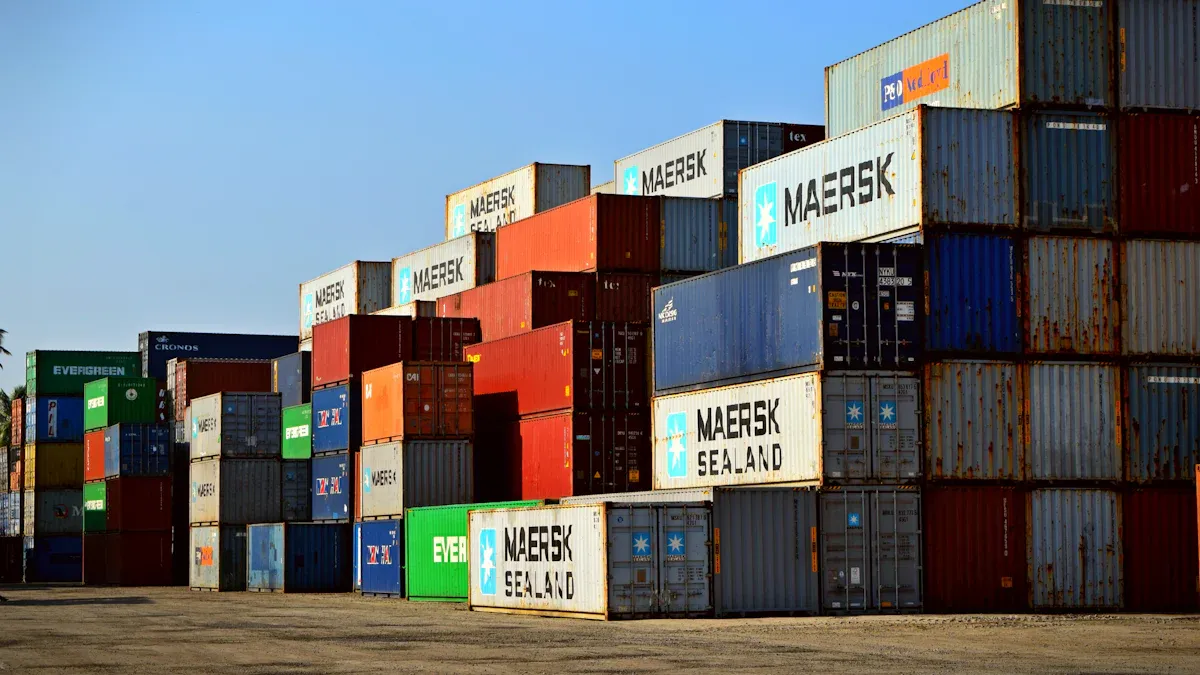
Short term warehousing solutions give ecommerce businesses flexible storage capacity when inventory requirements change faster than traditional warehouse contracts can accommodate.
Seasonal demand, promotional campaigns, product launches, supplier purchasing decisions, and unexpected sales growth can all create temporary inventory requirements. Leasing a permanent warehouse for a short-lived demand spike may create unnecessary fixed costs, while keeping excess inventory in an existing facility can quickly create congestion.
Short-term warehousing provides another option.
Businesses can use temporary storage capacity for a few weeks, several months, or another defined period depending on operational requirements. These solutions can support inventory overflow while allowing ecommerce companies to maintain normal fulfillment operations.
This guide explains when short-term warehousing makes sense, which solutions are available, how to evaluate providers, and how to manage temporary inventory efficiently.
What Is Short Term Warehousing?
Short term warehousing is a flexible storage arrangement designed for businesses that need warehouse capacity for a limited period.
Unlike traditional long-term warehouse leases, short-term arrangements may offer:
· Flexible contract durations
· Temporary storage space
· Overflow capacity
· Seasonal inventory support
· Shorter commitments
· Scalable storage
· Additional handling services
Short-term warehousing may be provided by:
· Public warehouses
· 3PL companies
· Contract logistics providers
· Fulfillment centers
· Distribution facilities
· Temporary storage operators
The specific services available depend on the provider.
Why Ecommerce Businesses Need Short Term Warehousing
Ecommerce inventory requirements rarely remain constant throughout the year.
A business may experience:
· Holiday demand
· Seasonal product peaks
· Promotional campaigns
· Product launches
· Flash sales
· Supplier minimum-order requirements
· Unexpected demand increases
· Temporary supply chain disruptions
These events can create temporary inventory surpluses.
A short-term warehouse can absorb that additional inventory without forcing the business to commit to permanent warehouse capacity.
Common Use Cases for Short Term Warehousing
1. Holiday Inventory
Retailers often build inventory ahead of major shopping periods.
Products may arrive weeks or months before demand peaks.
Instead of overcrowding the primary fulfillment facility, businesses can place excess inventory in temporary storage.
2. Seasonal Products
Businesses selling products with seasonal demand may need additional storage only during certain periods.
Examples include:
· Holiday merchandise
· Outdoor products
· Winter apparel
· Summer goods
· Back-to-school products
· Seasonal beauty products
3. Product Launches
A product launch may require large inventory quantities before customer demand becomes predictable.
Temporary storage can provide additional capacity while sales volumes stabilize.
4. Promotional Campaigns
A major marketing campaign can create a sudden increase in orders.
Additional warehouse space may be required before, during, and immediately after the campaign.
5. Supplier Minimum Orders
Manufacturers may require businesses to purchase large quantities to achieve favorable production or pricing terms.
Short-term storage can hold excess inventory until it enters normal fulfillment operations.
6. Warehouse Overflow
A primary warehouse may simply run out of usable space.
Overflow storage allows businesses to move slower-moving inventory elsewhere while keeping high-volume products accessible in the main facility.
Short Term Warehousing vs. Long Term Warehousing
The primary difference is flexibility.
Factor | Short Term Warehousing | Long Term Warehousing |
Contract duration | Flexible | Usually longer |
Capacity | Temporary | More predictable |
Best for | Seasonal or variable demand | Stable inventory requirements |
Commitment | Lower | Higher |
Expansion | Rapid and temporary | Planned and structural |
Cost model | Often higher per unit of space | Potentially lower at stable volume |
Operational control | Depends on provider | Often more customizable |
Short-term warehousing is not necessarily cheaper.
Its primary advantage is flexibility.
Benefits of Short Term Warehousing
Flexible Capacity
Businesses can increase storage space when needed and reduce it when demand falls.
Lower Long-Term Commitment
Companies do not necessarily need to sign a multi-year warehouse lease to solve a temporary capacity problem.
Faster Expansion
A warehouse provider may already have available space, labor, and infrastructure.
Reduced Warehouse Congestion
Moving excess inventory out of a busy fulfillment center can improve picking efficiency.
Better Seasonal Planning
Businesses can build inventory before peak season without permanently increasing warehouse capacity.
Challenges of Short Term Warehousing
Short-term storage also creates operational challenges.
Higher Unit Costs
Flexible capacity may cost more per pallet or unit than a long-term arrangement.
Additional Inventory Movement
Moving products between facilities creates transportation and handling costs.
Inventory Visibility
Inventory stored outside the primary warehouse must remain synchronized with the main inventory system.
Split Inventory
Some products may be stored in multiple locations, complicating allocation.
Integration Requirements
Temporary warehouses may have different technology capabilities from the primary fulfillment center.
How to Determine How Much Temporary Space You Need
The first step is estimating the actual capacity gap.
Consider:
· Current inventory
· Expected inbound inventory
· Current warehouse capacity
· Peak inventory
· Average order volume
· Peak order volume
· SKU count
· Pallet dimensions
· Carton dimensions
· Expected storage duration
A simple calculation can help:
Temporary Storage Requirement = Peak Inventory Volume − Available Primary Warehouse Capacity
The calculation should also account for operational space.
A warehouse may technically have enough physical capacity while lacking enough usable space for efficient picking, receiving, or movement.
Pallet Storage vs. Individual Unit Storage
The required storage format depends on how inventory will be used.
Pallet Storage
Pallet storage is appropriate when products are stored in larger quantities and moved in bulk.
It can be useful for:
· Wholesale inventory
· Seasonal stock
· Slow-moving products
· Bulk replenishment
Carton Storage
Carton storage can work when inventory is packaged in manageable master cartons.
Individual Unit Storage
Individual unit storage is more appropriate when products need to be picked directly for ecommerce orders.
If the short-term warehouse is only holding overflow inventory, pallet or carton storage may be more economical.
Short Term Warehousing for Seasonal Ecommerce
Seasonality is one of the strongest use cases for temporary storage.
A typical seasonal strategy might look like:
Pre-Season → Inventory Build → Temporary Storage → Peak Demand → Replenishment → Inventory Reduction
Businesses can place surplus inventory in temporary storage before demand peaks.
As orders increase, inventory can be transferred to the primary fulfillment facility.
After the season ends, remaining inventory can be consolidated or stored until the next sales period.
Managing Inventory Across Multiple Warehouses
Temporary storage becomes more complicated when inventory is split across facilities.
Businesses should maintain visibility into:
· Quantity by location
· Available inventory
· Reserved inventory
· Inbound inventory
· Damaged inventory
· Inventory aging
· Transfer status
A centralized inventory management system can help synchronize these quantities.
Without accurate data, businesses risk overselling inventory that exists physically but cannot be accessed quickly enough to fulfill an order.
Inventory Transfer Strategies
Businesses can use several approaches to move inventory between facilities.
Scheduled Replenishment
Move inventory from temporary storage to the primary fulfillment center according to a predefined schedule.
Demand-Based Replenishment
Transfer products when inventory at the primary warehouse falls below a defined threshold.
Order-Based Transfer
Move specific products based on confirmed orders.
Bulk Replenishment
Move larger quantities at planned intervals to reduce transportation frequency.
The best strategy depends on product velocity and transportation economics.
Choosing a Short Term Warehouse Location
Location matters even when the storage arrangement is temporary.
Evaluate:
· Customer geography
· Primary warehouse location
· Supplier locations
· Transportation routes
· Port access
· Carrier networks
· Regional demand
If the temporary warehouse is too far from the main fulfillment facility, frequent inventory transfers can become expensive.
If it is close to a major customer market, it may potentially serve as a temporary regional fulfillment point.
Short Term Warehousing and 3PL Providers
A 3PL can provide short-term warehouse capacity alongside other logistics services.
Potential services include:
· Storage
· Receiving
· Inventory management
· Pallet handling
· Cross-docking
· Order fulfillment
· Transportation
· Returns
· Kitting
Using a 3PL may reduce the need to establish separate operational infrastructure.
However, businesses should confirm whether the provider supports genuinely flexible capacity rather than simply offering a standard long-term warehouse contract.

Technology Requirements
Temporary warehousing still requires accurate data.
Important capabilities include:
· WMS integration
· Inventory synchronization
· Barcode scanning
· Order management integration
· Transfer tracking
· Inventory reporting
If the temporary facility cannot integrate directly with the primary warehouse system, businesses should establish a reliable data-transfer process.
Manual spreadsheets may work for very small temporary inventories, but they become increasingly risky as inventory volume increases.
Short Term Warehousing Costs
Temporary storage pricing varies significantly.
Common cost components include:
· Storage per pallet
· Storage per cubic foot
· Receiving
· Putaway
· Handling
· Pallet movement
· Inventory transfers
· Pick and pack
· Packaging
· Returns
· Transportation
· Administrative fees
Some providers may also charge:
· Minimum monthly fees
· Setup fees
· Inbound processing fees
· Outbound handling fees
· Peak-season surcharges
Businesses should request a complete fee schedule before committing.
Calculating the Total Cost of Temporary Storage
Storage cost alone does not represent the true cost.
A better calculation is:
Total Temporary Warehousing Cost = Storage + Inbound Handling + Transfers + Outbound Handling + Transportation + Technology + Special Services
For example, inexpensive temporary storage may become costly if inventory must be transferred frequently between facilities.
The most useful comparison is therefore based on total logistics cost.
How to Control Short Term Warehousing Costs
Consolidate Inventory
Keep related products together when operationally practical.
Reduce Unnecessary Transfers
Every inventory movement creates handling and transportation costs.
Use Slow-Moving Inventory as Overflow Stock
Temporary storage is often most useful for inventory that does not need immediate picking access.
Negotiate Based on Expected Volume
Even short-term agreements may allow pricing discussions when inventory volume is significant.
Define the Exit Date
Avoid paying for unnecessary storage after the peak period ends.
Monitor Inventory Aging
Identify inventory that remains in temporary storage longer than expected.
Short Term Warehousing for Ecommerce Fulfillment
Not every temporary warehouse needs to fulfill individual ecommerce orders.
There are two common models.
Storage-Only Model
The warehouse stores inventory and periodically transfers it to the primary fulfillment center.
This is useful when the primary warehouse remains responsible for customer orders.
Fulfillment Model
The temporary facility also processes ecommerce orders.
This can be useful when businesses need additional fulfillment capacity during peak periods.
The second model requires more extensive technology, labor, packaging, and shipping capabilities.
Temporary Warehousing for Peak Seasons
Before peak season, businesses should establish:
· Expected inventory levels
· Required storage capacity
· Inbound schedule
· Transfer schedule
· Fulfillment responsibilities
· Labor requirements
· Shipping requirements
· Exit timeline
Peak planning should begin before the warehouse becomes crowded.
Once every aisle is full and employees are stacking cartons wherever gravity permits, strategic planning becomes considerably less elegant.
Questions to Ask a Short Term Warehouse Provider
Before selecting a provider, ask:
1. What is the minimum storage period?
2. Can storage volume increase or decrease during the agreement?
3. How is storage priced?
4. Are there minimum monthly charges?
5. What inbound handling fees apply?
6. Can the provider receive palletized inventory?
7. Can inventory be transferred to another warehouse?
8. Does the facility use a WMS?
9. Can inventory data be integrated with existing systems?
10. Can the provider fulfill ecommerce orders?
11. How quickly can inventory be accessed?
12. What are the outbound handling fees?
13. Are there peak-season surcharges?
14. What security measures are in place?
15. What happens when the storage period ends?
How to Evaluate a Short Term Warehousing Provider
A practical evaluation should consider five major areas.
Capacity
Can the provider handle the required inventory volume?
Flexibility
Can storage increase or decrease without major contractual complications?
Location
Does the facility support efficient inventory movement?
Technology
Can inventory remain visible and accurate?
Cost
What is the total cost after handling and transportation are included?
A warehouse with slightly higher storage rates may still be economically attractive if it minimizes transfer costs and provides better operational access.
Short Term Warehousing Best Practices
Businesses can improve temporary storage performance by:
1. Forecasting peak inventory requirements early.
2. Calculating usable rather than theoretical warehouse capacity.
3. Selecting an appropriate storage format.
4. Tracking inventory by location.
5. Using barcode-based receiving and transfers.
6. Defining replenishment rules.
7. Minimizing unnecessary inventory movements.
8. Establishing clear inbound and outbound procedures.
9. Monitoring inventory aging.
10. Defining a storage exit plan.
11. Reviewing total logistics cost.
12. Preparing contingency capacity for unexpected demand.
When Short Term Warehousing Makes Sense
Short-term storage is particularly useful when:
· Inventory requirements are temporary.
· Seasonal demand creates a predictable capacity spike.
· A primary warehouse is temporarily full.
· A new product requires additional storage.
· A marketing campaign is expected to increase inventory requirements.
· A business needs time to transition between facilities.
· Supply chain disruptions create temporary inventory accumulation.
It may be less suitable when a business has stable, predictable inventory requirements that justify dedicated long-term capacity.
When to Consider a Permanent Warehouse
A company may need a more permanent warehousing strategy when temporary storage becomes a recurring requirement.
Warning signs include:
· Temporary storage is used continuously.
· Inventory remains in overflow locations year-round.
· Transfer costs are increasing.
· Warehouse capacity is consistently insufficient.
· Order volumes have structurally increased.
· Multiple temporary facilities are being used simultaneously.
At that point, the business may need to evaluate a larger fulfillment center, contract warehouse, or distributed warehouse network.
Final Thoughts
Short term warehousing solutions provide ecommerce businesses with flexible capacity when inventory requirements fluctuate.
They can support seasonal demand, product launches, promotional campaigns, warehouse overflow, supplier purchasing requirements, and temporary supply chain disruptions.
The key is to evaluate temporary storage as part of the entire logistics system.
Businesses should consider storage costs alongside receiving, handling, transportation, inventory transfers, technology, and fulfillment requirements. They should also maintain accurate inventory visibility and establish a clear plan for moving or consolidating inventory when the temporary storage period ends.
When used strategically, short-term warehousing can provide the flexibility needed to handle demand fluctuations without forcing ecommerce businesses into permanent infrastructure commitments before those commitments are justified.
See Also
Enhancing Global Operations Through Innovative Logistics Solutions
Exploring LCL Shipping Trends in Panama's Logistics Future
PGL Transforms West Coast Trucking for Efficient Supply Chains

