How Companies Overcome International Shipping Challenges with Real Case Studies
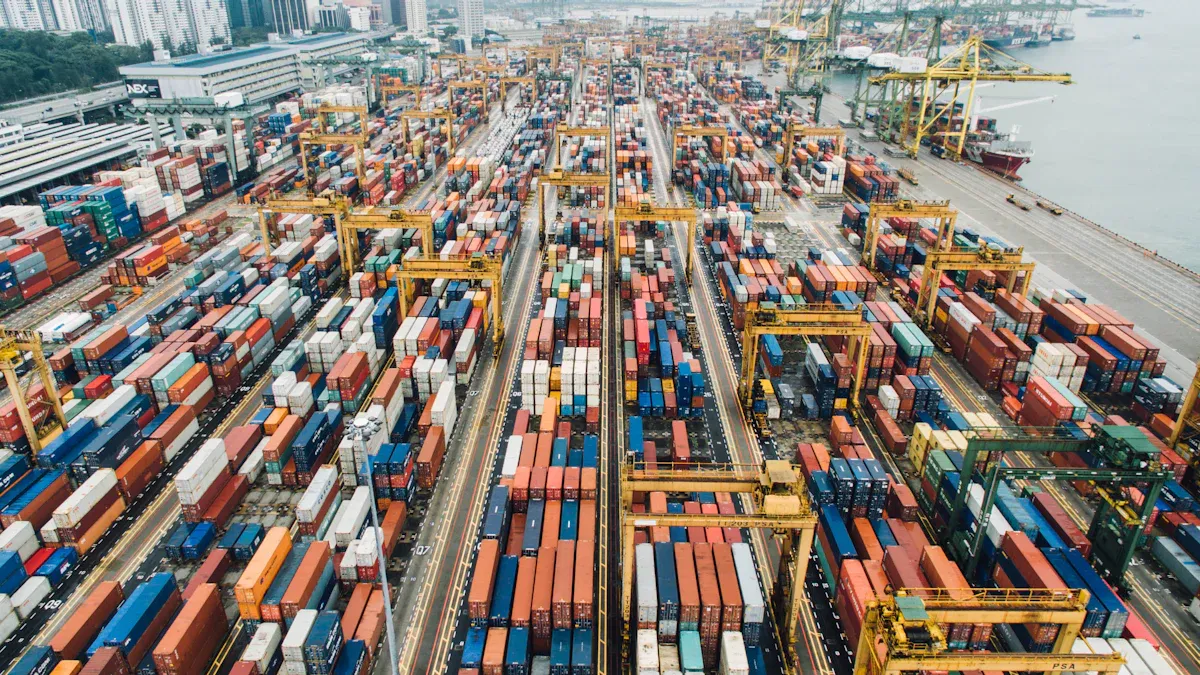
You face many hurdles when shipping goods across borders. Companies succeed by spotting these challenges early and using proven methods to solve them. Real international shipping case studies show how route optimization, real-time tracking, and 3PL partnerships make a difference. Proactive planning keeps shipments on track and reduces risk. With the right approach, you can overcome global shipping obstacles and improve your supply chain.
Key Takeaways
Identify common shipping challenges early to minimize costs and delays.
Use real-time tracking to gain visibility and control over your shipments.
Partner with 3PL providers to streamline logistics and ensure compliance.
Optimize delivery routes to reduce shipping costs and improve customer satisfaction.
Communicate proactively with partners and customers to address issues quickly.
Common International Shipping Challenges
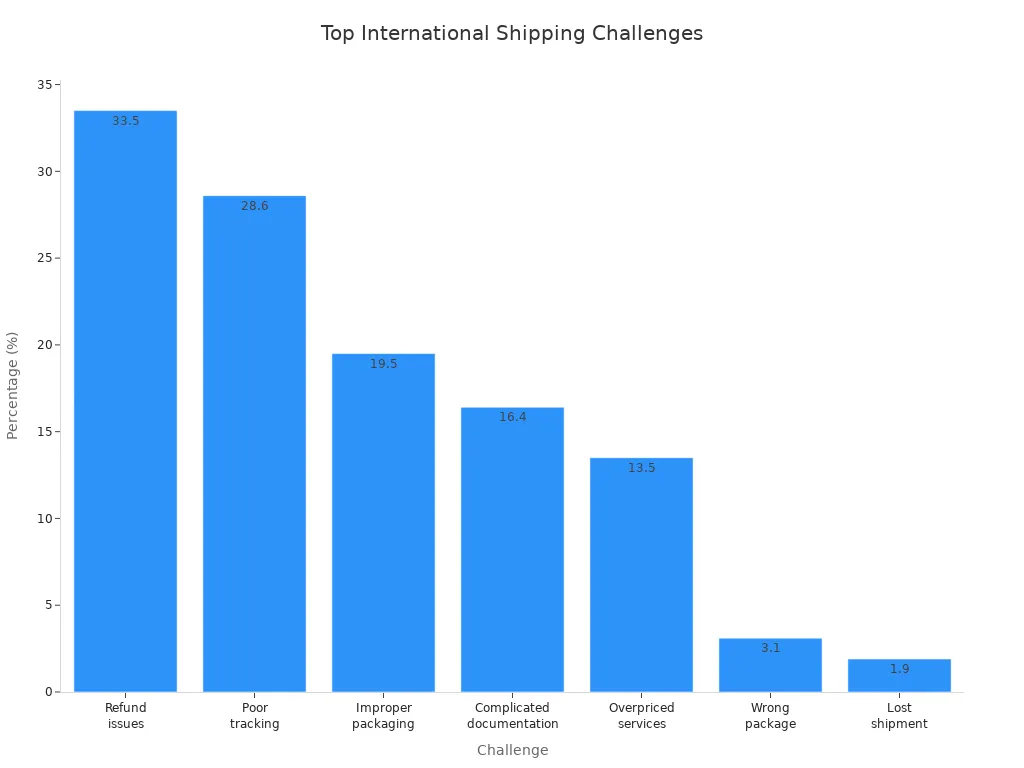
International shipping brings many obstacles that you must understand before sending goods across borders. The most frequent challenges affect your costs, delivery times, and customer satisfaction. The table below shows the most common problems reported by global businesses:
Challenge | Percentage (%) |
|---|---|
Refund issues for damaged shipments | 33.5 |
Poor package tracking | 28.6 |
Improper packaging | 19.5 |
Complicated documentation processes | 16.4 |
Overpriced services | 13.5 |
Wrong package delivered | 3.1 |
Lost shipment | 1.9 |
Customs & Compliance Issues
You face customs and compliance issues when shipping internationally. Each country sets its own rules for imports, safety standards, and labeling. You must prepare accurate documents for every shipment. Missing or incorrect paperwork can delay your goods or cause them to be seized. Trade compliance is essential for smooth customs clearance. If you do not follow regulations, you risk penalties or shipment delays. Customs rules change often, so you need to stay updated.
Customs clearance can slow down your shipments and increase costs if you do not follow the latest rules.
High Costs & Tariffs
Shipping goods across borders often costs more than you expect. Tariffs raise the price of imported items, which lowers your profit and increases prices for customers. You may see higher costs for materials and transportation. Global trade uncertainty can cause delays and make freight more expensive. Tariffs can also force you to change your supply chain, which affects your business model.
Tariffs increase costs and reduce profit margins.
Higher costs can slow down consumer demand.
Supply chain changes may disrupt your operations.
Logistics Disruptions
Logistics disruptions can happen at any time. You may face customs clearance complications, supplier problems, or port congestion. Weather events, political unrest, and trade disputes can also delay shipments. Inland transportation and carrier issues add more risk. Unexpected global events can stop your goods from reaching their destination.
Port congestion and customs delays are common.
Problems with suppliers and carriers can slow shipments.
Weather and political issues may cause unexpected delays.
Tracking & Visibility Gaps
Tracking and visibility gaps make it hard to know where your shipment is. You may not get timely updates at ports or terminals. Poor data quality can lead to missed deadlines and extra fees. Incomplete or delayed information increases risks and makes decision-making harder. Limited access to milestone data disrupts your ability to manage supply chain problems.
Reliable tracking helps you avoid costly delays and improves your control over shipments.
International Shipping Case Studies: Real Solutions

Customs & Compliance: FedEx Streamlines Clearance
Customs and compliance can slow down your shipments and add extra costs. You may face problems like missing documents, unclear duties, or changing regulations. FedEx faced these challenges before improving their customs clearance process:
Complex documentation for each country caused delays.
Unclear duties and taxes led to extra charges.
Different regulations made it hard to keep up.
Inspection delays held up shipments.
FedEx decided to streamline their customs process. They used professional customs brokers and digital tools to check paperwork before shipping. This helped you avoid mistakes and move goods faster. FedEx also offered single customs processing for consolidated shipments, which made it easier for small businesses to scale up.
Here is what FedEx achieved after making these changes:
Improvement Type | Measurable Outcome |
|---|---|
Monthly Savings | $27,250 (Annual: $327,000) |
Cost Reduction in Customs Fees | 63% savings on customs fees for consolidated shipments |
Delivery Time Improvement | Cut 5-10 business days from customs processing |
You can see how international shipping case studies like FedEx show the value of using experts and digital tools for customs. Faster delivery and lower costs help you stay competitive.
Cost Management: IKEA Optimizes Routes
High shipping costs can hurt your profits and make your products less attractive. IKEA noticed that their delivery routes were not efficient. They wanted to save money and improve the customer experience. Here is how IKEA found and fixed the problem:
IKEA worked with Mover, a Danish logistics technology company, to improve delivery planning.
Mover’s system connected with IKEA’s, so you could plan and track deliveries in real time.
Employees watched the delivery flow and found ways to reduce mistakes.
IKEA also designed products to be flat-packed. This means you can fit more items in each truck, so you need fewer trips. IKEA worked with logistics partners to use trucks better and plan smarter routes.
These changes led to big savings:
Flat-packing allowed more items per truck, saving space and money.
Better route planning meant fewer errors and faster deliveries.
International shipping case studies like IKEA’s show that smart planning and technology can cut costs and improve service.
Logistics Disruptions: Maersk & Suez Canal
Logistics disruptions can happen suddenly. In 2021, the Suez Canal blockage stopped ships and delayed goods worldwide. Maersk, a global shipping company, faced major problems:
Affected Region | Impacted Services |
|---|---|
Exports out of Asia | All markets, due to expected equipment shortage |
Exports out of West Central Asia | To Europe, North Africa, North America East Coast, West Africa, Latin America via Mediterranean |
Exports out of Europe | To Asia, Middle East, Indian Sub-Continent, Oceania |
Exports out of North America | To Middle East, Indian Sub-Continent, East Africa |
Exports out of Latin America | East Coast South America to Middle East, Central America and West Coast South America to Middle East |
Exports out of Africa | East Africa to Europe, West Africa to Asia, Middle East, Indian Sub-Continent via Mediterranean |
Maersk acted quickly to reduce the impact. Here are the strategies they used and the results:
Strategy | Description | Result |
|---|---|---|
Increasing vessel speed | Ships traveled faster around Africa to save time. | Customers saw less disruption, even with higher fuel costs. |
Redesigning network | Maersk added more containers and ships, including coastal shuttles. | Contract customers got more space during busy periods. |
Providing alternative logistics solutions | Maersk offered air and sea-air services for urgent shipments. | Customers had flexible options and fewer delays. |
New cross-border transportation route | Maersk started a new train route from Xi’an, China, to Ambarli, Turkey. | Reliable connections into Europe with guaranteed cargo space. |
International shipping case studies like Maersk’s show that quick action and flexible solutions help you manage unexpected disruptions.
Tracking & Visibility: DHL’s Real-Time System
Not knowing where your shipment is can cause stress and missed deadlines. DHL saw that poor tracking made it hard for you to plan and respond to problems. To fix this, DHL built a real-time tracking system.
You can now see your shipment’s location at every step.
The system sends automatic updates, so you know about delays right away.
DHL’s tracking tools help you make better decisions and keep customers informed.
This real-time visibility means you can avoid costly surprises. You can plan for delays, reroute shipments, and keep your supply chain moving. International shipping case studies like DHL’s prove that technology gives you more control and confidence.
When you use real-time tracking, you gain peace of mind and improve your service.
Key Strategies for Overcoming Shipping Challenges
Route Optimization & Real-Time Tracking
You can improve your shipping process by using route optimization and real-time tracking. These tools help you find the fastest and most cost-effective paths for your shipments. Real-time tracking lets you see where your goods are at any moment. This visibility helps you react quickly if problems arise. Many international shipping case studies show that companies who use tracking technology avoid delays and keep customers happy.
Tip: Use GPS and IoT sensors to monitor shipments and get instant updates.
Leveraging 3PL Providers
Third-party logistics (3PL) providers make international shipping easier for you. They handle warehousing, inventory, order fulfillment, and shipping. 3PLs use technology to connect your online store with shipping systems. This gives you real-time inventory updates and smooth order processing. They also help with customs paperwork, so your goods clear borders faster.
3PLs manage your supply chain from start to finish.
They prepare documents for customs and ensure compliance.
You save time and reduce errors by letting experts handle logistics.
Online Freight Booking Systems
Online freight booking systems give you more control over your shipments. These platforms use AI to match loads and optimize routes. You can book shipments instantly and track them from pickup to delivery. This reduces paperwork and lowers costs.
Advantage | Description |
|---|---|
Automated Processes | Fewer manual errors and faster operations. |
Real-time tracking for better decision-making. | |
Reduced Costs | Optimized routes save money on transportation. |
Digital vs. Traditional | Faster and more transparent than old methods. |
International shipping case studies often highlight how these systems improve efficiency and cut expenses.
Local Inventory Management
Keeping inventory close to your customers helps you ship faster and avoid delays. Local inventory management means you always have products ready to send. You can track stock levels in real time and respond quickly to changes in demand. This approach reduces the risk of running out of products and keeps your shipping costs low.
Products are available for prompt shipping.
Real-time tracking helps you spot and fix problems early.
You avoid financial losses from late shipments.
Proactive Communication & Planning
Clear communication and careful planning prevent many shipping problems. You should set up regular updates with your partners and customers. Share shipment progress and address issues as soon as they appear.
Strategy | Description |
|---|---|
Stay in touch with all stakeholders. | |
Frequent Updates | Give regular progress reports and solve problems fast. |
Planning ahead also means working with trusted suppliers and preparing for emergencies. Many international shipping case studies show that companies who plan for disruptions recover faster and keep their supply chains strong.
You can overcome international shipping challenges by learning from real case studies. Key lessons include:
Understanding language and culture helps you connect with customers.
Navigating tax codes and compliance is vital for small businesses.
Strong planning and budgeting protect your supply chain.
Hiring the right staff reduces operational risks.
Strategic partnerships help you build new trade routes and use data to make better decisions. These steps make your shipping process stronger and more flexible.
FAQ
What is the biggest challenge in international shipping?
You often face customs and compliance issues. Every country has different rules. Missing documents or incorrect information can delay your shipment. You must stay updated on regulations to avoid problems.
How can you reduce shipping costs?
You can save money by optimizing delivery routes and using flat-packed products. Partnering with 3PL providers and using online freight booking systems also helps lower costs.
Why is real-time tracking important?
Real-time tracking lets you see where your shipment is at any moment. You can react quickly to delays. This helps you keep customers informed and avoid extra fees.
What should you do if your shipment gets delayed?
Contact your logistics partner right away. Ask for updates and possible solutions. You can also use alternative routes or transport methods to speed up delivery.
How do 3PL providers help with customs?
3PL providers prepare your documents and make sure you follow all rules. They use their experience to clear your goods faster. This reduces the risk of delays and extra charges.
See Also
Enhancing Global Operations Through Innovative Logistics Strategies
Simplifying Cross-Border Freight on the West Coast
Streamlining Supply Chains in the USA with Global Logistics
Reasons Southern California eCommerce Brands Prefer Premier Logistics
