Developing an Effective Warehousing Strategy to Scale Your Ecommerce Business
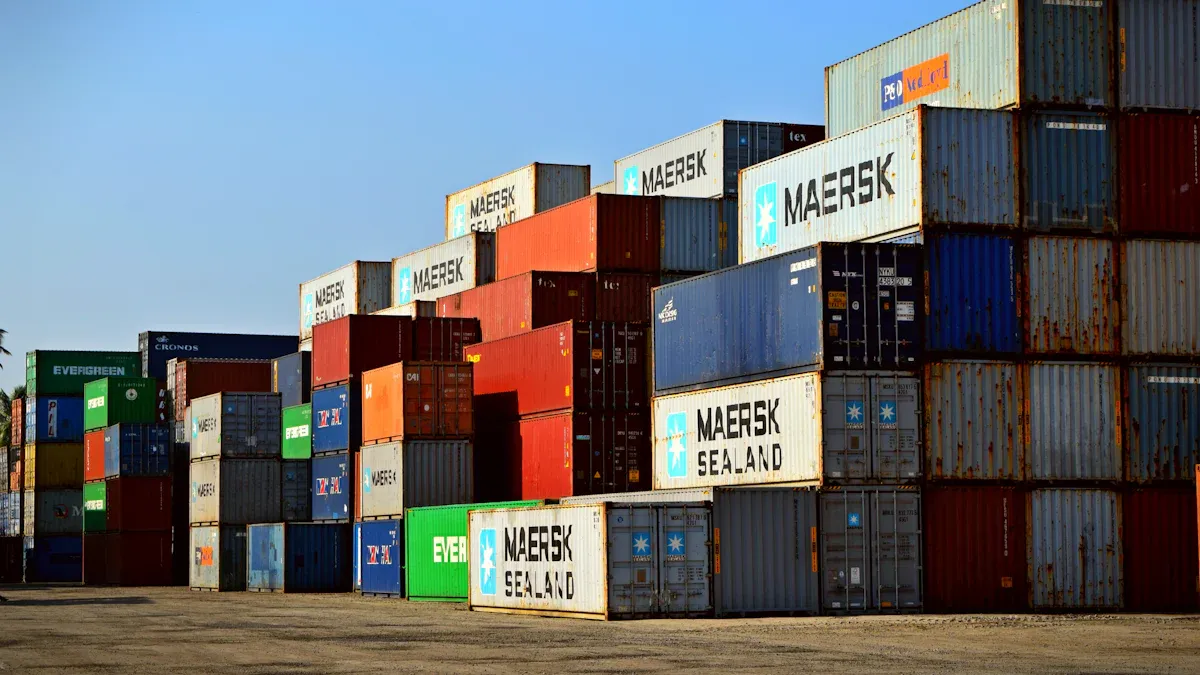
As an ecommerce business grows, warehousing becomes more than a storage function. Order volume increases, product catalogs expand, inventory becomes more difficult to manage, and customers expect faster and more reliable delivery.
A warehouse strategy that works for a small online store may become inefficient once the business reaches thousands of orders per month. Storage costs can increase, fulfillment teams can become overloaded, and inventory may end up in the wrong locations.
Developing an effective warehousing strategy allows ecommerce businesses to align storage capacity, inventory positioning, fulfillment operations, technology, and transportation with long-term growth objectives.
The goal is not simply to find more warehouse space. It is to build a scalable system that can handle increasing demand without allowing warehousing costs and operational complexity to grow uncontrollably.
What Is an Ecommerce Warehousing Strategy?
An ecommerce warehousing strategy is a structured plan for determining how inventory will be received, stored, managed, positioned, fulfilled, and transferred across a warehouse or network of warehouses.
A comprehensive strategy may cover:
· Warehouse locations
· Storage capacity
· Inventory allocation
· SKU management
· Warehouse layout
· Picking and packing
· Order fulfillment
· Technology
· Labor
· Transportation
· Returns
· Seasonal demand
· Cost management
· Scalability
· Business continuity
A strong strategy connects these elements rather than treating them as independent decisions.
For example, choosing a warehouse based only on cheap rent may create higher transportation costs if the facility is far from customers. Similarly, adding warehouse capacity without improving inventory management may simply create more places for inventory to become difficult to find.
Why Warehousing Strategy Matters for Ecommerce Growth
Warehousing directly affects several parts of the ecommerce business.
It influences how quickly orders can be processed, how much inventory the company can carry, how much it spends on fulfillment, and how reliably customers receive their orders.
As order volume grows, small inefficiencies can become significant expenses.
If a warehouse loses only a few minutes on every order, thousands of monthly orders can turn that small delay into hundreds of labor hours.
A scalable warehousing strategy helps businesses anticipate these challenges instead of reacting after the warehouse has already become a bottleneck.
Step 1: Understand Your Current Fulfillment Profile
Before changing the warehouse strategy, businesses should analyze how they currently operate.
Important data includes:
· Monthly order volume
· Peak daily order volume
· Average units per order
· Number of SKUs
· Inventory value
· Inventory turnover
· Customer locations
· Average shipping distance
· Return volume
· Seasonal demand
· Order growth rate
· Current warehouse capacity
· Fulfillment cost per order
This information provides the foundation for strategic planning.
A business should understand not only how much inventory it has today, but also how inventory and order volumes are expected to change.
Step 2: Forecast Future Warehouse Demand
Warehouse strategy should be based on future requirements rather than current conditions alone.
Growth forecasts should consider:
· Expected revenue growth
· New product launches
· New sales channels
· Geographic expansion
· Seasonal peaks
· Marketing campaigns
· Wholesale opportunities
· Supplier lead times
· Changes in product dimensions
· Changes in average order size
Businesses should model several scenarios rather than relying on a single growth assumption.
For example, a warehouse plan may consider normal growth, accelerated growth, and peak-season demand.
This makes it easier to determine when additional storage or fulfillment capacity may be required.

Step 3: Determine the Right Warehouse Model
Ecommerce businesses can use several warehouse models.
In-House Warehousing
The company operates its own warehouse and manages employees, equipment, systems, and daily operations.
This provides high operational control but requires significant investment and management resources.
Third-Party Logistics
A 3PL provider manages storage and fulfillment on behalf of the ecommerce business.
This can provide access to warehouse infrastructure and logistics expertise without requiring the merchant to build a complete operation internally.
Contract Warehousing
Contract warehousing provides dedicated or semi-dedicated warehouse capacity under a longer-term agreement.
It can be appropriate for businesses with relatively predictable and substantial storage requirements.
Public Warehousing
Public warehouses provide shared storage space that businesses can use according to their needs.
This can provide flexibility when demand changes significantly.
Hybrid Warehousing
Some ecommerce businesses combine internal facilities with third-party warehouses.
A hybrid strategy can provide greater flexibility when different product categories or markets have different fulfillment requirements.
Step 4: Choose Strategic Warehouse Locations
Location is one of the most important decisions in warehousing strategy.
The ideal warehouse location depends on where inventory originates and where customers are located.
Businesses should evaluate:
· Customer density
· Shipping zones
· Carrier availability
· Transportation costs
· Labor availability
· Warehouse rental costs
· Taxes and local regulations
· Port and airport access
· Highway connectivity
· Supplier proximity
· Expansion opportunities
A warehouse with lower rent may not actually reduce total logistics costs if it increases transportation expenses.
The correct question is not “Where is warehouse space cheapest?”
It is “Where can the business achieve the best balance between facility cost, inventory positioning, labor, and transportation?”
Single-Warehouse vs. Multi-Warehouse Strategy
As ecommerce businesses grow, they may need to determine whether one warehouse is sufficient.
A single warehouse provides operational simplicity.
Inventory is concentrated in one location, making management easier and reducing the need to coordinate transfers between facilities.
However, a single facility may create longer shipping distances for customers located far away.
A multi-warehouse strategy distributes inventory closer to major customer markets.
Potential benefits include:
· Faster delivery
· Lower average shipping distances
· Greater geographic coverage
· Reduced dependence on one facility
· Better regional inventory availability
However, multiple warehouses also increase complexity.
Inventory must be allocated correctly, transfers must be coordinated, and each facility may have separate operating costs.
Developing an Inventory Allocation Strategy
The number of warehouses is only part of the equation.
Businesses also need to decide which products should be stored at each location.
Inventory allocation can consider:
· Regional demand
· Product velocity
· Product size
· Product value
· Seasonality
· Shipping costs
· Replenishment lead times
· Customer service requirements
Fast-moving products may be distributed across several warehouses.
Slow-moving products may remain centralized to avoid unnecessary inventory duplication.
This creates a balance between delivery speed and inventory efficiency.
ABC Inventory Analysis
ABC analysis is a practical way to prioritize inventory.
A typical approach divides products into three groups.
A Items
High-value or high-impact products that require close monitoring.
B Items
Products with moderate value or demand.
C Items
Lower-value or slower-moving products that generally require less intensive management.
The categories can be based on revenue, demand, inventory value, order frequency, or other business-specific measures.
ABC analysis can influence warehouse placement, cycle counting frequency, safety stock, and replenishment policies.
Warehouse Capacity Planning
Capacity planning ensures the warehouse has enough room for inventory and operations without maintaining excessive unused space.
Businesses should evaluate:
· Pallet positions
· Shelf capacity
· Bin capacity
· Floor storage
· Receiving space
· Packing stations
· Returns areas
· Staging areas
· Aisle requirements
· Seasonal overflow
Warehouse capacity should be evaluated in both storage volume and operational throughput.
A warehouse can have plenty of empty shelves and still be unable to process enough orders because picking, packing, or shipping areas are overloaded.
Optimize Warehouse Layout
An efficient layout minimizes unnecessary movement and supports smooth material flow.
A basic warehouse flow may include:
1. Receiving
2. Inspection
3. Putaway
4. Storage
5. Picking
6. Packing
7. Staging
8. Shipping
9. Returns
The exact configuration depends on the products and fulfillment model.
Fast-moving inventory should generally be placed in accessible locations.
Products frequently ordered together can potentially be positioned closer together.
The objective is to reduce travel distance and avoid unnecessary handling.
Build an Effective Picking Strategy
Picking often represents one of the largest labor components of ecommerce fulfillment.
Businesses should select a picking method based on order volume and product characteristics.
Possible approaches include:
· Single-order picking
· Batch picking
· Zone picking
· Wave picking
· Cluster picking
· Automated picking
A growing business may move from simple single-order picking to more structured methods as order volume increases.
Technology can also support optimized picking routes and real-time task assignment.
Integrate Warehouse Technology
Technology provides the information layer required for scalable warehousing.
A modern ecommerce warehouse may use:
· Warehouse management systems
· Barcode scanners
· RFID
· Order management systems
· Inventory management software
· Shipping platforms
· API integrations
· Automated equipment
· Warehouse analytics
· AI forecasting
A WMS can track inventory locations and warehouse activity in real time.
Integration with ecommerce platforms can synchronize orders and inventory availability.
The technology stack should support the business strategy rather than become an expensive collection of disconnected software subscriptions.
Use Real-Time Inventory Visibility
Inventory visibility is essential when ecommerce businesses operate multiple sales channels or warehouses.
The system should provide reliable information about:
· Available inventory
· Reserved inventory
· Inbound inventory
· Damaged inventory
· Returned inventory
· Inventory by location
· Inventory committed to orders
Real-time visibility can reduce overselling and help customer service teams provide more accurate information.
It also supports better purchasing and replenishment decisions.
Plan for Seasonal Demand
Seasonality can significantly affect warehouse requirements.
Peak periods may occur during:
· Holiday shopping
· Back-to-school seasons
· Summer sales
· Product launches
· Promotional campaigns
· Industry-specific seasonal events
Businesses should estimate peak inventory and order volumes before the season begins.
Peak planning may require:
· Temporary warehouse space
· Additional labor
· Extended operating hours
· Additional packing stations
· Seasonal storage zones
· Backup carriers
· Temporary fulfillment partners
Waiting until peak demand arrives is generally a poor capacity-planning strategy.
Create a Warehouse Overflow Plan
Unexpected growth can create storage problems.
An overflow strategy provides additional capacity when normal warehouse space is insufficient.
Potential solutions include:
· Short-term warehousing
· Public warehouse space
· 3PL overflow capacity
· Temporary storage
· Additional off-site facilities
· Supplier-managed inventory
Overflow capacity can provide flexibility without requiring a business to immediately commit to a permanent facility.
Develop a Returns Strategy
Returns should be included in the warehouse strategy from the beginning.
A well-designed returns process should define:
· Return authorization
· Receiving
· Inspection
· Product grading
· Restocking
· Refurbishment
· Disposal
· Customer refunds
· Inventory updates
Returns can consume significant warehouse labor if processes are inconsistent.
Efficient reverse logistics can help recover product value and return eligible inventory to available stock quickly.

Control Warehousing Costs
Warehouse costs extend beyond rent.
A complete cost model should consider:
· Facility rent
· Labor
· Utilities
· Insurance
· Equipment
· Software
· Maintenance
· Packaging
· Inventory handling
· Warehouse management
· Transportation
· Returns
· Inventory transfers
Businesses should evaluate total fulfillment cost rather than focusing on a single expense category.
For example, a larger warehouse with higher rent could potentially reduce transportation and labor costs if it provides better inventory positioning and operational efficiency.
Balance Inventory Levels With Warehouse Capacity
Too much inventory creates storage costs and increases the risk of obsolete stock.
Too little inventory can create stockouts and lost sales.
A warehousing strategy should therefore be closely connected to inventory planning.
Important variables include:
· Demand forecasts
· Supplier lead times
· Safety stock
· Reorder points
· Minimum order quantities
· Seasonal demand
· Product lifecycle
· Inventory turnover
The warehouse should support the inventory strategy instead of operating as a completely separate function.
Use Data to Improve Warehouse Decisions
Data analytics can help businesses identify operational trends.
Useful analyses include:
· SKU velocity
· Order density by region
· Picking productivity
· Storage utilization
· Inventory aging
· Return patterns
· Shipping costs
· Warehouse labor utilization
· Order cycle times
· Stockout frequency
These insights can reveal opportunities for layout changes, inventory transfers, SKU consolidation, or automation.
Consider Automation at the Right Stage
Automation can improve warehouse scalability, but the timing matters.
Businesses should first identify processes where automation can produce measurable benefits.
Potential applications include:
· Automated conveyors
· Sortation systems
· Autonomous mobile robots
· Automated storage and retrieval systems
· Robotic picking
· Automated packing
· Dimensioning systems
· Automated inventory counting
A company processing a modest number of orders may not need a highly automated facility.
As order volume increases, however, automation may become increasingly valuable.
Build a Flexible Warehouse Strategy
Ecommerce demand can change rapidly.
A warehouse strategy should therefore avoid unnecessary rigidity.
Flexibility can come from:
· Adjustable storage systems
· Scalable software
· Flexible labor models
· Multi-purpose warehouse areas
· 3PL partnerships
· Short-term storage agreements
· Multiple transportation options
· Modular automation
Flexibility is particularly valuable for businesses with seasonal products or unpredictable growth.
Build Business Continuity Into the Strategy
Warehousing operations can be disrupted by:
· Severe weather
· Equipment failures
· Labor shortages
· Transportation disruptions
· Supplier delays
· Power outages
· Technology failures
· Other unexpected events
A resilient warehouse strategy should identify critical dependencies and establish contingency plans.
Possible measures include:
· Backup power
· Multiple carriers
· Secondary warehouse locations
· Data backups
· Alternative suppliers
· Emergency labor resources
· Disaster recovery procedures
· Business continuity plans
The objective is to keep essential fulfillment operations running when normal processes are interrupted.
When Should an Ecommerce Business Add Another Warehouse?
Adding another warehouse should be based on operational and financial analysis rather than growth alone.
Potential signals include:
· Shipping distances becoming excessive
· Delivery times increasing
· Existing warehouse capacity approaching its limits
· Transportation costs rising
· Regional demand becoming concentrated
· Peak-season capacity becoming insufficient
· Inventory transfers becoming frequent
· Customer service requirements becoming harder to meet
Businesses should compare the cost of adding a facility with the expected benefits in transportation, delivery performance, capacity, and resilience.
When Should an Ecommerce Business Use a 3PL?
A 3PL may be useful when a company wants to scale fulfillment without building additional infrastructure internally.
A 3PL can potentially provide:
· Warehouse space
· Labor
· WMS technology
· Picking and packing
· Shipping coordination
· Returns processing
· Multi-location fulfillment
· Seasonal capacity
The right decision depends on the company’s desired level of control, operational capabilities, growth plans, and financial model.
Key Warehousing KPIs for Scaling Ecommerce
A scalable warehousing strategy should be measured consistently.
Important KPIs include:
KPI | What It Measures |
Inventory accuracy | Reliability of warehouse inventory records |
Order accuracy | Percentage of orders shipped correctly |
Order cycle time | Time from order release to shipment |
Fulfillment cost per order | Overall warehouse fulfillment efficiency |
Pick rate | Picking productivity |
Storage utilization | Use of available warehouse capacity |
Inventory turnover | Speed at which inventory moves |
Stockout rate | Frequency of unavailable inventory |
Return processing time | Speed of reverse logistics |
On-time shipment rate | Ability to meet shipping commitments |
Warehouse throughput | Number of units or orders processed |
Labor utilization | Efficiency of warehouse labor |
Tracking these metrics over time allows management to identify when existing infrastructure is approaching its limits.
Common Warehousing Strategy Mistakes
Expanding Storage Too Early
More warehouse space does not solve poor inventory planning.
Waiting Too Long to Expand
Operating at maximum capacity for too long can create service problems and employee burnout.
Choosing Locations Based Only on Rent
Facility costs are only one component of total logistics cost.
Duplicating Too Much Inventory
Multiple warehouses can improve delivery speed but also increase inventory carrying costs.
Ignoring Returns
Reverse logistics can become a major operational requirement as ecommerce volume grows.
Using Disconnected Systems
Poor technology integration creates inventory inaccuracies and fulfillment delays.
Automating Without Redesigning Processes
Technology cannot fix an inefficient process if the underlying workflow remains poorly designed.
A Practical Ecommerce Warehousing Strategy Framework
A scalable strategy can be developed through the following sequence:
1. Analyze current warehouse performance.
2. Forecast order and inventory growth.
3. Identify customer geographic demand.
4. Determine required storage and throughput capacity.
5. Evaluate warehouse models.
6. Assess single-warehouse versus multi-warehouse options.
7. Design inventory allocation rules.
8. Optimize warehouse layout and picking processes.
9. Implement appropriate technology.
10. Build seasonal and overflow capacity.
11. Establish returns and contingency plans.
12. Track KPIs and review performance regularly.
This framework allows businesses to make warehouse decisions based on measurable operational requirements.
Conclusion
An effective warehousing strategy provides the infrastructure an ecommerce business needs to grow without allowing fulfillment complexity to grow at the same rate.
The right strategy aligns warehouse locations, inventory allocation, storage capacity, picking operations, technology, labor, transportation, and returns management.
For smaller ecommerce businesses, the priority may be improving inventory accuracy and warehouse organization. As order volumes increase, the strategy may evolve toward multiple facilities, advanced WMS technology, automation, and distributed inventory.
There is no single warehouse model that works for every ecommerce business. The appropriate approach depends on product characteristics, customer geography, order volume, growth expectations, service requirements, and cost structure.
The strongest warehousing strategies are therefore designed to evolve.
By forecasting future demand, monitoring operational KPIs, maintaining flexible capacity, and continuously improving warehouse processes, ecommerce businesses can create a fulfillment infrastructure capable of supporting sustainable long-term growth.
See Also
Key Strategies for Effective Management of Global Logistics
The Role of Direct Logistics Systems in Global Efficiency
Enhancing International Operations Through Innovative Logistics Solutions
Prepare for Holiday Demand with PGL’s Logistics Services
PGL Transforms West Coast Trucking for Today’s Supply Chains

