Understanding Warehouse Services: How They Streamline Your Supply Chain

Warehouse services play an essential role in modern supply chains by connecting suppliers, manufacturers, importers, retailers, and customers through organized inventory storage and distribution operations. As businesses expand across regions and increasingly rely on ecommerce and international sourcing, efficient warehouse management becomes critical for controlling costs, improving delivery performance, and maintaining accurate inventory.
A warehouse is no longer simply a building where products are stored until someone needs them. Modern warehouse operations can include receiving, unloading, inspection, inventory management, storage, order fulfillment, transloading, cross-docking, labeling, kitting, freight consolidation, returns processing, and domestic distribution.
For businesses that import products, manage multiple sales channels, or serve customers across large geographic areas, professional warehouse services can simplify complex logistics processes and create a more flexible supply chain.
This guide explains what warehouse services include, how they work, what types of businesses use them, how to select the right warehouse solution, and how professional warehousing can improve overall supply chain performance.
What Are Warehouse Services?
Warehouse services refer to the range of logistics activities performed within a warehouse to receive, store, manage, process, and distribute inventory.
Depending on the warehouse and business requirements, services may include:
• Receiving and unloading
• Container unloading
• Pallet storage
• Carton storage
• Bulk storage
• Inventory management
• Pick and pack fulfillment
• Labeling and relabeling
• Kitting and assembly
• Cross-docking
• Transloading
• Freight consolidation
• Order processing
• Returns management
• Quality inspection
• Domestic distribution
• Transportation coordination
Some warehouses specialize in a specific function, while others provide comprehensive logistics services covering multiple stages of the supply chain.
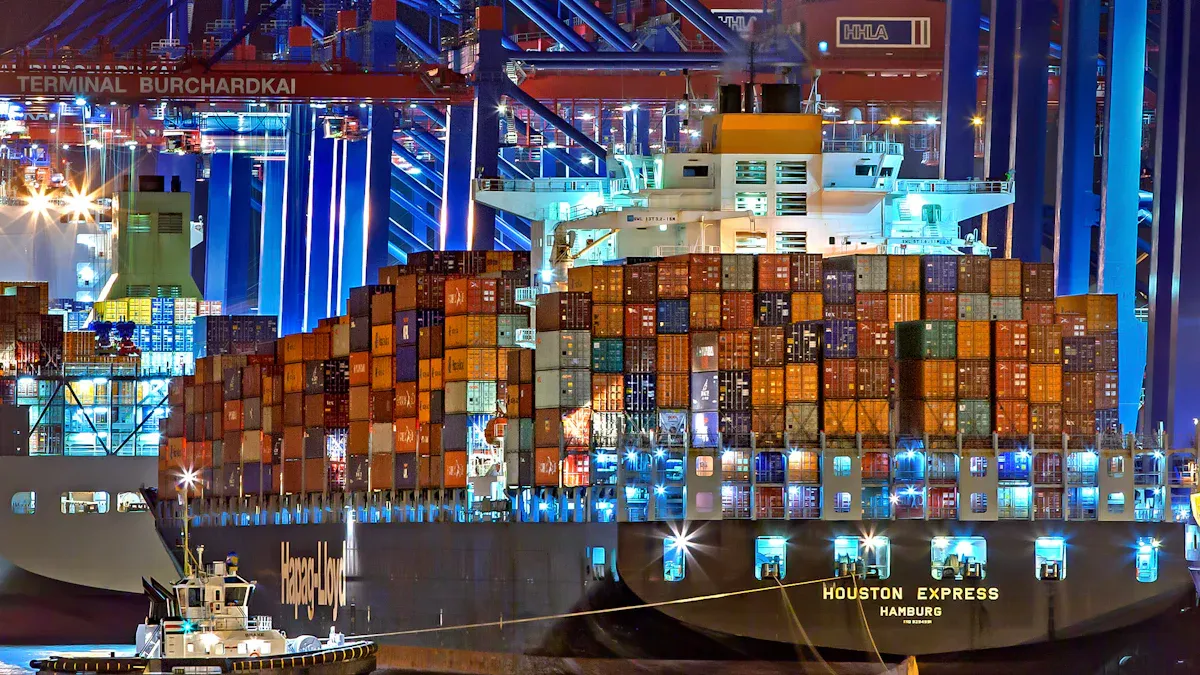
The right warehouse service model depends on the type of inventory, order volume, geographic distribution, transportation requirements, and business objectives.
Why Warehouse Services Matter
Efficient warehousing creates a connection between supply and demand.
Manufacturers may produce products in one location while customers are located hundreds or thousands of miles away. Imported cargo may arrive through a port but still require storage and distribution before reaching its final destination.
Warehouses provide the physical infrastructure necessary to bridge these geographic and operational gaps.
A well-managed warehouse can help businesses:
• Maintain accurate inventory
• Reduce unnecessary transportation
• Improve order processing
• Consolidate shipments
• Position inventory closer to customers
• Handle seasonal demand
• Reduce delivery times
• Improve supply chain visibility
• Support ecommerce fulfillment
• Simplify international distribution
Without organized warehousing, inventory can become difficult to track and transportation costs can increase.
Inbound Receiving and Warehouse Processing
Receiving is one of the most important warehouse functions because it establishes the starting point for inventory accuracy.
When a shipment arrives, warehouse personnel may unload the cargo, inspect the shipment, verify quantities, identify products, record damage, and enter the inventory into the warehouse management system.
The receiving process can involve several different types of shipments.
These may include:
• Full truckloads
• LTL shipments
• Ocean containers
• Air freight
• Palletized freight
• Carton shipments
• Supplier deliveries
• Customer returns
Advance shipment information can make receiving more efficient.
When warehouse personnel know what is expected before the truck or container arrives, they can prepare labor, equipment, storage locations, and receiving documentation.
Accurate receiving also reduces downstream problems. If inventory is incorrectly counted or entered into the system at arrival, the discrepancy may later appear as a picking error or inventory shortage.
Inventory Storage Solutions
Storage is a fundamental warehouse service, but not all inventory should be stored in the same way.
Warehouse storage methods can include pallet racking, shelving, bins, floor storage, bulk storage, and specialized areas.
Pallet rack systems are commonly used for palletized inventory because they make vertical use of warehouse space and provide organized access to individual pallet locations.
Shelving and bin storage are more suitable for smaller products and individual-unit picking.
Floor storage can be useful for large or heavy products that are difficult to place on conventional racks.
The warehouse layout should be designed around the characteristics of the inventory.
Important considerations include:
• Product dimensions
• Product weight
• SKU count
• Inventory turnover
• Order frequency
• Handling requirements
• Packaging configuration
• Safety requirements
• Seasonal demand
Fast-moving products are often positioned in locations that reduce walking and handling time, while slower-moving products may be placed farther from the primary picking areas.
Warehouse Inventory Management
Inventory management is one of the most important functions of modern warehousing.
A warehouse should be able to answer basic questions quickly:
How much inventory is available?
Where is each SKU located?
Which inventory has already been allocated to orders?
Which products are damaged or unavailable?
How much inventory is expected to arrive?
Accurate inventory information supports purchasing, sales, production planning, and customer service.
Warehouse management systems can track inventory movements from receiving through storage, picking, and shipping.
Barcode scanning can further improve accuracy by reducing manual data entry.
Cycle counting is another important inventory control method. Instead of relying exclusively on a large annual physical inventory count, warehouse teams can regularly verify selected inventory locations or SKUs.
Regular inventory checks help identify discrepancies before they become larger operational problems.
Pick and Pack Services
For ecommerce and retail businesses, pick and pack operations are central to warehouse fulfillment.
Picking involves retrieving the correct products from their storage locations according to an order.
Packing involves preparing those products for transportation.
Several picking methods can be used depending on warehouse volume and order characteristics.
Single-order picking is straightforward and may work well for lower-volume operations.
Batch picking allows warehouse employees to pick products for multiple orders during one trip through the warehouse.
Zone picking divides the warehouse into areas, with workers responsible for specific zones.
Wave picking organizes orders into groups that are released for processing at scheduled intervals.
The best method depends on SKU characteristics, order volume, warehouse layout, labor availability, and technology.
Packing operations should also be standardized.
Proper packaging can protect products from damage while controlling dimensional weight and material costs.
Warehouse teams may select cartons, protective materials, labels, inserts, and shipping documentation according to specific order requirements.
Cross-Docking Services
Cross-docking is a warehouse process in which incoming shipments are transferred directly to outbound transportation with minimal or no long-term storage.
For example, an inbound truck may arrive with products destined for several retail locations. Instead of placing those products into long-term storage, warehouse personnel can unload, sort, consolidate, and transfer them to outbound vehicles.
Cross-docking can reduce storage requirements and handling time.
It is particularly useful when inventory needs to move quickly through the distribution network.
However, successful cross-docking requires accurate shipment information, synchronized transportation schedules, sufficient dock capacity, and effective warehouse coordination.
Transloading and Container Handling
Businesses involved in international trade often require warehouse services that support ocean container and domestic freight operations.
Transloading involves transferring cargo from one transportation mode or equipment type to another.
For example, imported cargo may arrive in an ocean container and then be transferred into domestic trailers for inland distribution.
Warehouse operators may unload the container, sort the cargo, palletize products, label shipments, and load outbound equipment.
This process can provide greater flexibility when international containers need to be returned promptly or when cargo must be redistributed to multiple destinations.
Container unloading also requires careful planning because labor, dock space, forklifts, pallet equipment, and transportation appointments must be coordinated.
Freight Consolidation
Warehouse services can also help businesses consolidate multiple shipments.
Instead of sending several small shipments separately, a warehouse may receive products from multiple suppliers, hold them temporarily, and combine compatible cargo into larger outbound shipments.
Consolidation can help improve transportation efficiency.
This is especially useful when suppliers are geographically dispersed or when shipments are too small to justify dedicated truckload transportation.
Warehousing for Ecommerce
Ecommerce has significantly changed warehouse requirements.
Traditional warehouses were often designed primarily around pallet storage and larger wholesale shipments.
Ecommerce fulfillment requires more detailed order processing.
A single customer order may contain only a few individual units, which means warehouses must efficiently manage small-order picking, packing, shipping labels, parcel transportation, and returns.
Ecommerce warehouse services may include:
• Individual-unit picking
• Multi-channel order fulfillment
• Parcel shipping
• Same-day or next-day processing
• Product labeling
• Kitting
• Promotional inserts
• Returns processing
• Inventory synchronization
Warehouse technology becomes particularly important when order volume increases.
Automated order transmission and inventory updates can reduce manual work and improve visibility across multiple sales channels.
Warehousing for Importers and International Businesses
Importers often need warehouse services immediately after cargo enters the domestic market.
An imported shipment may require transportation from a port to a warehouse, where it can be unloaded, stored, processed, and distributed.
Depending on the shipment and business model, warehouse operations may work alongside customs clearance and transportation services.
A centralized warehouse can also act as a distribution point for multiple regions.
For example, a business importing products through a major coastal gateway may move inventory to an inland distribution warehouse and then ship orders throughout the country.
This approach can simplify inventory management and create a consistent distribution process.
Bonded and Specialized Warehousing
Certain supply chains require specialized warehouse arrangements.
Bonded warehousing may be used for qualifying imported merchandise under applicable customs procedures. These facilities operate under specific regulatory requirements and can provide businesses with additional options for managing imported inventory.
Other specialized warehouse environments may support products requiring particular handling conditions.
Examples include:
• Temperature-controlled products
• Food-related products
• Pharmaceuticals
• Health and beauty products
• High-value inventory
• Oversized equipment
• Fragile products
• Regulated merchandise
Businesses should confirm that the warehouse has the appropriate facilities, procedures, permits, insurance, and operational capabilities for their products.
Warehouse Value-Added Services
Modern warehouses often provide more than basic storage and fulfillment.
Value-added services can include:
• Label application
• Relabeling
• Repackaging
• Kitting
• Product assembly
• Quality inspection
• Sorting
• Bundling
• Palletizing
• Re-palletizing
• Retail preparation
• Shipment preparation
These services can reduce the number of separate logistics facilities involved in the supply chain.
For example, products arriving from an overseas supplier may be inspected, relabeled, repacked, and prepared for domestic distribution at the warehouse before being shipped to customers.
This can simplify transportation and reduce unnecessary handling between facilities.
Warehouse Management Technology
Technology has become a central component of warehouse operations.
A warehouse management system can provide visibility into inventory, receiving, storage locations, picking, packing, and shipping.
Important technology capabilities may include:
• Barcode scanning
• RFID
• Inventory tracking
• Order management integration
• Electronic data exchange
• API integration
• Shipping system integration
• Real-time reporting
• Automated notifications
• Inventory alerts
The purpose of warehouse technology is not simply to digitize paperwork.
Effective technology should help warehouse teams make faster and more accurate decisions.
For businesses using outsourced warehouse services, system integration is particularly important.
Inventory and order information should move efficiently between the business and warehouse provider so that both sides maintain consistent operational data.
Choosing the Right Warehouse Location
Warehouse location can have a major effect on overall supply chain costs.
Businesses should consider several factors when evaluating potential warehouse locations.
Customer Distribution
A warehouse located near major customer markets can reduce domestic transportation distances.
Port Access
For importers, proximity to major ports can reduce drayage and inbound transportation costs.
Highway Access
Easy access to major highways can improve truck transportation efficiency.
Airport and Rail Access
Certain businesses may benefit from proximity to airports or rail terminals.
Labor Availability
Warehouse operations depend heavily on labor. Local workforce availability and wage conditions can influence operating costs.
Warehouse Capacity
The facility should have enough space for current requirements while allowing reasonable room for growth.
Security and Infrastructure
Businesses should also consider facility security, dock configuration, equipment availability, parking, yard capacity, and other infrastructure requirements.
Warehouse KPIs
Performance should be measured using clear warehouse key performance indicators.
Common warehouse KPIs include:
• Inventory accuracy
• Order accuracy
• On-time shipment rate
• Receiving turnaround time
• Picking productivity
• Packing productivity
• Order cycle time
• Storage utilization
• Damage rate
• Inventory shrinkage
• Return processing time
These metrics help businesses understand whether warehouse operations are meeting expectations.
For outsourced warehouse relationships, KPIs can also provide an objective foundation for regular performance reviews.
Common Warehouse Challenges
Even well-managed warehouses face operational challenges.
Inventory discrepancies can occur because of receiving errors, picking mistakes, damaged products, or inaccurate adjustments.
Labor shortages can affect receiving and fulfillment capacity.
Seasonal demand can create temporary space and staffing requirements.
Transportation delays can create congestion when inbound and outbound schedules become misaligned.
Poor warehouse layout can increase travel time and labor costs.
Technology failures can interrupt order processing and inventory visibility.
The goal is not to eliminate every possible problem. That would require a warehouse staffed entirely by mythical creatures who never make mistakes, which has not yet been approved by the laws of physics.
The goal is to establish processes that identify problems quickly and prevent recurring issues.
Best Practices for Efficient Warehouse Operations
Standardize Receiving
Create clear procedures for receiving, counting, inspecting, labeling, and system entry.
Organize Inventory Strategically
Position frequently picked inventory in accessible locations and review storage layouts regularly.
Maintain Accurate Inventory Records
Use barcode scanning, cycle counting, and discrepancy investigations to maintain inventory accuracy.
Optimize Warehouse Layout
Minimize unnecessary movement between receiving, storage, picking, packing, and shipping areas.
Use Appropriate Technology
Select warehouse systems that match operational complexity and integrate with other supply chain systems.
Prepare for Seasonal Demand
Forecast peak periods and plan labor, storage capacity, equipment, packaging materials, and transportation in advance.
Track Performance
Review warehouse KPIs regularly and investigate negative trends before they become major problems.
Maintain Clear Communication
Warehouse teams, transportation providers, suppliers, and business managers should have clear communication channels for routine operations and exceptions.
How Warehouse Services Support Supply Chain Growth
As a company grows, logistics requirements often become more complicated.
A business that initially ships a few dozen orders per week may eventually process thousands of orders.
Inventory may expand from several hundred units to thousands of pallets.
Customer locations may spread across multiple regions.
At this stage, an informal storage arrangement may no longer be sufficient.
Professional warehouse services can provide the infrastructure needed to scale.
Instead of continually expanding internal warehouse operations, a business can use established logistics facilities and operational systems to accommodate growth.
This can allow management to focus on sales, product development, sourcing, and strategic planning while warehouse specialists handle day-to-day logistics.
The Role of Warehousing in a Modern Supply Chain
Warehousing connects multiple parts of the supply chain.
Suppliers depend on warehouses to receive and distribute inventory.
Manufacturers may use warehouses to stage materials and finished products.
Importers use warehouses to manage incoming international shipments.
Retailers use distribution facilities to replenish stores.
Ecommerce businesses rely on fulfillment warehouses to process individual customer orders.
Transportation providers depend on warehouses for loading, unloading, consolidation, and shipment preparation.
Because of this interconnected role, warehouse performance can affect nearly every other part of the supply chain.
A well-designed warehouse operation can improve inventory visibility, transportation efficiency, order accuracy, and customer service simultaneously.
Conclusion
Warehouse services have evolved far beyond basic inventory storage. Modern warehousing can include receiving, storage, inventory management, fulfillment, cross-docking, transloading, freight consolidation, labeling, kitting, returns processing, and domestic distribution.
For importers, ecommerce businesses, manufacturers, wholesalers, and retailers, the right warehouse solution can simplify logistics while providing greater flexibility and operational visibility.
Selecting an appropriate warehouse requires careful consideration of location, capacity, technology, labor, service capabilities, security, pricing, and scalability.
Businesses should also establish clear processes and performance standards to ensure that warehouse operations remain accurate and efficient as demand changes.
Ultimately, effective warehousing is about placing inventory in the right location, maintaining accurate control of that inventory, and moving products through the supply chain efficiently. When these functions are properly coordinated, warehouse services can become a strategic advantage rather than simply another operating expense.
As supply chains continue to become more global, customer expectations continue to rise, and ecommerce fulfillment becomes increasingly complex, efficient warehouse services will remain a fundamental part of successful logistics management.

