Reducing Customs Delays in Cross Border Freight: Practical Strategies for Faster Clearance
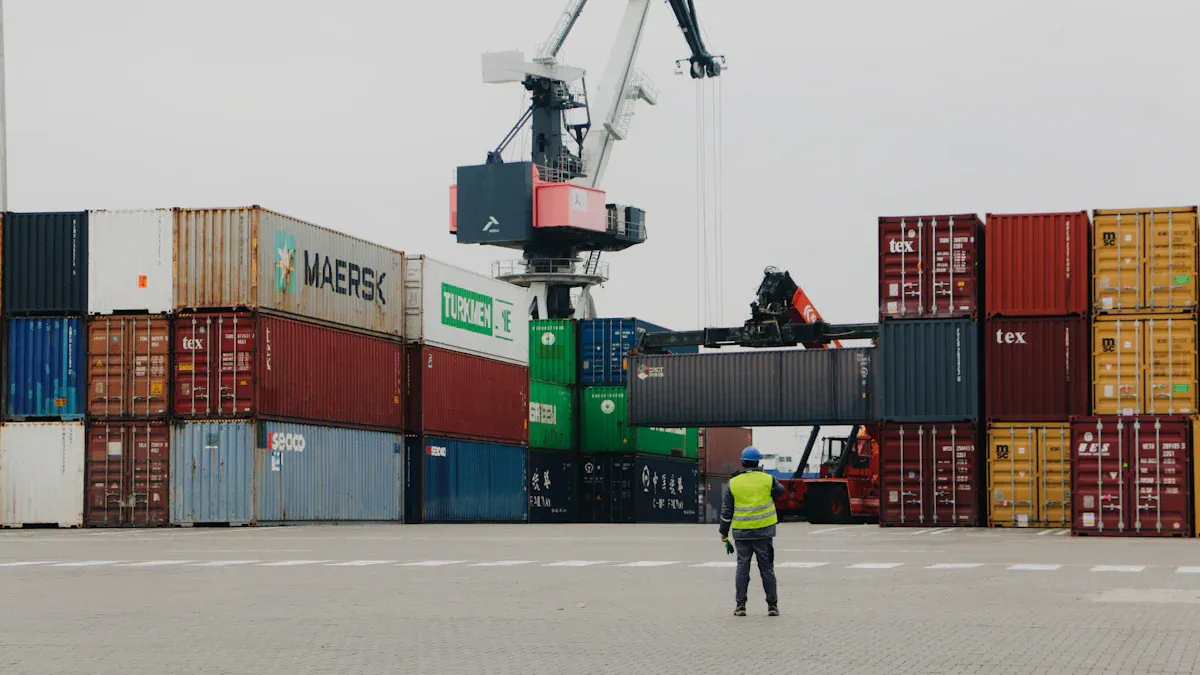
Customs delays can disrupt your entire supply chain, leading to increased costs and missed delivery deadlines. Your customers may become dissatisfied, and even minor paperwork errors can result in fines or wasted time at storage facilities. For industries that rely on just-in-time deliveries, reducing customs delays in cross border freight is critical, as any holdup can translate into significant financial losses. Here’s how these challenges impact businesses:
Statistic | Impact |
|---|---|
Shipments lacking live customs ETA data | |
Operating costs for cross-border transport | Increased by 20% in 2024 |
Diesel prices | Rose by 6.33% to an average of $25.71 pesos per liter |
Rising cargo theft and road blockades |
Implementing effective strategies for reducing customs delays in cross border freight is essential. By focusing on compliance and proactive planning, you can avoid costly disruptions and maintain a strong reputation for reliability in your business operations.
Key Takeaways
Look at all shipping papers closely so you do not make errors that can slow things down.
Pick the right HS codes for your items to stop fines and extra checks.
Send in forms early and think about pre-clearance to make customs go faster.
Get help from customs brokers to follow rules and stay compliant easily.
Use technology and digital tools to make tasks automatic and help people talk better.
Main Causes of Customs Clearance Delays
Knowing why customs clearance gets delayed helps you avoid problems and keep shipments moving. Customs bottlenecks usually happen because of a few main issues that affect each step.
Documentation Errors
Delays happen if shipping documents are wrong or missing. Mistakes like missing invoices, wrong values, or incorrect consignee details are common. Small differences between documents can make customs check your shipment more. If you forget paperwork rules, customs might hold your shipment or ask for more information. These mistakes can mean extra taxes or duties, which cost more and slow your business.
Tip: Always check your paperwork before sending it to stop confusion and mistakes.
HS Code Misclassification
Wrong HS code classification affects about 15% of shipments worldwide. If you use the wrong code, customs may change your goods’ category, give fines, or do more checks. This happens when you don’t check product details or ignore country rules. HS code mistakes can delay your supply chain and make you pay more duties.
Compliance and Regulatory Issues
Rules change often, so you need to watch for new ones. Bad or missing paperwork is a big reason shipments get delayed. Not following rules can mean fines, goods taken away, or long customs holds. Regular shipments may need extra papers because of new trade deals or safety rules. Last-minute changes in paperwork can slow customs clearance and mess up transport.
Violation Type | Description | Typical Penalty |
|---|---|---|
Manifest Violations | Wrong cargo manifest | $500–$5,000 |
Negligence | Mistakes in classification or value | Up to 2× lost duties |
Gross Negligence | Ignoring import rules on purpose | Up to 4× lost duties |
Fraud | Lying about shipment details | Full domestic value |
Restricted or Controlled Goods
Some goods need special permits or certificates. Lithium batteries, alcohol, medicines, cultural artifacts, and animal products often need extra papers. If you ship restricted items without the right paperwork, customs may hold or take your cargo. You must check what papers each product and country need to stop delays.
Note: Checking shipments for restricted goods helps prevent customs problems and keeps your freight moving.
Customs delays cost more money, mess up schedules, and hurt your reputation. If you know these causes, you can act early to lower risks and keep your business running well.
Practical Steps for Reducing Customs Delays Cross Border Freight
Accurate HS Code Classification
You can stop clearance problems by using the right HS code. First, teach your team about HS codes. Show them why HS codes are important in trade. Use official tools to find the correct code for each product. This helps you put your goods in the right group. Always write down why you picked each code. If customs asks, you can show your proof. These steps help you avoid delays and extra fees.
Teach your team how to use HS codes.
Use official tools to look up codes for each product.
Write down why you chose each code for every shipment.
Tip: Using the right HS code helps your shipments move faster.
Complete and Consistent Documentation
You need to have all the right paperwork for every shipment. Good descriptions help customs check your cargo quickly. Add details about what items are made of and what they do. This stops confusion and helps things move faster. Always check that invoices, certificates, and lists match each other. Even one mistake can slow down your shipment.
Details about items stop mix-ups.
Product details, HS codes, and values must follow the rules.
Having the right paperwork is key for trade. It helps you avoid customs delays and keeps your business running.
Pre-Clearance and Advance Filing
Pre-clearance and early filing help you skip long waits at customs. Customs gets your cargo info before it arrives. This helps them get ready and plan ahead. The ACI process makes things less crowded at customs offices. Using computers saves money and stops fraud. Exporters pay fees to file papers, which helps the government earn money.
Benefit | Description |
|---|---|
Faster Planning | Customs gets info early and can plan better. |
Less Waiting | ACI makes customs offices less crowded. |
Stops Fraud | Early filing helps stop fraud. |
Saves Money | Computers make things cheaper for everyone. |
More Money for Gov | Exporters pay fees that help the government. |
Cargo preclearance lets customs clear goods before they arrive. The PARS system makes border checks faster and cuts down on waiting.
Working with Customs Brokers
Customs brokers help you get through customs faster. They know all the rules for importing and exporting. Brokers handle your paperwork and talk to customs for you. Their skills help you follow the rules and avoid fines. You save money by paying the right taxes and fees. Brokers also use trade deals to speed up your shipments.
Having the right paperwork is very important. Gather all needed papers, like invoices and lists. If something is wrong, your shipment could be delayed or rejected.
Gather all needed paperwork carefully.
Make sure all details match, like item names and numbers.
Check your papers again to catch mistakes before shipping.
Trade Agreement Compliance
You must follow trade agreement rules to avoid problems at customs. Rules of origin say where your product comes from. This changes what taxes you pay and if you get trade deal benefits. If you get the origin wrong, you may pay more and wait longer. The value you say for your goods decides your taxes. If you say the wrong value, customs may check your shipment and slow things down. You need invoices, lists, and certificates for every shipment. If these do not match, you will face delays.
Compliance Requirement | Description | Impact on Customs Clearance |
|---|---|---|
Rules of Origin | Says where your product is from for trade deals. | Wrong info means delays and more taxes. |
Valuation | The value you declare sets your taxes. | Wrong value means checks and delays. |
Documentation | Needs invoices, lists, and certificates. | Mistakes cause slowdowns at customs. |
Using the right HS code is needed for customs rules. Goods with lower tariffs under FTAs clear customs faster. Some products need special permits, which can also change how fast they clear.
Screening for Restricted Goods
Screening for restricted goods helps you avoid customs problems. Checking cargo finds banned items before they reach customs. This lets customs fix problems fast and keeps things moving. Technology helps you spot delays early and tell customers when to expect their goods. Real-time data lets you change your plans and avoid waiting at the border.
Early checks find restricted goods and stop delays.
Technology helps you track and get updates.
Change your plans if customs gives you new info.
Screening your shipments for restricted goods helps you avoid delays and keeps your business strong.
Streamlining Customs Clearance with Technology and Communication
Digital Systems and Automation
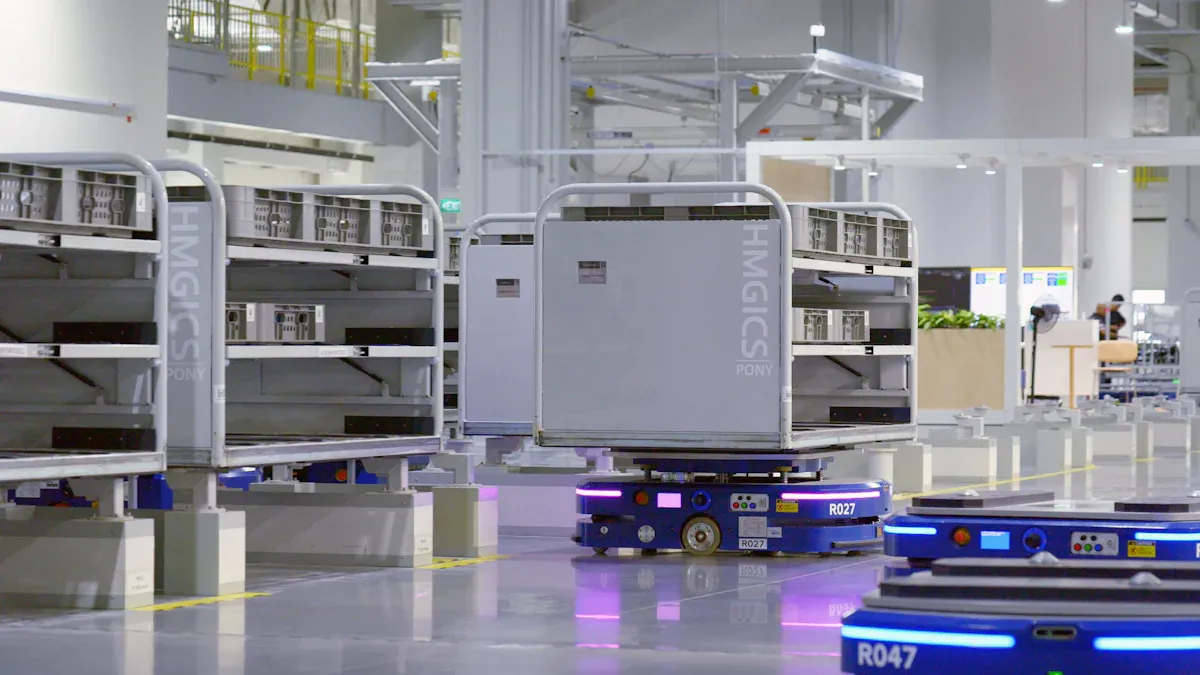
Digital systems and automation tools help speed up customs clearance. These tools make paperwork easier and keep shipments moving. Automated customs declarations use AI to check data. Machine learning helps pick the right tariff codes. This makes goods easier to process. Real-time updates tell you about new trade rules. AI finds fraud and helps you follow the rules.
Aspect | Description |
|---|---|
Customs Declaration Flow | Automation makes customs declarations easier for traders. |
Efficiency Improvement | Technology helps customs work faster. |
Cost Reduction | Automation lowers costs for companies. |
Compliance | |
Competitiveness | Faster processes help companies compete in global trade. |
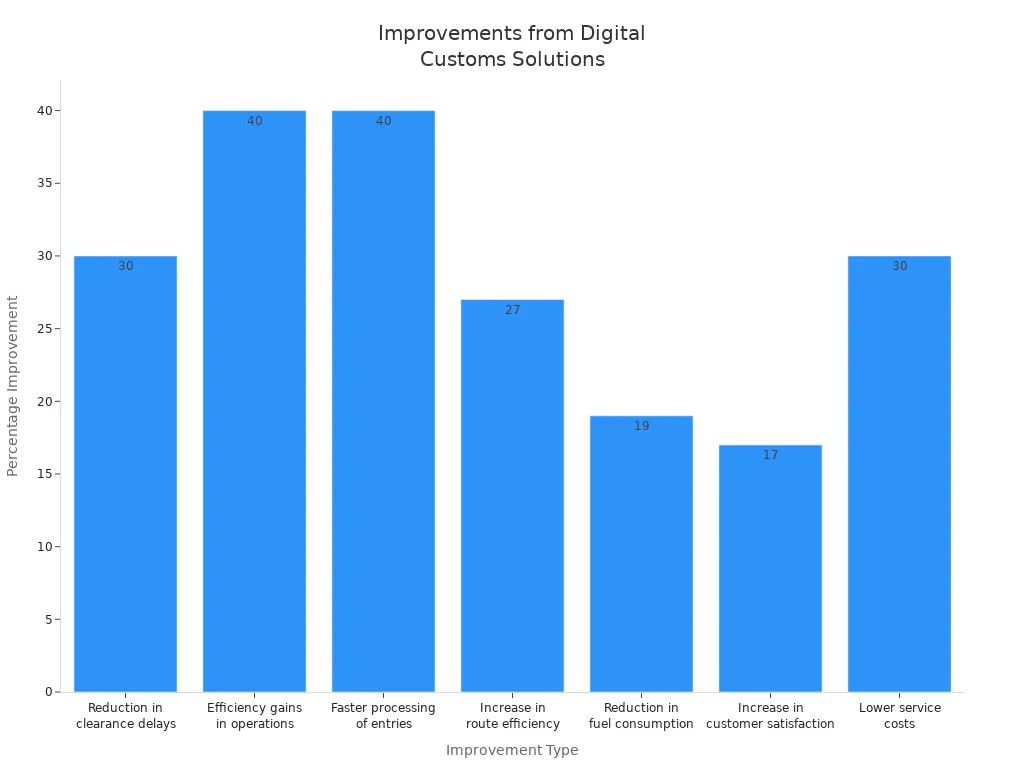
Companies using digital tools see big improvements. Automating emails cuts delays by 30%. AI reviews documents and boosts efficiency by 40%. Route optimization makes logistics better by 27%. Deep learning lowers fuel use by 19%. Customer satisfaction goes up by 17%. Service costs drop by 30%.
Real-Time Stakeholder Communication
Clear communication helps stop border delays. Share shipment records and paperwork before goods arrive. Real-time access lets you check rules quickly. Being open helps fix problems fast. Message templates and two-way talks keep everyone updated. Managing documents early stops costly delays.
Tip: Make sure you talk clearly with your logistics partners to keep shipments moving.
Record-Keeping and Audit Readiness
Good record-keeping helps you get ready for customs audits. It also keeps shipments moving. Keep invoices, packing lists, bills of lading, permits, customs bond info, and certificates of origin. Store all documents in one place for at least five years. Do practice reviews to find mistakes. Make a team to check import data, HS codes, and origin papers.
Pick one person to handle customs.
Keep a log of all talks.
Give documents quickly and in order.
Monitoring Border and Port Conditions
Watching border and port conditions helps avoid delays. AI checks licenses and permits in real time. Machine learning predicts trade volumes and helps customs plan. AI makes inspections faster and tracks processing times. Smart bots cut clearance times by 40-60%. Watching things all the time helps you spot problems and change plans.
Evidence Type | Description |
|---|---|
License and Permit Verification | AI checks import/export licenses in real time to stop delays. |
Trade Agreement Compliance | AI checks if goods get duty benefits and follow trade deals. |
Traffic Forecasting | Machine learning predicts trade volumes and helps customs plan. |
Inspection Optimization | AI balances risk and speed to make inspections better. |
Performance Monitoring | Watching processing times helps fix bottlenecks fast. |
Time Release Study Results | Smart Border Clearance Bots cut average clearance times by 40-60%. |
Using technology and good communication helps clear customs faster. These steps keep shipments moving and lower supply chain delays.
Reducing Delays: Real-World Success Stories
Electronics Import Documentation Case
You can make things better by using correct paperwork. One electronics importer had slow customs clearance and many shipment rejections. The team chose to use computers to help with paperwork. They used digital tools to check invoices, packing lists, and HS codes before sending them. This made the process faster and more dependable.
Metric | Before Automation | After Automation |
|---|---|---|
Avg. Clearance Time | 7 days | 4 days |
Rejection Rate | 18% | 5% |
Team Effort (per shipment) | 3.2 hours | 1.1 hours |
Automation cut the clearance time almost in half. The number of rejected shipments went down a lot. The team spent less time working on each shipment. This helped them handle more orders and made customers happier.
Tip: Use computers to check your documents. This will help you clear customs faster and have fewer rejections.
Navigating Regulatory Changes with Automation
New rules can be confusing and slow things down. You need to change quickly when rules change. Smart automation helps you keep up. AI tools watch for new rules and change your work steps right away. This keeps your shipments following the rules and moving forward.
Automation gives you updates to your work right away.
You can find problems and fix them before they cause delays.
Changing fast to new trade rules means fewer fines and missed chances.
Problem | Solution |
|---|---|
Missing or inconsistent data across declarations | Automated classification engines ensure correct declarations before filing |
Redundant manual checks | National Single Window platforms integrate approvals digitally |
Late document submissions | Pre-arrival electronic filing allows real-time corrections |
You can get rid of customs paperwork and make your work easier. Many companies have stopped costly border delays and made more money by offering customs help to their clients.
Outcome Description | Impact |
|---|---|
Complete removal of customs administration burden | Made work easier for your team |
Made your clients trust you more | |
Opened a new revenue stream | Let you offer customs help to customers |
Annual additional revenue of £250,000 generated | Gave your business more money |
Note: Using automation not only helps you follow rules but also makes your supply chain faster. You can react quickly to changes and help your business grow.
You can make customs delays shorter by using three main ideas. First, keep your paperwork correct and complete. Second, use computers and digital tools to help with customs. Third, work well with your team and partners. Electronic filing lets you send forms quickly. Automated checks find mistakes before they cause problems. Keeping all records in one place helps you follow the rules. Watching shipments in real time helps you fix issues fast. Getting updates every day and checking work together helps everyone talk better.
Strategy | Description | Outcome |
|---|---|---|
Use computers for customs forms | Faster clearance, lower costs | |
Documentation Accuracy | Double-check HS codes and invoices | Fewer delays, fewer errors |
Collaboration | Share news and check work as a team | Better risk management |
Begin by teaching your team, using digital tools, and checking papers before shipping. This will help your shipments move without delays.
FAQ
What documents do you need for customs clearance?
You need a commercial invoice, packing list, bill of lading, and certificate of origin. Check if your shipment needs import or export licenses. Make sure all information matches across documents. This helps your goods move through customs quickly.
How can you avoid delays at the border?
You can avoid delays by checking your paperwork, using the correct HS code, and screening for restricted goods. Teach your team about customs rules. Use digital tools to track shipments and share updates with partners.
Why do shipments get held by customs?
Shipments get held when documents are missing or incorrect. Using the wrong HS code or not following trade agreements can cause problems. Shipping restricted goods without permits also leads to delays. Always review your paperwork before sending.
Should you work with a customs broker?
You should work with a customs broker if you want expert help. Brokers know the rules and handle paperwork for you. They help you avoid mistakes and speed up the process. This makes your shipments more reliable.
How does technology help with customs clearance?
Technology helps you automate paperwork and track shipments in real time. Digital systems check for errors and update you on rule changes. You can fix problems faster and keep your supply chain moving.
See Also
Simplifying Cross-Border Freight Solutions on the West Coast
Enhancing International Operations Through Innovative Logistics Solutions
Key LCL Shipping Steps for Exporting from Panama with PGL
Effortless Cross-Border Trucking Solutions Across North America
PGL Provides Streamlined Trucking Solutions for U.S.-Canada and U.S.-Mexico
