Step-by-Step Guide to International Freight Shipping in 2025
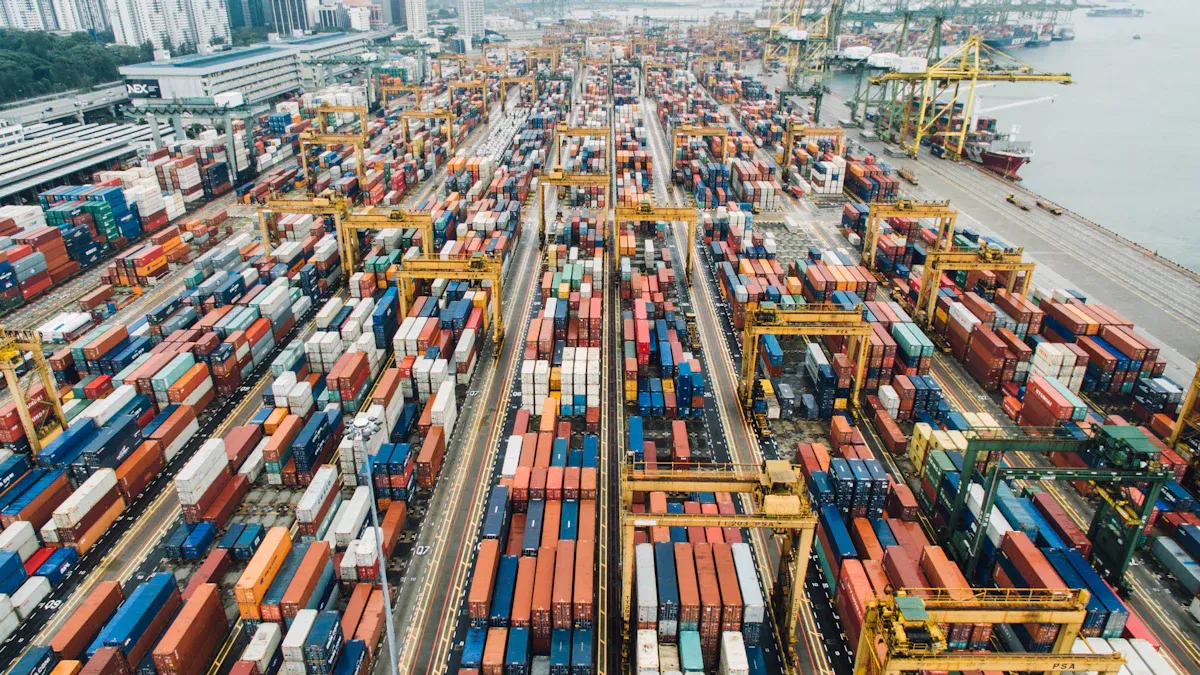
You can ship freight internationally in 2025 by following a clear process. Start by selecting the best shipping mode for your cargo. Confirm all shipment details and gather the right documents. Pay attention to cost, check for compliance, and avoid common mistakes. When you follow international freight best practices, you make shipping smoother and more reliable. Careful planning helps you stay on track and protect your goods.
Key Takeaways
Define your shipping needs by identifying cargo type, weight, and volume. Accurate details help avoid extra costs and delays.
Choose the right shipping mode based on your cargo, budget, and timeline. Air freight is faster but more expensive, while sea freight is cost-effective for larger shipments.
Review and confirm all costs in your freight quote. Understanding each component helps you avoid hidden fees and plan your budget effectively.
Stay organized with documentation. Keep all required papers up to date to prevent customs delays and ensure smooth shipping.
Use real-time tracking tools to monitor your shipment. This keeps you informed and helps you address issues quickly.
Define Shipping Needs
Before you start shipping internationally, you need to define your shipping needs. This step helps you avoid mistakes and keeps your shipment on track. You should focus on two main areas: your cargo and your shipping plan.
Identify Cargo and Volume
You must know exactly what you are shipping. Start by listing the items in your shipment. Check if your goods have special requirements, such as refrigeration or extra protection. Next, measure your cargo. You need to know both the weight and the size.
Actual Weight: This is the physical weight of your cargo. Use a scale to get an accurate number.
Dimensional Weight: This measures how much space your cargo takes up. Carriers use this to decide how much to charge if your shipment is large but light.
Volume Calculation: Measure the length, width, and height of your cargo. Multiply these numbers to find the total volume. This helps you choose the right container or pallet.
Impact on Shipping Costs: If you miscalculate weight or volume, you might pay more than expected. You could also face delays if your cargo does not fit the planned space.
Tip: Double-check your measurements before you request a quote. Accurate numbers help you avoid extra fees and shipment problems.
Set Destination and Timeline
You also need to decide where your shipment is going and when it needs to arrive. Write down the full address, including the country, city, and postal code. Make sure you know if the destination has special rules for imports.
Set a clear timeline for your shipment. Ask yourself when your goods must arrive. Some shipments need fast delivery, while others can take longer. Your timeline will help you choose the best shipping mode and plan for customs clearance.
By defining your shipping needs, you set the foundation for a smooth and cost-effective international freight process.
Choose Shipping Mode

Selecting the right shipping mode shapes your entire freight process. You need to match your cargo, budget, and timeline with the best transport option. Start by comparing air and sea freight, then look at other choices that might fit your needs.
Air vs. Sea Freight
You face two main options for international shipping: air freight and sea freight. Each has strengths and weaknesses. The table below shows how they compare in cost, speed, and environmental impact in 2025:
Aspect | Air Freight | Sea Freight |
|---|---|---|
Cost | More expensive per kg, but costs are decreasing due to fuel-efficient aircraft and better tech. | Budget-friendly, but delays can incur indirect costs. Digitization improves visibility. |
Speed | Transit time of 1 to 3 days. | Transit time of 15 to 45 days. |
Environmental Impact | Higher carbon emissions, but investments in sustainable aviation fuel are ongoing. | Emerging as the greener option with new regulations and fuel-efficient ships. |
Tip: If you ship electronics or perishable goods, air freight helps you deliver quickly. If you move large volumes or heavy items, sea freight saves you money.
Other Transport Options
Sometimes, you need more than just air or sea. You can use other transport modes to fit your shipment’s needs. The table below highlights when each mode works best:
Transportation Mode | Effectiveness Scenario | Key Characteristics |
|---|---|---|
Air Transport | High-value, time-sensitive goods like perishables and electronics. | Fast and efficient but more expensive; best for urgent shipments. |
Road Transport | Local distribution and flexible routes. | Accessible and flexible; faces traffic and emission challenges. |
Rail Transport | Large volumes over long distances, such as raw materials. | High capacity and reliable; strong networks in North America and Europe. |
Maritime Transportation | Large volumes for international trade. | Cost-effective for bulk shipping; longer transit times. |
Pipelines | Liquids and gases for energy industries. | Efficient for specific cargo; not for general freight. |
Intermodal Transportation | Combining modes for best results. | Cost-effective and efficient by using different transport methods. |
You can combine these modes for better results. For example, you might ship by sea, then use trucks for final delivery. This approach, called intermodal transportation, helps you balance cost, speed, and flexibility.
Note: Always check which modes work best for your route and cargo type. The right choice keeps your shipment safe and on schedule.
Accept Quote & Finalize Details
Review and Confirm Costs
You need to review your freight quote before you accept it. Each quote includes several key components that affect your total shipping cost. Understanding these details helps you avoid surprises and plan your budget.
Type of freight: Spot rates offer flexibility, while contract rates provide predictable costs over time.
Mode(s) of transportation: Air, sea, or land options change the speed and price of your shipment.
Cargo weight and dimensions: Larger or heavier shipments cost more because they take up more space and need extra handling.
Shipping route and complexity: Longer or more complicated routes increase costs due to extra logistics.
Tariffs, duties, and taxes: Customs charges depend on your cargo type and destination. These fees add to your total cost.
Tip: Always ask your provider for a breakdown of each cost. This helps you spot hidden fees and compare quotes from different carriers.
Check if the quote matches your shipping needs. Make sure the timeline, route, and services fit your plan. If you see unclear charges, ask for an explanation. You should confirm all details before you sign any agreement.
Finalize Shipment Arrangements
After you accept the quote, you need to finalize your shipment arrangements. This step ensures your goods move smoothly from start to finish.
Export Haulage: Arrange transport from your factory or warehouse to the port, rail terminal, or airport.
Export Customs: Prepare documents and pay any fees or tariffs for exporting your goods.
Transportation: Schedule loading and shipping by air, ocean, or land freight.
Import Customs: Plan for customs clearance at the destination. Make sure you have all required paperwork.
Import Haulage: Set up delivery from the arrival point to the final warehouse or distribution center.
Note: Good communication with your carrier or freight forwarder helps you avoid delays. Track each step and keep records of your arrangements.
You should double-check every detail before your shipment leaves. This careful approach protects your cargo and keeps your shipping process on track.
Select Carrier or Forwarder
Choosing the right carrier or freight forwarder shapes your shipping experience. You want your goods to arrive safely, on time, and at a fair price. This step helps you find a reliable partner for your international freight.
Compare Carriers
You should start by making a list of possible carriers or forwarders. Look at their services, prices, and reputation. Each company offers different strengths. Some focus on fast delivery, while others offer better rates for large shipments.
Here is a simple table to help you compare:
Carrier/Forwarder | Transit Time | Price | Service Area | Customer Reviews |
|---|---|---|---|---|
Carrier A | 5 days | $ | Global | ⭐⭐⭐⭐⭐ |
Carrier B | 10 days | $ | Europe/Asia | ⭐⭐⭐⭐ |
Carrier C | 7 days | $$ | North America | ⭐⭐⭐⭐⭐ |
Tip: Ask for references or read online reviews. Real customer stories show how a company handles problems.
You can also check if the carrier offers tracking, insurance, and customer support. These features make your shipping process easier and safer.
Check Credentials
You must check that your chosen carrier or forwarder has the right licenses and certifications. This step protects your shipment and keeps you compliant with laws.
Licenses: Make sure the company has a valid freight license for your shipping route.
Certifications: Look for industry certifications like ISO or CTPAT. These show a commitment to safety and quality.
Insurance: Confirm that the carrier has cargo insurance. This covers your goods if something goes wrong.
Note: Never skip this step. Unlicensed carriers can cause delays, fines, or even loss of cargo.
You should always ask for proof of credentials. A trustworthy carrier will share this information with you. This careful check gives you peace of mind and helps you avoid costly mistakes.
International Freight Best Practices
Following international freight best practices helps you avoid costly mistakes and keeps your shipments on track. You can improve your shipping process by focusing on three main areas: documentation, packaging, and communication.
Documentation Management
You need to keep your paperwork organized and up to date. Missing or incorrect documents can cause delays at customs or even lead to fines. Always check the latest requirements for your destination country. Make sure you have the following:
Commercial invoice
Packing list
Bill of lading or airway bill
Certificates or licenses for restricted goods
Tip: Create a checklist for your documents. Review it before every shipment to ensure nothing is missing.
Packaging Standards
Proper packaging protects your cargo and helps you meet international freight best practices. The shipping industry now focuses more on sustainability and safety. You should use packaging that is strong, secure, and eco-friendly when possible.
Choose materials that meet current safety standards for load securement.
Check if your cargo falls under any of the nine hazard classes. Each class has special packaging rules.
Stay updated on regulations, especially for items like lithium batteries, which have strict shipping rules.
Use clear labels to identify hazardous materials and follow all legal requirements.
Consumer demand and new laws are changing packaging practices. You need to verify compliance with the latest rules for every shipment.
Communication and Tracking
Good communication and tracking are key parts of international freight best practices. Real-time tracking has become a standard expectation. Most customers want to know where their shipment is at all times.
Use shipment tracking software to get updates from different carriers.
Set up automated notifications for important milestones.
Respond quickly to any issues or delays.
Studies show that 88% of shoppers expect real-time tracking. If you provide clear updates, you build trust and improve customer satisfaction.
By following these international freight best practices, you make your shipping process smoother, safer, and more reliable.
Understand Incoterms
Incoterms Overview
Incoterms, or International Commercial Terms, are rules that help you and your trading partner understand who does what during shipping. These terms set clear guidelines for dividing shipping duties, costs, and risks. When you use Incoterms, you avoid confusion and disputes. Almost 90% of global trade uses these terms to keep deals smooth and efficient.
Here is what Incoterms do for you:
Define who pays for freight, insurance, and customs duties.
Set rules for who handles shipping, insurance, and customs clearance.
Help you know your responsibilities at each step of the shipping process.
Make sure you and your partner follow the same rules, which helps with customs and legal compliance.
Impact your total shipping cost and risk.
Tip: Always choose the right Incoterm for your shipment. The right choice can save you money and prevent problems at customs.
Assigning Responsibilities
You need to know which Incoterm fits your shipment. Each term assigns tasks to either the buyer or the seller. This assignment affects who pays for what and who takes the risk if something goes wrong.
Here is a simple table to show how some common Incoterms divide responsibilities:
Incoterm | Seller Pays/Handles | Buyer Pays/Handles |
|---|---|---|
EXW | Goods ready at seller’s place | All transport, insurance, import duties |
FOB | Export customs, loading on ship | Main transport, insurance, import duties |
CIF | Export customs, main transport, insurance | Import duties, unloading, final delivery |
DDP | All costs, including import duties | Receives goods at destination |
You should always agree on the Incoterm before you sign a contract. This step helps you avoid extra costs and surprises. If you are new to shipping, ask your freight forwarder for advice. They can help you pick the best term for your needs.
Remember, the right Incoterm keeps your shipment on track and protects your business.
Prepare Documentation
Customs Paperwork
You must prepare the right customs paperwork before you ship goods across borders. Customs officials use these documents to check your shipment and make sure it follows all rules. Missing or incorrect paperwork can cause long delays or extra costs.
Here are the main documents you need for most international shipments:
Packing list
Certificates of origin
Electronic Export Information (EEI)
A commercial invoice shows the details of your transaction. It lists the buyer, seller, and value of the goods. The packing list describes what is inside each box or container. Some countries ask for a certificate of origin to prove where your goods come from. If your shipment is worth more than $2,500, you must file Electronic Export Information (EEI) with the government.
Tip: Always double-check the paperwork requirements for your destination country. This step is part of international freight best practices and helps you avoid problems at customs.
Licenses and Certificates
You may need special licenses or certificates to ship certain goods. These documents show that your shipment meets all legal and safety rules.
Common licenses and certificates include:
Commercial Invoice
Bill of Lading
Certificate of Origin
Packing List
Import Licenses
An export license is needed for goods that are controlled by your country. This is important for items that could have both civilian and military uses. You must get approval from government agencies before you ship these goods. Some countries also require an import license. This license lets your goods enter the country and helps control what comes in.
Note: Check if your goods need any extra certificates, such as health or safety documents. Following international freight best practices means you always stay up to date with the latest rules.
Arrange Insurance
Protecting your shipment with the right insurance is a smart move. You face many risks when shipping goods internationally. Insurance helps you recover losses if something goes wrong. You need to choose the best type of coverage for your cargo and shipping plan.
Insurance Types
You can pick from several insurance options. Each type covers different risks and suits different shipments. The table below shows the main choices:
Type of Insurance | Coverage Description | Recommended For |
|---|---|---|
All-Risk Insurance | Covers a broad range of incidents unless specifically excluded. | Fragile, high-value shipments, multi-modal shipping. |
Total Loss Insurance | Applies when the entire shipment is lost or destroyed. | Low-value goods, minimal risk exposure. |
Specific Peril Insurance | Covers only specific risks agreed upon in the contract. | Targeted risk scenarios, cost-effective options. |
All-risk insurance gives you the most protection. You should use it for expensive or delicate items. Total loss insurance works best for bulk shipments with low value. Specific peril insurance lets you cover only the risks you worry about most. You can save money by choosing the right coverage for your needs.
Tip: Always read the policy details. Some events, like war or natural disasters, may not be covered.
Risk Management
Managing risk keeps your shipment safe and your business strong. You can use several strategies to lower your chances of loss or delay. The table below lists smart ways to protect your freight:
Strategy | Description |
|---|---|
Invest in cybersecurity infrastructure | Use firewalls, encryption, and detection systems to protect sensitive shipping data. |
Use freight forwarders with relationships | Pick forwarders with strong ties to major carriers for better rates and reliability. |
Advanced weather forecasting tools | Use AI-powered tools to predict storms and avoid delays. |
Diversify sourcing | Get materials from different countries to avoid supply chain problems. |
Route optimization | Plan your routes with supply chain visibility tools for faster and safer delivery. |
You can combine these strategies for better results. Strong cybersecurity protects your data. Reliable forwarders help you avoid shipping problems. Weather tools and route planning keep your goods moving. Sourcing from many places makes your supply chain more flexible.
You lower your risk and save money when you plan ahead and use the right insurance.
Export Customs Clearance
Export customs clearance is a key step in international freight shipping. You need to make sure your goods meet all legal requirements before they leave your country. This process protects your shipment from delays and extra costs.
Declarations Process
You must submit accurate export declarations to customs authorities. Start by gathering all required documents, such as the commercial invoice, packing list, and export licenses. Customs officials use these papers to check your shipment’s details. You also need to provide the correct Harmonized System (HS) code for your goods. This code tells customs what you are shipping and helps them apply the right taxes and rules.
When you declare your goods, you must state the true value and describe the items clearly. Double-check your paperwork for errors. Even a small mistake can cause problems. Many shippers use a customs broker or freight forwarder to help with this process. These experts know the latest rules and can guide you through each step.
Tip: Always keep copies of your customs documents. You may need them if customs asks for more information.
Avoiding Delays
Customs delays can disrupt your shipping schedule and cost you money. The most common causes include missing documents, wrong tariff codes, unpaid duties, mislabeled packages, and non-compliance with local laws. Sometimes, delays happen because you did not respond quickly to customs questions.
You can avoid these problems by following best practices:
Learn the import and export rules for your destination.
Use the correct HS code for every item.
Declare the right value for your goods.
Check all documents for accuracy before you submit them.
Respond quickly if customs contacts you.
Work with a reliable customs broker or agent.
Customs clearance works best when you prepare ahead and pay attention to detail. Careful planning keeps your shipment moving and helps you avoid costly setbacks.
Track Shipment
Tracking your shipment is a key part of international freight shipping. You need to know where your goods are at every stage. This helps you plan, solve problems, and keep your customers happy.
Real-Time Tracking Tools
In 2025, you have access to advanced tracking tools. These platforms give you updates in real time. You can see your shipment’s location, condition, and estimated arrival. Many tools also offer alerts if something changes. Here is a table that shows some of the top tracking tools and what they offer:
Tool | Features | Benefits |
|---|---|---|
Overhaul | User-friendly interface, performance benchmarking, compliance tools | Enhances operational efficiency and safeguards assets throughout the supply chain journey. |
Fourkites | Predictive analytics, extensive visibility, integrated messaging system | Ensures timely deliveries and builds stronger relationships among stakeholders. |
Shippeo | Advanced technology, predictive analytics, detailed reporting capabilities | Optimizes logistics strategies and enhances collaboration within the supply chain ecosystem. |
Shipsy | AI-powered platform, real-time tracking, automated updates | Improves customer satisfaction and minimizes routing errors. |
Tive | IoT devices, real-time data on shipment conditions | Enables proactive risk management and enhances operational efficiency for sensitive goods. |
Tip: Choose a tracking tool that matches your shipment type and business needs. Some tools work better for sensitive goods, while others focus on speed or communication.
Managing Issues
Problems can happen during shipping. You might face delays, lost items, or wrong updates. You can manage these issues by following best practices:
Use a strong tracking system to keep your logistics efficient.
Make sure all data and documents are correct and follow the same format.
Work closely with your partners and carriers to share updates quickly.
Watch for problems before they grow. Take action early to avoid bigger issues.
Learn about common tracking challenges so you can improve your process.
Good tracking and teamwork help you solve problems fast. When you stay alert and organized, you keep your shipments moving and your customers satisfied.
Import Clearance & Delivery
Import Procedures
You must clear your goods through customs before they enter the destination country. Each country sets its own rules for import documentation. You need to check these requirements early to avoid delays or extra costs. The table below shows some common document requirements in major global markets:
Country | Import Document Requirement |
|---|---|
India | Extended Producer Responsibility (EPR) certification for electronics |
Mexico | Compliance with NOM (Official Mexican Standards) for specific goods |
South Africa | Import permits governed by ITAC for specific goods |
Angola | CNCA waiver certificate required for all shipments since 1994 |
United Kingdom | Export licenses may be required for controlled goods post-Brexit |
Hong Kong | HKTID required for certain restricted goods |
You should gather all documents before your shipment arrives. Customs officers will check your paperwork and may inspect your goods. If you miss a document or use the wrong code, your shipment could get stuck at the border. Always work with your customs broker or freight forwarder to stay updated on the latest rules.
Tip: Double-check the import requirements for your destination country. Rules can change quickly, especially for electronics, chemicals, and food products.
Last-Mile Delivery
Last-mile delivery brings your goods from the port or airport to the final address. This step is important for customer satisfaction and business success. You can use several strategies to make last-mile delivery faster and safer:
Real-time tracking and transparency keep you and your customers informed about the shipment’s location.
Customer communication provides clear updates and notifications, building trust and reducing confusion.
Driver empowerment and performance monitoring use technology to track deliveries and improve service quality.
Sustainability and green logistics help you reduce emissions by optimizing delivery routes.
Smart warehousing and micro fulfillment use data analytics and local storage to speed up deliveries.
You should choose partners who use modern technology and value clear communication. Fast and reliable last-mile delivery helps you meet customer expectations and grow your business.
You can master international freight shipping by following a clear process:
Plan your shipment and research Incoterms.
Prepare accurate documents.
Choose the best shipping mode.
Book and track your freight.
Clear customs with expert help.
Use technology like real-time tracking and data analytics to boost efficiency and transparency.
Stay updated on new rules, such as the EU’s Digital Products Passport and tighter de minimis regulations. Improve your process with methods like Six Sigma and Kaizen. When you focus on best practices, you protect your business and deliver results.
FAQ
What documents do you need for international freight shipping?
You need a commercial invoice, packing list, and bill of lading. Some shipments require extra certificates or licenses. Always check the rules for your destination country. Missing documents can cause delays.
How do you track your shipment in real time?
You can use tracking tools from your carrier or freight forwarder. These tools show your shipment’s location and status. Set up alerts for important updates. Tracking helps you solve problems quickly.
What is the difference between air and sea freight?
Air freight moves goods faster but costs more. Sea freight takes longer but saves money for large shipments. Choose air for urgent or valuable items. Pick sea for heavy or bulky cargo.
How can you avoid customs delays?
Check all paperwork for mistakes. Use the correct codes for your goods. Respond quickly if customs asks questions. Work with a customs broker for expert help.
Do you need insurance for your shipment?
Insurance protects your goods from loss or damage. You can choose different types based on your needs. Most experts recommend insurance for valuable or fragile shipments.
See Also
Enhancing Global Operations Through Innovative Logistics Solutions
Maximize Savings with Premier Global Logistics for FTL Shipping
Simplifying Cross-Border Freight on the West Coast Easily
