Top 15 USA Supply Chain Companies Transforming Domestic Logistics Operations

The U.S. supply chain industry is undergoing continuous transformation as businesses face rising customer expectations, transportation complexity, labor challenges, inventory pressure, and growing demand for real-time shipment visibility.
Supply chain companies now provide far more than basic transportation. Modern logistics providers may combine freight transportation, warehousing, distribution, fulfillment, inventory management, technology, customs coordination, and final-mile delivery into integrated supply chain solutions.
For businesses evaluating supply chain partners in the United States, comparing companies by service capabilities is often more useful than looking only at company size.
This guide examines 15 major categories of supply chain companies and logistics capabilities shaping domestic operations. The comparison focuses on the services businesses should evaluate when selecting a logistics partner.
What Is a Supply Chain Company?
A supply chain company helps businesses move, store, manage, or coordinate goods and information from suppliers to customers.
Depending on its business model, a logistics provider may specialize in:
· Freight transportation
· Warehousing
· Distribution
· Fulfillment
· Freight forwarding
· Customs coordination
· Drayage
· Transloading
· Inventory management
· Final-mile delivery
· Reverse logistics
· Supply chain technology
· Transportation management
Some providers focus on a single function, while others offer integrated services covering multiple stages.
The 15 Supply Chain Company Categories to Consider
1. Third-Party Logistics Providers
Third-party logistics providers, commonly known as 3PLs, manage logistics activities on behalf of businesses.
Typical services include:
· Warehousing
· Transportation
· Order fulfillment
· Inventory management
· Distribution
· Returns processing
A 3PL can be particularly useful for businesses that want to outsource logistics operations without building their own nationwide warehouse and transportation infrastructure.
2. Freight Forwarders
Freight forwarders coordinate the movement of goods between locations and across international borders.
Their services may include:
· Ocean freight
· Air freight
· Import coordination
· Export coordination
· Documentation
· Cargo consolidation
· Customs coordination
· Inland transportation
For businesses importing goods into the United States, freight forwarding can connect international transportation with domestic distribution.

3. Ocean Freight Specialists
Ocean freight providers focus on moving large volumes of cargo by sea.
Common services include:
· Full container load shipping
· Less-than-container load shipping
· Container coordination
· Port handling
· Documentation
· Inland transportation
Ocean freight is particularly important for businesses moving large quantities of goods between international manufacturing centers and U.S. distribution markets.
4. Drayage Providers
Drayage companies specialize in short-distance transportation of containers between ports, rail terminals, container yards, warehouses, and transloading facilities.
A typical supply chain may look like:
Port → Drayage → Transloading Facility → Warehouse → Domestic Distribution
Drayage is a critical link between international freight transportation and domestic logistics.
5. Warehousing Providers
Warehousing companies provide storage and inventory management services.
Modern warehouses may support:
· Receiving
· Put-away
· Inventory management
· Picking
· Packing
· Labeling
· Cross-docking
· Transloading
· Returns processing
Warehouse location is particularly important because transportation distance can have a significant effect on total logistics costs.
6. Fulfillment Providers
Fulfillment providers specialize in processing customer orders after inventory has entered a warehouse.
A typical process includes:
Order Received → Inventory Check → Picking → Packing → Labeling → Shipping → Delivery
Fulfillment services are particularly important for e-commerce businesses handling large numbers of small customer orders.
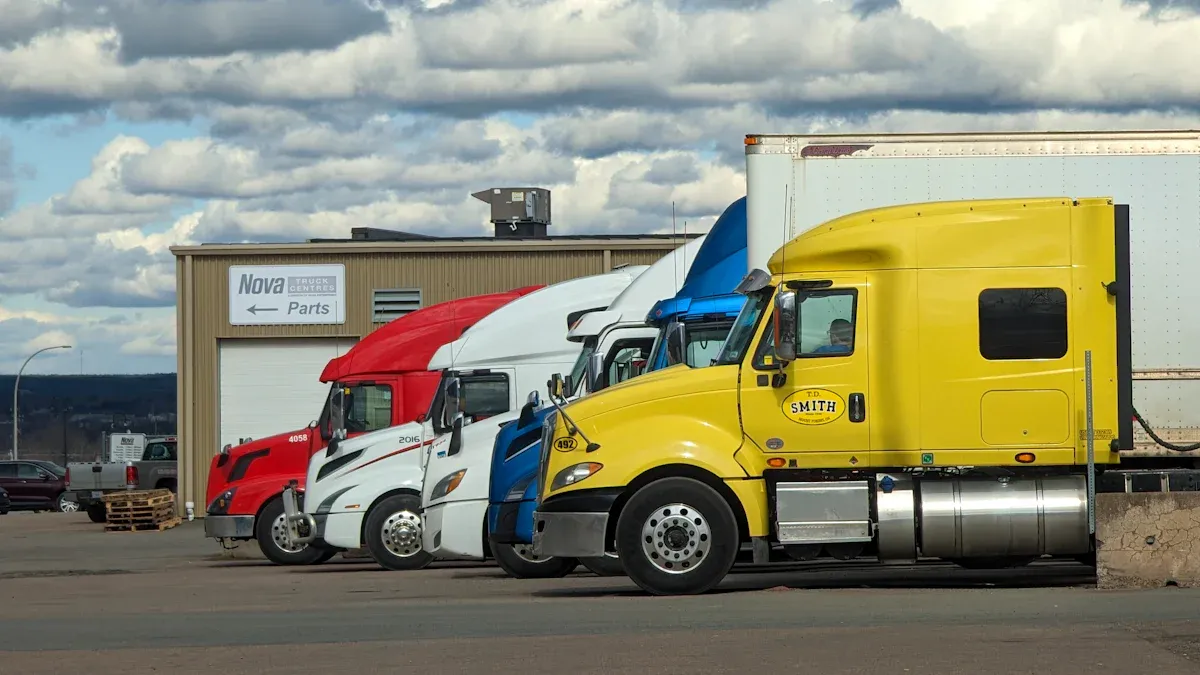
7. Domestic Trucking Providers
Truckload and less-than-truckload transportation remain central to U.S. domestic supply chains.
Truckload services are generally suitable for larger shipments requiring dedicated trailer capacity.
LTL transportation allows multiple shipments to share transportation capacity when individual shipments do not require a full truck.
8. Intermodal Logistics Providers
Intermodal logistics combines multiple transportation modes, such as rail and trucking.
A common sequence is:
Container Terminal → Rail → Truck → Distribution Center
Intermodal transportation can be useful for long-distance freight where businesses want to balance transportation cost, capacity, and transit requirements.
9. Final-Mile Delivery Providers
Final-mile providers handle the final transportation segment to the customer or receiving location.
This may involve:
· Residential delivery
· Commercial delivery
· Scheduled delivery
· Appointment-based delivery
· Large-item delivery
Final-mile performance directly affects customer satisfaction because it represents the visible end of the supply chain.
10. Distribution Specialists
Distribution companies help move products from centralized inventory locations to regional markets, stores, customers, or other facilities.
Distribution networks may use:
· Regional distribution centers
· Cross-docking
· Transportation hubs
· Consolidation
· Deconsolidation
The goal is generally to position inventory closer to demand while controlling transportation and storage costs.
11. Cold Chain Logistics Providers
Cold chain providers specialize in temperature-sensitive products.
These supply chains require careful management of:
· Temperature
· Storage conditions
· Transportation conditions
· Handling time
· Monitoring
· Documentation
The cost of failure can be particularly high when temperature-sensitive products are damaged or become unusable.
12. Reverse Logistics Providers
Reverse logistics companies manage goods moving backward through the supply chain.
A reverse logistics process may include:
Customer Return → Transportation → Receiving → Inspection → Restocking or Disposal
Returns management is increasingly important for businesses with high e-commerce sales.
13. Supply Chain Technology Providers
Technology companies support logistics operations through software and digital platforms.
Common solutions include:
· Transportation management systems
· Warehouse management systems
· Inventory platforms
· Shipment tracking
· Route optimization
· Analytics
· Electronic documentation
Technology can improve visibility across transportation and warehouse operations.
14. Customs and Trade Logistics Specialists
International businesses may require specialized support for import and export operations.
Relevant activities include:
· Customs documentation
· Tariff classification
· Import compliance
· Export documentation
· Duty and tax coordination
· Regulatory requirements
Although customs is only one part of the supply chain, errors at this stage can delay downstream transportation and inventory availability.
15. Integrated Supply Chain Providers
Integrated logistics providers combine several supply chain functions under one coordinated operating model.
Services may include:
· International freight
· Customs coordination
· Drayage
· Warehousing
· Transloading
· Domestic transportation
· Fulfillment
· Final-mile delivery
This model can simplify logistics management when a business has complex transportation requirements.
How to Compare Supply Chain Companies
Businesses should not select a logistics partner based solely on company size.
Instead, evaluate several operational factors.
Geographic Coverage
Determine whether the provider can support the regions where inventory is sourced, stored, distributed, and delivered.
Transportation Capabilities
Consider whether the provider supports the required transportation modes.
Warehouse Network
Evaluate warehouse locations, storage capacity, receiving capabilities, and fulfillment operations.
Technology
Look for shipment visibility, inventory management, electronic documentation, and reporting capabilities.
Scalability
A logistics partner should be able to support changes in shipment volume without creating major operational disruptions.
Customs and International Capabilities
For imported products, international logistics expertise can be particularly important.
Customer Service
Clear communication becomes critical when shipments encounter delays, exceptions, or capacity problems.
The Role of Technology in U.S. Supply Chains
Technology is transforming logistics operations through better visibility and automation.
Modern supply chain systems can provide:
· Real-time shipment tracking
· Automated inventory updates
· Digital proof of delivery
· Warehouse scanning
· Transportation planning
· Exception alerts
· Performance dashboards
Better data allows logistics managers to identify problems earlier rather than discovering them after a customer complains.
How Supply Chain Companies Improve Domestic Logistics
A capable logistics provider can improve domestic operations by coordinating multiple activities.
For example:
Imported Container → Port → Drayage → Transloading → Warehouse → Inventory → Order Fulfillment → Domestic Transportation → Final Delivery
Without coordination, each stage may be managed separately.
With an integrated approach, transportation schedules, warehouse capacity, inventory levels, and delivery requirements can be planned together.
Questions to Ask Before Choosing a Logistics Provider
Businesses should consider:
1. What transportation modes are supported?
2. Where are the warehouse facilities located?
3. Can the provider handle imported cargo?
4. Is customs coordination available?
5. Can the provider manage container drayage?
6. Is transloading available?
7. Can inventory be managed digitally?
8. What shipment tracking capabilities are available?
9. Can the provider handle peak-season volume?
10. How are delivery exceptions managed?
These questions help companies compare operational capabilities instead of relying on marketing claims.
Frequently Asked Questions
What are the largest types of supply chain companies in the USA?
Major categories include 3PLs, freight forwarders, trucking providers, warehouse operators, fulfillment providers, distribution companies, drayage providers, intermodal logistics providers, and integrated supply chain providers.
What does a 3PL do?
A 3PL manages outsourced logistics functions such as transportation, warehousing, inventory management, fulfillment, and distribution.
Why is drayage important?
Drayage connects ports and other transportation terminals with warehouses and domestic distribution networks.
What should businesses look for in a supply chain partner?
Important factors include geographic coverage, transportation capabilities, warehouse capacity, technology, scalability, international expertise, and service reliability.
Can one logistics provider manage an entire supply chain?
Some providers offer integrated services covering international freight, customs coordination, drayage, warehousing, domestic transportation, fulfillment, and final delivery. The appropriate model depends on the business’s logistics requirements.
Final Takeaway
The U.S. supply chain industry includes many different types of logistics companies, each serving a specific role in moving and managing goods.
The 15 categories discussed above range from freight forwarding and ocean transportation to warehousing, fulfillment, drayage, final-mile delivery, and supply chain technology.
For businesses choosing a logistics partner, the most important question is not simply which company is largest. The better question is whether its capabilities match the actual requirements of the supply chain.
A logistics provider that can coordinate transportation, warehousing, inventory, fulfillment, and delivery may offer significant operational advantages when supply chains become increasingly complex.
See Also
PGL Transforms West Coast Trucking For Efficient Supply Chains
The Role of Point-to-Point Logistics In Global Efficiency
Prepare for Holiday Demand With PGL’s Logistics Services
Key Strategies For Effective Management of Global Logistics
Innovative Logistics Strategies Enhance Efficiency in International Operations

