50 Expert Tips for Warehouse Logistics Best Practices in 2025
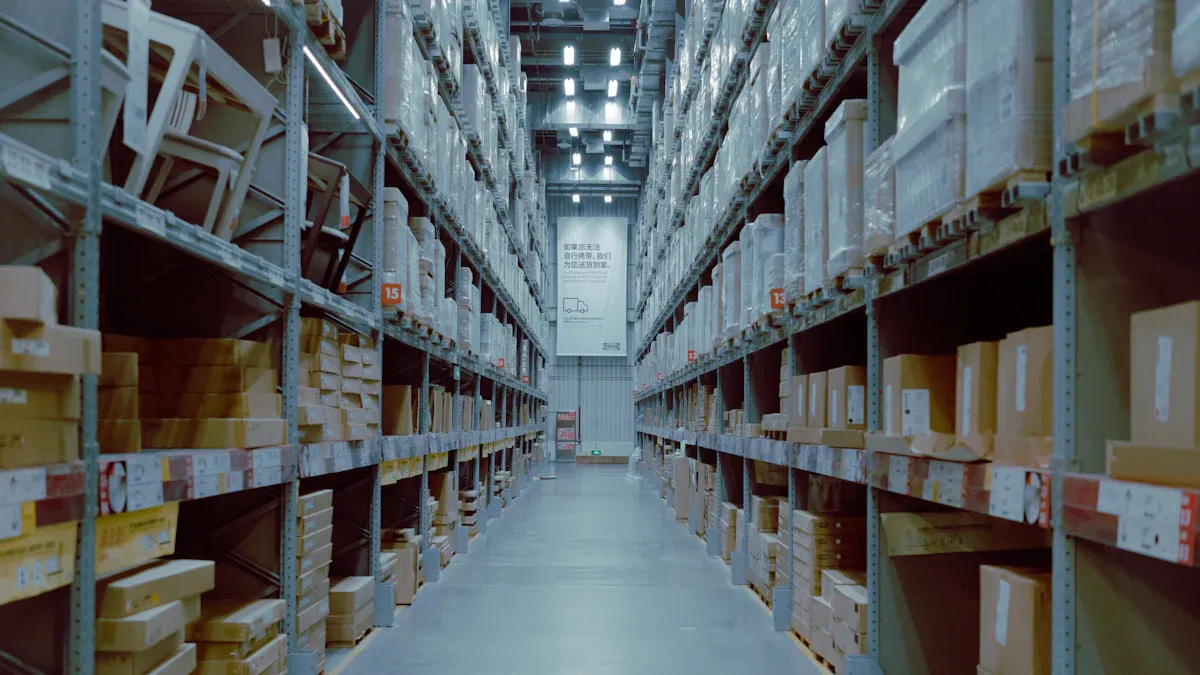
You want to keep your warehouse running smoothly. Actionable tips help you boost efficiency, safety, and organization. In 2025, same-day or next-day order fulfillment sets the standard. High inventory turnover means lower costs and higher profits. Warehouses use vertical racking to make the most of rising space premiums. AI helps you deploy workers better than ever. The global warehousing industry grows every year, and more warehouses open across the world. Use warehouse logistics best practices to meet new demands and stay ahead.
Key Takeaways
Implement lean operations to reduce waste and improve efficiency. Focus on strategies like AI-powered demand forecasting and automated storage systems to save time and costs.
Adopt the 5S principles to organize your warehouse. This method enhances safety, boosts employee morale, and increases productivity by keeping the workspace clean and efficient.
Embrace continuous improvement through methods like Kaizen and Six Sigma. Regularly train your team and celebrate small wins to foster a culture of progress and engagement.
Optimize your warehouse layout to enhance workflow. Regularly assess your space to eliminate bottlenecks and ensure fast-moving items are easily accessible.
Utilize technology like Warehouse Management Systems (WMS) and RFID tracking to improve inventory accuracy and streamline operations. Real-time data helps you make informed decisions.
Warehouse Logistics Best Practices
Staying current with warehouse logistics best practices helps you keep your operations efficient and competitive. In 2025, you face new challenges like higher order volumes, tighter delivery windows, and rising costs. You need to adopt proven strategies that improve productivity, safety, and organization. By focusing on lean operations, 5S principles, and continuous improvement, you can create a warehouse that adapts quickly and runs smoothly.
Lean Operations
Lean operations help you remove waste and boost value in every process. You focus on what matters most—delivering products quickly and accurately. Lean strategies make your warehouse more flexible and cost-effective. Here are some of the most impactful lean operations strategies for 2025:
Strategy | Impact/Benefit |
|---|---|
AI-Powered Demand Forecasting | Reduces errors by up to 50% |
Automated Storage and Retrieval Systems | Saves 85% of floor space, boosts picking accuracy to 99.9% |
Vertical Storage Solutions | Maximizes warehouse capacity |
Smart Warehouse Management Software | Streamlines operations with real-time tracking |
Lean Inventory Management | Cuts costs by reducing excess stock and waste |
Cycle Counting | Improves inventory accuracy to over 95% |
Cross-Docking | Speeds up delivery by eliminating long-term storage |
Green Warehouse Operations | Reduces emissions and energy costs |
AR Training for Staff | Reduces training time and errors |
Vendor-Managed Inventory (VMI) | Improves efficiency by letting suppliers handle inventory |
You can also use these lean tools and methods:
Waste reduction
Employee involvement
5S methodology (Sort, Set in order, Shine, Standardize, Sustain)
Kanban
Value Stream Mapping
Kaizen events
Lean operations save you money and time. For example, lean warehousing can cut your costs by 20–50%. You may also see up to 40% savings in transportation costs. Better inventory management reduces holding costs and keeps your warehouse organized. When you engage your team in problem-solving, you create a more responsive and productive environment.
Lean practices encourage everyone to look for ways to improve. You can minimize waste, reduce the need for large storage spaces, and improve efficiency through better layout planning and inventory management.
5S Principles
The 5S principles help you organize your warehouse for maximum efficiency and safety. These five steps—Sort, Set in order, Shine, Standardize, and Sustain—make it easy for your team to find what they need and keep the workspace clean.
Enhanced efficiency through better organization of materials and tools
Reduced costs by eliminating clutter and optimizing space usage
Improved safety by reducing trip hazards and maintaining cleanliness
Heightened employee morale due to a cleaner and more organized workplace
Implementing 5S principles means you spend less time searching for items and more time getting work done. You also free up valuable space and reduce the risk of accidents. A clean, organized warehouse boosts morale and helps your team take pride in their work.
Benefit | Improvement Percentage |
|---|---|
Up to 30% | |
Improvement in supply chain management | 50% |
Increase in productivity | 15% |
The 5S methodology is essential for modern warehouse management. It creates a safe, organized, and efficient workspace, especially when your team interacts with tools, materials, or machines every day.
Continuous Improvement
Continuous improvement means you always look for ways to make your warehouse better. You can use methods like Kaizen, Lean, and Six Sigma to drive progress.
Methodology | Description | Benefits |
|---|---|---|
Kaizen | Focuses on small, ongoing changes. | |
Lean | Minimizes waste while maximizing value. | Streamlines processes and reduces lead times. |
Six Sigma | Reduces process variation and improves quality. | Increases order accuracy and consistency. |
You can guarantee quality, reduce logistics costs, and move products efficiently by optimizing picking routes. Here are some steps you can take:
Invest in training and development for your team.
Celebrate small wins to keep everyone motivated.
Use key performance indicators (KPIs) to track progress.
Embrace a problem-solving mindset.
Leverage technology and automation.
A warehouse that improved its safety protocols with Kaizen strategies saw a 30% reduction in workplace accidents.
Automation can also raise your inventory accuracy to 99% or higher, which lowers the chance of costly errors. When you focus on continuous improvement, you boost efficiency, improve inventory accuracy, and engage your employees in making the warehouse better every day.
By adopting warehouse logistics best practices like lean operations, 5S principles, and continuous improvement, you set your warehouse up for success in 2025 and beyond.
Layout & Organization
Optimize Layout
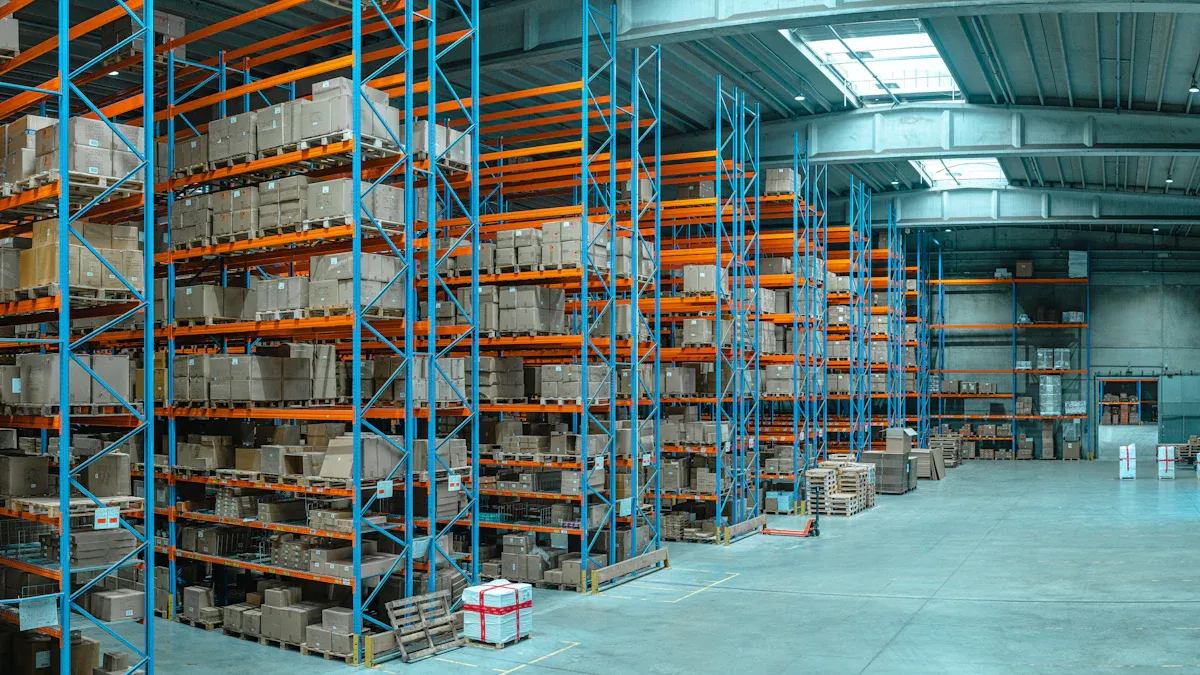
You can boost your warehouse’s throughput by optimizing the layout. Start by assessing your current operations to spot bottlenecks. Plan your space so each job has a dedicated area. Create a flow that moves products smoothly from storage to shipping. Place fast-moving items near packing stations to cut down on travel time. Regularly review your layout to find new ways to save labor costs.
Technique | Description |
|---|---|
Optimizing warehouse layout | Enhances the flow of goods, reducing time spent moving items. |
Implementing lean inventory practices | Minimizes waste and improves efficiency in inventory management. |
Adopting advanced picking methods | Increases speed and accuracy in order fulfillment. |
Standardizing processes | Reduces variability and improves predictability in operations. |
Integrating technology | Streamlines operations and enhances data visibility. |
Utilizing warehouse management systems (WMS) | Improves overall management and tracking of inventory and orders. |
Zone Storage
Zone storage helps you organize products by grouping similar items together. Assign staff to specific zones to reduce travel distance. This method increases picking speed and accuracy. Workers can specialize in their zones, which boosts productivity and reduces congestion. You also make inventory tracking easier and more precise.
Zone picking assigns staff to specific areas, reducing travel time.
It allows multiple pickers to work on one order at the same time.
You can optimize picking methods based on product type in each zone.
Maximize Vertical Space
You can maximize storage by using vertical space. Install pallet racking systems with the right load capacity. Add mezzanines in high-ceiling areas to increase storage. Label clearance spaces to keep your warehouse safe and compliant. Use a warehouse management system to track inventory and optimize space. Store high-demand items closer to packing areas to save time.
Avoid permanent aisles to keep traffic flowing.
Use fall protection for workers on elevated platforms.
Organize inventory by storage type for better efficiency.
Clear Signage
Clear signage keeps your warehouse organized and reduces errors. Directional signs show where aisles, docks, and storage zones are located. Informational signs help with inventory management and order fulfillment. Place signs at picking locations to give product details and prevent mistakes. Make sure all signage is accurate and easy to see.
Digital signage gives your team a clear visual guide, which leads to fewer errors and a smoother workflow.
Separate Picking Areas
Separate picking areas help you avoid congestion and speed up order fulfillment. Designate specific zones for picking, packing, and shipping. This setup keeps workflows organized and reduces the risk of mistakes. You can also improve safety by keeping busy areas clear.
By following these layout and organization tips, you put warehouse logistics best practices into action and create a safer, more efficient workspace.
Inventory Management
SKU Velocity Review
You should review SKU velocity to improve inventory turnover. This process helps you identify which products move quickly and which do not. By removing slow-moving items, you free up space and resources for top performers. Regular review cycles keep your inventory aligned with market demand.
Key Point | Explanation |
|---|---|
SKU Rationalization | Eliminate underperforming products that take up resources. |
Resource Reallocation | Redirect resources to better-performing products. |
Regular Review Cycles | Prevent SKU proliferation and match inventory to market needs. |
Bins and Totes
Bins and totes help you organize inventory and maximize storage. You can choose from many shapes and sizes to fit your needs. Totes with dividers protect items from damage. Using bins and totes also reduces workplace accidents by keeping aisles clear.
Advantage | Description |
|---|---|
Maximized Storage | Add more items to each shelf or rack. |
Improved Organization | Use different bins for different applications. |
Enhanced Protection | Dividers and covers keep inventory safe. |
Picking becomes faster and more accurate. | |
Reduced Workplace Accidents | Proper storage lowers the risk of trips and falls. |
Inventory Management System
A strong inventory management system gives you real-time visibility into stock levels. You can track inventory as it moves through your warehouse. Modern systems offer centralized control, automated replenishment, and data-driven insights.
Feature | Description |
|---|---|
Centralized inventory control | Manage stock across all locations from one platform. |
Automated replenishment | Predict when to reorder based on trends. |
Data-driven insights | Use analytics to improve turnover and optimize storage. |
Accurate inventory tracking helps you avoid stockouts and overstock situations.
ABC Analysis
ABC analysis sorts your inventory into three groups based on sales and importance. You focus most on Class A items, which move the fastest. This method helps you optimize inventory control and improve efficiency.
Increased inventory optimization for high-demand products.
Better forecasting with improved data collection.
Enhanced resource allocation for top-priority items.
Cycle Counts
You should count high-value or fast-moving products every month. Count other items each quarter. Spread counts throughout the year and keep them small enough to finish in one day. This schedule keeps your inventory accurate and reduces errors.
FIFO/LIFO
FIFO (First-In, First-Out) works best for perishable goods and gives you accurate inventory values. LIFO (Last-In, First-Out) can lower your taxes during inflation but may not match the physical flow of goods.
Method | Benefits | Drawbacks |
|---|---|---|
FIFO | Accurate values, ideal for perishables, matches natural flow | Higher taxes during inflation |
LIFO | Tax advantages during inflation, higher cost of goods sold | May not match physical flow, not for perishables |
By following these inventory management tips, you support warehouse logistics best practices and keep your operations running smoothly.
Picking & Packing
Batch Picking
Batch picking lets you collect items for several orders in one trip. You save time by avoiding repeated walks through the same aisles. Your team moves faster and spends less time doubling back. You also reduce congestion in busy areas. See how batch picking improves efficiency:
Evidence Description | Benefit of Batch Picking |
|---|---|
Gather items for several orders simultaneously | Increases efficiency by minimizing trips |
Enhances productivity and efficiency | |
Reduces bottlenecks and improves order processing speed |
Pick and Pass
Pick and pass divides the picking process into zones. You assign each worker to a specific area. Workers pick items for an order in their zone and then pass the order to the next zone. This method speeds up picking and reduces errors. You keep workers focused and cut down on walking time. Orders move smoothly from one area to another.
Pick and pass helps you streamline workflows and boost accuracy.
Pick-to-Light
Pick-to-light technology uses lights and displays to guide workers to the correct items. You see visual cues that show you what to pick and where to go. This system increases picking accuracy and speeds up order fulfillment. You also track inventory in real time.
Benefit | Description |
|---|---|
Improved Picking Accuracy | Visual cues guide you to the correct items, reducing errors. |
Optimized workflows and clear indicators allow for quicker order completion. | |
Order Fulfillment Speed | Streamlined processes enable faster order fulfillment and improved satisfaction. |
Real-time Inventory Management | Accurate tracking of item movements helps manage inventory effectively. |
Packing Stations
Efficient packing stations help you complete orders quickly and safely. You need a sturdy workbench and organized storage for packing materials. Quick access to supplies and ergonomic tools make packing easier. Barcode or RFID scanners help you verify orders. Gravity flow tracks reduce physical strain. You should place packing stations in strategic locations for smooth workflow.
Spacious workbench for comfort
Organized storage for materials
Quick access to packing supplies
Barcode or RFID scanners for accuracy
Ergonomic tools and gravity flow tracks
Packing Material Reduction
You can lower costs and help the environment by reducing packing material waste. Reuse sturdy boxes and pallets when possible. Train your team to use the right amount of packaging. Choose eco-friendly fillers like air packs or biodegradable peanuts. Assess your shipments and eliminate unnecessary layers.
Strategy | Description |
|---|---|
Reuse Packaging Materials | Use boxes and pallets multiple times before recycling. |
Optimize Packaging Design | Train staff to avoid repackaging waste. |
Use Appropriate Fillers | Select eco-friendly materials for packing. |
You make your warehouse more sustainable and efficient by cutting down on packing waste.
Technology & Automation
Warehouse Management System (WMS)
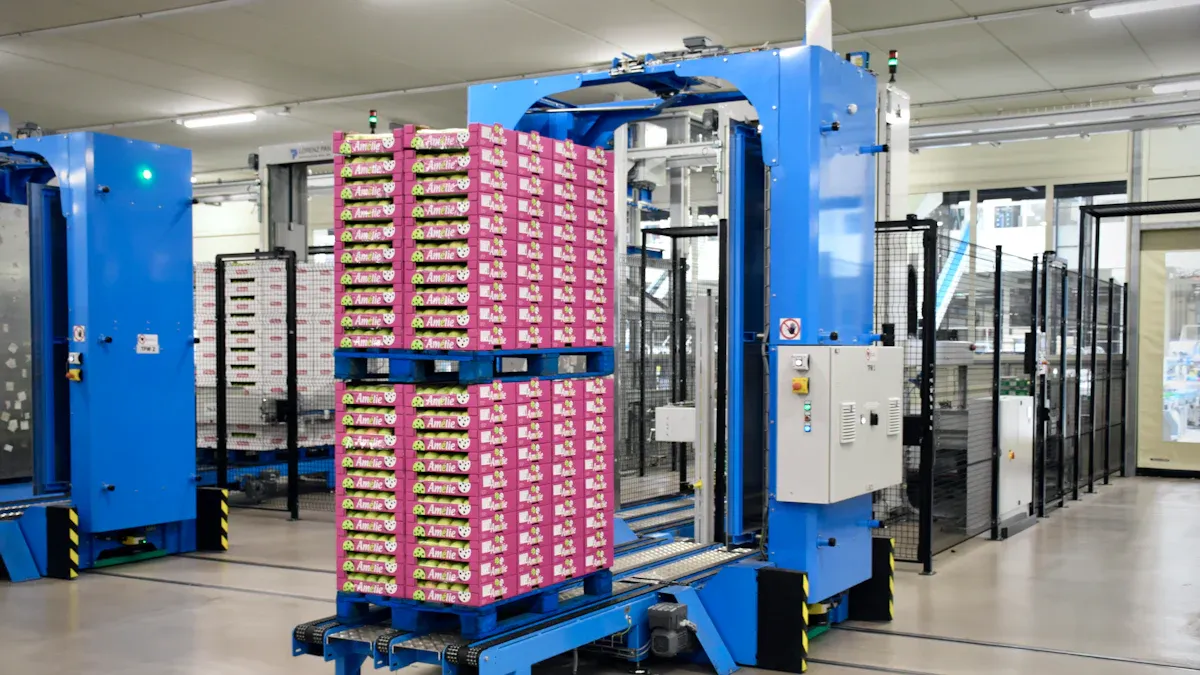
You can transform your warehouse with a modern WMS. New systems in 2025 use AI to analyze real-time data and optimize inventory. You get faster decision-making with 5G and edge computing. Cloud-based solutions make your WMS easy to scale and access. Augmented reality helps workers find items quickly. Blockchain adds security and transparency. Many WMS platforms now offer low-code tools, so you can customize workflows without coding.
Advancement | Description |
|---|---|
AI-Powered Optimization | AI analyzes data to improve efficiency and inventory accuracy. |
Autonomous Robotics Integration | Robots automate tasks and reduce errors. |
5G and Edge Computing | Enables real-time communication and faster decisions. |
Cloud-Based Solutions | Scalable and accessible from anywhere. |
Blockchain | Secures records and increases transparency. |
Advanced IoT Sensors | Tracks inventory movement in real time. |
Augmented Reality | Guides workers with real-time instructions. |
Sustainability Innovations | Reduces energy use and waste. |
Integration with TMS | Connects warehouse and transportation systems. |
Low-Code/No-Code Platforms | Lets you tailor workflows easily. |
RFID & Barcode
RFID and barcode systems help you track inventory with high accuracy. RFID tags give each item a unique identity. You can scan items automatically, which reduces human error. Many companies have seen inventory accuracy jump from about 67% to nearly 100% after using RFID. You spend less time on audits and avoid costly mistakes. These tools help you keep the right stock levels and improve customer satisfaction.
RFID automates data capture and reduces manual errors.
Unique tags ensure accurate tracking and fewer discrepancies.
Higher accuracy means fewer audits and lower costs.
Companies like Levi’s Brazil and Siman Group improved inventory accuracy to over 95% with RFID.
Robotics & Automation
Robots now play a big role in large warehouses. About half of facilities over one million square feet use autonomous mobile robots (AMRs). E-commerce and automotive sectors lead in adopting these technologies. However, many companies still have not deployed AGVs or AMRs. Robots help you automate picking, packing, and moving goods. You boost productivity and reduce errors.
Facility Size (sq ft) | Adoption of AMRs (%) |
|---|---|
> 1,000,000 | 50 |
Sector | Adoption Rate (%) |
|---|---|
E-commerce | 39 |
Automotive | 38 |
IoT Integration
IoT devices give you real-time control over your warehouse. Sensors track assets and monitor conditions. You can spot bottlenecks and optimize resources. IoT helps you prevent inventory shrinkage and improve safety. You also automate tasks like picking and sorting, which increases productivity and reduces manual labor.
Tracks product movement in real time
Prevents stockouts and overstock
Monitors environmental conditions for safety
Automates repetitive tasks
Data Analytics
Data analytics tools help you make smart decisions. WMS platforms provide dashboards to track performance. Supply chain planning tools improve demand forecasting and inventory analysis. AI finds patterns and predicts trends. Sensors collect real-time data, so you can monitor assets and conditions. You use these insights to optimize workflows and boost efficiency.
Tool Type | Description |
|---|---|
Warehouse Management System (WMS) | Tracks goods and provides analytics dashboards. |
Supply Chain Planning Tools | Improves forecasting and inventory management. |
Artificial Intelligence (AI) | Analyzes data for trends and optimization. |
Sensors | Collects real-time data for asset tracking and monitoring. |
When you use technology and automation, you make your warehouse smarter, safer, and more efficient.
Safety & Training
Safety Audits
You should run regular safety audits to spot hazards before accidents happen. Walk through your warehouse and check for blocked aisles, damaged racks, and poor lighting. Use a checklist to make sure you do not miss anything. Record your findings and fix problems right away. Safety audits help you keep your team safe and your warehouse running smoothly.
Tip: Schedule monthly audits and involve your staff in the process. This builds a culture of safety.
Staff Training
You need to train your team on warehouse safety and best practices. Teach workers how to lift heavy items, use equipment, and follow emergency procedures. Hold short training sessions every month. Use videos, hands-on practice, and quizzes to make learning easy. Well-trained staff make fewer mistakes and work more efficiently.
Teach safe lifting techniques
Show how to use forklifts and pallet jacks
Practice emergency drills
PPE Enforcement
Personal protective equipment (PPE) keeps your team safe from injuries. You must enforce PPE rules every day. Make sure workers wear hard hats, gloves, safety shoes, and high-visibility vests. Check that PPE fits well and is in good condition. Remind your team why PPE matters and reward those who follow the rules.
PPE Item | Purpose |
|---|---|
Hard Hat | Protects head |
Safety Shoes | Shields feet |
Gloves | Guards hands |
High-Vis Vest | Improves visibility |
Emergency Exits
You need clear and accessible emergency exits in your warehouse. Mark all exits with bright signs. Keep pathways free from boxes and equipment. Practice evacuation drills so everyone knows where to go. Check exit doors often to make sure they open easily.
Note: Fast and safe exits save lives during emergencies.
Ergonomics
Ergonomics helps your team avoid injuries and stay comfortable. Set up workstations at the right height. Use anti-fatigue mats for standing jobs. Provide adjustable chairs for packing stations. Teach workers to stretch and take breaks. Good ergonomics boost morale and reduce sick days.
Adjust workstations for comfort
Use mats and chairs to prevent fatigue
Encourage stretching and regular breaks
Productivity & Efficiency
Performance Metrics
You need to track performance metrics to measure your warehouse’s success. Metrics like order accuracy, picking speed, and inventory turnover show you where to improve. Use dashboards to view real-time data. Set clear goals for your team. Review results every week. When you monitor these numbers, you spot problems early.
Metric | What It Measures | Why It Matters |
|---|---|---|
Order Accuracy | Correct shipments | Fewer returns |
Picking Speed | Items picked per hour | Faster fulfillment |
Inventory Turnover | Stock sold vs. held | Lower holding costs |
Dock-to-Stock Time | Receiving efficiency | Quicker availability |
Tip: Share performance results with your team. Celebrate improvements to keep everyone motivated.
Bottleneck Reduction
You can boost productivity by finding and fixing bottlenecks. Walk through your warehouse and watch for slowdowns. Use time studies to see where delays happen. Rearrange workstations to improve flow. Add automation in areas with frequent backups. Test changes and measure results. When you remove bottlenecks, you speed up every process.
Identify slow zones with time studies
Rearrange workstations for better flow
Add automation to repetitive tasks
Test and measure improvements
Team Communication
Strong communication keeps your team working together. Hold daily huddles to share updates. Use radios or messaging apps for quick questions. Post schedules and goals where everyone can see them. Encourage feedback from staff. When you listen to your team, you solve problems faster.
Note: Open communication helps you prevent mistakes and build trust.
Preventive Maintenance
Preventive maintenance keeps your equipment running smoothly. Create a schedule for checking forklifts, conveyors, and racks. Train staff to spot wear and tear. Replace parts before they break. Record all maintenance tasks in a log. When you maintain equipment, you avoid costly downtime.
Equipment | Check Frequency | Common Tasks |
|---|---|---|
Forklifts | Weekly | Inspect tires, fluids |
Conveyors | Monthly | Lubricate, tighten |
Racking | Quarterly | Check for damage |
Regular maintenance protects your investment and keeps your warehouse safe.
Shipping & Receiving
Vendor Compliance
You need strong vendor compliance to keep your warehouse running smoothly. Set clear rules for your suppliers. Share your requirements for packaging, labeling, and delivery times. Use a checklist to review each shipment. Give feedback to vendors when they miss the mark. Good vendor compliance helps you avoid delays and mistakes.
Vendor Compliance Checklist | Why It Matters |
|---|---|
Correct labeling | Prevents misplacement |
On-time delivery | Keeps schedules on track |
Proper packaging | Reduces damage |
Accurate documentation | Speeds up receiving |
Tip: Reward vendors who meet your standards. This builds strong partnerships.
Streamlined Receiving
You can speed up receiving by preparing in advance. Assign staff to check incoming shipments as soon as they arrive. Use handheld scanners to log items quickly. Sort products by type or destination. Remove empty pallets and packaging right away. A fast receiving process keeps your warehouse organized and ready for new stock.
Prepare receiving areas before trucks arrive
Use technology to scan and record items
Clear out waste materials quickly
Dock Scheduling
Dock scheduling helps you avoid traffic jams at your loading docks. Set up a calendar for deliveries and pickups. Assign time slots to each truck. Share the schedule with your team and your vendors. This system reduces wait times and keeps your operations moving.
Benefit | Result |
|---|---|
Fewer delays | Faster turnaround |
Less congestion | Safer work environment |
Better planning | Smoother workflows |
Real-Time Tracking
You can track shipments in real time with modern tools. Use RFID tags or barcodes to follow products from arrival to departure. Real-time tracking shows you where each item is at any moment. This helps you spot problems early and fix them fast.
Real-time data gives you control over your inventory and shipments.
Outbound Accuracy
You must check every order before it leaves your warehouse. Scan each item and compare it to the order list. Use checklists to make sure nothing gets missed. Outbound accuracy keeps your customers happy and reduces costly returns.
Scan and verify all outgoing items
Double-check orders before shipping
Keep records of each shipment
By following these shipping and receiving tips, you keep your warehouse efficient and your customers satisfied.
You keep your warehouse competitive when you update logistics best practices regularly. Modern strategies and technology help you improve efficiency and meet customer needs. You lower costs with better inventory control and organization. Advanced systems like WMS boost accuracy and productivity. Continuous improvement and staff training create a safer workplace.
Improved efficiency comes from regular updates.
Cost reduction follows effective inventory control.
Customer satisfaction grows with better organization.
Share your own tips or experiences below. Your ideas help everyone learn and improve.
FAQ
What is the most important warehouse technology for 2025?
You should focus on a modern Warehouse Management System (WMS). This system uses AI and real-time data. It helps you track inventory, improve accuracy, and boost efficiency.
How often should you review warehouse layouts?
You should review your layout every six months. This helps you spot bottlenecks and adjust for new products or higher order volumes. Regular reviews keep your warehouse efficient.
Why does 5S matter in warehouse logistics?
5S keeps your warehouse clean and organized. You find items faster and reduce accidents. Your team works better in a tidy space.
Tip: Use 5S checklists to keep everyone on track.
How can you improve warehouse safety?
You can run monthly safety audits and train your staff often. Make sure everyone uses PPE. Mark emergency exits clearly. Good safety practices protect your team and reduce downtime.
See Also
Key Strategies for Effective Global Logistics Operations
Choosing the Right Warehousing and Fulfillment Solutions in the U.S.
Prepare for Holiday Demand with PGL’s Logistics Services
Enhancing Global Operations Through Innovative Logistics Strategies
Streamlined Inventory Management and Distribution with Premier Logistics
