Industrial Warehouse and Distribution: Designing Facilities Optimized for High-Volume Order Fulfillment
Introduction
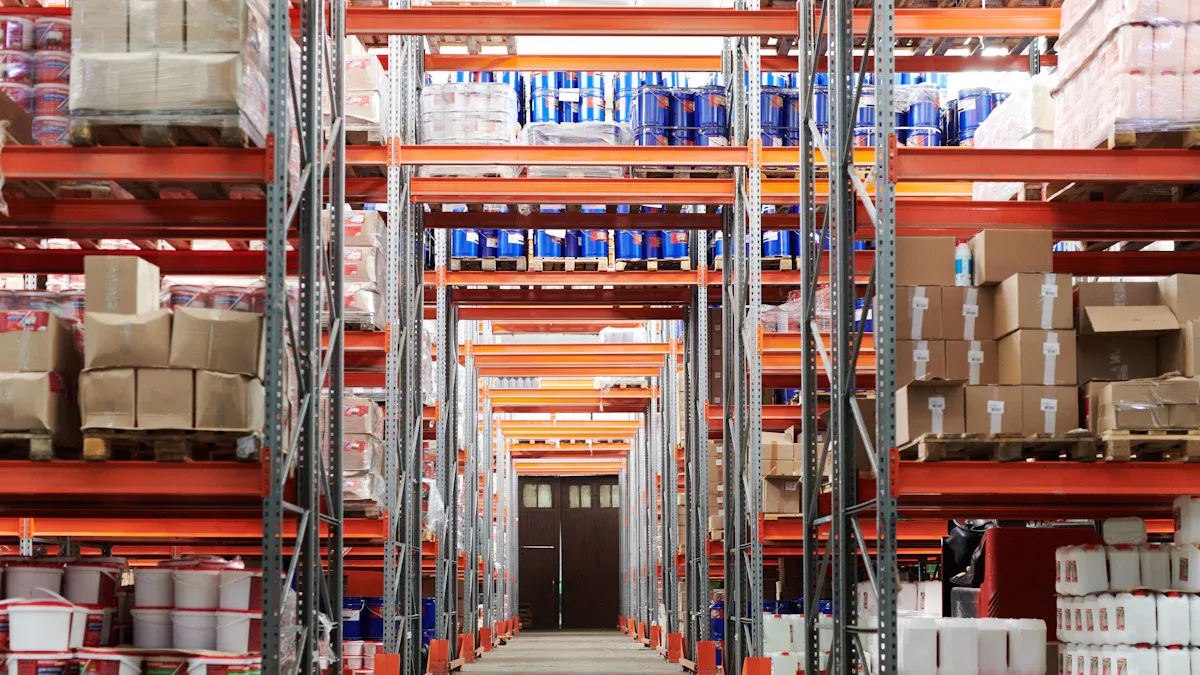
Industrial warehousing and distribution play a critical role in modern supply chains, particularly for businesses that handle large cargo volumes, bulk inventory, heavy products, and high-frequency shipments. Manufacturers, importers, wholesalers, retailers, and third-party logistics providers depend on well-designed warehouse facilities to receive products, maintain inventory accuracy, process orders, and move shipments efficiently.
As order volumes increase and customer delivery expectations become more demanding, warehouse design has a direct impact on operating costs and service performance. An inefficient facility can create unnecessary product movements, congested loading docks, slow picking processes, inaccurate inventory records, and higher labor expenses. These problems become more expensive as throughput grows.
An industrial warehouse must therefore do more than provide storage space. It needs to support the entire flow of goods, from inbound receiving and inventory placement to order preparation, staging, loading, and outbound transportation.
Effective facility design combines layout planning, storage systems, material handling equipment, labor management, technology, safety controls, and transportation access. These elements must work together to create a warehouse that can process current demand while accommodating future growth.
This guide explains the main principles of industrial warehouse and distribution design, explores the infrastructure required for high-volume fulfillment, and outlines practical strategies for improving warehouse productivity, safety, and scalability.
What Is an Industrial Warehouse and Distribution Facility?
An industrial warehouse is a facility designed to store, handle, consolidate, and move products or materials as part of a commercial or industrial supply chain. A distribution facility performs many of the same functions but places particular emphasis on receiving inventory and dispatching it to other warehouses, retailers, business customers, or fulfillment operations.
Some facilities primarily store products for extended periods. Others are designed for rapid inventory turnover, cross-docking, pallet distribution, or order processing.
Industrial facilities may handle a wide range of products, including raw materials, manufacturing components, packaged merchandise, machinery, building materials, consumer products, and palletized imports.
Their operating requirements vary according to cargo dimensions, weight, storage conditions, order patterns, and transportation methods.
Industrial Warehousing vs. Traditional Storage
Traditional storage may prioritize maximizing the quantity of inventory held within a building.
High-volume industrial distribution requires a broader approach. Storage density matters, but so do access to products, picking speed, receiving capacity, staging space, and the ability to move cargo safely.
For example, a warehouse that fills every available floor position with inventory may have little space remaining for unloading incoming trailers or preparing outbound shipments. This can create congestion even when the facility appears to be using its space efficiently.
The objective is to balance storage capacity with operational flow.
The Role of Industrial Warehousing in the Supply Chain
Industrial warehouses connect production, transportation, inventory management, and customer delivery.
They may receive imported cargo after customs clearance, store products until demand occurs, consolidate shipments for regional distribution, or prepare bulk orders for wholesale customers.
A well-designed facility helps reduce unnecessary handling, maintain reliable inventory records, and coordinate inbound and outbound transportation.
For businesses operating multiple facilities, consistent warehouse processes also improve inventory visibility and make it easier to transfer products between locations.
Core Principles of High-Volume Warehouse Design
The most effective warehouse layouts are based on the movement patterns of products rather than on storage capacity alone.
1. Optimize the Flow of Goods
A warehouse should have a clear and logical flow from receiving to storage, picking, staging, and shipping.
Where practical, the layout should reduce unnecessary backtracking and avoid conflicts between inbound and outbound traffic.
For example, a facility that receives full truckloads in the morning and dispatches bulk orders in the afternoon may require separate staging areas to prevent inbound cargo from blocking completed outbound shipments.
The correct arrangement depends on the building, shipment patterns, available docks, and the type of material handling equipment used.
2. Balance Storage Density and Accessibility
High storage density can reduce the cost per stored unit, but excessively dense storage may make frequently needed products difficult to access.
Warehouse planners should consider inventory turnover, product dimensions, picking frequency, replenishment requirements, and equipment compatibility when selecting storage systems.
Fast-moving products generally benefit from convenient access, while slower-moving inventory may be stored in less accessible locations if doing so does not compromise safety or handling requirements.

3. Design for Peak Demand
A warehouse should be planned around realistic peak operating conditions rather than average daily volume.
Seasonal surges, large customer orders, inbound shipment delays, and promotional activity can all create temporary capacity requirements.
The design should provide enough flexibility to receive cargo, stage orders, and maintain safe movement during busy periods.
4. Minimize Unnecessary Handling
Every additional movement consumes labor and may increase the risk of damage, loss, or delay.
Where practical, products should move through a planned sequence of activities without repeated relocation.
Cross-docking, direct staging, suitable storage assignments, and coordinated shipment schedules can reduce unnecessary handling when the product and order requirements support these methods.
5. Prioritize Safety and Maintainability
Warehouse layouts must accommodate safe pedestrian movement, equipment operation, emergency access, fire protection, and maintenance activities.
A design that maximizes theoretical throughput but creates unsafe traffic patterns is not an effective design.
Safety requirements should be incorporated from the beginning rather than added after equipment and storage systems have been installed.
Essential Zones Within an Industrial Warehouse
A high-volume facility generally contains several functional zones. Their size and arrangement should reflect the warehouse's workload and cargo characteristics.
Receiving Area
The receiving area is where inbound shipments are unloaded, counted, inspected, and entered into the inventory system.
Adequate space is needed for unloading equipment, temporary staging, discrepancy investigation, and product identification.
If receiving capacity is insufficient, incoming shipments may wait outside the facility or occupy space needed for other operations.
Receiving procedures should establish how employees verify shipment quantities, document damage, identify products, and record inventory status.
Quality Inspection and Exception Area
Some products require inspection before entering available inventory.
A designated inspection area allows employees to isolate damaged, incorrect, or questionable products without blocking normal receiving operations.
Where products require quality approval or regulatory checks, the system should prevent them from being allocated to customer orders until the relevant requirements are satisfied.
Storage Area
The storage area holds inventory between receiving and fulfillment or distribution.
Its configuration may include pallet racking, shelving, floor storage, bulk storage, or specialized storage equipment.
The correct system depends on product dimensions, weight, turnover, stacking limitations, handling requirements, and the building's physical characteristics.
Storage locations should be clearly identified and linked to the warehouse management system.
Picking and Order Preparation Area
The picking area supports the retrieval of products for specific orders.
Bulk operations may use pallet picking, full-case picking, or mixed-product picking, depending on customer requirements.
The layout should reduce travel distances while maintaining adequate access for equipment and employees.
Picking areas may also require replenishment locations where reserve inventory is transferred to more accessible positions.
Packing and Palletization Area
This area is used to consolidate products, prepare cartons, build pallets, apply protective materials, and complete shipment labeling.
For large shipments, pallet stability and load configuration are important considerations.
Packaging procedures should account for product weight, fragility, stacking requirements, transportation conditions, and customer specifications.
Outbound Staging Area
Outbound staging holds completed orders until they are loaded onto transportation equipment.
Orders should be organized by destination, carrier, delivery appointment, or dispatch schedule.
Clear staging rules help prevent shipments from being mixed together or occupying loading space longer than necessary.
The staging area should be sized according to shipment volume, average waiting time, and the number of vehicles that can be loaded simultaneously.
Shipping Docks
Shipping docks connect warehouse operations with outbound transportation.
Their configuration should reflect vehicle types, shipment sizes, loading methods, dock equipment, and traffic conditions.
Dock scheduling can help distribute activity throughout the day and reduce waiting time for both vehicles and warehouse personnel.
Selecting the Right Warehouse Location
Facility location influences transportation expenses, labor availability, customer service, and long-term operating costs.
A warehouse should be evaluated as part of the wider distribution network rather than as an isolated property.
Proximity to Suppliers and Ports
Importers may benefit from locating facilities near major ports, rail terminals, or freight corridors when these locations reduce inland transportation costs or support time-sensitive cargo handling.
However, the nearest available warehouse is not always the most economical option. Property expenses, congestion, labor costs, and outbound delivery requirements must also be considered.

Access to Customer Markets
A facility located closer to major customer concentrations may reduce outbound transportation distances and improve delivery responsiveness.
Businesses serving multiple regions should evaluate how warehouse location affects the total cost and transit time of shipments across the entire customer base.
Transportation Infrastructure
Industrial warehouses require appropriate access for the vehicles and transportation services used by the business.
Consider highway access, truck restrictions, terminal connections, road conditions, and the availability of suitable parking or staging space.
Facilities handling containerized imports may also need to coordinate drayage services and container return requirements.
Labor Availability
The local labor market affects recruitment, retention, training, and operating costs.
Businesses should evaluate the availability of warehouse employees, equipment operators, supervisors, maintenance personnel, and technical support.
Building Suitability and Expansion Potential
The building must support the intended storage systems, equipment, cargo weights, and operating procedures.
Important considerations include clear height, floor loading capacity, column spacing, dock configuration, utility availability, fire protection, and opportunities for expansion.
A property that appears inexpensive may require substantial modifications before it can support high-volume industrial operations.
Storage Systems for Industrial Warehouses
Storage equipment should be selected according to product characteristics and inventory movement patterns.
Selective Pallet Racking
Selective pallet racking provides direct access to individual pallet positions.
It is flexible and suitable for warehouses handling many different products with varying demand patterns.
The main trade-off is that aisles and access requirements can limit overall storage density.
Drive-In and Drive-Through Racking
These systems allow suitable forklifts to enter storage lanes, reducing the need for a separate aisle at every pallet position.
They can increase storage density for products stored in larger quantities, particularly when individual pallet access is less important.
However, they require careful inventory rotation planning and are generally less suitable for highly varied inventory requiring frequent direct access.
Push-Back and Pallet Flow Systems
Push-back racking and pallet flow systems support denser storage arrangements for selected product profiles.
Pallet flow systems use gravity to move pallets along inclined tracks, while push-back systems allow pallets to be loaded and retrieved from the same aisle according to the system design.
These systems may improve storage density and handling efficiency, but their suitability depends on pallet specifications, inventory rotation, load characteristics, and throughput.
Bulk Floor Storage
Floor storage can be appropriate for large, heavy, or oversized products that do not fit conventional racking systems.
It may also suit products stored in stable, stackable units.
The layout must preserve safe access, protect emergency routes, and account for stacking limits, floor capacity, and equipment maneuverability.
Automated Storage Systems
Automated storage and retrieval systems can use vertical space efficiently and reduce the time required to locate or retrieve compatible inventory.
They may be attractive in operations with high transaction volumes, consistent handling units, and suitable building infrastructure.
However, capital expenditure, maintenance requirements, throughput constraints, and system downtime risks should be evaluated before implementation.
Material Handling Equipment and Warehouse Productivity
Material handling equipment plays a major role in industrial warehouse performance.
Forklifts and Reach Trucks
Forklifts are commonly used to move pallets, unload trailers, replenish storage locations, and load outbound shipments.
Reach trucks can support high-density storage arrangements where aisle dimensions and lift heights are suitable.
Equipment selection should reflect load weight, dimensions, lift height, floor conditions, turning requirements, and the facility's storage configuration.
Pallet Jacks and Specialized Handling Equipment
Pallet jacks and other handling tools support shorter movements and selected loading or staging tasks.
Specialized attachments or equipment may be required for drums, long materials, irregular loads, or other products that cannot be handled safely using standard equipment.
Conveyors
Conveyor systems can move cartons and compatible products between receiving, sorting, packing, and shipping areas.
They are most effective when movement patterns are sufficiently consistent to justify fixed infrastructure.
A conveyor should be designed around actual throughput requirements and the capacity of connected workstations.
Dock Equipment
Dock levelers, vehicle restraints, dock seals, and related equipment can support safe and efficient loading operations.
The equipment should be appropriate for the vehicles served and maintained according to established inspection procedures.
Equipment Maintenance
Equipment downtime can disrupt the entire warehouse workflow, particularly when a critical forklift, conveyor, or automated system has no practical alternative.
Preventive maintenance schedules, operator inspections, repair procedures, and spare-parts planning help reduce disruption.
Warehouse Management Technology
Technology provides the information and coordination needed to manage inventory and warehouse tasks accurately.
Warehouse Management Systems
A warehouse management system, or WMS, tracks inventory locations, receiving, putaway, picking, replenishment, cycle counting, and shipping.
For industrial distribution, important features may include pallet tracking, lot or batch control where required, multiple units of measure, equipment-directed tasks, and customer-specific shipping instructions.
The system should reflect the warehouse's actual operating procedures rather than forcing employees to maintain parallel paper records.
Transportation Management Systems
A transportation management system, or TMS, supports shipment planning, carrier selection, freight rating, dispatch coordination, and performance reporting.
It can help businesses coordinate inbound transportation with receiving capacity and outbound shipping with customer delivery requirements.
Inventory and Demand Planning
Inventory planning tools use demand history, forecasts, supplier lead times, and replenishment rules to determine stock requirements.
They can help businesses reduce shortages and excessive inventory while maintaining appropriate service levels.
Forecasts should be reviewed regularly because changing demand can make historical patterns less reliable.
Barcode Scanning and Identification
Barcode scanning improves the accuracy of product identification and inventory transactions.
Employees can verify products, storage locations, quantities, and shipping labels as cargo moves through the facility.
Consistent product identifiers and accurate master data are essential for reliable scanning workflows.
Automation and Analytics
Automation may include conveyors, automated storage equipment, robotic handling, dimensioning systems, and automated packing processes.
Analytics can identify slow-moving inventory, inefficient travel patterns, congestion, recurring errors, and underused equipment.
Technology should be introduced according to measurable operational needs rather than novelty alone.
Improving High-Volume Order Fulfillment
Industrial warehouse design must support efficient processing as well as storage.
Optimize Inventory Slotting
Inventory slotting assigns products to storage locations according to demand, size, weight, handling requirements, and order relationships.
Frequently picked products may be positioned in accessible locations to reduce travel time.
Heavy products should be placed where they can be handled safely, and products with special storage requirements should be segregated as necessary.
Slotting should be reviewed when demand patterns change.
Choose Appropriate Picking Methods
The best picking method depends on order volume and structure.
Pallet picking is suitable when customers order complete pallets. Case picking supports orders containing full cartons, while mixed picking may be required when customers order multiple products in different quantities.
Batch, zone, or wave picking can improve productivity in suitable operations, but the method should be tested against actual order profiles.
Reduce Congestion
Congestion often develops when receiving, replenishment, picking, and outbound staging compete for the same space.
Separate traffic flows where practical, define staging locations, manage dock appointments, and establish rules for moving completed orders.
Warehouse performance should be assessed during peak conditions, not only when activity is low.
Standardize Work Procedures
Document receiving, storage, picking, packing, loading, and exception-handling procedures.
Standardization improves training, reduces variation between shifts, and helps identify the causes of recurring problems.
Procedures should also specify how employees handle damaged products, shortages, incorrect labels, and inventory discrepancies.
Coordinate Inbound and Outbound Operations
Inbound scheduling should consider receiving capacity, available storage space, labor, and expected outbound workload.
Outbound scheduling should account for order readiness, vehicle availability, loading time, and delivery appointments.
Coordination reduces the risk of receiving cargo that cannot be processed promptly or completing orders that remain in staging because transportation was not arranged.
Safety and Compliance in Industrial Warehouse Design
Safety should be incorporated into every stage of warehouse planning and operation.
Pedestrian and Equipment Separation
Where practical, establish designated pedestrian routes and controlled equipment travel paths.
Use suitable barriers, markings, signage, and traffic rules to reduce the risk of collisions.
Intersections, blind corners, dock areas, and high-traffic aisles require particular attention.
Rack and Load Safety
Storage racks must be suitable for the intended loads and installed according to the relevant specifications.
Employees should follow approved loading practices, report damaged rack components, and avoid exceeding marked capacity limits.
Pallets and stacked products must remain stable under expected storage and handling conditions.
Fire Protection and Emergency Access
Warehouse layouts must maintain appropriate emergency exits, access routes, and fire protection arrangements.
Storage height, commodity characteristics, rack configuration, and building design may affect sprinkler and fire protection requirements.
Businesses should consult qualified professionals and applicable authorities when designing or modifying industrial storage facilities.
Worker Training
Employees should receive training appropriate to their responsibilities, including equipment operation, lifting practices, hazard recognition, emergency procedures, and safe loading activities.
Refresher training and documented inspections help maintain consistent safety practices.
Product-Specific Requirements
Some products require additional controls, such as temperature management, hazardous-material segregation, security restrictions, or specialized handling procedures.
Storage and transportation processes should reflect the applicable product and regulatory requirements.
Key Performance Indicators for Industrial Warehouses
Performance indicators help managers determine whether the facility is operating efficiently and meeting service commitments.
Inventory accuracy: Measures the agreement between recorded inventory and physical stock.
Receiving cycle time: Measures the time required to unload, verify, record, and make incoming inventory available according to the defined process.
Picking productivity: Measures completed order lines, cases, units, or pallets per labor hour, using a consistent definition.
Order accuracy: Measures the percentage of orders completed without product, quantity, or documentation errors.
Dock-to-stock time: Measures the elapsed time between receiving a shipment and making the inventory available for use, with clearly defined start and end points.
Warehouse utilization: Measures the use of available storage or operating capacity. Excessive utilization can reduce flexibility and increase congestion.
On-time shipment rate: Measures the percentage of orders dispatched by the required deadline.
Cost per unit handled: Measures relevant warehouse operating expenses relative to the volume processed.
Equipment availability: Measures the proportion of planned operating time that equipment is available for use.
These metrics should be considered together. Higher picking productivity is not an improvement if it increases errors or creates unsafe working conditions.
Common Industrial Warehouse Design Mistakes
Maximizing Storage at the Expense of Flow
Filling every available space with inventory can restrict access, create congestion, and reduce the ability to stage shipments.
Warehouse planning should balance storage density with safe movement and sufficient operating space.
Underestimating Peak Capacity
A facility sized for average demand may struggle during seasonal surges or large customer orders.
Capacity planning should consider peak inventory, inbound shipment schedules, outbound staging requirements, and labor availability.
Selecting Equipment Before Defining Processes
Installing conveyors, racking, or automation before mapping product flow can create expensive layout constraints.
Businesses should define operational requirements first and select equipment that supports them.
Ignoring Future Expansion
A facility that meets current requirements may become unsuitable as inventory volumes or product dimensions change.
Expansion potential, flexible storage areas, utility capacity, and the ability to adjust operating zones should be considered during site selection.
Neglecting Maintenance and Safety
Damaged racks, poorly maintained equipment, and unclear traffic routes can reduce productivity and create serious risks.
Maintenance schedules, inspections, training, and safety controls must be built into normal warehouse operations.
Outsourcing Industrial Warehousing and Distribution
Businesses that do not want to operate their own industrial warehouse may use a third-party logistics provider.
Depending on the facility, services may include bulk storage, pallet handling, cross-docking, transloading, inventory management, order preparation, freight coordination, and domestic transportation.
Outsourcing can provide access to existing infrastructure and operating expertise, but provider selection should reflect the cargo and service requirements.
Evaluate Facility Capability
Confirm that the warehouse can handle the required product weights, dimensions, storage conditions, pallet configurations, and throughput.
A provider specializing in small parcel fulfillment may not have suitable equipment or space for heavy industrial products.
Review Location and Transportation Access
Assess proximity to suppliers, ports, major roads, and customer markets.
Confirm whether the facility can accommodate the expected vehicle types, loading requirements, and shipment schedules.
Check Technology and Visibility
Determine how inventory, receiving records, order status, and shipment information will be shared.
Establish clear requirements for inventory accuracy, reporting frequency, and discrepancy resolution.
Understand the Complete Cost Structure
Review storage charges, receiving fees, handling expenses, equipment services, labor, loading, transportation, and additional service charges.
Compare providers using the same operating assumptions so that apparent price differences do not conceal different service levels or billing structures.
Establish Service-Level Agreements
Define measurable requirements for receiving, inventory control, order accuracy, shipment readiness, reporting, and exception management.
The agreement should also clarify responsibilities for damaged cargo, shortages, and operational disruptions.
Building a Scalable Industrial Distribution Operation
A scalable warehouse can handle increased volume without allowing labor requirements, errors, congestion, and costs to grow uncontrollably.
Begin by analyzing product movement and order profiles. Identify which products occupy the most space, which move most frequently, and which require specialized handling.
Next, establish realistic throughput and capacity targets. Consider receiving volume, storage requirements, picking workload, staging capacity, dock utilization, and transportation availability.
Then prioritize improvements with measurable benefits. Better inventory accuracy, revised slotting, standardized procedures, and improved dock scheduling may deliver substantial gains without requiring a major facility expansion.
As demand increases, evaluate whether additional equipment, software, labor, or external warehouse capacity is justified. Expansion decisions should be based on total logistics cost and service requirements rather than storage demand alone.
Finally, review performance regularly and adjust the operating model as products, customers, and order patterns change.
Conclusion
Industrial warehouse and distribution design directly affects the efficiency, safety, and scalability of high-volume fulfillment operations. A successful facility must balance storage capacity with product accessibility, material handling, order preparation, transportation coordination, and safe working conditions.
Businesses can improve performance by designing logical product flows, selecting appropriate storage systems, maintaining accurate inventory records, coordinating inbound and outbound activity, and using technology to support reliable warehouse execution.
The best facility is not necessarily the one that stores the most inventory or uses the most advanced equipment. It is the one that moves the right products through the operation efficiently, safely, and consistently while supporting the business's long-term requirements.
With careful planning, disciplined processes, and ongoing performance measurement, industrial warehouses can become more than storage locations. They can serve as reliable distribution hubs that support bulk order fulfillment, control operating costs, and provide the infrastructure needed for sustainable growth.
See Also
Comprehensive Guide To Premier Global Logistics East Coast Services
Fast Order Fulfillment With Premier Logistics Warehousing In NJ And FL
Enhancing West Coast Operations Through Premier Logistics LA Warehousing
Trusted East Coast Warehousing And Distribution Across Multiple States
Top Reasons To Select Premier Global Logistics For Export Needs

