What Are Cross-Border Compliance Requirements for International Businesses
You must understand cross border compliance requirements if you operate in global markets. These rules tell you how to follow laws in different countries. Many business leaders say that cross-border complexity changes their decisions.
82% of leaders say it affects market entry.
70% of companies fail internationally due to poor compliance research.
You face challenges like changing regulations, data privacy laws, and language barriers. Ignoring these risks can lead to costly mistakes.
Key Takeaways
Understand both home and host country laws to avoid fines and legal issues. Always check compliance requirements before entering a new market.
Stay updated on changing regulations to prevent costly mistakes. Regularly review your compliance processes every 6 to 12 months.
Build strong relationships with local experts. They can provide valuable insights and help you navigate complex compliance requirements.
Use technology to streamline compliance management. Automation tools can help track regulations and reduce errors in reporting.
Invest in employee training on compliance issues. A well-informed team can help maintain adherence to laws and protect your business reputation.
Understanding Cross Border Compliance Requirements

What Compliance Means Across Borders
You face many rules when you do business in more than one country. Cross border compliance requirements tell you how to follow laws in both your home country and the countries where you operate. These rules cover taxes, data privacy, customs, and more. You must pay attention to both sets of laws because each country has its own way of protecting its people and businesses.
You cannot ignore the rules in your home country. At the same time, you must respect the laws in the host country. For example, employment laws often change from one country to another. Local laws may override your home country agreements. If you do not follow these rules, you may face fines or lose your right to do business there.
Tip: Always check both home and host country rules before starting operations in a new market.
Types of Cross Border Compliance Requirements
You will find that cross border compliance requirements cover many areas. Some of the most important types include:
Employment Law: Each country sets its own rules for hiring, firing, and employee rights.
Immigration and Work Permits: You must get the right permits for your workers. Mistakes can lead to fines or bans.
Tax and Social Security: You may need to run two payroll systems. Errors can cause big problems with local tax offices.
Data Protection: Countries like the United States, European Union, and China have different rules for handling personal data.
Customs and Trade: You must declare goods correctly and follow trade rules.
Here are some key components that define cross border compliance requirements:
Component | Description |
|---|---|
Adapted Organizational Structure | A committee oversees compliance with customs and trade rules. |
Reliable Transaction Verification | You need clear steps to check customs and trade declarations. |
Shipment Monitoring Procedures | Controls help you follow rules during shipping. |
Regular Supply Chain Audits | You should check your process every year to make sure you follow the rules. |
Reporting and Corrective Actions | You must fix problems found during audits. |
Company-wide Compliance Training | All employees need training on compliance rules. |
Efficient Record Retention System | You must keep documents as local laws require. |
You also need to:
Build strong industry relationships to learn best practices.
Do careful research to find out which rules apply to your business.
Understand complex tax and employment laws to avoid penalties.
Regulatory Bodies and Jurisdictions
You must know which organizations set the rules for your business. Each country has its own agencies and laws. For example, the United States, European Union, and China all have different ways to protect data and manage business risks.
Here is a table showing some differences in data protection rules:
PIPL (China) | GDPR (European Union) |
|---|---|
Security assessment by government authority required | No similar requirement, but new EU rules may change this for critical infrastructure (NIS 2 Directive) |
International agreements and adequacy decisions may apply | EU issues “adequacy decisions” for countries with strong data protection |
Certification mechanisms may be developed for data importers | Organizations must make binding commitments to protect data subject rights |
You must also follow rules from local tax offices, customs agencies, and labor departments. These groups check if you follow the law. If you do not, they can fine you or stop your business.
Note: Cross border compliance requirements change often. You need to keep up with new laws in every country where you operate.
Why Compliance Matters for International Businesses
Legal and Financial Risks
You face serious legal and financial risks when you ignore cross border compliance requirements. Each country sets its own rules for trade, transport, and insurance. If you do not follow these rules, you may run into trouble with customs, face disputes over damaged goods, or find gaps in your insurance coverage. The table below shows some common legal risks:
Legal Risk Type | Description |
|---|---|
Customs Violations | Non-compliance with import/export documentation requirements. |
Regulatory Discrepancies | Differences in trucking and transportation standards between jurisdictions. |
Cargo Liability Disputes | Disagreements over liability for damaged or lost goods during transit. |
Insurance Gaps | Coverage limitations when operating across borders. |
Financial penalties can be huge. In the EU, fines start at €35 million. In the US, regulators issued $4.3 billion in penalties in 2024, which made up 95% of global enforcement actions.
The EU AI Act imposes penalties starting at €35 million.
In 2024, US regulators issued $4.3 billion in penalties, accounting for 95% of global enforcement actions.
Market Access and Reputation
You need to follow regulations to enter new markets. If you want to do business in the US or other countries, you must meet their rules. This can raise your costs, but it also helps you build trust with customers and investors.
Compliance with regulations is crucial for companies seeking to access new international markets, particularly in the U.S. market. It impacts operational costs, competitive strategies, and the ability to attract investments.
Compliance with U.S. regulations can lead to increased operational costs for foreign companies.
Companies may need to innovate or form partnerships to remain competitive.
Adhering to regulations enhances credibility and consumer trust.
Reputation matters. If you break the rules, you risk losing customer confidence, damaging investor relations, and losing business partners. The table below shows how non-compliance can hurt your reputation:
Reputational Risk | Description |
|---|---|
Customer Confidence | Regulatory breaches can lead to a significant loss of customer trust, resulting in a mass exodus of customers. |
Investor Relations | Non-compliance indicates poor governance, which can lead to decreased company valuations. |
Partnership Losses | Financial institutions may cut ties with non-compliant businesses to mitigate their own risk exposure. |
Market Value Impact | A World Economic Forum report indicates that 25% of a company's market value is linked to its reputation. |
Consequences of Non-Compliance
If you do not meet cross border compliance requirements, you may face:
Hefty fines and monetary penalties that can strain financial resources.
Revocation of critical import/export licenses, which can halt operations.
Legal repercussions, including civil and criminal actions, that damage your reputation.
Customs authorities can seize and forfeit goods, disrupting supply chains.
These penalties can lead to extensive business disruptions.
You protect your business and your future when you follow the rules.
Key Compliance Areas and Regulations
Tax and Customs Duties
You must understand how taxes and customs duties affect your business. When you move goods across borders, you face several types of charges:
Import duties: Countries charge tariffs on certain goods when you bring them in. These are usually a percentage of the product’s value.
Export taxes: Some countries tax goods that leave their borders to control exports or raise money.
VAT and GST: Many countries add value-added tax or goods and services tax to both local and international sales.
Withholding taxes: Governments may take taxes from payments for cross-border services before you receive them.
Taxation of digital products: Digital sales often face VAT or GST, but rules change from country to country.
Double taxation: Treaties between countries help you avoid paying tax twice on the same income.
You need to calculate these costs carefully. Mistakes can lead to fines or delays at customs.
Data Protection and Privacy Laws
Data protection laws differ around the world. In the European Union, the GDPR sets strict rules for handling personal data. You must protect customer information and report breaches quickly. In the United States, there is no single privacy law. Instead, you follow different rules for each industry, such as HIPAA for health data or GLBA for financial data. The EU enforces heavy penalties for breaking the rules, but U.S. penalties depend on the sector.
Tip: Always check which data laws apply before collecting or sharing customer information.
Licensing and Registration
You must register your business and get the right licenses in every country where you operate. The table below shows common requirements:
Requirement | Description |
|---|---|
Compliance with Local Laws | Follow local tax, employment, and environmental rules. |
Intellectual Property Protection | Protect your patents and trademarks. |
Contract Enforcement | Make sure contracts work under local laws. |
Data Protection and Privacy Laws | Meet international data protection standards. |
Local Employment Laws | Know local rules for wages and working hours. |
International Tax Planning | Align your business with local tax laws and treaties. |
Business Registration Process | Submit documents and get licenses. |
Local Bank Account | Open a bank account for local transactions. |
Local Legal Representative | Appoint someone to handle legal matters locally. |
Permanent Establishment Risk
Permanent establishment risk means your business may owe taxes in another country if you have a fixed presence there. If you open an office or hire staff in a foreign country, you may need to report and pay local corporate taxes. This creates extra tax bills and paperwork. You must understand these risks before expanding.
A fixed place of business, like an office or warehouse, can trigger local tax obligations.
Significant business activities in a country may also count as a permanent establishment.
You must follow local tax laws and file reports if you meet these conditions.
SEC and State Law Requirements
If you enter the U.S. market, you must follow rules from the Securities and Exchange Commission (SEC) and state laws. The table below lists key requirements:
Requirement | Description |
|---|---|
SEC Reporting | File disclosure statements if you buy 5% or more of a company’s shares. |
Insider Trading | Follow rules on trading and report insider activity. |
Anti-Money Laundering | Submit ownership information to U.S. authorities. |
BEA Surveys | Complete surveys about foreign investment every five years or as required. |
You must meet these cross border compliance requirements to avoid legal trouble and keep your business running smoothly.
Meeting Compliance Requirements
Learning Local Rules
You need to learn the rules in every country where you do business. Start by understanding local laws and international labor standards. This helps you avoid mistakes and penalties. Here are some best practices:
Study local legislation and labor laws before entering a new market.
Classify your workers correctly to prevent fines.
Create a compliance plan to spot and fix issues early.
Learn about agreements between countries that may affect your business.
Make sure payroll is accurate and on time.
Ask local experts for help with complex laws.
Stay flexible so you can adjust to new regulations.
Tip: Learning the rules early helps you avoid costly surprises.
Setting Up Internal Processes
You must set up strong processes to meet cross border compliance requirements. Use a clear framework to guide your team. The table below shows some best practices:
Best Practice | Description |
|---|---|
Developing an Effective Compliance Program | Build policies and controls for each country. |
Establishing Internal Controls | Add checks to your business processes. |
Training Employees on Compliance Issues | Teach your team about legal requirements. |
Conducting Regular Audits | Check your processes often to find risks. |
Fostering a Compliance Culture | Make compliance a core value in your company. |
Leveraging Technology | Use tools to track and report compliance. |
Ongoing Monitoring
You need to keep checking your compliance status. Use these methods to stay on track:
Automation tools help you track data and records in real time.
Regular audits show where you need to improve.
Employee training keeps everyone aware of their roles.
Note: Ongoing monitoring helps you catch problems before they grow.
Working with Local Experts
Local experts can guide you through new markets. They know the latest rules and can warn you about changes. Building strong relationships with these experts helps you avoid mistakes and respond quickly to new laws.
Local experts make your market entry smoother.
They help you understand local regulations and reduce compliance risks.
They alert you to upcoming changes in the law.
Working with local experts gives you confidence as you expand your business.
Documents, Tools, and Solutions
Essential Compliance Documentation
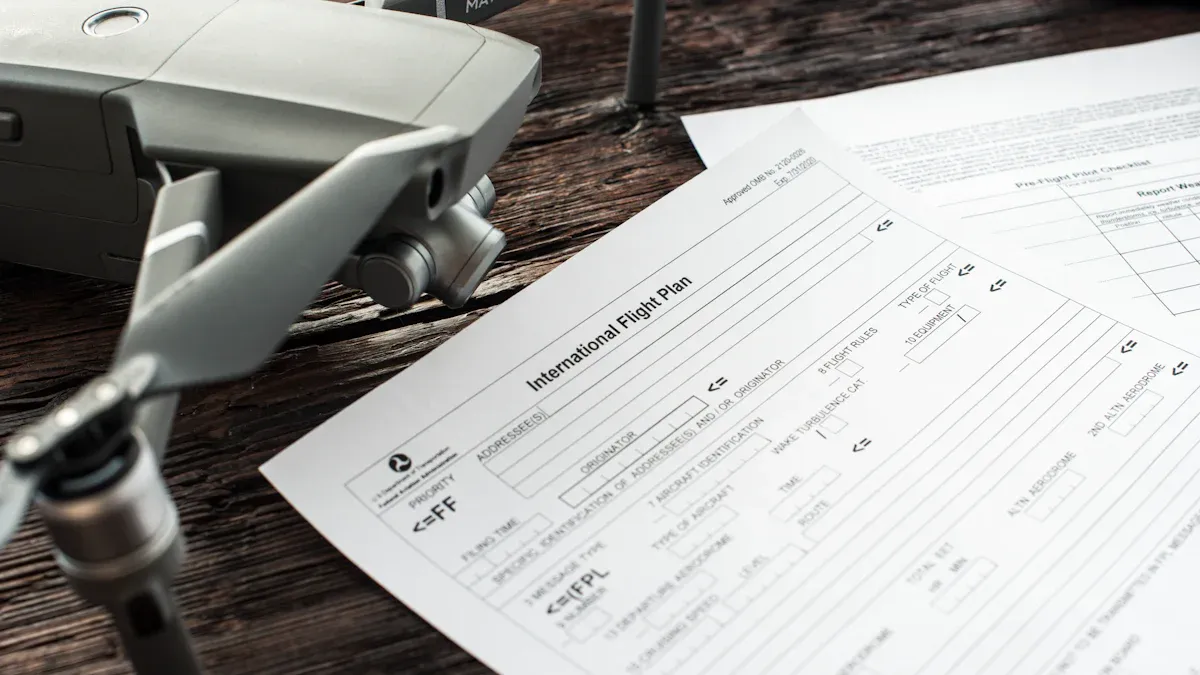
You need the right documents to move goods and operate across borders. These papers prove your business follows the rules and help you avoid delays. Here are some key documents you should prepare:
Preferential Certificates of Origin (COs)
Non-Preferential Certificates of Origin (COs)
Commercial Invoice (CI)
Bill of Lading (BOL)
Standard Alpha Carrier Code (SCAC)
Supplement to the Bill of Lading (CCP)
Document of Operations for Customs Clearance (DODA)
Tip: Keep these documents organized and updated. Customs officers may ask for them at any time.
Technology for Compliance Management
Technology makes compliance easier and faster. You can use special software and tools to track, report, and audit your business activities. Many companies use artificial intelligence and automation to spot problems early and reduce mistakes. The table below shows some top technology solutions and their benefits:
RegTech Solution Type | Primary Benefits and Efficiency Gains |
|---|---|
AI Transaction Monitoring | Up to 40% better detection, 70% fewer false positives, 45–65% fewer alerts |
Automated Screening | 60% fewer false positives with real-time updates |
Digital KYC | Up to 80% faster processing; deepfake-resistant biometric verification |
Workflow Automation | End-to-end compliance management; 25% cost savings |
You can also use advanced compliance management software to automate monitoring and reporting. Data analytics and AI help you find trends and predict risks.
Practical Solutions to Common Challenges
You face many challenges in cross-border business. Here are some practical solutions that can help:
Stay ahead of regulations by using trade compliance platforms and working with customs brokers.
Hedge against currency risk by opening multi-currency accounts and using FX forward contracts.
Modernize your payment systems with global B2B payment platforms for faster transactions.
Strengthen your supply chain by diversifying suppliers and using tracking technology.
Localize your business by working with local experts and using multilingual platforms.
Note: These steps help you manage risks and keep your business running smoothly.
Real-World Compliance Examples
Many large companies use smart strategies to meet compliance rules. The table below shows how some well-known businesses succeed:
Company | Compliance Strategy Description | Outcome |
|---|---|---|
Amazon | Used customs compliance software | 90% reduction in errors |
Unilever | Automated VAT reporting and reclaim processes | Saved time and resources |
Microsoft | Used Binding Corporate Rules for GDPR-compliant data transfers | Maintained compliance with EU law |
Uber | Audited third-party vendors and used Standard Contractual Clauses for GDPR | Ensured compliance for data transfers |
You can learn from these examples and apply similar strategies to your own business.
You can achieve cross-border compliance by following clear steps. The table below shows what you should do:
Step | Action |
|---|---|
Set Up Systems | Write policies, train your team, and use secure tools. |
Keep Checking | Review and update your process every 6 to 12 months. |
Maintain Documents | Keep tax, customs, and legal papers organized. |
Solve Challenges | Work with experts and use central systems for updates. |
Proactive compliance helps you prevent risks, save money, and protect your reputation. Use technology to automate tasks and spot problems early. Work with local experts and review your process often. Stay motivated by knowing you avoid penalties and keep your business strong.
FAQ
What is cross-border compliance?
You must follow laws and rules in every country where you do business. Cross-border compliance means you meet these requirements for taxes, data, customs, and more. You protect your company from fines and legal trouble.
Why do you need local experts for compliance?
Local experts know the latest rules and changes. You get advice that helps you avoid mistakes. They guide you through paperwork and help you respond quickly to new laws.
Tip: Local experts can save you time and money.
How often should you review your compliance process?
You should check your compliance process every 6 to 12 months. Regular reviews help you spot problems early. You keep your business safe from new risks.
What documents do you need for cross-border trade?
Document Type | Purpose |
|---|---|
Certificate of Origin | Proves where goods come from |
Commercial Invoice | Lists goods and prices |
Bill of Lading | Shows shipment details |
You need these documents for customs and legal checks.
Can technology help you manage compliance?
Yes, technology makes compliance easier. You use software to track rules, automate reports, and spot risks. AI tools help you find problems faster and reduce errors.
See Also
Effortless North American Trucking Solutions with PGL
Simplified Cross-Border Freight Solutions on the West Coast
Key Strategies for Effective Global Logistics Management
Enhancing International Operations Through Innovative Logistics Solutions
Comprehensive Ocean Export Services from U.S. Ports for FCL and LCL
