How to Compare 3 Key Differences Freight Broker and Forwarder
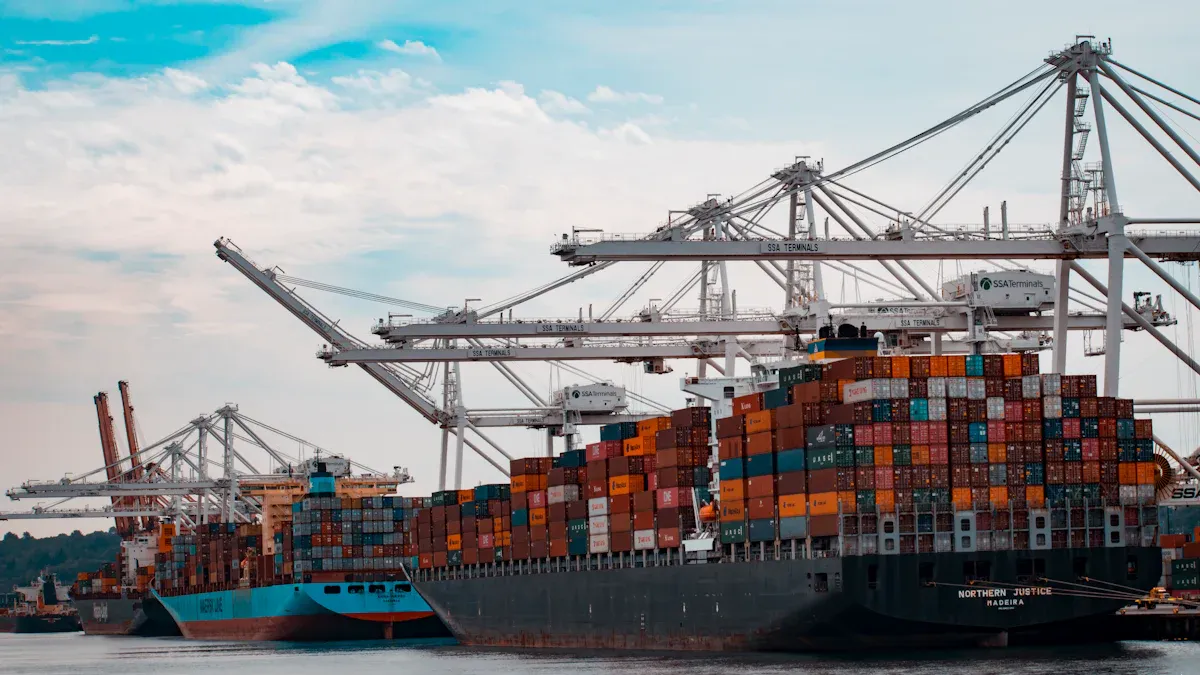
Understanding the differences freight broker and forwarder is important for anyone involved in shipping. The three main differences freight broker and forwarder include their core responsibilities, legal authority, and the range of services they provide. These differences freight broker and forwarder can impact your shipping process, influence the paperwork required, and help you choose the right logistics partner. Many shippers select a forwarder for comprehensive, end-to-end service, while others choose a broker to save costs and connect with carriers. By knowing the differences freight broker and forwarder, you can stay compliant with regulations and streamline your shipping operations.
Type | Number |
|---|---|
Active Licensed Customs Brokers |
Key Takeaways
Freight brokers help shippers find carriers. They do not touch cargo or handle paperwork. They work best for easy, local shipments.
Freight forwarders take care of the whole shipping job. They handle cargo, customs, and papers. They are good for worldwide and tricky shipments.
It is important to know the legal jobs of brokers and forwarders. Brokers have less responsibility. Forwarders take on more risk and duties.
Pick a freight forwarder for shipping around the world. They help with customs and hard shipping plans. Choose a freight broker for simple, nearby deliveries.
Always check who handles your shipping papers. This keeps things legal and stops delays in your shipping.
Role Differences: Freight Broker vs Freight Forwarder
Freight Broker Role
A freight broker helps you find carriers for your shipments. The broker is a middleman. You tell the broker what you need shipped. The broker looks for carriers, talks about prices, and sets up the trip. The broker does not touch your cargo. The broker plans pickup and delivery times. The broker makes sure all paperwork is ready before shipping. You count on the broker for:
Making friends with shippers and carriers
Finding and checking carriers for your loads
Talking about prices to save you money
Booking trucks and planning the trip
Watching your shipment and giving you updates
Freight brokers mostly work inside one country. They do not store or group cargo together. You see brokers working with trucks and simple shipments. They do not give out bills of lading or customs papers. You use a freight broker when your shipment is easy and does not leave the country.
Freight Forwarder Role
A freight forwarder helps you with the whole shipping job. The forwarder is in charge of your cargo. The forwarder sets up trips using ships, planes, trains, and trucks. The forwarder fills out customs forms, pays fees, and gets insurance for your cargo. You count on the forwarder for:
Planning trips inside the country and to other countries
Making deals and talking about shipping costs
Grouping cargo and using more than one way to ship
Doing customs forms and following rules
Arranging storage and keeping cargo safe
Giving out their own bills of lading
Freight forwarders work all over the world. They handle hard shipments that cross borders. You see them taking care of cargo, papers, and planning. They help with international trade, customs, and grouping cargo.
Direct Comparison
You can see big differences between a freight broker and a freight forwarder. The broker finds carriers and sets up the trip. The forwarder handles everything, including cargo and paperwork. You can check this table to see what each one does:
Role | Freight Broker | Freight Forwarder |
|---|---|---|
Cargo Handling | No | Yes |
Documentation | No | Yes |
Logistics Control | Limited | Full |
Transport Modes | Trucking | Ocean, air, rail, truck |
Customs Handling | No | Yes |
Storage/Consolidation | No | Yes |
Bill of Lading | Uses carrier's | Issues own |
Tip: Pick a freight forwarder if you ship to other countries or need customs help. Pick a freight broker if your shipment is simple and stays in one country.
You can see these differences in real life. A company in New York uses a forwarder for shipping overseas and customs, then a broker for moving goods in the U.S. A factory in Ohio only uses a broker for local shipments. A clothing brand uses a forwarder for fabric from other countries and a broker for shipping clothes in the U.S.
Freight forwarders use smart tools to track cargo and plan routes. Freight brokers use online tools to manage shipments but do not track cargo closely. Forwarders offer more help and take care of your cargo. Brokers focus on finding carriers for you.
Now you know the main differences between a freight broker and a freight forwarder. You can choose the right one for your shipping needs.
Legal Authority and Responsibility
Broker Licensing and Liability
It is important to know the rules for freight brokers. The FMCSA makes these rules. You need a Motor Carrier Property Broker’s License to work as a broker. You also need a $75,000 surety bond or trust fund. This money helps shippers if there is a problem. Look at the table below for the main rules:
Requirement | Details |
|---|---|
License Required | Motor Carrier Property Broker’s License (MC#) |
Financial Security Requirement | Minimum $75,000 USD surety bond or registered trust fund |
Scope of Operations | Arranging transportation within the US, to Canada, and to Mexico |
Freight brokers do not touch the cargo. Their main job is to match shippers and carriers. Brokers have limited responsibility. They are not usually blamed for lost or broken cargo unless they make a mistake. Brokers must check that carriers have the right insurance. They can use the FMCSA’s SAFER System to check this.
Forwarder Licensing and Liability
Freight forwarders follow different rules. If you ship by ocean from the US, you need a license from the FMC. You must have a “Qualifying Individual” with three years of ocean shipping experience. You also need a bond—$75,000 for licensed NVOCCs and $150,000 for unlicensed foreign NVOCCs. These bonds pay for damage or fines.
Freight forwarders take care of the cargo. They are in charge of safe shipping and paperwork. If cargo is lost or damaged, they have more legal responsibility. They must follow world rules and handle customs.
Comparison of Legal Standing
There are clear differences between a freight broker and a freight forwarder:
Freight brokers are go-betweens. They have less responsibility and do not touch cargo.
Freight forwarders do the whole shipping job. They have more legal responsibility and must follow harder rules.
Freight forwarding is riskier and needs more insurance.
Note: Pick a freight forwarder if you want help with all shipping, customs, and risk. Pick a freight broker if you just need someone to find a carrier.
Service Scope and Documentation
Services by Freight Broker
A freight broker helps you find the right carrier. Brokers do not own trucks or warehouses. They use their contacts to pick the best carrier for you. Look at this table to see what a freight broker offers:
Service Type | Description |
|---|---|
Freight Brokerage | Connects shippers with carriers, arranging transportation without owning trucks or warehouses. |
Shipment Coordination | Manages all types of shipments including truckload, LTL, and international freight. |
Capacity Management | Utilizes networks of contract carriers to secure shipping capacity efficiently. |
Freight brokers handle details between shippers and carriers. Their knowledge and connections help your shipment go smoothly. They make sure your goods get from start to finish without problems.
Services by Freight Forwarder
A freight forwarder does more than connect you with carriers. You get full support for your shipping needs. Forwarders take care of customs, storage, and special cargo. Check this table to see what a freight forwarder can do:
Service Type | Description |
|---|---|
US Customs Brokerage | Expert support to navigate US Customs regulations, ensuring compliance and preventing delays. |
Logistics Solutions | End-to-end solutions optimizing the movement of goods via air, sea, or land transportation. |
Warehousing & Distribution | Facilities designed for diverse storage needs, including handling, packaging, and distribution. |
Meat Inspection | Ensures compliance with health and safety regulations for meat imports and exports. |
Freight forwarders help with tricky shipments. They handle customs, storage, and rules for special products. You get global help and expert advice.
Documentation Control
It is important to know who handles your shipping papers. Freight brokers do not give out bills of lading or customs forms. The carrier gives the bill of lading when you use a broker. For international shipments, freight forwarders issue their own house bill of lading. They also handle invoices, packing lists, and customs forms. This makes freight forwarders key for shipping across borders.
Tip: Always check who manages your documents. This keeps your shipment on track and follows the rules.
Service Comparison
You can see big differences between freight brokers and forwarders in service and paperwork. Brokers focus on simple trucking inside one country. Forwarders handle hard, international shipping jobs. Here is a quick comparison:
Feature | Freight Broker | Freight Forwarder |
|---|---|---|
Multimodal Transport | No | Yes |
Customs Handling | No | Yes |
Cargo Consolidation | No | Yes |
Issues Bill of Lading | No | Yes |
End-to-End Solutions | Limited | Yes |
Pick a freight forwarder if you need help with customs, many ways to ship, or special cargo. Choose a freight broker for easy, local shipments.
Summary Table: Differences Freight Broker and Forwarder

The table below lets you see the main differences between a freight broker and a freight forwarder. This table makes it easier to pick the right partner for your shipping. Check each row to learn how each one handles logistics, rules, and services.
Feature | Freight Broker | Freight Forwarder |
|---|---|---|
Main Role | Finds carriers for your shipments | Manages the entire shipping process |
Cargo Handling | Does not handle cargo | Handles, stores, and consolidates cargo |
Documentation | Does not issue shipping documents | Issues bills of lading and customs forms |
Legal Authority | Licensed by FMCSA | Licensed by FMC (for ocean), may be NVOCC |
Liability | Limited, acts as an intermediary | Assumes more responsibility for cargo |
Transport Modes | Trucking (mostly domestic) | Ocean, air, rail, and truck (global) |
Customs and Compliance | Does not handle customs | Handles customs clearance and compliance |
Service Scope | Point-to-point, domestic focus | End-to-end, international focus |
Revenue Model | Earns commission per load | Charges service fees and freight markups |
Tip: Pick a freight broker for easy, local shipping. Pick a freight forwarder for global shipping, customs, or tricky shipments.
How to use this table:
Think about what you need to ship.
Compare your needs to the features in the table.
Choose the partner that matches your top needs.
This summary helps you see what each logistics partner does. You can make smarter choices and avoid mistakes for your business.
You now know the three main differences. These are who handles your cargo, who manages compliance, and who controls documents. If you ship simple loads in the country, a freight broker can help you find many carriers and save money. For hard or international shipments, a freight forwarder takes care of all the planning and paperwork. Always check who is in charge of following rules and insurance. This will help you avoid problems and keep your shipping easy.
FAQ
What is the main job of a freight broker?
A freight broker helps you find the right carrier for your shipment. The broker connects you with trucking companies and arranges transport. The broker does not handle your cargo or manage customs paperwork.
When should you use a freight forwarder?
You should use a freight forwarder for international shipments or complex logistics. The forwarder manages customs, paperwork, and cargo consolidation. You get help with every step of the shipping process.
Who issues the bill of lading?
A freight forwarder issues the bill of lading for your shipment. If you use a freight broker, the carrier provides the bill of lading. This document is important for tracking and proving ownership of your goods.
Do freight brokers handle customs clearance?
No, freight brokers do not handle customs clearance. You need a freight forwarder for customs paperwork and compliance. The forwarder makes sure your shipment meets all import and export rules.
Can you use both a broker and a forwarder for one shipment?
Yes, you can use both. You might use a forwarder for the international part and a broker for domestic delivery. This helps you manage costs and get expert help at each stage.
See Also
Selecting LTL, FTL, Or Drayage Solutions With PGL
Transport Large Shipments Economically Across The Country With PGL
PGL Specializes In LTL And FTL Freight Shipping Services
