Florida international warehouse and distribution hub secrets revealed

Florida international warehouse and distribution hub locations include Miami, Jacksonville, Orlando, Tampa Bay, and Fort Lauderdale. You find these hubs stand out because they link you directly to Latin America and the Caribbean. Miami ranks seventh among U.S. logistics cities. PortMiami handles huge container volumes, and Miami International Airport supports air cargo for perishable and high-value goods. The region keeps growing, with new warehouse space and strong demand driven by e-commerce and proximity to global markets.
Key Takeaways
Florida's international hubs connect you directly to Latin America and the Caribbean, making it easier to reach global markets.
Miami is a top logistics gateway, handling 45% of U.S. trade with Latin America through its major port and airport.
Jacksonville offers low congestion and strong rail access, allowing for quick cargo movement and same-day access to millions of consumers.
Orlando's strategic location and investment in infrastructure provide fast connections to major highways and airports for efficient distribution.
Utilizing Florida's Foreign Trade Zones can help you save on duties and improve cash flow, making your business more competitive.
Miami – International Logistics Gateway
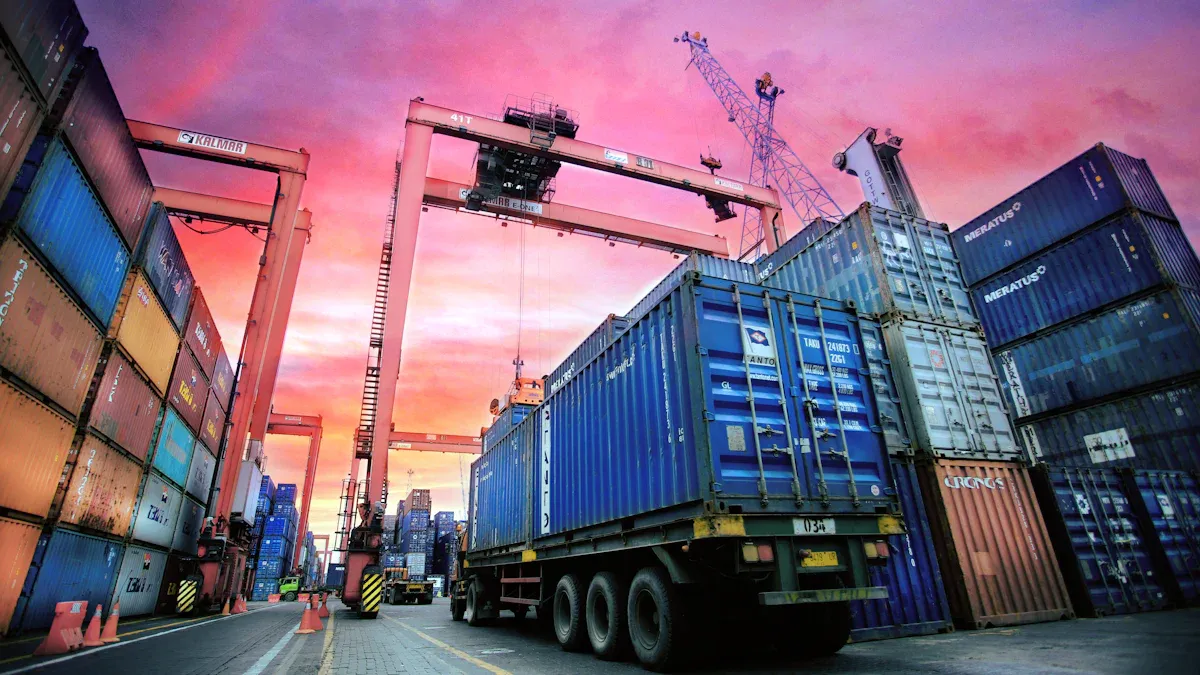
PortMiami and Airport Advantages
Miami stands out as a top choice for your international logistics needs. You benefit from direct access to Latin America and the Caribbean. PortMiami and Miami International Airport (MIA) give you unmatched trade connections. PortMiami handles over 9 million tons of cargo each year. MIA moves nearly three million tonnes of cargo annually and connects you to more than 200 destinations across the Americas.
Tip: Miami processes about 45% of all U.S. imports from and exports to Latin America. This makes it a true gateway for your business.
You can see Miami’s strengths in the table below:
Feature | Details |
|---|---|
Gateway to Latin America | 45% of U.S. trade with Latin America passes through Miami |
Maritime Advantage | PortMiami: 9+ million tons of cargo per year |
Aviation Hub | MIA: Top U.S. airport for international freight, 2.3+ million tons/year |
Intermodal Connectivity | Strong road and rail links for easy cargo movement |
Foreign Trade Zone Benefits | FTZs offer tariff and tax incentives |
Miami’s advanced infrastructure includes modern container terminals, bonded warehouses, and intermodal facilities. These features help you move goods quickly and efficiently.
Leading Warehousing Companies
You find many top warehousing and logistics companies in Miami. These companies help you store, manage, and ship your products with ease. Here are some industry leaders and their services:
Company Name | Services Offered |
|---|---|
Storage, transportation, inspection, pick, pack and repack, assembly services | |
Interworld Freight | Secure storage, inventory management, flexible distribution solutions |
OLIMP Warehousing | Dry, frozen, and temperature-controlled storage, bonded and hazmat warehousing |
Worldwide Logistics Group | Short-term and long-term storage, hazmat storage, pick and pack, e-commerce order fulfillment |
Global Warehouse Solutions gives you a full range of logistics services.
Interworld Freight helps you with secure storage and flexible distribution.
OLIMP Warehousing offers special storage options, including cold and hazmat storage.
Worldwide Logistics Group supports your e-commerce and retail needs.
When you choose Miami as your florida international warehouse and distribution hub, you gain access to world-class transport, advanced infrastructure, and expert logistics partners. This combination helps your business grow in global markets.
Jacksonville – Atlantic Distribution Hub
JAXPORT and Rail Access
Jacksonville gives you a powerful advantage in the florida international warehouse and distribution hub network. JAXPORT stands as Florida’s largest container port. You can move cargo quickly because the port has low congestion and easy access. JAXPORT is also the only East Coast port that offers LNG refueling, which helps you ship goods more efficiently.
You benefit from strong rail connections. Every day, 40 trains run through CSX, Norfolk Southern, and the Florida East Coast Railway. You find two intermodal container transfer facilities—one on-dock at Talleyrand Marine Terminal and another near Dames Point. These facilities help you transfer cargo between ships, trucks, and trains with speed. JAXPORT also gives you the highest and widest cargo clearance in the region, with space for loads up to 20 feet high and 13 feet wide. Heavy lift berths can handle up to 2,000 pounds per square foot.
Feature/Statistic | Description |
|---|---|
Daily Trains | 40 daily trains via CSX, Norfolk Southern, and FEC |
Intermodal Container Transfer Facilities | Two facilities: on-dock at Talleyrand, near-dock at Dames Point |
Cargo Clearance | 20 feet high, 13 feet wide |
Heavy Lift Berth Capacity | 2,000 lbs/sq ft, 78 kips per axle |
Regional Distribution Strengths
Jacksonville’s location gives you same-day access to over 98 million consumers. You reach key U.S. markets using three major interstates: I-95, I-10, and I-75. Lower warehousing and operational costs help you save money compared to other hubs. You find a business-friendly environment with tax incentives and favorable regulations.
Strengths | Description |
|---|---|
Crossroads of major interstate highways for easy market access | |
Cost-effective Warehousing | Lower costs than other logistics hubs |
World-class Transportation | JAXPORT, Jacksonville International Airport, and rail access |
Business-friendly Environment | Tax incentives and favorable regulations |
Reduced Shipping Times | Central location allows for quick order fulfillment |
Disaster Resilience | Less prone to flooding and hurricanes, strong disaster plans |
Sustainability Initiatives | Investments in green logistics and eco-friendly infrastructure |
Note: Jacksonville’s disaster resilience and sustainability efforts make it a reliable choice for your supply chain.
You can count on Jacksonville to deliver fast shipping, strong infrastructure, and cost savings. This hub helps you grow your business and reach more customers with confidence.
Orlando & Central Florida – Strategic Connections
Airport and Port Canaveral Access
You gain a strong advantage when you use Orlando and Central Florida for your distribution needs. Orlando sits in the heart of Florida, giving you quick access to major highways like I-4, I-75, and the Florida Turnpike. Orlando International Airport (MCO) connects you to over 150 non-stop destinations, making air cargo shipments fast and reliable. You also benefit from Port Canaveral, just 45 miles away, which offers deep-water access and uncongested routes for your cargo. This port lets you reach most of Florida within a 3-4 hour drive and the southeastern U.S. in less than 8 hours. Direct highway links and rail service from Florida East Coast Railway help you move goods efficiently.
Tip: Orlando’s $12 billion investment in transportation infrastructure means you get reliable and seamless connections for your business.
Here’s how Orlando’s location supports your logistics:
Feature | Details |
|---|---|
Port Proximity | Port Canaveral (45 miles), plus access to 5 major ports within 2 hours |
Airport Connectivity | Orlando International Airport with strong air cargo options |
Rail Infrastructure | CSX and Florida Central Railroad for intermodal transport |
Market Reach | Over 20 million Florida residents and 60 million in the Southeast |
Industrial Warehousing Growth
You see rapid growth in warehousing and logistics across Central Florida. E-commerce drives demand for last-mile distribution centers, especially in South Orlando and Conway. Older industrial parks in Sanford and Longwood are being upgraded for better value. New developments in Apopka and Northwest Orange County, like the Wekiva Parkway, make it easier to reach customers. The Lake County corridor is also growing, with companies like Kroger opening new distribution centers.
You find many top logistics providers in the region:
NXTPoint Logistics: Flexible warehouse and ecommerce fulfillment near MCO.
Traffic Tech: Global third-party logistics for air, ocean, rail, and road.
TCB Global 3PL: Innovative supply chain solutions.
NFI: Large network of warehouse space across North America.
Olimp Warehousing: Specialized storage, including cold and hazmat options.
Central Florida’s business-friendly climate and strong infrastructure make it a key florida international warehouse and distribution hub. You can reach millions of customers quickly and keep your supply chain running smoothly.
Tampa Bay & Fort Lauderdale – Gulf and South Florida Reach
Port Tampa Bay and Market Access
You find Port Tampa Bay at the center of Florida’s west coast. This port gives you access to deep-water shipping and connects you to major highways. You can move goods quickly to the Gulf Coast, Central Florida, and beyond. Tampa Bay’s location helps you reach fast-growing consumer markets. The region’s population keeps rising, which means more demand for goods and services.
Here is a quick look at what makes Tampa Bay important for your supply chain:
Feature | Tampa Bay | Fort Lauderdale |
|---|---|---|
Port Type | Deep-water ports | Port operations |
Access to Highways | Major highways facilitating cargo handling | Direct highway access |
Distribution Centers | Home to the largest concentration in Florida | Enhances connectivity to international markets |
Population Growth | Fastest growing region in Florida | N/A |
Port Tampa Bay handles 33 million tons of cargo each year. The port covers 5,000 acres and supports more than 85,000 jobs. You see an economic impact of over $17 billion. These numbers show why Tampa Bay stands out as a key florida international warehouse and distribution hub.
Tip: Tampa Bay’s location and infrastructure help you save on distribution costs and deliver goods faster.
Port Everglades and Distribution Assets
You find Port Everglades in Fort Lauderdale. This port sits in the heart of South Florida, close to highways and an international airport. Port Everglades handles many types of cargo, such as containers, cars, and refrigerated goods. The port serves as a gateway for 13% of all U.S. trade with Latin America.
Here are some assets that make Port Everglades unique:
Asset/Capability | Description |
|---|---|
Strategic Location | Direct highway access, near international airport |
Cargo Capabilities | Containers, refrigerated cargo, automobiles, liquid bulk |
International Trade | 13% of all U.S./Latin American trade |
Logistics Center | Modern warehousing, Foreign-Trade Zone |
Petroleum Distribution | Stores and distributes 38% of Florida's petroleum |
Infrastructure Improvements | Projects like Southport Turning Notch Extension |
Super Post-Panamax Cranes | New cranes for larger ships |
You benefit from modern facilities and ongoing upgrades. The Southport Turning Notch Extension project creates thousands of jobs and boosts cargo handling. Port Everglades also supports 38% of Florida’s petroleum needs, including jet fuel for airports. You can rely on this port for efficient, high-volume distribution across South Florida and international markets.
If you want to expand your reach in the florida international warehouse and distribution hub network, Tampa Bay and Fort Lauderdale give you strong options for growth.
Florida International Warehouse and Distribution Hub Advantages

Foreign Trade Zones (FTZs) and Tax Incentives
You can unlock major cost savings by using Florida’s Foreign Trade Zones. These zones help you manage your goods before they enter the U.S. market. You do not pay federal excise taxes until your products leave the zone. If you re-export goods to Canada or Mexico, you avoid duty payments completely. This means you keep more money in your business.
Here are some key benefits you get from Florida’s FTZ network:
You can reduce or delay duty payments, which improves your cash flow.
You avoid quota restrictions on goods stored in the zone.
You can transfer goods duty-free between multiple zones.
You can use direct delivery for imported materials and parts.
You can reduce or eliminate duty on capital equipment used in production.
Tip: The Deerfield Beach FTZ facility and other zones, like FTZ No. 64 in Jacksonville and FTZ No. 281 in Miami, offer unlimited storage and support for manufacturing and assembly.
Advantage/Tax Incentive | Description |
|---|---|
Reduced Customs Entries | Decrease the number of normal customs entries required. |
Duty Elimination | Eliminate duty on goods processed in and exported from the zone. |
Capital Equipment Duty | Reduce or eliminate duty on capital equipment used in production. |
Quota Restrictions | Avoid quota restrictions on merchandise admitted and held within zones. |
Direct Delivery | Allow imported materials and parts to be delivered directly to the zone site. |
Federal Excise Tax | Reduces federal excise taxes and some state inventory taxes when applicable. |
Duty-Free Transfers | Allow duty-free transfer of goods among multiple zones. |
Tax Deferral | Delay and reduction of duties, improving cash flow and liquidity. |
You can also use FTZs for manufacturing and assembly without paying duties right away. This flexibility helps you lower your operating costs and stay competitive in the florida international warehouse and distribution hub network.
3PL Providers and Tech Innovations
You can boost your supply chain by working with top third-party logistics (3PL) providers in Florida. Companies like Trinity Logistics, Phase V Fulfillment, and GoBolt use advanced technology to make your operations smoother. Trinity Logistics offers freight management, warehousing, and logistics consulting. They use smart technology to help you track and manage shipments. Phase V Fulfillment gives you real-time inventory management and order processing, which is perfect for e-commerce businesses. GoBolt focuses on eco-friendly fulfillment and uses technology to give you better insights into your supply chain.
Florida’s logistics sector leads in technology adoption. Many warehouses use automation and robotics, like AmbiSTack and Boston Dynamics’ Stretch robot, to speed up order processing. Artificial intelligence helps companies like Uber Freight optimize delivery routes and reduce empty truck miles. You also see more electric and hydrogen-powered vehicles, which lower emissions and support green logistics.
Advancement Type | Description |
|---|---|
Automation and Robotics | Advanced systems improve warehouse productivity and accuracy. |
AI for Route Optimization | AI tools reduce empty truck miles and improve delivery speed. |
Sustainability Initiatives | Electric vehicles and energy-efficient warehouses support green logistics. |
Note: Many florida international warehouse and distribution hub locations now use energy-efficient lighting, recycling programs, and smart building systems to reduce their environmental impact.
Choosing the Right Hub for Your Business
You need to pick the best florida international warehouse and distribution hub for your business goals. Start by looking at location and accessibility. Choose a hub close to major highways, ports, and airports to cut transportation costs. Check the building specifications, like ceiling height and dock doors, to make sure they fit your needs. Review the infrastructure for power, internet, and security.
You should also think about future growth. Pick a hub that lets you expand as your business grows. Make sure you have access to skilled workers and public transportation for your team.
Criteria | Description |
|---|---|
Location and Accessibility | Proximity to major highways, ports, airports, and target markets affects transportation costs. |
Building Specifications | Requirements like clear height, column spacing, and dock doors are essential for operational needs. |
Infrastructure | Power capacity, connectivity, and security features must meet operational requirements. |
Expansion Potential | Future expansion options provide flexibility for growing businesses. |
Labor Availability | Access to qualified workers and public transport impacts staffing capabilities. |
Tip: Balancing these factors helps you run your operations efficiently and save money over time.
You can learn from companies like BrandsMart USA, which grew their business by choosing the right florida international warehouse and distribution hub. They improved their customer reach and made their supply chain stronger. You can do the same by focusing on your needs and using Florida’s strategic advantages.
You discover Florida’s international warehouse and distribution hubs offer unmatched access to highways, airports, and seaports. The state’s location and infrastructure help you reach most U.S. markets quickly.
Key Advantage | Description |
|---|---|
Strategic Location | Connects you to Latin America, the Caribbean, and U.S. consumers. |
Robust Infrastructure | Deep-water ports, commercial airports, and strong rail service. |
Workforce Strength | Over half a million logistics professionals support your business. |
Advanced technology like AI and IoT improves safety and efficiency.
Green building practices lower costs and protect the environment.
You benefit from quick deliveries and reduced transportation expenses.
Florida’s assets and logistics providers help you build a resilient, efficient supply chain for global success.
FAQ
What is a Foreign Trade Zone (FTZ) in Florida?
A Foreign Trade Zone (FTZ) lets you store, assemble, or process goods without paying customs duties right away. You pay duties only when your goods leave the zone for U.S. markets. This helps you save money.
How do I choose the best warehouse hub in Florida?
You should look at location, access to highways, ports, and airports. Check if the hub has space for your needs. Make sure you can grow your business there. Ask about skilled workers and technology.
Which industries benefit most from Florida’s distribution hubs?
You see the most benefits if you work in retail, e-commerce, food, electronics, or automotive. These hubs help you move products quickly to customers in the U.S., Latin America, and the Caribbean.
What technology do Florida warehouses use?
Many Florida warehouses use automation, robotics, and real-time tracking. Some use artificial intelligence to plan delivery routes. You can find green technology like energy-saving lights and electric vehicles.
See Also
Strategic Logistics Hubs in Miami And LA By PGL
PGL's Efficient Warehouse Solutions For Quick East Coast Shipping
Effective Warehousing Strategies By PGL In Key U.S. Locations
Understanding Premier Global Logistics' B2B Services On The East Coast
Enhancing West Coast Operations With PGL's LA Warehousing Solutions
