FOB Responsibilities: Buyer vs Seller in International Shipping
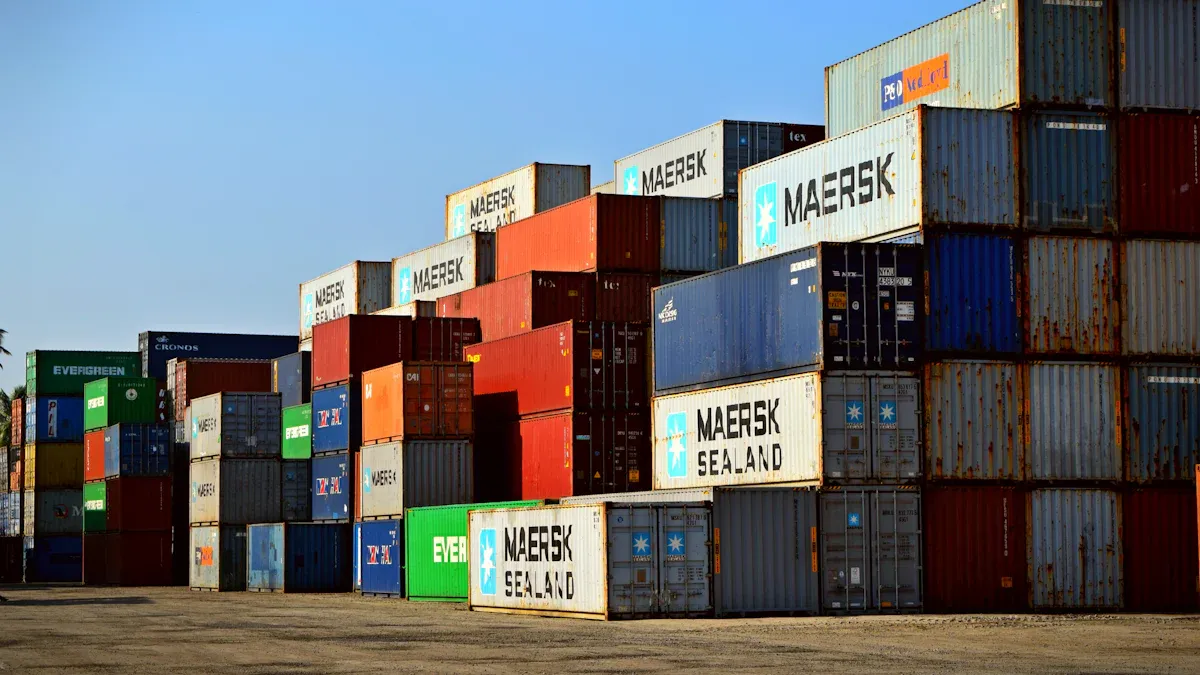
When you enter international trade, understanding fob responsibilities buyer seller can save you from costly mistakes. FOB sets a clear point where responsibility and risk move from seller to buyer. If you misunderstand this, disputes can arise and unexpected charges may follow.
A seller in Mumbai ships textiles FOB Shanghai. The buyer delays vessel booking. The container sits at port. $6,200 in detention fees. The seller’s team? Shocked. 'We thought the risk passed at the port.' But they didn’t read the fine print.
FOB terms bring efficiency and clarity to shipping. You can manage risk and costs more effectively when you know your exact duties.
Key Takeaways
FOB (Free On Board) shows when risk and responsibility move from seller to buyer. Sellers take care of goods until they are put on the ship. Buyers are in charge after the goods are loaded. Buyers need to set up shipping, insurance, and import clearance after loading. Good communication and contracts help stop arguments in FOB deals. Freight forwarders can help with planning and lower mistakes.
FOB Explained: Key Terms and Risk Transfer
What Is FOB?
You will often see the term FOB when you work with international commercial terms. FOB stands for free on board. This term comes from the Incoterms rules, which help you and your trading partners decide who takes care of costs, risk, and logistics at each stage of shipping. According to the International Chamber of Commerce, FOB (free on board) is a term in international commercial law that specifies the point at which the obligations, costs, and risks involved in the delivery of goods shift from the seller to the buyer under the Incoterms standard. You use FOB mostly for ocean shipments. When you agree to FOB, you know exactly when your ownership and liability for the goods begin.
FOB is one of the most common incoterms. It gives you a clear way to split responsibilities. If you are the seller, you handle the goods until they are loaded onto the vessel. If you are the buyer, you take over after that point. This clarity helps you avoid confusion about who pays for what and who is responsible if something goes wrong.
FOB Risk Transfer Point
You need to know the exact moment when risk and ownership move from seller to buyer. This point is not when the goods reach the port, but when they are actually on board the ship. At this moment, your liability as the seller ends, and the buyer’s liability begins. The table below shows how this works:
Aspect | Details |
|---|---|
Delivery point | On board the vessel at the port of shipment |
Risk transfer | When the goods are on board |
Costs division | Seller covers costs until loading; buyer covers all after |
If you are the buyer, you must arrange for freight on board and take care of insurance and import duties after the goods are loaded. This transfer of ownership and liability is a key part of FOB. You should always check your incoterms agreement to make sure you understand your duties. Knowing the risk transfer point helps you plan for costs and avoid disputes.
FOB Responsibilities Buyer Seller: Seller Duties
When you ship goods internationally under fob, you need to know what the seller must do. These jobs include getting the goods ready and putting them on the ship. If you do each job right, you can stop fights about who owns the goods or who is responsible. Here is what you must do as the seller with fob origin terms.
Cargo Preparation and Export
You begin by making sure the goods are set for export. This means you must:
Check that the goods are finished, packed, and marked right.
Get all needed papers, like the contract, invoice, packing list, and customs form.
Get product certificates, such as CE or FCC, if your buyer asks.
Tip: Always look at the packaging and marking again. This helps you avoid problems at customs and makes sure your goods fit what the buyer wants.
You also have to clear the goods for export. This means you handle customs papers, pay export taxes, and follow your country’s rules. If you skip a step, you might face delays or extra fees.
Inland Transport to Port
After you get the goods ready, you must set up transport to the port. Under fob responsibilities buyer seller, you pay for these things:
Clearing customs and paying export taxes.
Port charges and putting the goods on the ship.
You must make sure your goods get to the port safely and on time. You might need help from a local freight forwarder for trucking and customs. You also have to follow all local laws during this time. If you break a rule, your shipment could be late or stopped.
Loading and Documentation
Your last job as the seller is to put the goods on the ship at the named port. With fob origin, you do all the loading work. You pay all costs and take all risks until the goods are on the ship. When the goods go over the ship’s rail, the buyer gets ownership and responsibility.
You must give the buyer the right shipping papers. These usually include:
Document Type | Description |
|---|---|
Given by the carrier, it shows shipping details and the fob point of responsibility. | |
Commercial Invoice | Shows the fob point and lists the goods, price, and sale terms. |
You may also need to give proof of delivery, export licenses, and inspection papers if needed. Good paperwork helps the buyer get the goods at their port and shows you did your fob responsibilities buyer seller.
Note: Always keep copies of all papers. This helps you if someone asks about who owns the goods or who is responsible later.
By doing these jobs, you finish your seller duties under fob. You make the handover easy and lower the chance of fights with your buyer.
FOB Responsibilities Buyer Seller: Buyer Duties
When you act as the buyer in an FOB shipping agreement, you take on important tasks after the goods are loaded onto the vessel. You must manage costs, protect your cargo, and make sure your goods reach their final destination. Here is how you handle your duties step by step.
Freight Arrangement and Costs
Once the seller loads your goods onto the ship, you become responsible for arranging and paying for the main transport. You must:
Choose the shipping line or carrier that will move your goods from the port of origin.
Book space on the vessel and confirm the shipping schedule.
Pay all freight charges from the port of shipment to the destination port.
Handle any transit clearances if your cargo passes through other countries.
Tip: Always compare shipping rates and schedules. This helps you avoid delays and control your costs.
Under FOB, you must also pay for any handling fees at the destination port. You do not pay for export customs or loading at the origin port. The seller covers those. The table below shows how your costs under FOB compare to other Incoterms:
Cost/Task | EXW | FOB | CIF | DDP |
|---|---|---|---|---|
Seller’s factory pickup | ✗ | ✗ | ✗ | ✓ |
Export customs & documents | ✗ | ✓ | ✓ | ✓ |
Origin terminal/handling | ✗ | ✓ | ✓ | ✓ |
Main carriage (ocean/air) | ✗ | ✗ | ✓ | ✓ |
Cargo insurance | ✗ | ✗ | ✓* | ✓* |
Import customs clearance | ✗ | ✗ | ✗ | ✓ |
Duties & taxes | ✗ | ✗ | ✗ | ✓ |
Final delivery to your site | ✗ | ✗ | ✗ | ✓ |
Risk transfer point | Seller’s door | On board at origin | On board at origin | At delivery |
You see that under FOB, you control the main shipping process. This gives you more power over timing and costs, but it also means you carry more responsibility for your cargo.
Insurance and Import Clearance
After the goods are loaded, you hold both ownership and liability for the shipment. You should protect your investment by buying transport insurance. Most importers choose all-risk coverage for at least 110% of the cargo’s value. This insurance starts as soon as the goods cross the ship’s rail at the port of origin.
Insurance Type | Coverage Requirement |
|---|---|
Transport Insurance | All-risk coverage of at least 110% of the value of the goods |
Effective Date | As soon as the goods are loaded, risk is transferred when crossing the ship's rail |
Note: Insurance is not required under FOB, but it is highly recommended. Without it, you risk losing your goods and money if something happens during shipping.
You also need to clear your goods through customs at the destination port. You must:
Prepare and submit all import documents.
Pay duties, taxes, and any other fees.
Follow all local regulations for your cargo.
If you miss a document or payment, your goods may get stuck at the port. This can lead to extra storage fees and delays.
Inland Delivery After Arrival
Once your goods clear customs, you must arrange for inland delivery to your warehouse or final site. You can hire a local trucking company or use a freight forwarder to help with this step. You pay all costs and manage all risks from the port to your door.
Callout: Always check the condition of your goods when they arrive. If you find damage, report it to your insurance provider right away.
As the buyer, you act as the importer. You must follow all local rules and keep records of your shipping and import process. This helps you avoid problems with customs and proves your ownership of the goods.
Key Differences and Common Misunderstandings
Comparing Seller vs Buyer Responsibilities
It is important to know how seller and buyer jobs are different under fob. Each side has its own tasks and risks. Here is a simple list:
The seller gets the goods ready and handles export clearance. The seller also pays to move the goods to the port.
The seller puts the goods on the ship and does all export paperwork.
The seller’s job ends when the goods are on the ship at the port.
The buyer arranges and pays for shipping, insurance, import clearance, and final delivery.
With fob, the buyer gets more control after loading. The seller must have all documents and permits ready before the goods leave. Once the goods cross the ship’s rail, the buyer takes all risks, even if something happens during shipping.
Task | Seller Responsibility | Buyer Responsibility |
|---|---|---|
Export clearance | Yes | No |
Transport to port | Yes | No |
Loading on vessel | Yes | No |
Main shipping | No | Yes |
Insurance | No | Yes |
Import clearance | No | Yes |
Inland delivery (arrival) | No | Yes |
You should plan your money based on these jobs. The buyer pays for everything after the goods are loaded. The seller only pays up to that point.
Typical FOB Mistakes
Many people make mistakes with fob. You can avoid trouble by knowing the most common errors:
Using fob for container shipping, which is not right.
Forgetting that risk moves when goods are loaded, not when they get to the port.
Not having clear paperwork or missing export permits.
Fights happen when the seller thinks their job is done, but the buyer gets extra costs.
Mixing up fob with other terms like CIF, which changes who pays for insurance and shipping.
"Only the most enthusiastic lawyer could watch with satisfaction the spectacle of liabilities shifting uneasily as the cargo sways at the end of a derrick across a notional perpendicular projecting from the ship's rail." This quote shows how risk transfer can be confusing if you do not pay close attention.
You should always check your contract and talk to your shipping partners. Clear deals help both sides avoid costly mistakes.
Freight Forwarders and Practical Implications
Role of Freight Forwarders in FOB
Freight forwarders play a key role in making fob shipping smooth for both you as a buyer and the seller. They handle many tasks that can be hard to manage alone. You can see their main services in the table below:
Service Type | Description |
|---|---|
Logistical Preparations | They manage all shipping details and make sure your cargo is handled right. |
Customs Clearance | They work with customs to clear your goods at the destination. |
Insurance | They offer insurance to protect your goods during shipping. |
Transportation Management | They arrange transport from the factory to the port on time. |
Service Options | You can choose Door to Door, Door to Port, or Port to Door services. |
As a seller, you rely on the forwarder to prepare documents and pay fees at the origin. As a buyer, you get updates on your shipment and can pick the carrier that fits your needs. This control helps you manage costs and timing.
Tip: Ask your freight forwarder for regular updates. This helps you track your shipment and plan for any changes.
Avoiding Disputes and Managing Risk
You can avoid most fob disputes by following a few best practices. Clear communication and good planning are key. Here are some steps you should take:
Agree on fob terms in your contract and use the latest Incoterms.
Avoid unclear language that might confuse the buyer or seller.
Know your duties and risks for each term.
Make sure you get a clean bill of lading for fob shipments.
Freight forwarders help reduce errors by keeping everyone informed and handling documents the right way. They coordinate each step so you do not miss important details. You can also manage risk by choosing the right fob term. For example, if you want more control, pick fob shipping point. If you want less risk, choose fob destination.
FOB Term | Responsibility Transfer | Risk Assumed by |
|---|---|---|
FOB Shipping Point | At shipment point | Buyer |
FOB Destination | At buyer's location | Seller |
Note: Always review your contract and talk with your freight forwarder before you ship. This helps you avoid surprises and keeps your shipping process on track.
You should know your FOB responsibilities before you ship or buy. Here are the main things to remember:
If you are the seller, you pack and get the goods ready. You also handle export and load the goods at the port. Your risk stops when the goods are on the ship.
If you are the buyer, you set up shipping after the goods are loaded. You also get insurance and take care of import clearance. You are in charge of the shipment, so you need to plan well.
Talking clearly and using good freight forwarders helps you avoid big mistakes. Always check your FOB terms and make sure every detail is right before you sign a shipping contract.
FAQ
What does FOB mean in shipping?
FOB stands for "Free On Board." You use it to show when the seller’s job ends and your responsibility begins. The seller loads goods onto the ship. You take over after that point.
When does risk transfer from seller to buyer under FOB?
Risk moves to you once the goods are loaded onto the vessel at the named port. If anything happens after loading, you handle the loss or damage.
Do you need insurance as the buyer under FOB?
You should buy insurance after the goods are loaded. Insurance protects your cargo during the ocean journey. The seller does not cover this risk.
Can you use FOB for air freight shipments?
No, you use FOB only for sea or inland waterway shipping. For air freight, you should use other Incoterms like FCA (Free Carrier).
See Also
PGL Expands From Bulk Freight To FBA On The West Coast
Key LCL Shipping Steps For Panama Exports By Premier Global Logistics
Comprehensive Ocean Export Services For FCL And LCL From U.S. Ports
Maximize Savings With Cross-Country FTL Shipping By PGL
PGL Offers Expert Solutions For LTL And FTL Freight Shipping
