How to Understand Freight Associates Roles and Responsibilities Easily
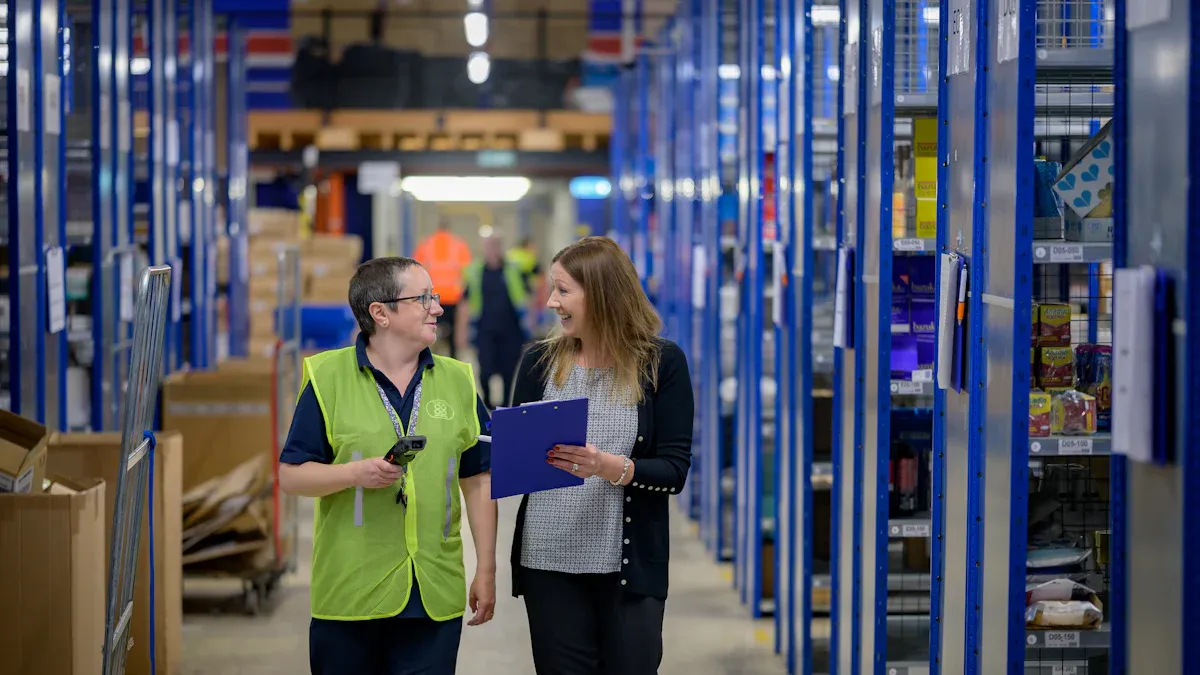
You are important as a freight associate. Your job is to help freight move safely and quickly. You do many tasks every day. Common freight associates roles and responsibilities include:
Loading and unloading products carefully so nothing gets broken
Organizing and checking inventory, making sure things are packed safely
Comparing items received to freight records and informing someone if there are problems
Checking goods for damage and documenting it for insurance
Using heavy equipment and tools to move cargo safely
Understanding these freight associates roles and responsibilities helps you perform well and supports your team and business.
Key Takeaways
Freight associates help move goods safely and quickly. Knowing your job helps the team work better and helps the business do well.
Main jobs are loading and unloading freight, handling paperwork, and following customs rules. Learn these tasks to do well in your job.
Good communication and organization skills are important. They help you work with others and fix problems fast. This leads to better service.
Using technology can make your work easier. Get to know tracking systems and software to work faster and more accurately.
You can grow your career by learning new skills and trying new jobs in logistics. Keep learning and look for chances to move up.
Freight Associates Roles and Responsibilities
Freight associates help move goods from one place to another. They do many jobs that keep shipping easy and fast. The job has different parts. Each part needs you to pay attention and talk clearly with others. Here are the main freight associates roles and responsibilities. This will help you know what you do each day.
Shipment Coordination
You plan and control how freight moves. Your job includes:
Planning cargo shipment for ocean, air, and land.
Handling export papers and setting up inland transport.
Managing port and customs papers.
Setting up shipping on ocean vessels and booking space.
Talking about freight costs and getting insurance.
Planning workers and transport for each shipment.
Talking with government people when needed.
For ocean freight, you book containers and watch their travel. For air freight, you make air waybills and check fast cargo. For land shipments, you pick the best route and plan pickups. Project cargo means you help with special permits and big shipments.
Documentation Management
You work with lots of papers every day. This part of your job is important for rules and smooth work. You do things like:
Making and checking bills of lading, invoices, and packing lists.
Making sure papers are right for customs.
Keeping records for checks and rules.
Keeping private info safe.
You may have problems like mistakes from writing by hand or rushing to meet deadlines. You need to stay neat to stop errors and keep freight moving.
Carrier Liaison
You are the main link between your company and carriers. Your job includes:
Responsibilities of Freight Associates | Impact on Shipment Efficiency |
|---|---|
Helps shipments arrive on time | |
Making sure freight is handled right | Stops damage |
Managing logistics for better shipments | Saves money |
You talk to trucking companies, airlines, and ocean carriers. You fix problems and make sure freight gets where it should go.
Customs and Regulatory Support
You help shipments pass customs and follow all rules. Your job covers:
Description | |
|---|---|
Product-Specific Regulations | You check safety and health rules for each product and market. |
Free Trade Agreements | You use these to lower import taxes if you can. |
Customs Clearance | You make sure all papers are right and taxes are paid. |
Entry Documentation | You send papers to customs to stop delays. |
Product Classification | You sort products to set tax rates and follow rules. |
Customs Valuation | You say the right value for tax calculation. |
Regulatory Holds | You act fast if customs stops a shipment. |
Duty Payment | You pay taxes as each country needs. |
Customs Examinations | You help with checks if customs picks a shipment. |
Restricted and Prohibited Goods | You check for needed permits and rules. |
Incoterms | You follow these rules for customs papers. |
Compliance Strategy | You help make a plan to keep work legal and smooth. |
You must know the rules for each country and product. This helps you stop delays and fines.
Freight Cost and Billing
You figure out shipping costs and help with bills. Your job includes:
Checking the weight and size of each shipment.
Writing down how far it ships.
Picking the right freight class.
Choosing the best way to ship.
Watching fuel costs and extra charges.
Adding taxes and other fees for shipping to other countries.
You use tools like TMS, calculators, and ROI calculators. These tools help you compare prices, pick the best way to ship, and save money.
Inventory and Warehouse Duties
You help the warehouse team and work with inventory. Your job covers:
Helping load and unload freight.
Making sure goods are safe and stored right.
Helping with LCL shipments.
Checking inventory and updating records.
You may use big machines and tools to move cargo. You also check quality and report any damage.
Customer Service Support
You give updates and answers to clients. Your job includes:
Description | |
|---|---|
Empathy | You know what the customer needs and feels. |
Flexibility | You change plans and fix problems fast. |
Active Listening | You listen closely to the customer. |
Communication Skills | You explain things clearly and answer questions. |
Curiosity | You ask questions to learn about the customer’s problems. |
Patience | You stay calm and helpful, even when it is hard. |
You answer questions about shipments, explain delays, and give solutions for tough shipping needs. You help build trust and keep clients happy.
Tip: If you want to be a senior freight associate, learn each job well and get advice from your freight manager or freight supervisor. This will help you grow in your freight logistics career.
Now you know the main freight associates roles and responsibilities. Each job helps move freight and keeps the process working well. Whether you work with a freight manager, a freight supervisor, or want to be a senior freight associate, your job is important in shipping and transportation.
Daily Duties of a Freight Associate
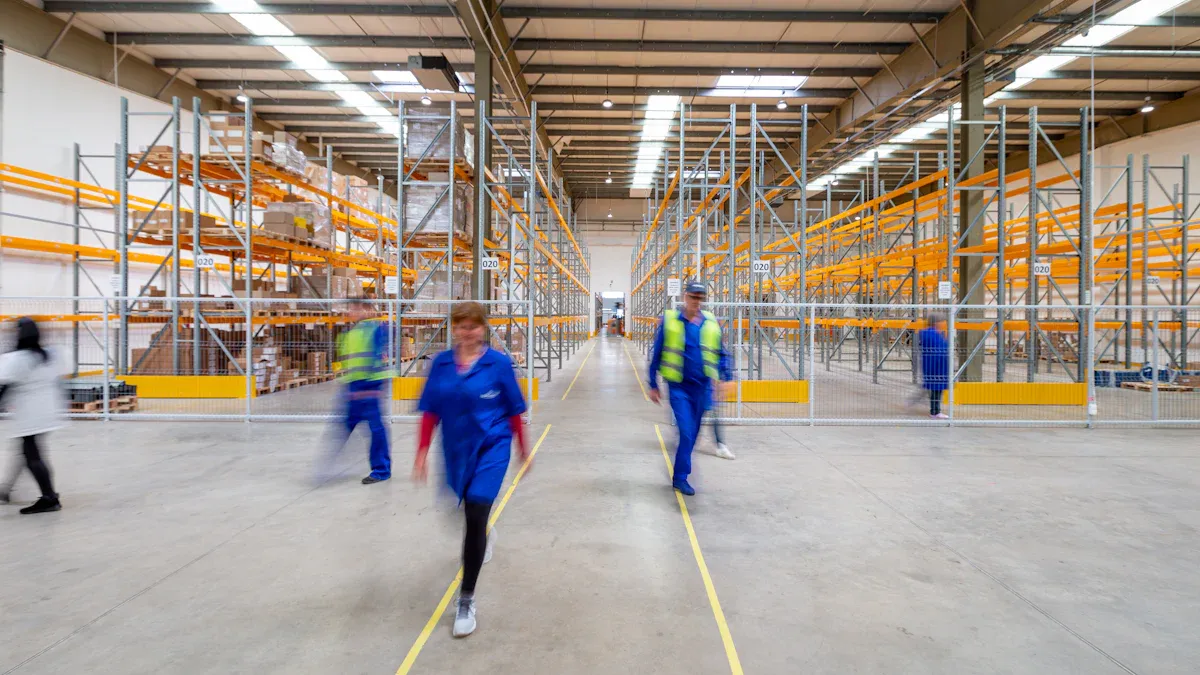
As a freight associate, you start your day with a plan. You help move freight at every step. Your job has many tasks. You work in warehouses and stores. Sometimes you work late or long hours. You must stay awake and ready to work hard.
Loading and Unloading
You handle freight carefully and follow safety rules. Before you begin, check if the truck is stopped. Make sure the parking brakes are on. Use trailer restraints so trucks do not roll away. Talk to your team and check the area for dangers. Make sure the area is bright and safe. Put heavy loads at the bottom. Place lighter loads on top. Secure all cargo before it moves. Use dock levelers and conveyor belts to unload fast. Always lift things the right way. Work with trained people.
Tracking Shipments
You track freight using new technology. GPS and Maritime AI help you see containers in real time. API integration gives quick updates. Sometimes tracking takes minutes, not hours. Predictive analytics help you find delays and change plans. You keep your team and customers updated about shipping.
Inventory Management
You check product counts and update records. Real-time tracking systems like SAP help you stop mistakes. These systems keep freight moving well. You connect inventory management with freight work. This makes things more accurate and efficient. This step is important for warehouses and stores.
Quality Checks
You check quality at different times. Before production, you look at raw materials. During production, you check for problems. Before shipping, you make sure products are good. You check papers to help customs go faster. Good quality checks stop returns and keep customers happy.
Quality Check Type | Description | Impact on Shipping Reliability |
|---|---|---|
Pre-Production Inspection | Check materials before making products | Makes sure materials are ready |
Final Random Inspection | Check products before shipping | Makes sure products are ready to sell |
Proper Documentation | Check papers for customs | Helps delivery go faster |
Operating Equipment
You use forklifts and other machines to move freight. You must follow safety rules and wear safety gear. You stand, walk, bend, and lift things up to 50 pounds. Sometimes you do this for twelve hours. You need to pay attention and use machines the right way. This keeps shipping safe and fast.
Tip: Always follow safety rules and talk to your team. This helps stop accidents and keeps freight moving.
A normal day as a freight associate needs teamwork and careful work. You help make shipping and transportation safe and reliable.
Skills Needed for Freight Associates
To do well as a freight associate, you need many skills. These skills help you move freight and keep things running. You also help with logistics and supply chain management. Here are the top skills you should learn:
Organization and Communication
You need to be organized and talk clearly. Being organized helps you handle many jobs at once. Good communication lets you share news and fix problems fast. Teams do better when you:
Use short and clear messages.
Listen carefully to others.
Set goals and check how you are doing.
When you know your team’s goals, you feel more involved. About 72% of workers say knowing company goals helps them work better. If you feel important, you will try harder at your job.
Knowledge of Documentation
You must know how to handle important papers for freight. This means working with import and export documents, bills of lading, and invoices. These papers have details for money, fees, and shipping steps. Good paperwork helps you stop delays and extra costs. Customs is faster when you check details and keep records updated.
Problem-Solving
You will face problems in freight every day. Try these steps to fix issues:
Stop the problem from getting bigger.
Ask “why” a few times to find the cause.
Draw a picture to see all reasons.
Write down what you find to stay clear.
Check your answer with facts before acting.
These steps help you fix delays and keep things moving.
Physical Strength
You need to lift and move freight safely. The table below shows the strength you may need:
Strength Level | Weight Range (lbs) | Duration Level |
|---|---|---|
Sedentary | < 10 | Seldom |
Light | 10-20 | Occasional |
Medium | 21-50 | Frequent |
Heavy | 51-100 | Constant |
Very Heavy | > 100 | Constant |
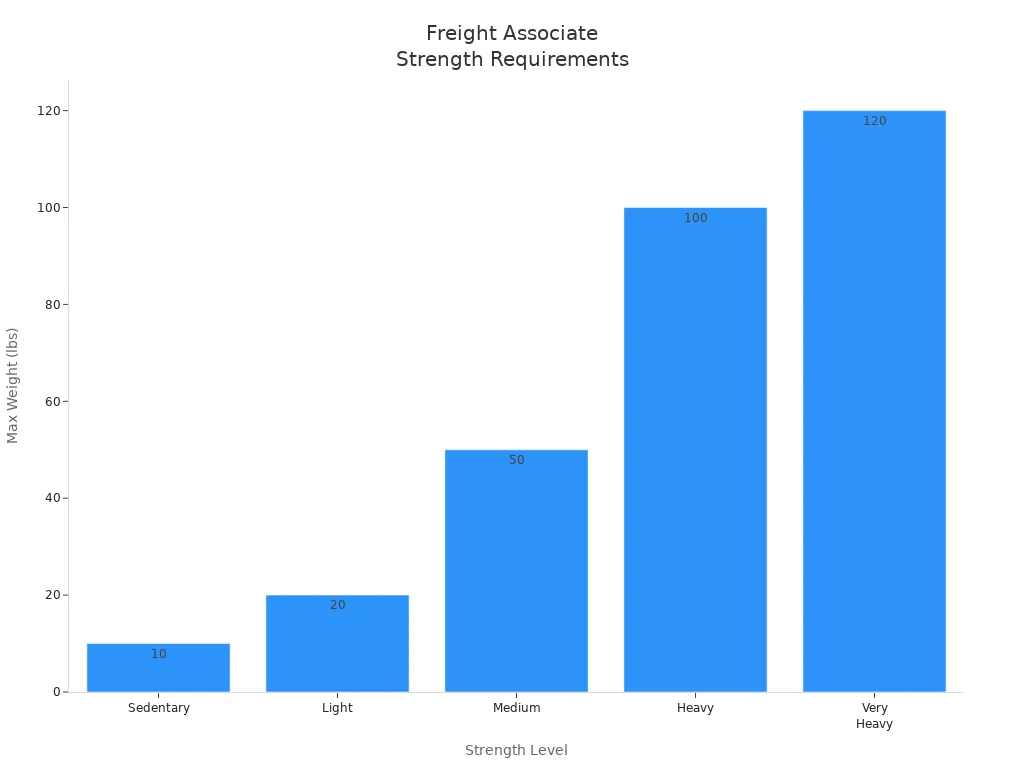
You must follow safety rules to avoid getting hurt at work.
Technology Familiarity
You should know how to use technology tools for freight. These tools help you do your job better. Some tools are:
Shared dashboards to check shipments.
Task apps to plan your work.
Automation for entering data and billing.
Dashboards to track important numbers.
Technology helps you work faster and make fewer mistakes. It also helps you change plans when needed.
Tip: Keep learning new tools and ways to work. This will help you do better in logistics and make your job easier.
Impact on Operations
Reducing Delays
You help keep freight moving on time. When you plan shipments and watch cargo, you stop delays. You use tracking tools to find problems fast. You check how long loading takes. You make sure trucks do not wait too long. Here are ways you see your impact:
On-time deliveries: You count orders that arrive when promised.
Average wait time: You write down how long loading or unloading takes.
Order accuracy: You check if orders have all items and no damage.
Transit time: You see how long freight travels from start to end.
Dwell time: You find places where shipments sit too long and fix them.
These steps help make shipping smooth and steady.
Ensuring Compliance
You must follow many rules as a freight associate. You check laws, company rules, and government guides. This helps you avoid fines and keeps work safe. The table shows how rules change your job:
Compliance Standards | Impact on Logistics Outcomes |
|---|---|
Legal standards | Keeps work honest and lowers risk |
Internal policies | Makes work steady and organized |
Regulatory guidelines | Stops mistakes and builds trust |
You also follow rules like the United States-Mexico-Canada Agreement and Advanced Filing Rules. By following rules, you protect your company and keep freight moving.
Improving Relationships
You build good relationships with carriers and customers. You talk clearly and give updates about freight. You set goals and check how things go. You use technology to share news and cut down on paperwork. These actions help you:
Build trust with carriers and shippers
Fix problems fast
Make service better
Help everyone know what will happen
Good relationships make shipping easier for all.
Lowering Costs
You help your company save money on freight. You talk with carriers to get better prices. You use tools to find the best and cheapest routes. You also put small shipments together to save money. Here are ways you lower costs:
Talk with carriers for better prices.
Use tools to plan fast and cheap routes.
Check bills to find and fix extra charges.
Put shipments together to fill trucks and save money.
These steps help your company stay strong in shipping and logistics.
How to Excel as a Freight Associate
Practical Tips
You can do well as a freight associate by using good habits. First, make sure you have the tools you need for your job. Use technology to help track freight and handle paperwork. Share updates with your team and listen to their ideas. Talking openly helps everyone fix problems faster. Having people from different backgrounds brings new ideas. Celebrate even small wins to keep everyone happy.
Give yourself the right tools for your work.
Build trust with your team members.
Talk honestly and share news with your team.
Work with people who have different ideas.
Celebrate when you or your team do well.
At places like D&L Transport, these habits help teams work together. When your team helps you quickly, you can move freight without delays.
Performance Improvement
You can get better at your job by watching important numbers. Look at how fast you move freight and how correct your work is. Some common numbers to check are:
Metric | Description |
|---|---|
Cycle time | Time from order to delivery to the customer |
Return rate | How often products come back because of freight problems |
Resource utilization | How well you use your tools and time |
Other numbers to watch are delivery time, on-time delivery, order accuracy, shipping costs, and how often you use your inventory. By checking these numbers, you can find ways to do your job better every day.
Career Growth
You can grow in your job by learning new things and trying new roles in logistics. Many freight associates move up to jobs like operations manager or pick special areas like sustainability or analytics. Some people work in buying or project management.
Career Path | Description |
|---|---|
Supply Chain Management | Watch over the whole supply chain process |
Operations Management | Run warehouses or shipping networks |
Specialization | Focus on things like safety or the environment |
Analytics and Technology | Use data to make better freight choices |
Procurement | Work with vendors and buy supplies |
Consulting or Project Management | Help companies make their freight work better |
You might start as a new freight associate, then move up to manager, and later become a senior leader. Stay curious and keep learning, and you will find many chances in the freight industry.
You are important as a freight associate. Your job includes shipment coordination, documentation, carrier liaison, and warehouse duties. Knowing these jobs helps you make good choices in logistics. You help freight move better, make customers happy, and support your team. Skilled freight associates help many industries for a long time:
Long-Term Benefits | |
|---|---|
Retail and E-commerce | Omnichannel fulfilment, seasonal capacity planning, last-mile optimisation, returns management. |
Manufacturing and Industrial | Just-in-time logistics, inbound material flow optimisation, outbound distribution, project logistics. |
Healthcare and Pharmaceuticals | Time-sensitive logistics, regulatory compliance, security protocols, emergency logistics. |
Technology and Electronics | High-value cargo security, new product introductions, reverse logistics, service parts logistics. |
Use the skills and tips you learned. You help keep supply chains strong and working every day.
FAQ
What does a freight associate do each day?
You help move freight by loading, unloading, checking inventory, and tracking shipments. You use equipment safely and keep records updated. You support your team and make sure goods arrive on time.
What skills do you need for this job description?
You need strong organization, clear communication, and basic technology skills. You must handle paperwork, solve problems, and lift heavy items. You also learn safety rules and follow instructions.
How do you track freight shipments?
You use tracking tools and software to follow shipments. You check updates, share information with your team, and report any delays. You keep customers informed about where their freight is.
Can you work late shifts as a freight associate?
You may work late or overnight shifts. You stay alert and ready to help with loading, unloading, and inventory checks. You follow safety rules and support your team during busy hours.
Why is accuracy important in this role?
You must check goods and paperwork carefully. Accurate records help prevent mistakes, delays, and extra costs. You keep shipments moving smoothly and help your company stay reliable.
See Also
PGL Offers Comprehensive Solutions for LTL and FTL Shipping
Selecting LTL, FTL, or Drayage with PGL for Trucking
Begin Your Freight Journey with PGL's FTL Services
Key Strategies for Effective Global Logistics Management
Premier Global Logistics Enhances West Coast Freight with Flexibility
