Freight Class Numbers Breakdown: Complete Guide to LTL Shipping Classes
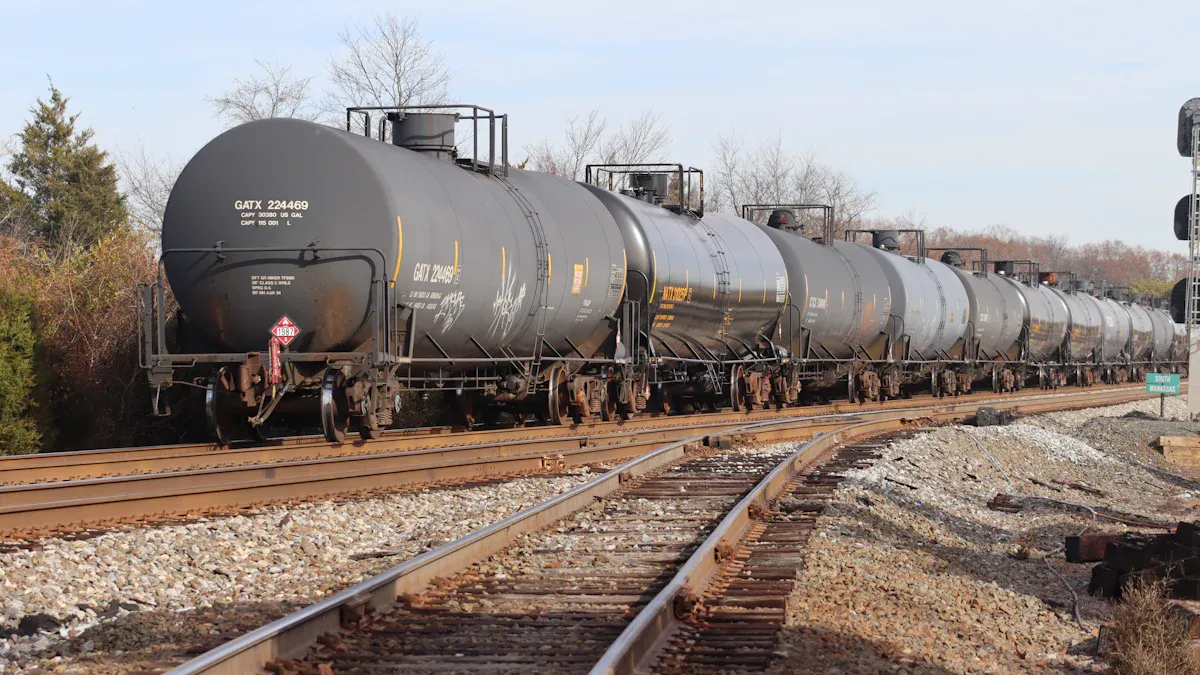
Freight class numbers breakdown shows how class codes change shipping costs and risks. You use a freight class number to sort freight by density, stowability, handling, and liability. Picking the right freight class helps you control shipping costs. If you use the right class, you avoid extra fees and save money. You also lower the chance of claims, especially if your freight is breakable or expensive.
Density: Lower density means a higher freight class.
Stowability: Odd shapes or dangerous freight raise the class.
Handling: Freight needing special care or tools gets a higher class.
Liability: Fragile or pricey freight has a higher class.
You can save 30-50% and have fewer problems if you use the correct freight class number.
Key Takeaways
Picking the right freight class number can help you save money. You can save 30-50% on shipping costs. It also lowers the chance of damage claims.
There are four main things that set your freight class. These are density, stowability, handling, and liability. These also affect your shipping rates.
Always measure and weigh your cargo the right way. This helps you avoid mistakes and extra fees.
You can use freight class calculators to make things easier. But always check the results with the real NMFC codes.
Keep learning about NMFC codes and check for updates often. This helps you follow the rules and ship your items smoothly.
Freight Class Numbers Breakdown in LTL
What Are Freight Class Codes?
Freight class codes help sort and rate LTL shipments. These codes show how carriers treat your freight and set prices. The national motor freight classification system gives each freight class a number. This number depends on four main things:
Factor | Description |
|---|---|
Density | How much space cargo takes up compared to its size. This changes the shipping class. |
Handling | How easy it is to move the freight. Size and shape matter here. |
Stowability | How simple it is to fit cargo on a trailer. Uniform shapes are easier to stow. |
Liability | The risk of shipping certain items. This affects their class in the NMFC system. |
You see these codes on shipping papers and bills of lading. They help you pick the right freight class for every shipment. Using the correct code stops extra charges and lowers claim risks.
NMFC System Overview
The NMFC, or national motor freight classification, is the main system for classifying LTL freight. You use this system to compare freight types and pick the right class number. The NMFC uses density, handling, stowability, and liability to make fair freight classes.
There are 18 different ltl freight classes in the NMFC system. Each class shows how easy or hard it is to ship something. Lower numbers mean the freight is heavy, easy to move, and simple to load. Higher numbers mean the freight is light, breakable, or hard to load.
You use the NMFC system to:
Set shipping prices for ltl shipments.
Choose how to pack and palletize freight.
Lower the chance of damage or loss.
Make sure your shipment follows carrier rules.
Range and Meaning of LTL Freight Classes
Freight class numbers start at 50 and go up to 500. This range helps sort freight by how easy or hard it is to ship. Lower numbers mean your shipment is heavy and easy to move. Higher numbers mean your freight is light, big, or breakable.
Here is a simple list of common ltl freight classes and what they mean:
Class | Density Range (lb/ft³) | Typical Commodities | Key Characteristics |
|---|---|---|---|
50 | ≥ 50 | Bricks, cement, steel rods | Very heavy, easy to load |
55 | 35–50 | Hardwood flooring, rolled textiles | Heavy, regular shape |
60 | 30–35 | Car parts, machine parts | Compact, used in factories |
65 | 22.5–30 | Bottled drinks, boxed tools | Stackable, for consumers |
70 | 15–22.5 | Unassembled furniture, canned foods | Medium density |
77.5 | 13.5–15 | Tires, bathroom fixtures | Heavier, need care |
85 | 12–13.5 | Crated machines, metal fixtures | Medium bulk |
92.5 | 10.5–12 | Refrigerators, tool chests | Bulky, medium density |
100 | 9–10.5 | Boat covers, garden tools | Low-medium density |
110 | 8–9 | Cabinets, framed art | Easy to damage, odd shapes |
125 | 7–8 | Small home appliances | Light, kind of fragile |
150 | 6–7 | Wooden desks, game consoles | Bulky, light |
175 | 5–6 | Soft chairs, stuffed furniture | Light, fragile |
200 | 4–5 | Mattresses, big plastic crates | Very light, large |
250 | 3–4 | Bamboo furniture, audio systems | Bulky, tricky to pack |
300 | 2–3 | Wooden tables, light kayaks | Lightweight, oversized |
400 | 1–2 | Deer antlers, big decorations | Very light, fragile |
500 | < 1 | Sculptures, fancy electronics | Almost no density, high risk |
You can see how density and handling change the freight class numbers. If your shipment is heavy and easy to stack, you get a lower class. If your shipment is light, breakable, or hard to load, you get a higher class.
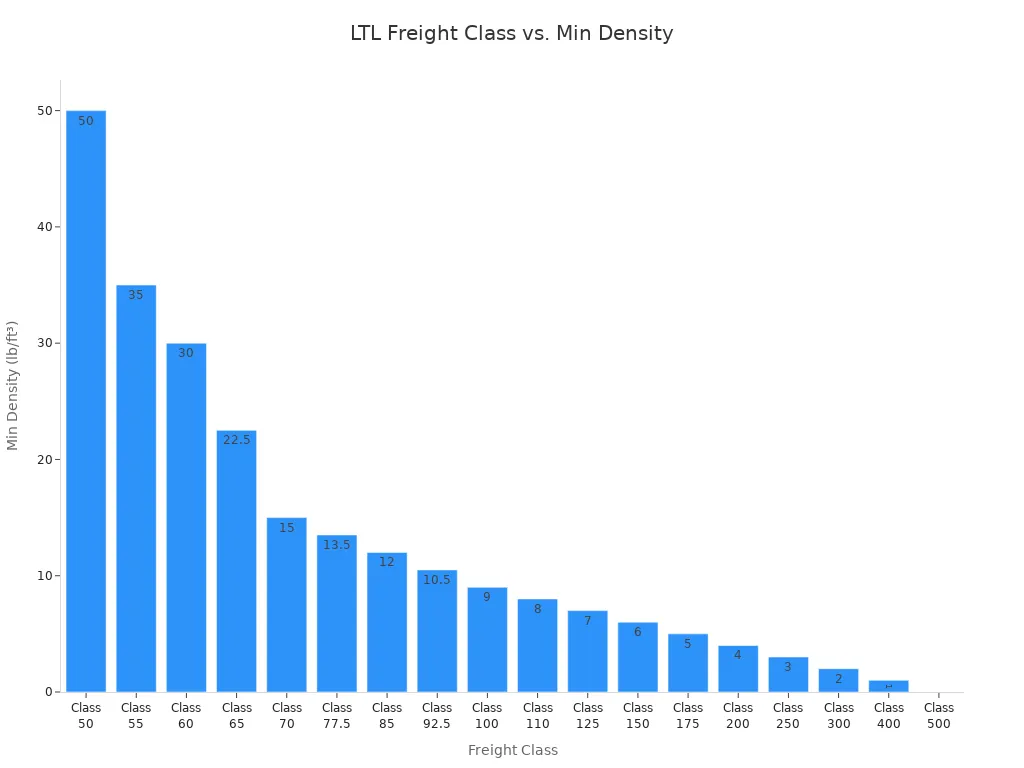
This chart lets you compare the minimum density for each ltl freight class. It shows why some freight costs more to ship than others.
Tip: Always check the NMFC code before you ship. Picking the right freight class saves money and stops billing problems.
You need to know about freight class numbers because they change your shipping price, risk, and how carriers treat your freight. When you understand ltl freight classes, you make better choices and avoid expensive mistakes.
Key Factors in LTL Freight Classification
You need to know why ltl freight classification matters. Four main things decide your shipment’s class. Each one changes how carriers treat your ltl freight and what you pay. Let’s see what these four key reasons are.
Density and Its Role
Density is the most important part of ltl freight classification. You find density by dividing weight by volume. If your shipment is heavy for its size, it has high density. If it is light and takes up more space, it has low density. Carriers use density to set the ltl freight classification. Density shows how much room your freight uses in a trailer.
Density (pounds per cubic foot) | Freight Class |
|---|---|
50 | 50 |
15 | 70 |
10.5 | 92.5 |
5 | 175 |
1 | 400 |
<1 | 500 |
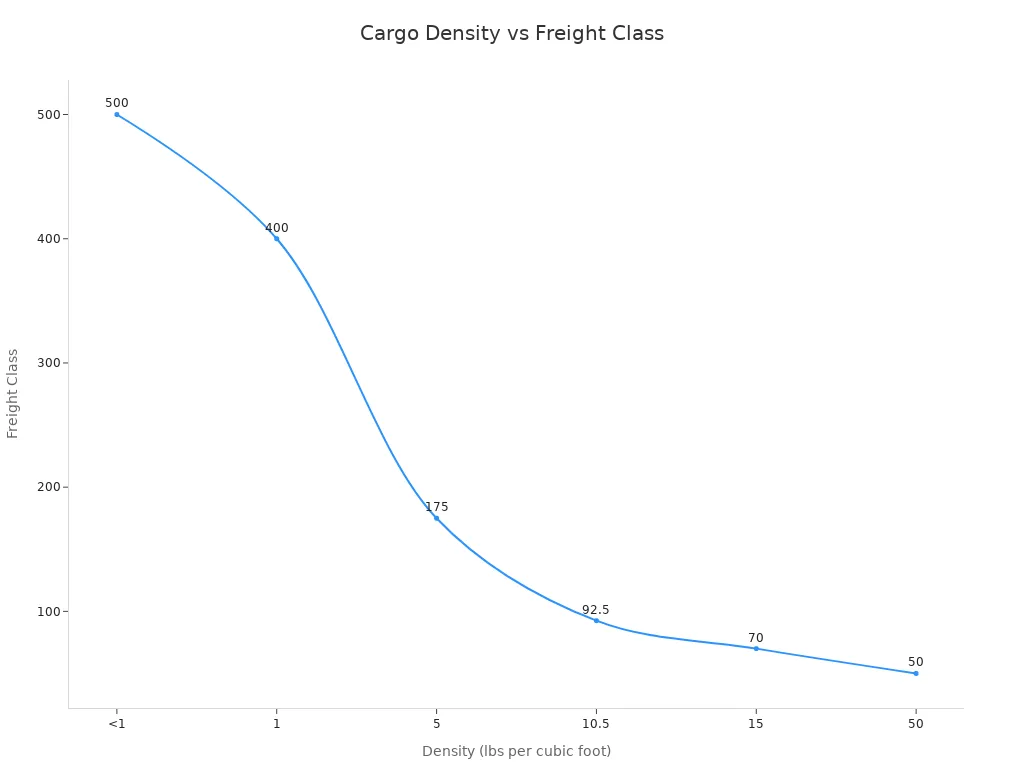
If you ship bricks, you get a low ltl freight classification. Bricks are dense. If you ship foam, you get a high ltl freight classification. Foam is light and bulky. Lower classes cost less to ship. Higher classes cost more.
Stowability Explained
Stowability means how well your ltl freight fits with other shipments. Some items are easy to stack and store. Others have odd shapes or rules that make them hard to load.
Stowability changes how shipments travel with other goods.
Hazardous materials or long pipes get a higher ltl freight classification.
Odd shapes or non-stackable freight waste space and raise costs.
If your freight is easy to stow, you get a lower ltl freight classification. You also get better rates.
Handling Requirements
Handling means how easy it is for workers to move your ltl freight. If your shipment needs special tools or extra care, it gets a higher ltl freight classification. Glass panels or fragile electronics need careful handling. Carriers charge more for these shipments. They take more time and effort.
If you ship items that are easy to move, you get a lower ltl freight classification. This saves you money. It also makes it easier for carriers to accept your freight.
Liability Considerations
Liability is about risk. If your ltl freight might get damaged or could harm other shipments, it gets a higher ltl freight classification. Expensive or fragile items, like artwork or chemicals, raise the risk for carriers. They may limit liability or charge more to cover losses.
You need to know your ltl freight classification. It affects your insurance, claims, and how much you pay if something goes wrong.
Tip: Always check each factor before you ship. Accurate ltl freight classification helps you avoid extra charges. It keeps your shipments moving smoothly.
How to Calculate Your LTL Freight Class

If you calculate your ltl freight class correctly, you avoid extra fees and delays. You must measure, weigh, and classify your cargo before shipping. This helps your shipment meet carrier rules and nmfc codes.
Measuring and Weighing Cargo
First, you need to measure and weigh your freight. This step helps you find the right ltl class. Here is what you do:
Look at your freight for damage or odd shapes.
Measure the longest parts, including packaging and pallets.
Write down the length, width, and height in inches.
Find cubic feet:
Multiply length, width, and height.
Divide by 1,728 to get cubic feet.
Weigh your shipment with a certified scale. Include all packaging.
Figure out density:
Use this formula: Density = Total Weight (lbs) / Cubic Feet.
Check your numbers to make sure they are right.
Tip: Teach your team to use new density charts and certified tools. This helps stop mistakes and keeps your ltl freight classification correct.
Step | Description |
|---|---|
Measure Dimensions | Use a tape measure for length, width, and height |
Calculate Cubic Feet | Divide cubic inches by 1,728 |
Weigh Shipment | Use a certified scale |
Divide weight by cubic feet |
Using Freight Class Calculators
A freight class calculator can make things easier. These online tools help you find the right ltl freight class. You type in your shipment’s size and weight. Most calculators need:
Length, width, and height of your freight
Total weight with packaging
Type of product or commodity
The calculator uses this information to find density and suggest a freight class. Some calculators also look at handling, stowability, and liability. You get a fast answer that helps you avoid mistakes.
Shippers often use these tools:
Freight density calculator: Enter your shipment’s details to get density and class.
Transportation management systems (TMS): Many TMS have freight class estimators.
Third-party logistics services: Experts can help with tricky loads and nmfc codes.
Note: Always check the class from any calculator with official nmfc codes. This helps you avoid expensive errors.
Verifying NMFC Codes
You need to check nmfc codes so your ltl freight meets carrier rules. Here are some good steps:
Use the official NMFTA directory. Search for your product by name or material.
Read item descriptions and match them to your shipment.
Compare density and packaging to find the best code.
Look at carrier websites and online tools for suggested classes.
Ask third-party logistics experts for help with tricky freight.
Do a manual code search if you need to. Skip categories that do not fit your product.
Read footnotes for special rules or packaging needs.
Check density-based class breaks to avoid mistakes.
Tip: Update your systems and BOL templates with the newest nmfc codes. This keeps your shipping smooth and follows the rules.
You must measure, weigh, and classify your ltl freight carefully. Using a freight class calculator and checking nmfc codes helps you avoid billing problems and delays. Good classification protects your business and keeps your shipments moving.
Why Freight Class Numbers Matter in LTL Shipping
Freight class numbers play a big role in ltl shipping. You need to know why these numbers matter before you send your freight. They affect your ltl rates, insurance, and even if a carrier will accept your shipment. Understanding freight class helps you control shipping costs and avoid problems.
Impact on Rates and Costs
Freight class is the main factor that sets ltl rates. Carriers use this system to quote prices for freight shipping. Each commodity gets a number based on how hard it is to move. If you ship items with a higher freight class, you pay more per pound. Lower classes mean lower shipping costs.
Freight class numbers sort goods by density, stowability, handling, and liability.
The system ranges from class 50 (least expensive) to class 500 (most expensive).
Higher freight class numbers lead to higher shipping costs and ltl rates.
Mistakes in freight class can cause reclassification fees and surprise charges.
You save money when you pick the right freight class for your freight shipping. Accurate classification keeps your shipping costs low and avoids extra fees.
Insurance and Claims
Freight class also affects your insurance and claim outcomes in ltl shipping. Higher freight class numbers often mean your freight is more fragile or valuable. These shipments face more risk during freight shipping because they get handled more often.
Freight Class | Claim Rate Increase |
|---|---|
Higher Classes |
Ltl shipments with higher freight class numbers are more likely to get damaged.
Proper packaging and careful handling lower the risk of claims.
The most delicate freight shipping items need extra protection.
You need to know your freight class to protect your freight and improve claim results.
Carrier Policies and Acceptance
Carriers set their own rules for freight shipping based on freight class numbers. These policies affect if they will accept your ltl shipment and what service level you get.
Carrier policies set ltl rates by freight class.
Wrong freight class can lead to penalties, reclassification, or higher shipping costs.
Carriers may refuse freight shipping with very high freight class numbers.
You avoid delays and extra costs when you use the correct freight class. This helps your ltl shipping run smoothly and keeps your freight moving.
Common Mistakes in LTL Freight Classification
Mistakes in ltl freight class assignment can cause expensive problems. You should know why these errors happen and how they hurt your business.
Density Estimation Errors
People often make mistakes when measuring freight size and weight. Small errors or changes in packaging can mess up density calculations. Many shippers guess weight and size without using proper scales. This causes wrong freight class assignments. If you guess too low, carriers may change your shipment’s class. You might get surprise fees and delays.
Common density errors include:
Using guessed weights instead of certified scales
Not counting packaging in measurements
Using old numbers for new shipments
Tip: Always use accurate tools to measure your freight. Make sure you include all packaging to avoid density mistakes.
Misclassification Issues
Misclassifying your freight class can cause money and shipping problems. If you pick a lower freight class for a higher-class item, carriers will fix it and charge you more. Overcharging or undercharging can hurt your profits. Fights with carriers may harm your business relationships. Wrong freight class assignments also slow down shipping.
Consequences of misclassification:
Expensive changes when carriers fix mistakes
Extra fees and surprise charges
Delays and slow shipping
Double-check your freight class before you ship. This helps you avoid fights and delays.
Packaging and Palletization Mistakes
Bad packaging and palletization can lead to wrong freight class assignments. If you use weak materials or unstable pallets, your freight may get damaged or refused. Carriers follow strict NMFC rules for packaging. Guessing your freight class or giving the wrong weight raises costs. Carriers may reweigh and reclass your shipment, causing extra fees and delays.
Tips to avoid packaging mistakes:
Check your freight class using density, stowability, handling, and liability
Use strong pallets and good packaging materials
Look at the NMFC directory for rules
Ask your carrier for help if you are not sure about your freight class or packaging.
If you know about these common mistakes, you can make your ltl shipping better. Accurate freight class assignment saves money and keeps shipments moving.
You get better shipping results when you know about freight class numbers and codes. If you classify your freight correctly, you save money and follow the rules. Use the NMFTA’s ClassIT system and measure your freight well so you do not make mistakes. Freight brokers or carriers can help you with this and make sure you do not pick the wrong class.
Freight Class | Example Commodities | Estimated Shipping Cost (Chicago to Atlanta) |
|---|---|---|
Class 50 | Dense items (e.g., nuts) | $300 |
Class 200 | Low-density items (e.g., lampshades) | $600 or more |
If your freight is heavy for its size, you pay less.
Brokers can help you understand NMFC codes and stop expensive mistakes.
Picking the right class keeps your freight safe and makes shipping easy.
Keep learning by watching NMFTA webinars and using their resources. This helps you know about new changes in freight classification.
FAQ
Why do LTL carriers use freight class numbers?
Carriers use freight class numbers to set fair shipping rates. These numbers help carriers group freight by how easy it is to move, store, and protect. You get a clear price, and carriers know how to handle your shipment.
Why does density affect my freight class?
Density shows how much space your freight takes up compared to its weight. Carriers want to use trailer space well. If your freight is light but large, you pay more because it uses more room.
Why can misclassifying freight lead to extra charges?
If you pick the wrong class, carriers may reclassify your shipment. This can cause billing disputes, delays, or extra fees. Accurate classification helps you avoid these problems and keeps your shipping costs low.
Why should I check NMFC codes before shipping?
NMFC codes give the official class for your product. If you check these codes, you avoid mistakes and follow carrier rules. This step helps you prevent costly errors and keeps your shipments moving without trouble.
See Also
PGL Provides Comprehensive Solutions for LTL and FTL Shipping
Selecting LTL, FTL, or Drayage Services with PGL's Expertise
PGL Offers Comprehensive Freight Services Across the West Coast
Complete Ocean Export Solutions for FCL and LCL from U.S. Ports
Maximize Savings with PGL's Cross-Country FTL Shipping Solutions
