Freight On Board (FOB) Guide: Meaning, Responsibilities, and Shipping Process
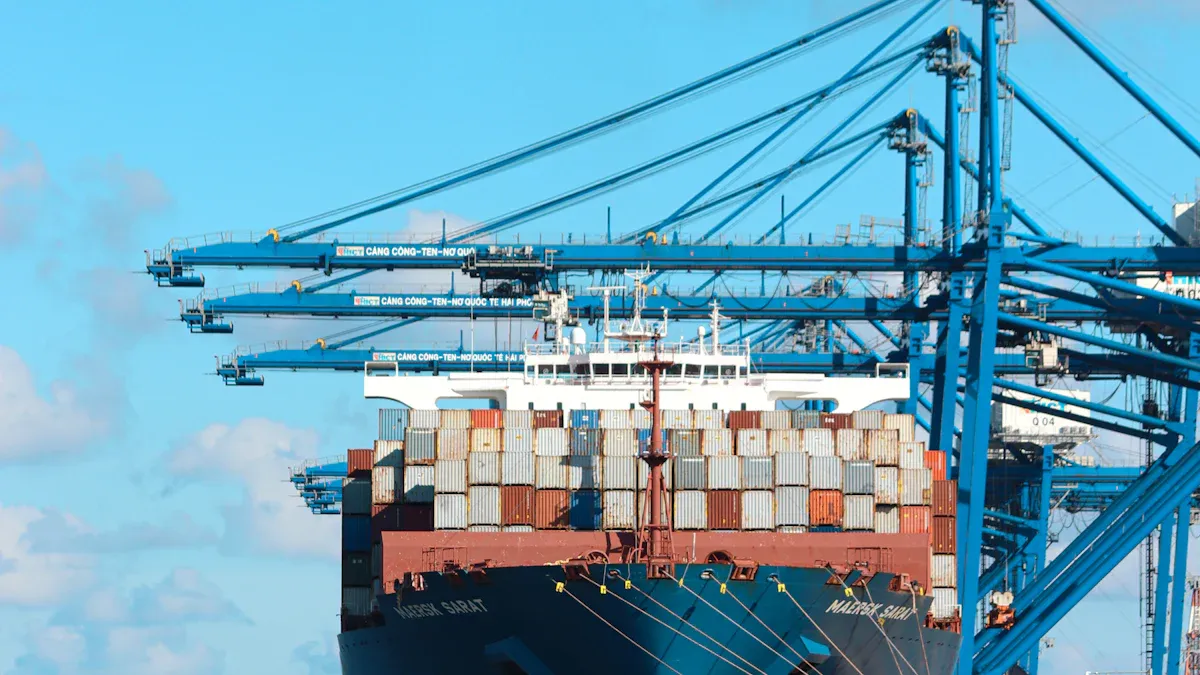
Freight On Board (FOB) is an important Incoterm in world trade. You see FOB a lot when you ship goods to other countries. If you know how FOB works, you can control costs and risks in global trade.
Knowing about Freight On Board (FOB) is very important for importers and exporters. It affects how much money you save and how you handle risks. FOB tells you the exact time when the seller stops being responsible for the goods. After that, the buyer takes over. This helps companies plan shipping, save money, and lower risks during transport.
FOB makes it clear who pays for shipping, insurance, and customs fees. This helps stop confusion and keeps people from arguing during trade.
You should learn about FOB because:
It shows who pays for shipping and insurance.
It tells who is responsible if goods are lost or damaged.
It helps you make a good plan for trading with other countries.
If you learn about FOB, your trading with other countries will be easier and better. Use this freight on board FOB guide to do well in the world market.
Key Takeaways
Learn about FOB to see when the seller stops being responsible and when the buyer starts. This helps you handle costs and risks better.
FOB terms show who pays for shipping and insurance. This stops arguments and confusion in global trade.
Pick FOB origin if you want more control over shipping costs and risks. Pick FOB destination if you want less risk and want the seller to be responsible until delivery.
Always look at your FOB agreement for the named port. This helps you know who is responsible and when risk changes.
Talk clearly with your trading partners. You can use a freight forwarder to make shipping easier and avoid expensive mistakes.
Freight On Board FOB Guide: Meaning & Basics
What Is Freight On Board?
You need to understand what freight on board means before you start using it in international trade. Freight on board, also called free on board or FOB, is an international trade term that tells you when the seller’s job ends and the buyer’s job begins. The official Incoterms rules say that the seller must clear the goods for export and load them onto the vessel chosen by the buyer at the named port of shipment. When the goods are on the ship, the risk and responsibility move from the seller to you, the buyer.
FOB is only for ocean or waterway shipping. The seller pays for moving the goods to the port, clearing customs, and loading the goods onto the ship. You, as the buyer, pay for everything after the goods are on board. This includes the main freight, insurance, import duties, and final delivery. If something happens to the goods after they are loaded, you are responsible.
Tip: Always check the named port in your FOB agreement. This tells you exactly where the seller’s responsibility ends.
You see the term free on board in many international trade contracts. It helps both sides know who pays for what and who takes the risk at each step. This makes planning and cost control easier for your business.
FOB in International Shipping
FOB plays a big role in international shipping. You find it in many contracts because it gives a clear line between seller and buyer duties. Here is how FOB works in the shipping process:
The seller handles all costs and risks until the goods are loaded onto the vessel.
You, the buyer, take over costs and risks once the goods are on board. This includes paying for marine freight and insurance.
FOB is best for non-containerized sea freight, like bulk cargo or large machinery.
You should know that the meaning of free on board has changed over time. In the past, people used FOB for almost all types of shipping. Now, experts say FOB works best for goods that are not in containers. For container shipping, many companies use other international trade terms, like Free Carrier (FCA), because modern logistics are more complex.
Even with these changes, you still see FOB in many international trade deals. It has a long history and helps buyers who want to control their own freight and shipping costs. You can use the freight on board fob guide to decide if FOB is right for your shipment.
Note: Some experts think FOB may change in the future as international shipping rules evolve. Always stay updated with the latest Incoterms.
FOB remains popular because it gives you, the buyer, more control over freight choices and costs. You can pick your own carrier, negotiate rates, and manage your shipping process. This makes FOB a favorite for many importers and exporters in international trade.
FOB Responsibilities & Risk Transfer
When you know who does what in a freight on board agreement, you can stop mistakes and save money. FOB terms split the work, costs, and risks between you and your trading partner at a set point. This part tells why each side has certain jobs and how risk moves from seller to buyer.
Seller’s Responsibilities Under FOB
If you are the seller, your job is to get the goods ready for shipping and bring them to the ship at the starting port. You do the first steps because you know your area and the export rules. Here is what you must do under FOB:
Pack and get the goods ready for export so they follow the rules.
Move the goods to the port that is named in the deal.
Clear the goods for export and finish all the needed papers.
Put the goods on the ship that the buyer picked.
Give proof to the buyer that the goods are on the ship.
You do these things because you know local transport and export steps better. By doing this, you help the buyer avoid slowdowns and extra costs at the start.
Buyer’s Responsibilities Under FOB
After the goods are on the ship, the buyer takes over. The buyer wants to control shipping so they can pick the carrier, talk about prices, and make sure the goods travel their way. The buyer’s main jobs under FOB are:
Set up and pay for shipping and insurance from the starting port.
Handle import taxes and customs in their own country.
Take the risk if the goods are lost or damaged after loading.
Take ownership of the goods at the starting port.
Manage all risks and insurance costs while the goods are shipped.
The buyer does these jobs because they may know shipping companies and can get better prices. They also make sure the goods follow their country’s import rules, which helps stop problems when the goods arrive.
Tip: If you take control after loading, you can make sure the goods are handled your way and get better shipping prices.
When Does Risk Transfer?
The most important thing in a FOB deal is knowing when risk moves from seller to buyer. This point decides who pays if something happens to the goods. In global trade, this rule is very clear.
With FOB, the seller is in charge of the goods until they are put on the ship. The seller pays all costs and takes all risks until the goods are on the ship’s deck. Once the goods are on the ship, the risk goes to the buyer.
Remember, the seller’s job ends when the goods are on the ship. After that, the buyer is in charge if anything goes wrong. This rule helps both sides plan and handle risks in global trade.
Common Misunderstandings About Risk Transfer
Many people get mixed up about when risk really moves. Here are some common mistakes:
With FOB, risk moves when the cargo is loaded on the ship. But sometimes, shippers give the cargo to the carrier at the terminal before it is loaded.
Another mistake is thinking the seller is always in charge until the goods reach the buyer, no matter what the FOB terms say. This is not true. The FOB deal says when ownership, costs, and risks move from seller to buyer.
You should check your contract and shipping papers to make sure everyone knows when risk moves. This stops fights and keeps your trade smooth.
If you know your jobs and when risk moves, you can make better choices in every FOB shipment. This helps keep your business safe and helps you do well in world trade.
FOB Shipping Process Explained
Step-by-Step FOB Process
You need to understand each step in the FOB shipping process to avoid mistakes and delays. The process starts at the seller’s location and ends when you receive the goods. Here is a simple breakdown:
The seller prepares and packs the goods for export.
The seller arranges inland transport to move the goods to the port.
The seller completes export customs clearance and pays any export duties.
The seller loads the goods onto the vessel at the named port.
Once the goods are on board, risk and responsibility transfer to you.
You arrange and pay for the main freight from the port of origin.
You handle cargo insurance if needed.
You manage import customs clearance and pay any import duties.
You organize final delivery to your warehouse or destination.
Tip: Always check your contract to confirm when the risk moves from seller to buyer. This step is key in the FOB process.
The process helps you control costs and manage risks. You can choose your own freight partners and negotiate better shipping rates. For more details on Incoterms and the shipping process, you can visit the International Chamber of Commerce website.
Role of Freight Forwarders
Freight forwarders play a big part in the FOB shipping process. They help you and the seller work together and keep the process smooth. Here is how they support you:
They coordinate with shipping partners so everyone knows their job under FOB terms.
They keep communication clear to prevent disputes or delays.
They build strong relationships with carriers, which can lower costs and improve reliability.
They arrange transportation, secure cargo insurance, and handle customs clearance.
They make sure the goods are packed and loaded safely for export.
Freight forwarders often have special certifications, like AEO status, which can speed up customs checks and reduce inspections. This helps your goods move faster through the shipping process. You can learn more about the role of freight forwarders in global trade by visiting Freightos.
Note: A good freight forwarder can make the FOB shipping process easier and help you avoid costly mistakes.
By understanding the full process and working with skilled freight forwarders, you can make your freight on board shipments more efficient and secure.
Freight On Board Variations & Related Terms
FOB Origin vs. FOB Destination
You see fob origin and fob destination in many shipping contracts. These terms change who is in charge of the freight and when risk moves. If you know the difference, you can avoid mistakes and plan better.
Here is a table that shows the main differences:
Aspect | FOB Origin | FOB Destination |
|---|---|---|
Responsibility | Seller’s job ends when goods go to the carrier. | Seller must bring goods to a set place. |
Risk of Loss | Buyer gets risk when goods leave seller’s place. | Seller keeps risk until goods reach you. |
Payment of Freight | Buyer pays for shipping. | Shipping cost is in the price. |
Passage of Title | Title moves at the starting point. | Title moves at the end place. |
fob origin means you are in charge as soon as the goods leave the seller’s place. You pay for shipping and take care of any problems on the way.
fob destination means the seller is in charge until the goods get to you. The seller pays for shipping and takes the risk until delivery.
If you want more control and want to handle costs, pick fob origin. If you want less risk and want the seller to ship, pick fob destination.
FOB vs. Other Incoterms
You should know how fob is different from other Incoterms like EXW, CFR, and CIF. Each one changes who pays for shipping and who takes the risk.
Definition | Risk Transfer | Responsibilities | |
|---|---|---|---|
FOB | Goods are put on the ship at the port. | Risk moves when goods are loaded. | Seller brings goods to the port and does export papers; buyer pays for shipping and takes risk. |
CFR | Seller pays for shipping to the destination port. | Risk moves when goods are loaded. | Seller pays for shipping; buyer takes risk after loading. |
CIF | Seller pays for shipping and insurance to the port. | Risk moves when goods pass the ship’s rail. | Seller pays for insurance and shipping; buyer takes risk after loading. |
EXW | Goods are ready at the seller’s place. | Risk moves at the seller’s place. | Seller does very little; buyer does all shipping and takes risk. |
fob lets you control shipping and costs after the goods are on the ship.
CFR means the seller pays for shipping, but you take the risk after loading.
CIF means the seller pays for shipping and insurance, so you get more safety.
EXW means you do almost everything, starting at the seller’s place.
Pick the Incoterm that matches what you know and how much risk you want. fob origin and fob destination give you different jobs, so choose the one that fits your plan.
FOB Examples, Risks & Tips
Real-World FOB Scenarios
You can see how fob works in many industries. These examples show why fob is a popular choice for global shipping:
Case Study | Description |
|---|---|
A German company sells machinery to a U.S. buyer under fob Hamburg. The seller handles transport to the port and loading. The buyer takes over when the goods are on the vessel. | |
FOB in Importing Textiles | A U.K. retailer buys textiles from India under fob Mumbai. The seller delivers the goods to the port and loads them. The buyer manages shipping and customs after loading. |
A U.S. buyer orders electronic parts from Japan under fob Yokohama. The seller brings the goods to the port and loads them. The buyer pays for freight and takes all risks after loading.
When you order electronics from China under fob terms, you may face extra costs if you do not plan well. Good communication helps you avoid surprises.
These examples show why fob gives you control over shipping and costs. You can choose your own freight partners and manage your supply chain.
Common FOB Risks
You need to know the risks in fob shipping to protect your business. Here are the most common problems:
Miscommunication about fob terms can cause disputes over who pays for damage or loss.
Confusing fob destination with fob origin can create liability issues.
Using fob for air freight instead of the right term can lead to mistakes.
Forgetting marine insurance can cost you a lot if the goods are lost at sea.
Not clarifying fob terms for containerized goods can make liability unclear.
Poor document handling can delay customs and payment.
Outdated or vague contracts can cause legal trouble.
Mixing up domestic and international fob meanings can lead to unpaid freight charges or customs problems.
You should always check your contracts and talk with your partners to avoid these risks.
Tips for Managing FOB Agreements
You can manage fob agreements better with these tips:
Always name the port of shipment and vessel in your contract.
Communicate clearly with your trading partner and the shipping line.
Make sure the seller handles export clearance, and you prepare for import steps.
Buy insurance to cover your goods after loading.
Use detailed contracts to outline each party’s responsibilities.
Choose reliable carriers for your freight.
Track your shipments with technology to spot problems early.
Review all terms so you know your duties and costs.
Work with a freight forwarder to handle logistics and paperwork.
Ask logistics experts if you have questions about fob shipping.
Tip: Good planning and clear contracts help you avoid costly mistakes in fob shipping.
By following these steps, you can reduce risks and make your fob shipments run smoothly.
You should learn about fob because it affects your job in world trade. With fob, you know when you become responsible and who pays for shipping or insurance. This helps you not make expensive mistakes.
fob origin means you are in charge after the goods leave the seller.
fob destination means the seller is in charge until you get the goods.
fob terms show who does each part and help stop arguments.
Responsibility | Seller | Buyer |
|---|---|---|
Transport to port | Yes | No |
Export clearance | Yes | No |
Loading onto ship | Yes | No |
Risk after loading | No | Yes |
Always talk openly with your partners about fob. If your shipment is tricky, ask a freight forwarder or logistics expert for advice.
FAQ
Why should you choose FOB for your shipment?
FOB gives you more control over shipping. You can pick your carrier and negotiate better rates. You also decide on insurance and delivery. This helps you manage costs and risks.
Why does the risk transfer at the port under FOB?
The risk transfers at the port because the seller loads the goods onto the ship. After loading, you take responsibility. This rule makes it clear who pays if something happens during transport.
Why do many importers prefer FOB over other Incoterms?
Many importers prefer FOB because it lets them handle shipping and insurance. You can choose trusted partners and track your goods. This control can save money and reduce surprises.
Why is clear communication important in FOB agreements?
Clear communication helps you avoid mistakes about who pays for what. It also prevents disputes if goods are lost or delayed. You should always check contracts and talk with your trading partner.
See Also
PGL’s Comprehensive Services Span the West Coast Freight
Begin Your Freight Journey with PGL’s FTL Services
PGL Offers Breakbulk and Oversized Ocean Freight Solutions
PGL Provides Versatile FCL, LCL, RoRo, and Breakbulk Options
Maximize Savings with PGL’s Nationwide FTL Shipping Services
