Freight on Board made easy how to handle shipping terms
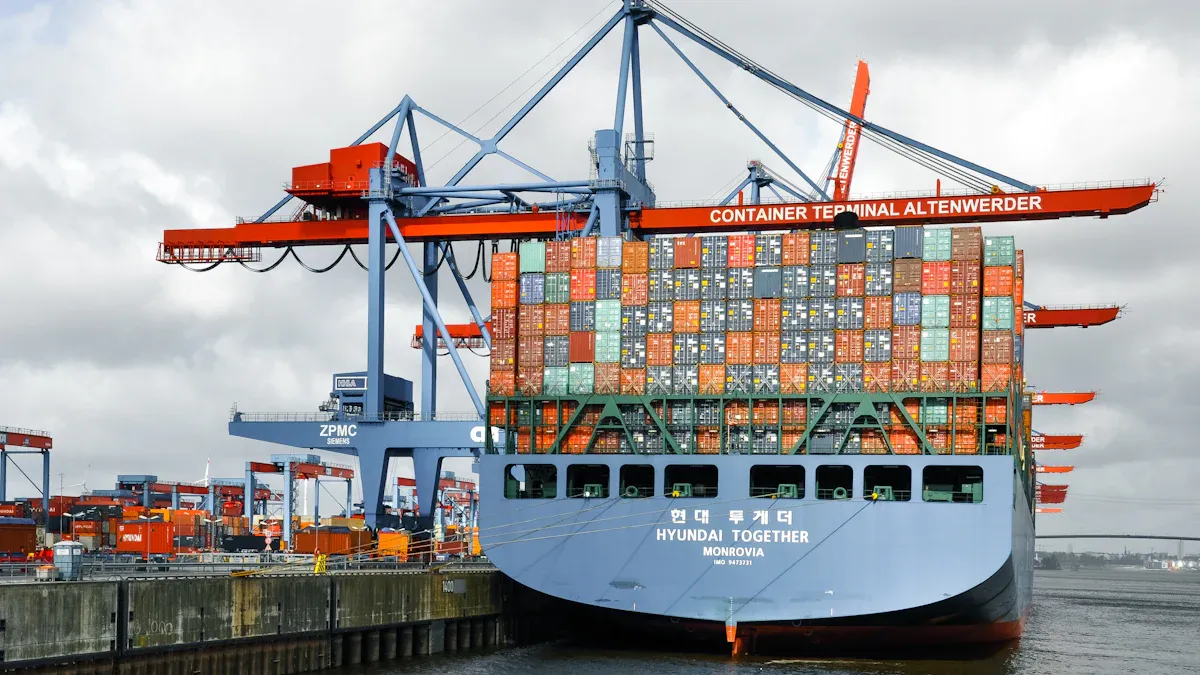
Freight on Board shows who is in charge of goods during shipping. You should know this term because it changes cost and risk for your business. A clear FOB agreement helps you stop fights about damaged goods. It also makes fixing problems easier. When you know when liability changes, you can plan your money better. You can also handle insurance in a smarter way. If you use this knowledge, you can make smart shipping choices. You can avoid expensive mistakes.
Key Takeaways
Learn what Freight on Board (FOB) terms mean. This helps you know when risk and responsibility move from seller to buyer. - Pick between FOB Shipping Point and FOB Destination. Your choice depends on how much control you want over shipping costs and risks. - Always add freight and insurance costs to your total landed cost. This helps you avoid surprise expenses. - Get important shipping papers ready, like the commercial invoice and bill of lading. This stops delays and arguments. - Talk clearly with your supplier about who does what and about insurance. This helps you avoid expensive mistakes.
Freight on Board Meaning in Shipping
FOB Definition and Legal Significance
You need to understand what Freight on Board means before you ship goods. Freight on Board, also called Free on Board, marks the point when costs and risks move from the seller to you, the buyer. This term is important in international shipping because it tells you who takes care of the goods at each step. When you use Freight on Board in your contracts, you make sure both sides know their responsibilities. International shipping regulations use this term to clarify when you take over ownership and risk. If you follow these rules, you can avoid confusion and protect your business.
Tip: Always check the latest Incoterms before you agree to any shipping terms. Incoterms 2020 updated how risk and loading are defined for Freight on Board. Now, risk transfers when the goods are loaded on the vessel, not just when they cross the ship’s rail.
How FOB Determines Responsibility and Risk
You must know exactly when responsibility and risk change hands. Freight on Board terms set this point clearly. The type of FOB you choose affects who pays for shipping and who handles problems if something goes wrong. Look at the table below to see how this works:
FOB Type | Responsibility Transfer |
|---|---|
FOB Origin | You take ownership and risk once the goods are shipped. You pay for shipping and handle any issues during transit. |
FOB Destination | The seller keeps ownership and risk until the goods reach your location. The seller pays for shipping and deals with any problems during transit. |
International shipping regulations require you to follow these rules:
FOB terms show when you take over costs and risks.
You must follow customs rules, which depend on the FOB point.
Knowing your FOB type helps you plan for insurance and shipping costs.
Different countries may use Freight on Board in slightly different ways. For example, in North America, the term can mean the seller stops paying shipping costs at a different point than in other countries. Always check the contract and local laws to avoid mistakes.
FOB Shipping Point vs Destination
Key Differences in Risk and Cost Transfer
You should know how risk and cost move between you and the seller. The biggest difference between FOB Shipping Point and FOB Destination is who takes care of the goods while they travel. Here is what you need to notice:
With FOB Shipping Point, you are in charge once the goods leave the seller’s place.
The seller only pays for moving the goods until they are put on the ship.
After that, you pay for shipping, insurance, and fix any problems during the trip.
With FOB Destination, the seller is in charge until the goods get to you.
The seller pays for shipping, insurance, and customs until the goods arrive safely.
This changes who pays if something bad happens while shipping. If you pick FOB Shipping Point, you need to plan for extra costs and risks. If you pick FOB Destination, the seller pays for these things until you get the goods.
Tip: Always read your contract to see who pays for shipping and who takes care of insurance. This helps you avoid surprise costs.
When Ownership Changes Hands
You also need to know when you become the owner of the goods. The time this happens depends on the Freight on Board term you use.
If your contract says FOB Shipping Point, you own the goods when they leave the seller’s warehouse. You must update your inventory right then. The goods are yours during the trip, so you take the risk if something happens.
If your contract says FOB Destination, you own the goods only when they reach your place in good shape. The seller keeps the risk until you get the goods. You update your inventory when you receive them.
Here is a simple table to help you compare:
Aspect | FOB Shipping Point | FOB Destination |
|---|---|---|
Ownership transfer | At shipment | At delivery |
Risk in transit | Buyer | Seller |
Inventory timing | Buyer records at shipment | Buyer records at delivery |
Knowing these differences helps you make better choices in your shipping contracts. You can control costs and keep your business safe from problems you did not expect.
Calculating Costs with FOB Terms
It is important to know your total landed cost when using Freight on Board terms. You need to count every cost from buying your goods until they reach your door. This helps you set prices, avoid surprises, and keep your business making money.
Product, Freight, and Insurance Costs
Start by looking at the main costs. These are the price of the product, shipping fees, and any insurance you buy. With Freight on Board, you must arrange and pay for freight and insurance after the goods are loaded on the ship. This lets you pick the carrier and insurance you want.
Here is a table that lists the usual costs you should include:
Cost Component | Description |
|---|---|
Product cost | The price to make or buy the product from manufacturers or suppliers. |
Shipping | The cost to move goods from suppliers to warehouses and customers. |
Customs | Fees for customs, especially in international shipping. |
Risk Coverage Costs | Insurance and other costs to protect goods during shipping. |
Overhead costs | Costs for storing inventory, paying staff, processing payments, and running your business. |
You need to get your own freight contract. This means you ask shipping companies for prices and pick the best one. You also decide if you want marine cargo insurance. Insurance is not required, but it protects you if something happens to your goods. Many importers buy full coverage for safety.
Tip: Always add freight and insurance to your landed cost. This stops you from missing costs.
Customs, Duties, and Example Calculation
Customs duties and taxes are also a big part of your total cost. These depend on what you are importing, its value, and the country. You must check the HS Code to find the duty rate for your product. You also need to add import taxes like VAT or GST, and other fees such as customs clearance.
Here is a table that shows the main costs to think about:
Component | Description |
|---|---|
Product Cost | The starting price of the goods you import. |
Shipping Costs | The cost to move the goods. |
Customs Duties and Taxes | Government fees for bringing in goods. |
Insurance | Protection for loss or damage. |
Additional Fees | Other costs during the import process. |
Here is an example to help you see how to add up your total landed cost:
Determine the Product Cost
Start with the supplier’s price per unit. If the price per unit (FOB) is $7 and you buy 250 units, the total product cost is $1,750.Add Shipping and Freight Costs
Add up ocean freight, port fees, and delivery. If ocean freight is $320 and local transport is $80, shipping costs are $400.Calculate Customs Duties and Import Taxes
Duties depend on the HS Code. If customs duty is $175 and import tax is $340, the total for duties and taxes is $515.Add Insurance Costs
Insurance is usually a small part of the product cost. If insurance is $18, add this to your total.Include Additional Fees
This can be customs agent fees and payment fees. If these are $60, add them too.Final Landed Cost Calculation
Add all the costs:Product cost: $1,750
Shipping: $400
Duties and taxes: $515
Insurance: $18
Additional fees: $60
Total landed cost: $2,743
To get the cost per unit, divide by the number of units: $2,743 ÷ 250 = $10.97 per unit.
Note: Always check each cost carefully. Missing a fee can mean surprise costs and less profit.
You can use these steps for every shipment. This helps you compare suppliers, plan your spending, and make good choices for your business.
Documentation and Best Practices
Essential Shipping Documents
You need the right papers to ship goods with Freight on Board. If you forget a document or fill it out wrong, you can have big trouble. You might not know where your goods are. You could wait longer for payment. You may even argue about costs. To stop these problems, always get these important papers ready:
Commercial Invoice: Tells the price and details of your goods.
Bill of Lading: Shows your goods are on the ship and when risk changes.
Insurance Certificate: Proves you have insurance if something bad happens.
Customs Documents: Includes forms for bringing goods in and any special papers.
Check every paper to make sure it is correct before you ship. If you make a mistake, the bank might not accept your papers. This can slow down your payment and keep your goods at the port.
Contract and Insurance Tips
Your contract should be easy to understand. Good contracts help everyone know their jobs and costs. Here are some smart ways to talk about Freight on Board terms:
Tell who loads the container and gets the papers ready.
List what you pay now and what you pay later.
Explain when the seller stops being in charge and you start.
Use simple words so no one gets confused.
You also need to handle insurance the right way. The table below tells you what to remember:
Aspect | Details |
|---|---|
The seller is in charge until the goods pass the ship's rail. After that, you are in charge. | |
Insurance Coverage | You should buy ocean cargo insurance to keep your goods safe during the main trip. |
Insurance Activation | Your insurance starts when the goods are loaded and you get the On Board bill of lading. |
Tip: Always talk with your supplier and freight forwarder before you agree. Good talks and clear contracts help you avoid expensive mistakes.
Common Mistakes and How to Avoid Them
Misunderstanding FOB Responsibilities
You must know who is in charge at each shipping step. Many companies make mistakes with Freight on Board because they do not set clear rules. Here are some mistakes you should watch for:
You might give the wrong jobs in your sales contract. This can make it unclear who pays for shipping or does customs.
If you do not name the delivery port or place, you might argue about where to send the goods.
You could get confused about when risk moves from seller to buyer. This can cause fights if goods get lost or broken.
If the ship loads late, you might pay for storage even if you cannot control loading.
If you use the wrong Incoterms for containers, you might pay extra costs.
Not writing clear FOB rules in your contract often causes fights and money loss. Always write down when risk moves and where to deliver.
To stop these mistakes, do these things:
Pick the right Incoterms for your shipment.
Write the exact delivery place in your contract.
Make sure both sides know when risk and jobs change.
Overlooking Risk and Insurance Issues
You need to keep your goods safe during shipping. Many companies forget insurance or do not know when it should start. Here are problems you face if you skip insurance:
If you do not get freight insurance, one loss can take away months of profit.
Damage or loss during shipping can hurt your customer relationships.
Your company may look bad if goods come late or broken.
If you do not get insurance before shipping, you may have to pay for losses once goods are on the ship.
A real story: A company shipped goods from China to the US. The truck crashed before the port. No one had insurance for this part of the trip. Both sides lost money because insurance did not cover the crash.
To stop these problems, always:
Get and write down insurance before you ship.
Talk with your supplier about who handles insurance.
Check your contract to see when risk moves and who must get insurance.
If you know your jobs and plan for risk, you can stop big mistakes and keep your goods safe.
You now know that Freight on Board terms affect shipping costs, risk, and who is responsible. If you write FOB terms clearly in your contract, you will have fewer arguments. You will also know who should make a claim if goods go missing. Always check what you need to do and keep your contracts up to date. If your shipment is hard to manage, logistics experts can help you follow the law, control costs, and make backup plans. For more help, look at guides from AIT Worldwide or the International Chamber of Commerce.
Key reminders:
Make FOB terms clear so you do not make expensive mistakes.
Watch all costs and keep contracts current.
Ask experts for help with tricky shipments.
Aspect | Explanation |
|---|---|
Clarity in Responsibilities | FOB terms make it clear who does what, so there are fewer fights about shipping costs, who owns the goods, and who is responsible. |
FAQ
What does FOB mean in shipping?
FOB stands for "Freight on Board" or "Free on Board." You use it to show when you take responsibility for goods during shipping. It tells you who pays for shipping and who handles risk.
How do I choose between FOB Shipping Point and FOB Destination?
You should pick FOB Shipping Point if you want control and can handle shipping risks. Choose FOB Destination if you want the seller to manage shipping and risk until goods arrive at your place.
Do I need insurance with FOB terms?
Yes, you should get insurance. With FOB Shipping Point, you take the risk once goods are loaded. Insurance protects you if goods get lost or damaged during transit.
What documents do I need for FOB shipments?
You need a commercial invoice, bill of lading, insurance certificate, and customs documents. Always check that each document is correct before shipping to avoid delays or payment issues.
See Also
PGL Specializes in Breakbulk and Oversized Ocean Shipping
PGL Transports Everything from Bulk Freight to FBA on the West Coast
Transport Large Loads Economically with Premier Global Logistics' FTL Services
PGL Offers Expert Solutions for LTL and FTL Freight Shipping
