What Are the Key Principles of Warehouse Logistics
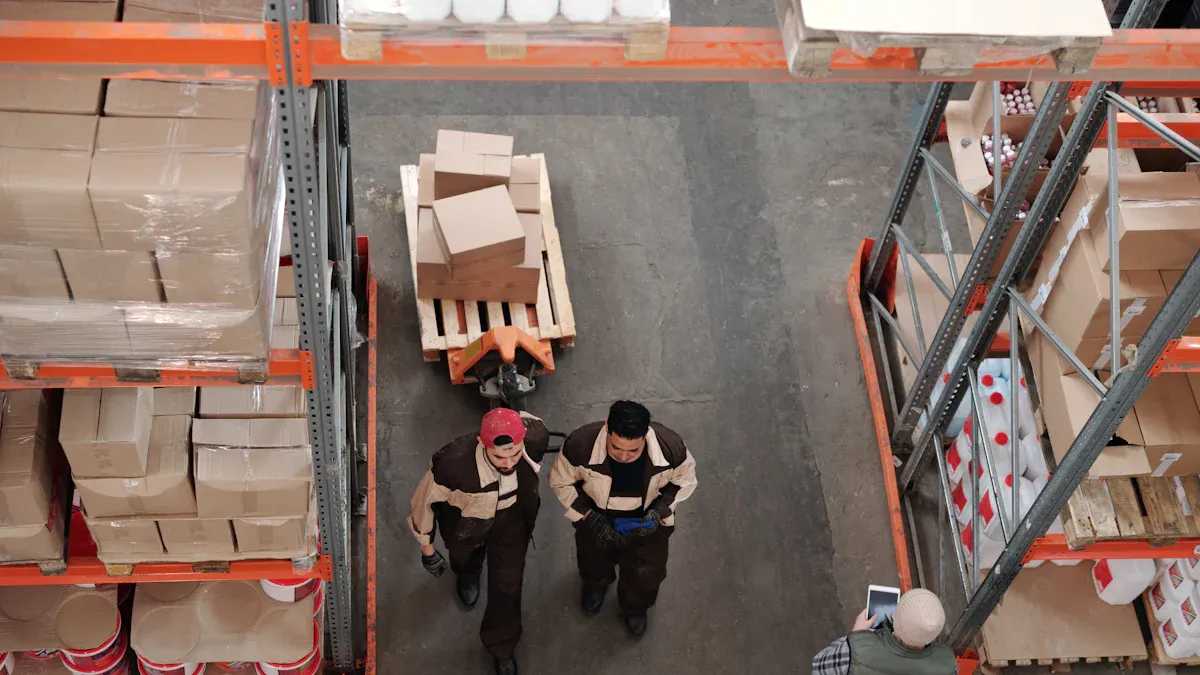
You need to focus on key warehouse logistics principles for success: optimum stock levels, fast order processing, material movement control, transaction efficiency, transparency, and data safety. These principles help you boost efficiency, lower costs, and improve safety. For example, using technology like PDAs can speed up order processing and reduce expenses. Placing high-volume items close to shipping areas and following safety protocols also make your warehouse safer and more productive. As you read, think about how your own warehouse follows these principles.
Key Takeaways
Maintain optimum stock levels to meet customer demand without excess inventory. Regularly review stock levels to adapt to changes.
Implement fast order processing methods using technology to increase efficiency and reduce errors. This includes using automated systems and smart scanning tools.
Control material movement by standardizing processes and using ergonomic designs. This enhances safety and streamlines workflows.
Focus on transaction efficiency by tracking key metrics. This helps identify areas for improvement and boosts overall productivity.
Ensure transparency and data safety to build customer trust. Use automation for accurate data management and maintain strong communication.
Core Warehouse Logistics Principles
Warehouse logistics principles guide you to deliver the right product, in the right quantity, at the right time, and to the right customer. These principles help you satisfy customer requests efficiently and optimize your logistics processes. You can improve customer satisfaction and operational performance by following these foundational rules.
Optimum Stock Levels
You need to keep the right amount of stock in your warehouse. This means you should meet customer demand without holding too much inventory. Industry benchmarks suggest you consider customer demand, stock turnover, product type, and safety stock levels. You also need to think about lead time when planning stock levels.
Tip: Set maximum, minimum, and safety stock levels for each product. Review these levels regularly to match changes in demand.
Maintaining optimum stock levels helps you minimize holding costs. You spend less on storage, insurance, and depreciation. You also keep your customers happy because you can meet their needs quickly. When you have enough stock, your operations run smoothly and you avoid missing sales.
Fast Order Processing
Fast order processing is a key part of warehouse logistics principles. You want to process orders quickly and accurately. This involves capturing orders, validating them, fulfilling, tracking, and delivering them.
Here are some methods to speed up order processing:
Streamline data collection to avoid downtime.
Use smarter scanning tools for efficiency.
Implement flexible barcode readers to boost scanning speed.
Modern picking technologies, such as warehouse management systems, voice systems, and robotics, help you process orders faster. These tools increase the number of orders you can handle and reduce errors. You save time with automatic pick lists and real-time inventory updates. Instant verification ensures you pick the correct items, which lowers the chance of mistakes.
Material Movement Control
Material movement control means you manage how goods move inside your warehouse. You need to plan and standardize equipment and processes. Simplify workflows and use ergonomic designs to protect workers. Organize your space by unitizing loads and using vertical storage.
Key Points | |
|---|---|
Planning and Standardization | Develop a plan and standardize equipment and processes. |
Simplification and Ergonomics | Simplify processes and use ergonomic designs. |
Organization and Space Utilization | Unitize loads and maximize space with vertical storage. |
Systematization and Sustainability | Systematize operations and use reusable packaging. |
Automation and Technology Integration | Invest in automation and use technology for real-time tracking. |
Safety and Training | Train staff regularly and maintain equipment. |
Continuous Improvement | Monitor performance and use employee feedback for improvements. |
Automating transport, storage, and retrieval reduces manual labor. This lowers workplace hazards and shortens picking and transport times. You gain real-time inventory control and streamline the flow of goods, which cuts costs and improves safety.
Transaction Efficiency
Transaction efficiency means you complete warehouse tasks quickly and accurately. You measure this using metrics like damaged shipment rate, receiving accuracy, and order picking accuracy.
Metric | Description |
|---|---|
Damaged Shipment Rate | Percentage of damaged shipments compared to total shipments. |
Receiving Accuracy | Checks if received inventory matches the order. |
Putaway Accuracy | Measures if inventory is stored in the correct location. |
Order Picking Accuracy | Tracks errors in picking items for orders. |
Percentage On-Time Deliveries | Measures how many orders reach customers on time. |
Efficient transactions help you lower error rates and boost productivity. You spend less time fixing mistakes and more time fulfilling orders. You also improve labor productivity and equipment performance. Tracking these metrics helps you find areas to improve and keep your warehouse running smoothly.
Transparency and Data Safety
Transparency and data safety are vital warehouse logistics principles. You need to keep customers informed and protect their information. Automation helps you gather and scan data accurately. A strong warehouse management system gives you insights and helps manage workflows.
Practice | Description |
|---|---|
Automation | Automates data gathering and scanning to reduce errors. |
Effective Inventory Management | Uses a warehouse management system for insights and workflow management. |
Communication | Keeps customers informed about their product's journey. |
Automating tasks like label generation and tracking updates improves efficiency. Transparent communication builds trust with your customers. Data breaches can damage trust and disrupt operations. Companies that lose customer trust may face financial losses and increased scrutiny. Protecting data keeps your business safe and maintains customer confidence.
Note: The average cost of a data breach reached $4.88 million in 2024. Protecting your data is not just about security—it is about keeping your business running and your customers loyal.
You should review your warehouse logistics principles often. This helps you adapt to changes, improve teamwork, and keep your warehouse efficient and safe.
Inventory and Order Accuracy

Inventory Control Methods
You need strong inventory control methods to keep your warehouse accurate and efficient. Technologies like inventory management software, barcode systems, and RFID tracking help you automate stock tracking and reduce manual errors. These tools give you real-time visibility, which is crucial for maintaining accurate inventory levels. You can use different methods to control inventory:
Inventory Control Method | Description | Benefits |
|---|---|---|
ABC Analysis | Categorizes inventory into A, B, and C items based on value and turnover. | Increases inventory accuracy by up to 95%. |
Just-in-Time (JIT) | Goods arrive only as needed for production. | Reduces warehouse costs by 15-30%. |
FIFO | Oldest stock is sold first to prevent spoilage. | Prevents 5-10% of warehouse waste from product expiration. |
Cycle Counting | Regular counting of small inventory portions. | 30% reduction in stock discrepancies. |
You can also improve accuracy by using vendor scorecards, training sessions, and regular cycle counts. Inventory shrinkage often happens because of theft, errors, or damage. Understanding these causes helps you choose the best control methods.
Order Picking Accuracy
Order picking accuracy is vital for customer satisfaction and cost control. Top-performing warehouses reach picking accuracy rates of 99.8% or better. Most companies average between 97% and 99.6%. You can boost accuracy with better labeling, employee training, and optimized warehouse layouts. Advanced technologies like Pick-To-Light and Pick-To-Voice systems also help.
Ways to improve order picking accuracy:
Use clear labeling for products.
Train staff regularly.
Organize your warehouse for easy access.
Leverage technology for faster, error-free picking.
You can also try zone picking, wave picking, and cluster picking to make the process more efficient.
Just-in-Time (JIT) Inventory
Just-in-Time inventory helps you reduce costs and save space. Companies like Toyota use JIT to lower carrying costs and improve efficiency. JIT can cut inventory by 20-60%. You only keep what you need, which means less storage and lower holding costs.
Aspect | Effect |
|---|---|
Warehouse Space Utilization | JIT reduces the amount of inventory held, minimizing storage space needed. |
Holding Costs | Lower holding costs due to less space used for inventory storage. |
Stockout Frequency | Increased risk of stockouts due to insufficient inventory for unexpected demand. |
JIT works best when your supply chain is reliable. You must watch for risks like supply chain disruptions or missed opportunities from sudden demand. Using JIT as part of your warehouse logistics principles can help you stay lean and efficient.
Warehouse Layout and Equipment
Layout Optimization
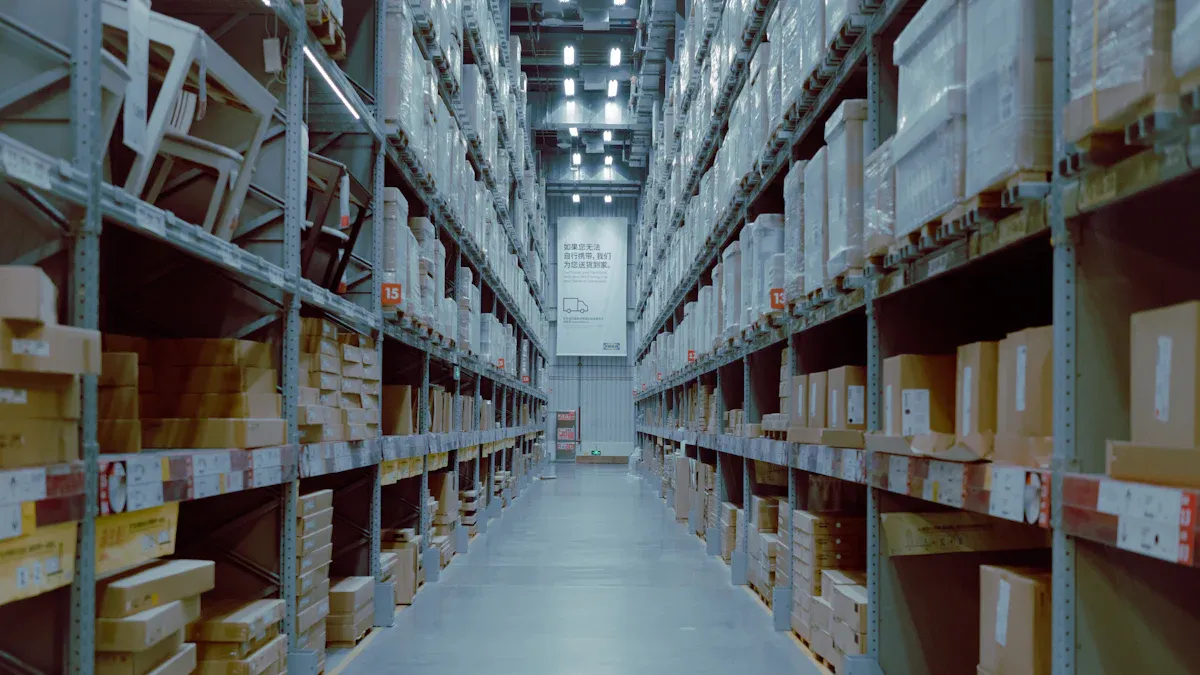
You can make your warehouse more efficient by optimizing the layout. A smart design helps you move products faster and reduces mistakes. When you plan your layout, you should think about your type of operation, the products you store, and the space you have. You also need to choose the right equipment and follow safety rules. The table below shows important factors to consider:
Factor | Description |
|---|---|
Type of operation | Match layout to your business, like manufacturing or distribution. |
Products being stored | Use special storage for items like cold goods or dry goods. |
Available space | Make the most of your building’s size and shape. |
Equipment requirements | Pick racks and shelves that fit your products. |
Workflow implementation | Plan for easy movement of goods and people. |
Safety regulations | Follow safety rules, like clear aisles and exit routes. |
Cost-efficiency | Balance your budget with your layout needs. |
If you place fast-moving items near packing zones and group popular products together, you can speed up picking and lower error rates. This setup helps your team work faster and makes your warehouse safer.
Efficient Material Flow
You need to keep materials moving smoothly in your warehouse. Good material flow saves time and prevents bottlenecks. Try these strategies:
Store bulk items together for easy access.
Use conveyor systems to move products quickly.
Stack pallets to use vertical space.
Train your team often to improve safety and speed.
Cross-train workers so they can help in different areas.
Mark aisles clearly for safe movement.
Hold daily team huddles to share goals and solve problems.
Use technology for instant communication.
When you organize your warehouse this way, you make it easier for everyone to find and move products. You also reduce mistakes and keep your team safe.
Quality Equipment Use
Using quality equipment helps you work faster and safer. Good tools save money and lower the risk of injuries. The table below shows how quality equipment improves your warehouse:
Benefit | Impact on Productivity and Safety |
|---|---|
Fewer injuries and better labor performance | |
Streamlined processes | Easier tasks and fewer errors |
Improved inventory management | Faster shipping, receiving, and tracking |
You should check your equipment often and train your team to use it correctly. When you invest in good equipment, you boost productivity and protect your workers.
Lean and Process Optimization
Lean Warehousing Principles
You can make your warehouse more efficient by following lean warehousing principles. These principles help you cut waste and improve productivity. Lean warehousing focuses on organizing, cleaning, and standardizing your space and processes. You should sort items, set everything in order, keep the warehouse clean, create uniform procedures, and sustain improvements over time.
Principle | Description | Waste Reduction Impact |
|---|---|---|
Sort | Remove unnecessary items to free up space. | Reduces excess inventory and clutter. |
Set in Order | Give everything a specific place to minimize search time. | Decreases unnecessary worker activity. |
Shine | Keep the warehouse clean to prevent problems. | Enhances safety and efficiency. |
Standardize | Create uniform procedures for tasks. | Streamlines operations and reduces variability. |
Sustain | Maintain and improve standards over time. | Ensures continuous waste reduction. |
Tip: Regularly review your warehouse layout and processes. Small changes can lead to big improvements in speed and safety.
Process Standardization
Standardizing your warehouse processes helps everyone work together smoothly. When you use the same steps for each task, you reduce mistakes and save time. You also make it easier to train new employees and keep your team on track.
Benefit | Description |
|---|---|
Streamlines operations and eliminates inefficiencies. | |
Cost Reduction | Saves money on labor, equipment, and overhead. |
Better Resource Allocation | Helps you use your resources more effectively. |
Consistency and Fairness | Sets clear expectations and improves morale. |
You spend less time planning shifts.
You deliver orders faster.
You lose fewer products.
You gain more floor space for storage.
You help new team members learn quickly.
Use of Warehouse Management Systems (WMS)
A Warehouse Management System (WMS) helps you track inventory and manage tasks in real time. You can boost accuracy and productivity by using automated systems. WMS solutions integrate data, control inventory, and improve labor efficiency.
Implementing an automated WMS solution increases overall productivity in a warehouse environment, making it essential for enhancing asset utilization and inventory accuracy.
You often see inventory accuracy rates above 99% with WMS. Labor costs drop because your team works faster and travels less inside the warehouse. Customers get their orders on time, which keeps them happy. You can measure improvements by tracking units per hour and orders processed per person.
Workforce and Safety
Staff Training
You need strong staff training to keep your warehouse safe and efficient. Training helps your team learn the right way to use equipment and follow safety rules. You should teach your workers about new technology and encourage them to keep learning. Training on inventory systems helps everyone work faster and make fewer mistakes. A full training program covers all parts of warehouse operations. When your team understands warehouse processes, they work better and stay safe.
Training Component | Importance |
|---|---|
Safety Training | Teaches correct use of PPE, emergency steps, and safe equipment operation. |
Equipment Operation | Shows how to use warehouse equipment safely and efficiently. |
Continuous Improvement | Builds a culture of learning and adapting to new technology. |
Technology Training | Prepares workers for automation and robotics. |
Performance Monitoring | Tracks employee skills and gives feedback for growth. |
Safety Culture | Involves everyone in keeping safety rules and watching for unsafe actions. |
A complete training program covers every key part of warehouse work.
Good training keeps daily operations smooth for your team.
Safety Protocols
You must follow safety protocols to lower accident rates in your warehouse. Safety rules protect your workers from injuries and keep your warehouse running. You should teach proper lifting techniques and check equipment often. Workers need to wear personal protective equipment (PPE) and know fire safety steps. Preventing slips, trips, and falls is also important.
Safety Protocols | Impact on Accident Rates |
|---|---|
Proper material handling | Reduces injuries from lifting |
Regular equipment inspections | Prevents accidents by checking equipment |
Use of PPE | Protects workers from hazards |
Fire safety measures | Lowers risk of fire incidents |
Slips, trips, and falls prevention | Decreases falls and related injuries |
Tip: Hold regular safety meetings to remind your team about rules and updates.
Team Communication
You need strong team communication for a safe and productive warehouse. When your team shares information, you make fewer mistakes and work faster. Teams that communicate well can boost productivity by up to 25%. Most workplace failures happen because workers do not talk enough. If you include everyone in communication, your team is five times more likely to work better.
Evidence Type | Statistic/Fact |
|---|---|
Impact on Productivity | Teams with good communication increase productivity by 20-25%. |
Cause of Workplace Failures | 86% of employees say poor communication causes most failures. |
Inclusion in Communication | Workers included in communication are 5 times more productive. |
Share goals and updates with your team every day.
Encourage everyone to speak up about problems or ideas.
You have learned the main principles of warehouse logistics. These include keeping the right stock levels, speeding up order processing, controlling material movement, improving transaction efficiency, and protecting data. When you use these principles, you make your warehouse safer and more productive.
Review your current practices.
Try new tools and training.
Look for guides or courses on warehouse management.
Tip: Keep learning and updating your methods to stay ahead in warehouse operations.
FAQ
What is the most important principle in warehouse logistics?
You should focus on keeping the right stock levels. This principle helps you meet customer needs and avoid extra costs. When you manage inventory well, your warehouse runs smoothly and stays efficient.
How can you improve order picking accuracy?
You can use clear labels, train your team, and organize your shelves. Technology like Pick-To-Light systems also helps. Accurate picking keeps your customers happy and reduces returns.
Why does warehouse layout matter?
A good layout lets you move products faster and safer. You save time and lower the risk of accidents. Place fast-moving items near packing zones to speed up your work.
What tools help with inventory control?
You can use barcode scanners, RFID tags, and warehouse management software. These tools track stock in real time. They help you avoid mistakes and keep your records up to date.
See Also
Key Strategies for Effective Global Logistics Oversight
Connecting Warehouses and Optimizing Supply Chains with PGL
Streamlined Inventory Management and Distribution via PGL Warehousing
PGL's Miami Warehouse Solutions for Rapid East Coast Shipping
Optimized Inventory and Distribution Through Premier Global Logistics
