Hong Kong Large Warehouse Facilities: Strategic Gateway for Asian Market Distribution

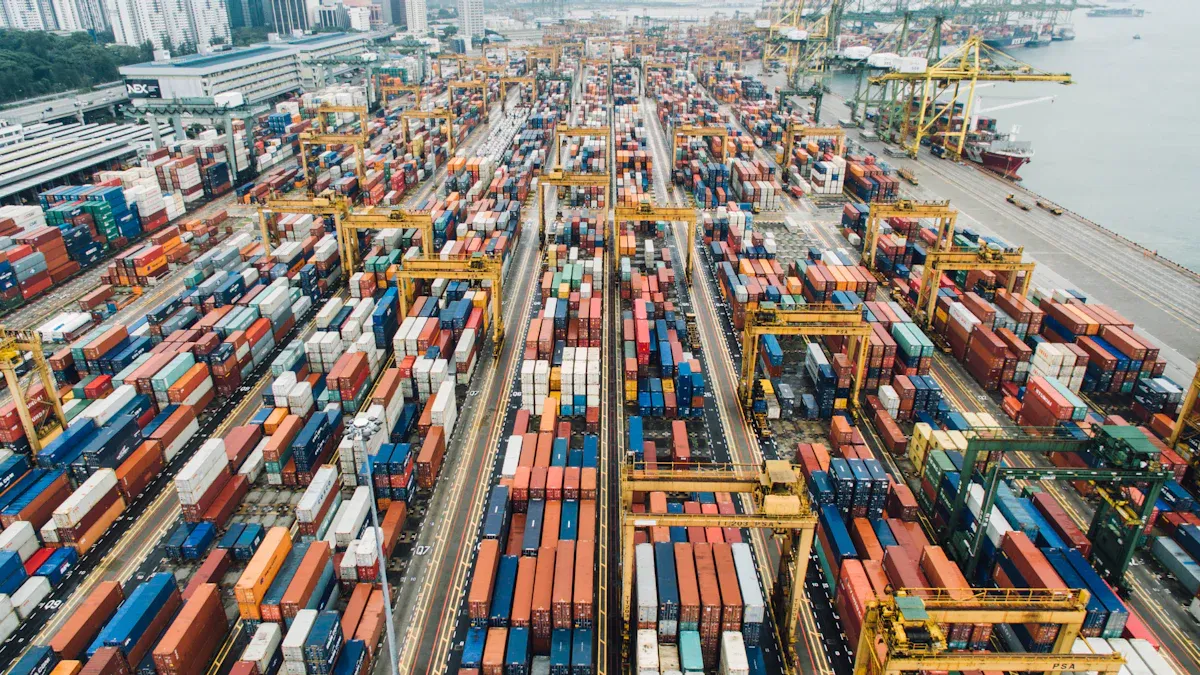
Hong Kong large warehouse facilities play an important role in regional logistics, international trade, inventory storage, and distribution across Asia. With access to major ocean and air transportation networks and close connections to manufacturing and commercial markets in the region, Hong Kong has long served as an important logistics location for businesses managing international cargo flows.
For companies operating ecommerce, wholesale, retail, manufacturing, and international distribution networks, selecting the right warehouse location can have a significant effect on transportation costs, inventory availability, delivery speed, and supply chain flexibility.
Large warehouse facilities in Hong Kong can provide substantial storage capacity while supporting services such as cargo receiving, inventory management, cross-docking, order fulfillment, consolidation, labeling, and regional distribution.
However, warehouse size alone does not determine whether a facility is strategically useful. Businesses must also consider location, transportation access, warehouse design, storage density, labor, technology, cross-border logistics, operating costs, and the final destination of inventory.
This guide explains how large warehouse facilities in Hong Kong support Asian distribution strategies and what businesses should consider when evaluating a facility for international logistics operations.
Why Hong Kong Is Important for Asian Distribution
Hong Kong occupies a strategically important position in East Asia.
The region has extensive connections with manufacturing centers, international trade routes, major consumer markets, and global transportation networks.
This makes Hong Kong suitable for businesses that need to coordinate:
• International imports
• Export shipments
• Regional distribution
• Ecommerce fulfillment
• Inventory storage
• Freight consolidation
• Cross-border transportation
• Air cargo
• Ocean freight

Businesses can use Hong Kong as a regional logistics node rather than treating the warehouse as an isolated storage facility.
A well-positioned warehouse can connect inbound cargo with multiple outbound distribution channels.
What Is a Large Warehouse Facility?
A large warehouse facility is generally designed to handle significant inventory volumes, high cargo throughput, or multiple warehouse activities.
Large facilities may support:
• Pallet storage
• Carton storage
• Rack storage
• Bulk storage
• Container unloading
• Cross-docking
• Pick and pack
• Freight consolidation
• Inventory transfers
• Returns processing
• Labeling
• Kitting
• Repackaging
The exact capabilities depend on the facility.
A warehouse with a large floor area may still be inefficient if its layout, loading capacity, storage systems, or transportation access are poorly designed.
Warehouse Capacity and Storage Density
Storage capacity is one of the primary considerations when evaluating a large warehouse.
Businesses should examine both total floor space and usable storage capacity.
Important factors include:
• Ceiling height
• Rack configuration
• Aisle width
• Pallet positions
• Floor loading capacity
• Dock capacity
• Staging space
• Fire protection
• Material handling equipment
Vertical space can be particularly valuable in high-cost logistics markets.
High-density storage systems can increase the amount of inventory stored within a given footprint.
However, maximum storage density should not be the only objective.
If products become difficult to access, picking time may increase.
The warehouse should balance storage density with operational efficiency.
Warehouse Location Within Hong Kong
The specific location of a warehouse matters.
Businesses should consider access to:
• Container terminals
• Air cargo facilities
• Major roads
• Cross-border transportation routes
• Industrial areas
• Delivery markets
A facility located closer to major transportation infrastructure may reduce drayage or local transportation requirements.
However, warehouse rental cost and available space can vary significantly by location.
The correct decision should consider total logistics cost rather than rent alone.
Ocean Freight Connections
Ocean transportation remains important for large-volume international shipments.
A Hong Kong warehouse can serve as a receiving or consolidation point for ocean freight.
A typical process may look like:
International Supplier → Port → Warehouse → Inventory Storage → Regional Distribution
Alternatively, inventory may move through the facility with minimal storage:
Supplier → Port → Warehouse → Consolidation → Outbound Shipment
The appropriate model depends on inventory requirements and shipment schedules.
Air Freight and Time-Sensitive Distribution
Air transportation can be important for high-value and time-sensitive inventory.
Large warehouse facilities connected to air cargo networks can support:
• Urgent replenishment
• High-value products
• Small shipments
• Samples
• Replacement parts
• Time-sensitive ecommerce orders
Businesses should compare air and ocean transportation based on cost, urgency, shipment characteristics, and inventory planning.
Cross-Border Distribution
Hong Kong's proximity to mainland manufacturing and commercial markets makes cross-border logistics an important consideration.
Businesses may use warehouse facilities to coordinate inventory moving between:
• Hong Kong
• Mainland manufacturing regions
• Southeast Asia
• Other Asian markets
• International destinations
Cross-border transportation requires accurate documentation, scheduling, and coordination.
Businesses should clearly define responsibility for customs procedures, transportation arrangements, and shipment documentation.
Large Warehouse Facilities for Ecommerce
Ecommerce fulfillment has different requirements from traditional bulk distribution.
Instead of shipping entire pallets to a small number of wholesale destinations, ecommerce fulfillment may involve hundreds or thousands of individual orders.
A large warehouse may therefore require dedicated areas for:
• Receiving
• Storage
• Picking
• Packing
• Shipping
• Returns
An efficient ecommerce workflow can follow:
Inventory Receiving → Put-Away → Order Processing → Picking → Packing → Shipping → Tracking
Warehouse design should minimize unnecessary movement between these stages.
Fast-moving products should be positioned where they can be picked efficiently.
Slow-moving products can be stored in higher-density areas.
Inventory Management
Large warehouses can contain substantial numbers of SKUs and inventory units.
Without effective inventory management, physical scale can become a liability.
Businesses should use systems and procedures to track:
• SKU quantities
• Warehouse locations
• Receiving records
• Picking activity
• Inventory transfers
• Returns
• Damaged inventory
• Inventory adjustments
Barcode scanning can reduce manual data-entry errors.
Cycle counting can also help identify discrepancies before they become significant.
Warehouse Receiving Operations
Receiving is the first major warehouse process after inbound cargo arrives.
A large warehouse should have sufficient receiving capacity to handle expected inbound volume.
Receiving may involve:
Delivery appointment
Vehicle arrival
Cargo unloading
Quantity verification
Product inspection
Barcode scanning
Inventory recording
Put-away
Receiving bottlenecks can affect the entire supply chain.
If inbound inventory remains in the receiving area for several days, storage capacity becomes less available and inventory may not be immediately available for fulfillment.
Cross-Docking Capabilities
Large warehouse facilities can also support cross-docking.
Cross-docking reduces the need for long-term storage.
For example:
Inbound Cargo → Sorting → Consolidation → Outbound Transportation
This approach can be useful when inventory already has a known destination.
Potential applications include:
• Regional replenishment
• Freight consolidation
• Retail distribution
• Time-sensitive shipments
• Promotional inventory
• Large-volume transfers
Cross-docking requires accurate scheduling and reliable communication between transportation and warehouse teams.
Warehouse Equipment
Large warehouse facilities require appropriate material handling equipment.
Depending on the operation, equipment may include:
• Forklifts
• Pallet jacks
• Reach trucks
• Conveyor systems
• Dock equipment
• Barcode scanners
• Weighing equipment
• Packaging equipment
Equipment selection should match product characteristics and warehouse design.
For example, high-density rack storage may require specialized equipment capable of safely accessing elevated locations.
Loading Dock Capacity
Dock capacity is often overlooked during warehouse selection.
A large facility may have substantial storage space but limited loading positions.
This can create transportation bottlenecks.
Businesses should evaluate:
• Number of loading docks
• Dock dimensions
• Truck access
• Staging space
• Appointment scheduling
• Loading and unloading times
Dock throughput should match expected inbound and outbound cargo volume.
Warehouse Security
Inventory stored in a large warehouse represents significant financial value.
Security measures may include:
• Controlled access
• Surveillance systems
• Security personnel
• Visitor procedures
• Alarm systems
• Inventory controls
• Restricted storage areas
Businesses handling high-value inventory may require additional security procedures.
Insurance requirements should also be reviewed before inventory is transferred.
Specialized Storage
Some products require specialized warehouse conditions.
Depending on the product category, businesses may require:
• Temperature-controlled storage
• Humidity management
• Secure storage
• Food-related handling
• Medical-related handling
• Hazard-controlled storage
• High-value inventory areas
Special requirements should be discussed before selecting a facility.
Not every large warehouse is suitable for specialized products.
Technology and Warehouse Management Systems
Modern warehouse operations depend heavily on technology.
A warehouse management system can help coordinate:
• Receiving
• Put-away
• Inventory tracking
• Picking
• Packing
• Shipping
• Returns
Businesses may also require integration with:
• Ecommerce platforms
• Order management systems
• Enterprise systems
• Transportation systems
• Accounting systems
System integration allows order and inventory information to move efficiently between business operations and the warehouse.
Warehouse Visibility
Inventory visibility is especially important for businesses using a large regional warehouse.
Management should be able to determine:
• Current inventory
• Available inventory
• Reserved inventory
• Incoming inventory
• Damaged inventory
• Inventory by SKU
• Inventory by location
Reliable visibility helps businesses make better replenishment and distribution decisions.
Labor and Warehouse Productivity
Labor is another important component of warehouse performance.
Large warehouse facilities may require employees for:
• Receiving
• Put-away
• Picking
• Packing
• Loading
• Inventory control
• Returns
• Equipment operation
Productivity can be measured through KPIs such as:
• Units picked per hour
• Orders processed per hour
• Receiving turnaround time
• Loading time
• Order accuracy
• Inventory accuracy
Higher productivity can reduce the labor cost associated with each shipment.
Packaging and Value-Added Services
Large warehouses can support more than storage.
Value-added services may include:
• Labeling
• Repackaging
• Kitting
• Product assembly
• Promotional inserts
• Carton preparation
• Pallet building
• Shipment consolidation
These services can allow businesses to complete additional supply chain activities within the warehouse.
This may reduce the need to move inventory between multiple facilities.
Regional Fulfillment Strategy
A Hong Kong warehouse can serve as one component of a broader Asian distribution network.
For example, inventory may enter the region through international transportation, be stored in Hong Kong, and then move to different regional markets based on demand.
The network may include:
International Supplier → Hong Kong Warehouse → Regional Distribution → Final Delivery
Alternatively, some inventory may move directly from the warehouse to international customers.
The appropriate structure depends on demand distribution.
Warehouse Cost Considerations
Large warehouse facilities can involve substantial operating costs.
Businesses should evaluate:
• Rent
• Labor
• Utilities
• Equipment
• Maintenance
• Security
• Insurance
• Receiving
• Storage
• Picking
• Packing
• Transportation
• Technology
Warehouse cost should be evaluated together with transportation costs.
A warehouse with a higher rental cost may still reduce overall logistics expense if it provides better transportation access and more efficient regional distribution.
Choosing Between Large and Smaller Warehouses
A large warehouse is not always the best option.
Businesses should compare warehouse size with actual inventory requirements.
Large facilities may provide:
• Higher storage capacity
• Greater operational flexibility
• More room for expansion
• Higher throughput potential
Smaller facilities may provide:
• Lower fixed costs
• Simpler operations
• More efficient use of space for limited inventory
The right facility size should reflect current demand and expected growth.
Scalability and Future Growth
Warehouse requirements can change quickly.
A business may start with a modest inventory level and expand significantly within a few years.
When evaluating a large warehouse, businesses should ask:
Can additional storage space be added?
Can warehouse operating hours be expanded?
Can labor capacity increase during peak periods?
Can additional services be introduced?
Can the facility support larger inbound and outbound volumes?
Scalability can be more valuable than simply having large empty space available today.
Seasonal Demand
Seasonal businesses may require significantly more warehouse capacity during specific periods.
Examples include:
• Holiday shopping
• Promotional campaigns
• Product launches
• Seasonal consumer demand
• Regional sales events
Peak-season planning should begin before inventory arrives.
Businesses should coordinate:
• Storage space
• Receiving capacity
• Labor
• Packaging materials
• Picking capacity
• Transportation
• Shipping schedules
A warehouse that performs well during average demand may need additional resources during peak periods.
Warehouse KPIs
Businesses should establish measurable warehouse performance standards.
Important KPIs include:
Inventory Accuracy
Measures whether physical inventory matches warehouse system records.
Order Accuracy
Measures whether the correct products and quantities are shipped.
Receiving Turnaround Time
Measures how quickly inbound inventory becomes available.
Order Processing Time
Measures the time between receiving an order and preparing it for shipment.
On-Time Shipment Rate
Measures whether orders leave the warehouse according to agreed schedules.
Warehouse Utilization
Measures how effectively available storage capacity is being used.
Damage Rate
Measures inventory damage associated with handling and storage.
Return Processing Time
Measures how quickly returned products are processed.
These metrics provide an objective basis for evaluating warehouse performance.
How to Evaluate a Hong Kong Large Warehouse Facility
Businesses should conduct a structured evaluation before committing inventory.
Facility Location
Check transportation access and proximity to major logistics infrastructure.
Storage Capacity
Evaluate usable pallet positions, rack space, floor space, and future expansion.
Receiving and Dock Capacity
Determine whether the facility can process expected inbound and outbound volume.
Warehouse Equipment
Confirm that appropriate handling equipment is available.
Technology
Review inventory systems, warehouse management systems, and integration capabilities.
Security
Evaluate physical security and inventory protection.
Labor
Review labor availability and operational productivity.
Special Handling
Confirm whether the warehouse can meet product-specific requirements.
Pricing
Analyze total operating costs rather than only rental rates.
Scalability
Determine whether the facility can support future growth.
Common Warehouse Selection Mistakes
Choosing Based Only on Warehouse Size
A large facility does not guarantee efficient operations.
Ignoring Transportation Access
Storage capacity is less useful if transportation connections are inefficient.
Underestimating Receiving Requirements
Large inbound volumes can quickly overwhelm receiving areas.
Ignoring Dock Capacity
Limited dock positions can create significant operational bottlenecks.
Failing to Plan for Peak Demand
Seasonal demand requires additional warehouse resources.
Using Inaccurate Inventory Data
Poor inventory information can create receiving, picking, and replenishment problems.
Ignoring Technology Integration
Manual data transfers increase the risk of errors and operational delays.
Building a Hong Kong Distribution Strategy
A Hong Kong warehouse can be particularly useful when it is integrated into a broader international supply chain.
Businesses should consider the entire flow:
Supplier → International Transportation → Warehouse → Regional Distribution → Final Customer
Every stage affects total logistics performance.
The warehouse should therefore be evaluated according to how well it supports the complete network.
For businesses serving multiple Asian markets, the facility may function as a regional inventory hub, consolidation point, fulfillment center, or cross-docking location.
Conclusion
Hong Kong large warehouse facilities can provide valuable infrastructure for businesses managing international inventory and Asian market distribution.
Their usefulness depends on more than warehouse size. Location, transportation access, storage density, loading capacity, warehouse technology, inventory management, labor productivity, security, and specialized handling capabilities all contribute to operational performance.
A strategically located warehouse can connect international freight with regional fulfillment and distribution. It can receive large shipments, consolidate cargo, store inventory, process ecommerce orders, and support outbound transportation across multiple markets.
Businesses should evaluate warehouse requirements based on actual demand and long-term supply chain objectives. Large facilities can provide substantial scalability, but excessive warehouse capacity can also increase operating costs if it is not utilized effectively.
The most effective approach is to balance storage capacity with transportation connectivity, fulfillment requirements, inventory turnover, and future growth.
For businesses building an Asian distribution network, Hong Kong can serve as a strategic logistics gateway when its warehouse infrastructure is properly integrated with international transportation, regional fulfillment, inventory management, and cross-border distribution.
With accurate data, efficient warehouse processes, appropriate technology, and a carefully designed transportation network, a large warehouse facility can become much more than a place to store inventory. It can serve as a central component of an efficient regional distribution strategy.
See Also
Enhancing Global Operations Through Innovative Logistics Strategies
Reasons Southern California eCommerce Companies Prefer Global Logistics
Key Strategies for Effective Global Logistics Management
Simplifying Supply Chain Optimization with American Logistics Solutions
Understanding East Coast B2B Warehousing by Premier Global Logistics

