The Complete Guide to Bulk Order Fulfillment: Strategies, Systems, and Solutions for Scaling Your Business

Bulk order fulfillment becomes increasingly complex as order volume grows. Processing a small number of large orders is very different from managing thousands of units or multiple high-volume customer orders simultaneously.
Businesses handling wholesale orders, retail replenishment, e-commerce volume, or large commercial shipments need fulfillment processes designed around scale.
The objective is not simply to move more products. It is to process larger quantities accurately, efficiently, and consistently while controlling labor, inventory, warehouse, and transportation costs.
What Is Bulk Order Fulfillment?
Bulk order fulfillment is the process of receiving, processing, picking, packing, and shipping large quantities of products within a single order or across a high-volume group of orders.
Bulk fulfillment may involve:
· Wholesale orders
· Retail replenishment
· Large e-commerce orders
· Distribution center transfers
· Promotional campaigns
· Seasonal demand
· Commercial customers
Why Bulk Fulfillment Is Different
Bulk orders create different operational requirements from individual parcel orders.
They may involve:
· Large quantities
· Palletized products
· Full cases
· Multiple SKUs
· Special packaging
· Scheduled deliveries
· Freight transportation
A bulk order may therefore require coordination between warehouse operations and freight transportation.
The Bulk Order Fulfillment Process
A typical process is:
Order Received → Inventory Verification → Allocation → Picking → Consolidation → Packing → Documentation → Freight Preparation → Shipment
Each step needs to scale with order volume.
Step 1: Order Validation
Before fulfillment begins, verify:
· Customer information
· Product quantities
· SKUs
· Delivery address
· Required delivery date
· Shipping method
· Special requirements
Errors discovered early are easier to correct than errors discovered after shipment.
Step 2: Inventory Allocation
Inventory must be reserved for the order.
The warehouse determines:
· Available stock
· Reserved stock
· Location
· Quantity
· Replenishment needs
Accurate inventory data is essential.
Step 3: Pick the Products
Bulk orders may be picked by:
· Full pallet
· Full case
· Individual unit
· Batch
· Zone
The best method depends on product characteristics and order structure.
Step 4: Consolidate the Order
Products from multiple warehouse locations may need to be brought together.
Consolidation ensures the complete order is ready before shipping.
Step 5: Pack and Prepare
Bulk shipments may require:
· Palletizing
· Stretch wrapping
· Carton labeling
· Shipping labels
· Packing lists
· Special handling instructions
Packaging should protect products during freight transportation.
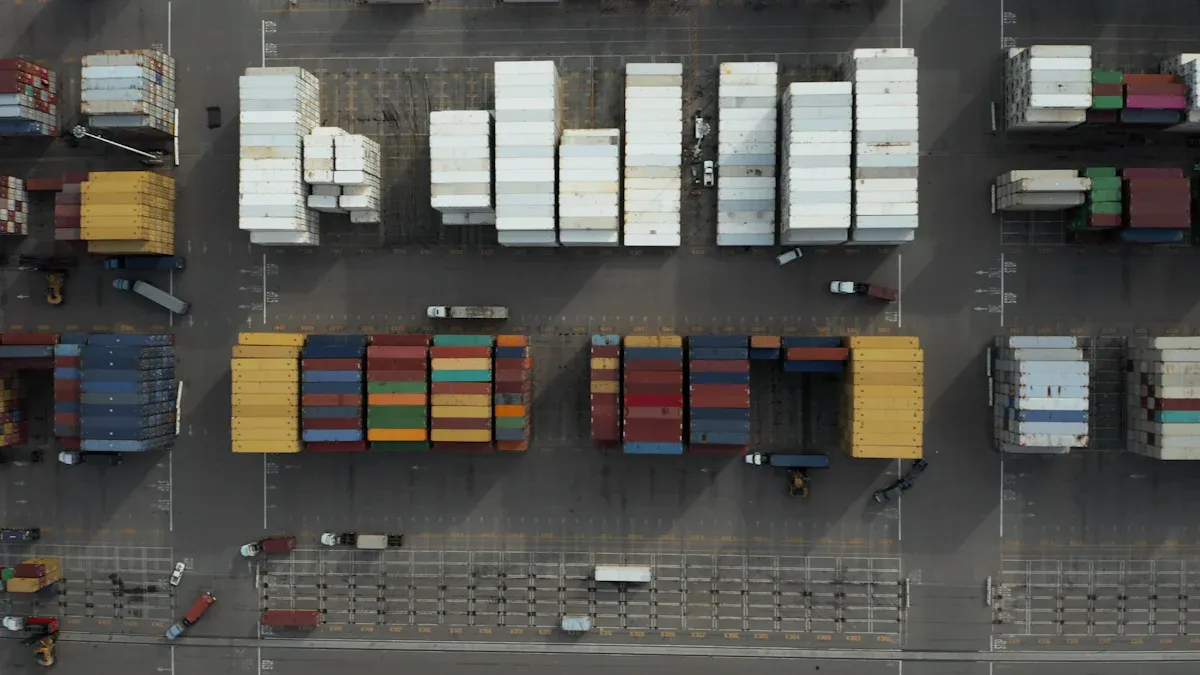
Step 6: Prepare Freight
Large orders may ship using:
· Full truckload
· LTL
· Intermodal
· Local delivery
Transportation mode should reflect shipment size, destination, delivery requirements, and cost.
Step 7: Confirm Shipment
Shipment information is recorded and tracking details are provided.
Documentation should match the physical shipment.
Bulk Fulfillment Strategies
Full-Case Picking
Employees pick entire cartons rather than individual units.
This reduces handling for suitable products.
Pallet Picking
Entire pallets are moved directly into outbound transportation.
This is efficient for large-volume orders.
Batch Picking
Multiple orders are picked together to reduce travel time.
Zone Picking
Warehouse employees work within specific areas.
Orders move between zones until complete.
Wave Picking
Orders are released in groups according to transportation schedules or operational priorities.
Technology for Bulk Fulfillment
Warehouse management systems can support:
· Inventory allocation
· Pick instructions
· Barcode scanning
· Order prioritization
· Shipment consolidation
· Warehouse reporting
Automation can further improve high-volume operations.
How to Reduce Bulk Fulfillment Costs
Improve Warehouse Layout
Position frequently handled products strategically.
Reduce Unnecessary Handling
Use pallet or case-level handling when possible.
Consolidate Transportation
Combine compatible shipments when practical.
Improve Inventory Accuracy
Prevent picking delays caused by incorrect stock records.
Schedule Labor According to Demand
Adjust staffing around expected order volume.
Bulk Fulfillment KPIs
Useful metrics include:
· Orders processed per labor hour
· Picking accuracy
· Order cycle time
· Cost per order
· On-time shipment rate
· Inventory accuracy
· Damage rate
Common Bulk Fulfillment Challenges
Stockouts
Large orders can quickly consume available inventory.
Labor Constraints
Peak periods may require additional warehouse labor.
Warehouse Congestion
Large inbound and outbound volumes can overwhelm dock and storage capacity.
Transportation Capacity
Large orders may require advance booking.
Documentation Errors
Incorrect shipment information can delay receiving at the destination.
Bulk Fulfillment for International Supply Chains
Imported inventory may first arrive as containerized freight.
A typical flow is:
Port → Drayage → Warehouse → Container Unloading → Inventory → Bulk Fulfillment → Domestic Freight → Customer
This creates an important connection between international freight and domestic fulfillment.

Frequently Asked Questions
What is bulk order fulfillment?
Bulk order fulfillment involves processing and shipping large quantities of products, often for wholesale, retail replenishment, commercial, or high-volume e-commerce orders.
Is bulk fulfillment the same as wholesale fulfillment?
They can overlap, but bulk fulfillment describes the operational handling of large quantities, while wholesale fulfillment specifically refers to fulfilling wholesale customer orders.
What transportation is best for bulk orders?
Full truckload, LTL, intermodal, and other freight modes may be appropriate depending on shipment size, destination, urgency, and cost.
How can businesses scale bulk fulfillment?
Businesses can improve warehouse layout, automate repetitive processes, improve inventory accuracy, use appropriate picking strategies, plan labor according to demand, and coordinate transportation early.
Final Takeaway
Bulk order fulfillment requires a different operating model from ordinary individual-order fulfillment.
Businesses must coordinate inventory, warehouse labor, picking methods, packaging, documentation, and freight transportation.
As order volume increases, scalable systems become increasingly important. The strongest bulk fulfillment operations combine accurate inventory, efficient warehouse workflows, appropriate technology, and well-planned transportation.
See Also
Enhancing Global Operations Through Innovative Logistics Strategies
Key Strategies for Effective Global Logistics Administration
Prepare for Holiday Demand with PGL’s Logistics Services
Optimizing East Coast Imports with Premier Logistics Solutions
Boosting Global Efficiency with Point-to-Point Logistics Systems

