How to File an Ocean Cargo Claim Step by Step
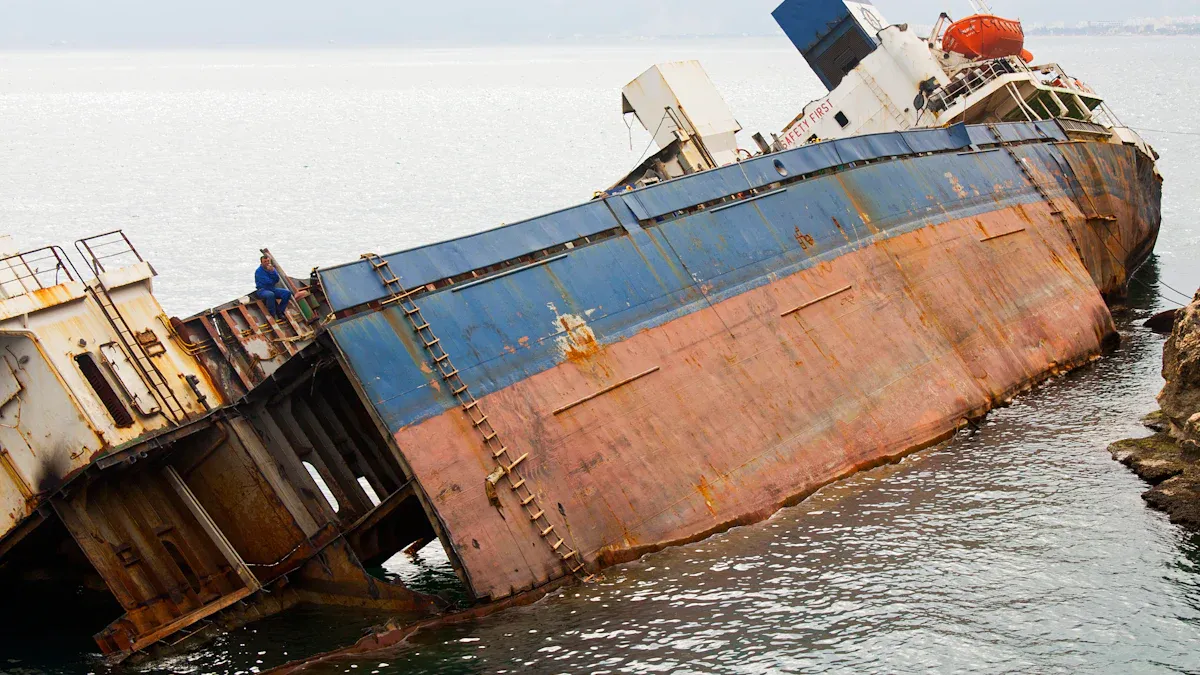
You start the ocean cargo claims process by taking quick action when you notice damage or loss. You check your shipment as soon as it arrives. You gather photos, inspection reports, and shipping documents. You notify the carrier right away. You keep records and follow each step closely. You need to act fast and use the correct paperwork to protect your rights.
Key Takeaways
Inspect your cargo immediately upon arrival. Document any damage with clear photos and detailed notes.
Notify your carrier right away if you find damage or loss. Quick action is crucial to protect your rights.
Gather all necessary documents before filing a claim. Missing paperwork can delay or deny your claim.
Follow up regularly on your claim status. Keep records of all communications to ensure a smooth process.
Be aware of deadlines for notifications and claims. Missing these can result in losing your right to compensation.
Immediate Actions

Inspect and Document Cargo
When your shipment arrives, you need to inspect the container right away. Look for any signs of damage before you unload. If you see damage, stop unloading immediately. Take clear photos of the cargo while it is still inside the container. Make sure you capture close-up shots of the damage and wide shots that show the container’s identifying marks. You should also check for wet spots, broken seals, or strange odors.
Here is a checklist to help you document the condition:
Review the Bill of Lading and delivery receipts.
Take photos of damaged goods and the container.
Collect signed delivery documents.
Write a statement of claim with details about the loss.
Gather commercial invoices and sales contracts for value verification.
Tip: Keep all original documents and reports. Insurers often ask for transportation documents, quality assessment reports, and repair quotes.
Protect Damaged Goods
You must protect the damaged cargo to prevent further loss. Move the affected goods to a safe area. Keep them separate from undamaged items. Make sure the storage area is clean and dry. Check that the container is weatherproof and the doors are secure. If possible, use proper restraints to avoid more damage.
Inspect the container for leaks or previous repairs.
Make sure the cargo is not exposed to weather or contamination.
Prepare a survey report and take extra photos if needed.
Notify Carrier of Loss
You need to notify your carrier as soon as you find damage or loss. Quick notification is a key part of the ocean cargo claims process. Most international rules set strict deadlines for reporting. The table below shows the recommended timeframes:
Convention | Timeframe for Notification |
|---|---|
Hague-Visby Rules | Upon receipt for visible loss; within 3 days for hidden damage |
CMR Convention | Within 7 days of delivery for hidden damages (excluding Sundays and holidays) |
Contact your insurance company if your cargo is insured. The carrier may send a surveyor to inspect the damage. Always keep a record of your communication with the carrier and insurer.
Ocean Cargo Claims Process Steps

Gather Required Documents
You need to collect all the essential paperwork before you start your claim. This step helps you avoid delays and makes the ocean cargo claims process smoother. Most carriers and insurers ask for specific documents. You should check each item carefully and make sure you have the latest versions.
Here is a list of documents you need to gather:
Bill of Lading (B/L): You may use electronic Bills of Lading (eBL) for faster processing.
Commercial Invoice: This must show the 2025 tariff classifications for your goods.
Packing List: New packing lists include better traceability features.
Cargo Manifest: Manifests now display carbon footprint data.
Sea Waybill: Many shippers prefer this for its simple process.
Damage Report or Survey Report: Some reports use IoT sensors for real-time updates.
Photographs of Damaged Goods: 360-degree images are becoming standard.
Claim Letter: You can use AI-assisted tools to draft your claim.
Policy or Certificate of Insurance: This proves your coverage.
Notice of Claim Against Carriers and Their Replies: These documents show who is responsible.
Port Inward and Outward Survey Report: These reports confirm the cargo’s condition.
Forwarder’s Delivery Order and Delivery Receipts: These papers verify how your cargo was handled.
Custom Declaration Form: This shows your goods cleared customs.
Quality Control Report and Technical/Damage Report: Experts use these to evaluate the damage.
Repair/Replacement Quotation: This gives the cost to fix or replace your goods.
Claim Bill Less Salvage: This summarizes your total claim value.
Note: Missing documents can slow down your claim. You should double-check each item before you submit your claim.
Prepare Claim Letter with HS Code Valuation
You need to write a formal claim letter. This letter explains what happened and why you deserve compensation. You should include all the facts and attach your supporting documents. The ocean cargo claims process requires you to use the correct format and details.
Your claim letter should cover these points:
Component | Description |
|---|---|
Nature and Extent of Damage | Describe the type of cargo, its condition, and how much it lost in value. |
Circumstances Leading to Loss | List transport details, timeline, and cause of damage. |
Evidence Supporting the Claim | Attach photos, inspection reports, shipping documents, and claim forms. |
You must reference the 2025 HS code for your goods. The HS code helps classify your cargo and affects how much you can claim. New codes introduced in 2025 may change your coverage and valuation. You should list the exact HS codes in your claim letter. This step helps the carrier and insurer review your claim quickly.
The 2025 HS code is important for classifying your goods.
Listing the HS code in your claim letter helps with accurate valuation.
New HS codes can affect your claim amount and coverage.
Tip: Use AI-assisted claim drafting tools if you want to save time and avoid mistakes.
Submit to Carrier and Insurer
You need to send your claim and documents to both the carrier and your insurer. The ocean cargo claims process has strict deadlines and response times. You should keep track of every step and follow up if you do not get a reply.
Here is a table showing the main steps and timeframes:
Process Step | Timeframe |
|---|---|
Adjustment Finalization | 30 to 60 days |
Payment After Settlement | Less than 1 week |
You have at least 9 months from the delivery date to file a written claim with the carrier. If your claim is denied, you have at least 2 years from the denial date to file a lawsuit. Carriers must acknowledge your claim within 30 days. They must give you a full response within 120 days. If they need more time, they must send you updates every 60 days.
You have 9 months to file a claim after delivery.
Carriers must reply within 30 days.
You get a full answer within 120 days.
You receive updates every 60 days if the process takes longer.
Most claims resolve in about 45 days. Simple claims may finish in 30 days. Complex claims can take 90 days or more. You should keep all records and follow up often to avoid delays.
Alert: Delays can happen because of customs checks, technical problems at ports, bad weather, or military actions. You should stay in touch with your carrier and insurer to get updates.
You should follow these steps in order:
File pre-claim notifications with all carriers as soon as you find damage or loss.
Submit a claim form to your insurance provider.
Provide all supporting documents.
Wait for the insurance company to assess your claim.
Negotiate the settlement if needed.
You should respond quickly to any requests from the carrier or insurer. This helps you move through the ocean cargo claims process without problems.
Notification and Timelines
Carrier Notification Deadlines
You must act quickly when you discover cargo damage or loss. Each shipping convention sets strict deadlines for notifying the carrier. Missing these deadlines can cause you to lose your right to claim. The table below shows the main rules you need to know:
Convention | Notification Deadline | Suit Deadline |
|---|---|---|
COGSA | 3 days from delivery | 1 year from delivery |
Carmack | 9 months from delivery | 2 years from declination |
You should remember that the time-bar period starts on the day the carrier delivers your goods or the last day they should have arrived. Claims for damages must be started within one year under most conventions. Always check your shipping documents for any special terms.
Tip: Set reminders for these deadlines as soon as your shipment arrives. This helps you stay on track during the ocean cargo claims process.
Insurer Contact Methods
You need to contact your insurer as soon as you notice a problem. Most insurance companies offer several ways to reach them:
Call the claims hotline listed on your policy.
Email your claim details and documents to the claims department.
Use the insurer’s online portal to submit your claim.
Visit your insurance agent or broker in person if you need help.
When you contact your insurer, provide clear information about the type of loss. Ocean cargo insurance covers total loss, constructive total loss, partial loss, and general average loss. For example, you might claim for a total loss if your entire shipment is destroyed, or a partial loss if only some items are damaged.
Record Communications
You should keep a detailed log of every communication with your carrier and insurer. This log helps you track your claim and protects your rights if there are disputes. Your communication log should include:
Date and time of each contact
Name and role of the person you spoke with
Summary of the discussion
Copies of emails, letters, and forms sent or received
You should also keep copies of important documents, such as:
Bill of Lading or Sea Waybill
Commercial invoice and packing list
Survey reports and photos of damage
Delivery receipts and tally sheets
Certificates of destruction or salvage evidence
Note: Keeping organized records makes it easier to answer questions and speeds up your claim.
Avoiding Common Mistakes
Missed Deadlines
You must pay close attention to deadlines when you file an ocean cargo claim. Missing a deadline can cause your claim to be rejected. Many claims fail because people wait too long or do not notify the carrier or insurer on time. You should always check the rules for your shipment and set reminders for important dates.
Common reasons for claim rejection include:
Incomplete or late filing of the claim
Neglecting maintenance of the insured property
Outstanding survey compliance warranties
Industry surveys show that poor cargo handling, inadequate storage, and improper packing also lead to mistakes. Pressure to finish quickly can cause you to make poor decisions. You should avoid shortcuts and follow each step carefully.
Tip: File your claim as soon as you discover damage. Do not delay notification to carriers or insurers.
Incomplete Documentation
You need to provide complete and accurate documents with your claim. Missing paperwork can slow down your claim or cause it to be denied. Carriers and insurers require proof to validate your claim. If you forget to include invoices, delivery receipts, or inspection reports, you may not get paid.
Here is a table showing what can happen if you submit incomplete documentation:
Problem | Consequence |
|---|---|
Claim denial or delay | |
No proof of delivery | Carrier disputes responsibility |
Incomplete inspection reports | Hard to prove damage or value |
Inaccurate data | Shipping lines may delay or reject your claim |
One of the most frequent errors is submitting claims with missing or inaccurate details. You should double-check every document before you send your claim.
Note: Keep copies of all packing lists, inspection reports, and signed delivery receipts.
Poor Follow-Up
You must follow up on your claim to make sure it gets resolved. Many claims fail because people do not check the status or respond to requests. You should keep records of every communication and update all stakeholders about the progress.
Recommended follow-up actions include:
File claims immediately after discovering damage
Check proof of delivery and timing documents
Retain original invoices and shipping documents
Capture clear photos of visible damage
Use automated systems for updates
Establish strong communication channels
Record all communication from first notice to final settlement
Do not rely only on verbal communication. Always follow up in writing. If your claim is denied, review the denial letter, gather more evidence, and submit an appeal on time.
Alert: Careful follow-up helps you avoid delays and increases your chance of a successful claim.
You can protect your cargo claim by acting quickly and staying organized. Use a checklist to track each step, such as reviewing your insurance policy, documenting shipment details, and keeping communication logs.
Task | Method |
|---|---|
Review insurance policy | Check coverage details |
Document shipment details | Take photos and notes |
Maintain communication log | Record all contacts |
You should keep thorough records. Take photos, save packaging, and list damaged items. For complex claims, seek help from maritime law experts or use guides that explain legal terms and procedures. Find online claim forms and templates to make the process easier.
FAQ
What should you do if the carrier rejects your claim?
You should review the rejection letter. Gather more evidence if needed. Submit an appeal with extra documents. You can also ask a maritime lawyer for advice.
Can you file a claim if you discover damage after delivery?
Yes, you can file a claim for hidden damage. Notify the carrier within the deadline. Take photos and keep all documents. Quick action helps your case.
How long does it take to settle an ocean cargo claim?
Most claims settle in 30 to 60 days. Complex cases may take longer. You should follow up often and respond quickly to requests.
What documents help speed up your claim?
Keep these ready:
Bill of Lading
Commercial invoice
Packing list
Photos of damage
Survey reports
Who pays for the cargo survey?
The party requesting the survey usually pays. If the insurer asks for a survey, they may cover the cost. Always check your policy for details.
See Also
Key LCL Shipping Guidelines for Panama Exports by PGL
Reliable Ocean Freight Solutions for Any Cargo Worldwide
PGL Offers Safe and Prompt Ocean Shipping from U.S.
