Why Optimizing Freight Contracts for FCL and LCL Matters in 2026
Optimizing freight contracts fcl lcl helps you manage cost, efficiency, and supply chain strength in 2026. If you use old freight contracts, you face real problems:
Lunar New Year 2026 will cause shipping issues with factories closing and less space across Asia.
Higher freight prices, crowded ports, and longer shipping times can hurt your business.
Production and shipping schedules that do not match may cause expensive delays.
Global trade, new rules, and technology will affect your shipping choices. You get useful tips and ideas by staying ahead.
Key Takeaways
Optimizing freight contracts lets you save money. It also helps lower risks by not wasting space and managing costs well.
Check your contracts often and change them as needed. This helps you keep up with market changes, new rules, and higher costs in 2026.
Pick FCL or LCL shipping based on how big your shipment is. Also, think about how fast you need it to arrive. This helps you work better and spend less.
Make good partnerships with carriers for better prices. This gives you reliable service and makes logistics easier to handle.
Use technology like IoT and predictive analytics to improve tracking. It also helps with planning and makes shipping work better.
Why Optimizing Freight Contracts FCL LCL Is Critical
Cost Savings and Risk Reduction
Optimizing freight contracts fcl lcl helps you save money and lower risks in 2026. If you manage your container deals well, you do not pay for empty space. You keep your prices steady. You pick the best container rates by knowing what makes shipping cost more in FCL and LCL. Here is a table with the main cost factors:
Cost Driver | Description |
|---|---|
Volume billed in cubic meters for LCL | Charges depend on how much cargo you ship in Less than Container Load. |
Port handling fees | You pay fees for moving cargo at the port, both where it starts and ends. |
ISF filing | You must file paperwork for shipments to the United States, which costs extra. |
Pier pass charges | Some West Coast ports charge fees to enter the port. |
Chassis rental | You pay to rent chassis for moving containers inland. |
Demurrage and detention | You pay if containers stay too long at the port or terminal. |
Fuel surcharges | Extra fees change with oil prices and affect shipping costs. |
You can cut transport costs by making flexible deals with forwarders. Sending smaller shipments more often helps you avoid big losses if something goes wrong. You do not pay for space you do not use, which matters when shipping far or trying new markets. Flexible supply chains help you avoid having too much or too little stock, especially when things go wrong. Optimizing freight contracts fcl lcl gives you more control and helps you manage costs.
Supply Chain Efficiency
Optimizing freight contracts fcl lcl makes your supply chain work better. You check how well things are delivered and how long they take. You look at old data to find risks and plan for problems. You work with forwarders to keep improving and make your logistics strong. Here are ways to measure efficiency after you optimize contracts:
You check how carriers do by looking at delivery times.
You use past demand to set the right inventory and spend less.
You watch booking and paperwork to stop mistakes.
You keep improving by checking contract terms often.
You also get faster deliveries and better reliability by following contract rules and having lane choices. Quick action helps your team handle changes fast. The table below shows how different plans affect delivery speed and reliability:
Strategy | Impact on Lead Times and Delivery Reliability |
|---|---|
Contract Discipline | Makes service more steady |
Lane Optionality | Gives flexibility when things go wrong |
Fast Execution | Makes logistics work better |
You focus on keeping schedules steady instead of chasing low prices. Managing transit times keeps customers happy and your supply chain steady.
Adapting to 2026 Market Changes
You need to change your freight contracts for new market conditions in 2026. Higher compliance costs, changing fuel prices, and new trade rules will affect your container deals. New rules make carriers pay more, especially for biofuels and emissions fees. If Red Sea routes open again, supply and demand may change, causing new prices and busy ports.
You also need to know how global trade rules change your contracts. AfCFTA lowers tariffs and makes trade easier, so more people use LCL shipping across borders. The Belt and Road Initiative builds better roads and ports, making LCL shipping faster and cheaper for cross-region trade. Trade policy changes affect supply chains and contract details. Here is a table showing how these things change your contracts:
Factor | Impact on FCL and LCL Contracts |
|---|---|
AfCFTA Implementation | Lowers tariffs and makes trade easier, so more LCL shipments cross borders. |
Belt and Road Initiative | Builds better infrastructure, cuts costs and transit times, and makes LCL shipping more reliable for cross-region trade. |
Trade Policy | Changes supply chains with new tariffs and rules, which affects contracts. |
You stay ahead by working with trusted forwarders and checking your contracts often. Optimizing freight contracts fcl lcl helps you handle market changes, keep costs low, and build a strong supply chain.
FCL Shipping vs LCL Shipping: Key Differences
What Is FCL Shipping?
FCL shipping is used when you need a whole container. It works best for big shipments. You pay one price for the whole container. The price stays the same no matter how full it is. FCL contracts let you pick different container sizes. Some sizes are 20-foot, 40-foot, or high cube. Your cargo stays sealed from start to finish. This gives you more control and keeps your goods safe. FCL shipping is good for bulky items, machines, electronics, and perishable goods. Your container moves straight to its destination. This means faster transit times.
Tip: FCL is great for businesses that ship a lot or need safe delivery for sensitive products.
Characteristic | Description |
|---|---|
Container sizes | 20-foot, 40-foot, high cube containers |
Shipment volumes | Best for large volumes (15+ CBM) |
Goods shipped | Machinery, electronics, perishables, hazardous materials |
What Is LCL Shipping?
LCL shipping is used when your cargo does not fill a whole container. Your goods share space with other shipments. You pay for the space you use. The cost is measured in cubic meters. LCL contracts have flexible terms and handling fees. This method is good for small items or new markets. LCL shipping saves money for low-volume shipments. Transit times may be longer because cargo is combined and separated.
Aspect | FCL (20GP Container) | LCL (Per CBM) |
|---|---|---|
Flat rate (~$3,000-5,000) + fixed fees | $50-100/CBM + variable handling | |
Volume Suitability | 15+ CBM | 1-13 CBM |
Control & Security | High | Low |
Transit Time | Faster | Slower |
Import Customs Duties | Simpler | Complex |
Hidden Risks | Overage if overloaded | Destination fees ($200-500 extra) |
Choosing the Right Mode
You pick FCL or LCL based on shipment size, speed, and security. FCL is best for big, urgent, or sensitive shipments. LCL fits small, flexible, or less urgent cargo. For international shipping, check customs duties and hidden fees. Use this checklist to help you choose:
Shipment Volume: Pick FCL for 15 CBM or more. Choose LCL for smaller volumes.
Speed and Delays: FCL is faster. LCL may have delays.
Cargo Security: FCL gives more control. LCL shares space with others.
Regular Shipping: FCL is good for frequent, high-volume needs.
Factor | FCL (Full Container Load) | LCL (Less than Container Load) |
|---|---|---|
Shipment Volume | More cost-effective for shipments over 15 CBM | Ideal for low-volume shipments (1-13 CBM) |
Cargo Security | Higher security | Lower security |
Shipment Cost | Lower per unit for large shipments | Charged per CBM |
Urgency of Shipment | Fewer delays | More prone to delays |
You can save money, get better delivery times, and lower risks by matching your shipping mode to your business needs.
Strategies for Optimizing Freight Contracts
Negotiation Tactics for FCL and LCL
You can get better freight contracts by using smart ways to negotiate. Start by learning about the market. Find out the newest shipping prices and how many containers are available. This helps you show carriers you know what is happening. Ask for quotes from different carriers. This makes them try harder to win your business. Do not only look at price. Try to get deals for bigger shipments, promises for good service, and limits on extra fees. Watch out for carrier tricks like bundling services or asking for long contracts. These steps help you keep costs low and make your shipping work better.
Study the market to learn about spot rates and container space.
Get quotes from many carriers to create competition.
Negotiate for more than just price—think about volume, service, and extra fees.
Know carrier tricks so you can protect yourself.
Leveraging Technology in Shipping
Technology helps make shipping easier and clearer. In 2026, you can use IoT sensors to track containers live. Predictive analytics help you plan and compare freight costs. Automation, like robots at ports, cuts labor costs and moves containers faster. Digital tools, such as blockchain and AI, keep your documents safe and follow rules. Cloud platforms let shippers and logistics teams share data and pick the best routes. AI pricing models change with the market, so you can control costs. Digital platforms also cut mistakes and give updates right away, making shipping smoother.
Use IoT sensors to track containers in real time.
Use predictive analytics to plan and check freight costs.
Automate simple tasks so you can focus on bigger jobs.
Use cloud tools to work together and share data.
Tip: Digital tools make shipping clearer, cut mistakes, and make customers happier.
Building Strong Freight Partnerships
Good partnerships with carriers and forwarders help you get better prices and steady container space. Long-term relationships can give you priority bookings and lower costs. Clear talks and strong service agreements set rules for both sides. Use SLAs and KPIs to check how well contracts work. Shippers who work closely with logistics partners can change plans fast and keep their supply chain strong. Try to combine shipments when you can to save money and make shipping more efficient.
Build long-term partnerships for better container access.
Set clear SLAs and KPIs to check logistics performance.
Talk often to fix problems and make service better.
For more tips on building strong logistics partnerships, see How to Choose the Right Freight Forwarder.
2026 Trends Impacting Freight Shipping

Global Trade and Regulation
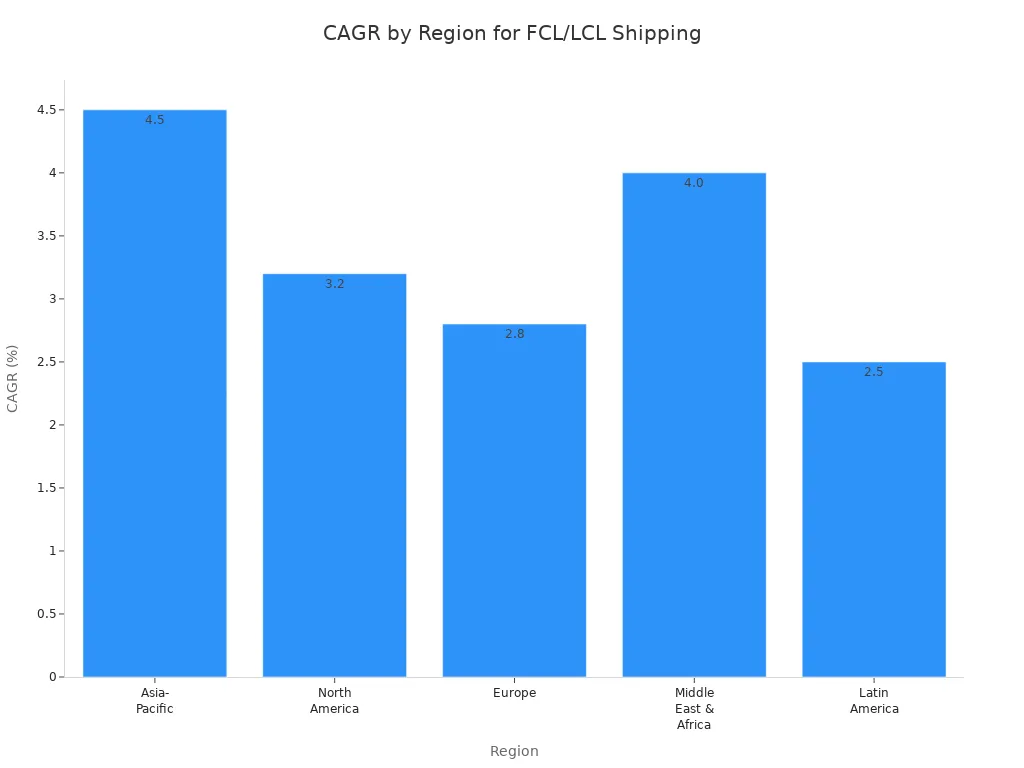
Global trade is changing quickly in 2026. Asia-Pacific makes lots of products and builds new ports. North America brings factories back and uses more FCL at ports. The Middle East builds new ports and connects with Asia and Europe. Latin America exports goods and has big centers in Brazil and Mexico. You need to watch these changes to keep your container deals good. The table shows how each region affects shipping and costs:
Region | CAGR (%) | Key Drivers |
|---|---|---|
Asia-Pacific | 4.5 | Manufacturing, urban growth, new infrastructure, intra-Asia trade |
North America | 3.2 | E-commerce, reshoring, high FCL demand at ports |
Europe | 2.8 | Sustainable logistics, trade diversification, key hotspots |
Middle East & Africa | 4.0 | Port initiatives, trade links with Asia and Europe |
Latin America | 2.5 | Manufacturing, commodity exports, Brazil and Mexico as main centers |
New rules change how you make container contracts. You look at all costs, not just ocean freight. This matters for shipments close to 12–15 CBM. FCL gives a flat price and less handling. LCL lets you pay for only the space you use but can have more delays and damage.
FCL has fixed prices and faster shipping.
LCL shares cargo and has more handling risks.
You must check every cost, like customs and port fees.
Digitalization and Automation
Digital tools and automation help you make better freight contracts. Agentic AI gets quotes much faster. It learns from market data and makes pricing better. You win more deals because AI works quickly and improves over time.
Agentic AI watches market changes, thinks about the best prices, makes quotes by itself, and learns to get more accurate.
IoT sensors help you track containers. Predictive analytics help you plan costs and routes. Automation at ports moves containers faster and cuts labor costs. Digital platforms let you share data and stop mistakes.
Capacity and Performance Metrics
You use clear metrics to check contract performance. You look at cost, lead time, handling risk, and claims for both FCL and LCL. The table helps you compare:
Metric | FCL Characteristics | LCL Characteristics |
|---|---|---|
Cost | Higher per shipment cost, lower variability | Lower per shipment cost for small shipments |
Lead Time | Predictable, single consignee control | Longer, more variable due to consolidation |
Handling Risk | Lower risk, fewer handling events | Higher risk, multiple handling events |
Claims Exposure | Lower claim rates | Higher claim rates |
You stop using yearly bids. You update contracts every quarter and use mini-bids. You check lanes in real time so you do not pay too much. You keep your freight contracts flexible and competitive.
Tip: You make your supply chain stronger by tracking performance and changing contracts often.
You have a special chance in 2026 to make your freight contracts better. There are too many containers and changing demand, so buyers have more power. You can get important container routes early. You can mix steady contracts with flexible spot deals. You can make backup plans with other carriers. If you share shipment details and set clear rules for extra charges, you will not be surprised by costs. Long-term container prices are good, and carriers give discounts if you promise to ship a lot. Check your freight deals now. Change your container plans and act to keep your supply chain safe.
Take action: Make your container contracts stronger and help your freight operations stay strong in the future.
Get steady prices for your main container routes.
Make clear rules for handling containers and extra charges.
FAQ
Why should you review your FCL and LCL contracts every year?
You face changing shipping rates, new regulations, and shifting demand each year. Reviewing contracts helps you catch cost increases, spot hidden fees, and adjust terms. This keeps your supply chain strong and your shipping costs under control.
Why does choosing between FCL and LCL matter for your business?
You save money and avoid delays when you pick the right shipping mode. FCL works best for large shipments. LCL fits small or irregular loads. The right choice helps you manage risk and meet delivery deadlines.
Why do digital tools help optimize freight contracts?
Digital tools give you real-time tracking, faster quotes, and fewer errors. You see shipment status and costs clearly. This helps you make better decisions and respond quickly to changes in the market.
Why do strong partnerships with carriers improve contract outcomes?
You get better rates, priority space, and reliable service when you build trust with carriers. Strong partnerships help you solve problems faster and keep your supply chain running smoothly.
Why do performance metrics matter in freight contracts?
You track delivery times, costs, and service quality with clear metrics. This lets you spot issues early and improve your shipping process. Metrics help you hold carriers accountable and ensure you get what you pay for.
See Also
Comprehensive Ocean Export Services for FCL and LCL Shipments
Top-Notch FCL Export Solutions Offered by Premier Global Logistics
Enhancing Global Operations Through Innovative Logistics Strategies
