Shipping cost accounting ocean freight made simple for 2025

You need to track shipping cost accounting ocean freight by focusing on every expense, from container rates to delivery surcharges. In 2025, average global ocean freight rates reach $1,651 per 40-ft container. Most Oceania export lanes stay steady, but some trade routes shift due to commodity demand. Fuel prices and new environmental rules, like carbon taxes, can increase shipping costs. Port congestion causes delays and impacts rates. When you use accurate, up-to-date methods, you budget with confidence.
Average global rates: $1,651 per 40-ft container
Pricing steadiness in Oceania lanes
Key Takeaways
Track all shipping costs, including freight charges, handling fees, and surcharges. This helps you avoid unexpected expenses.
Choose the right accounting method based on your shipping terms. This affects your financial reports and inventory value.
Use digital tools and automation to enter shipping costs accurately. This reduces errors and saves time.
Conduct regular audits of your shipping costs. This keeps your records accurate and helps you catch mistakes early.
Stay informed about new regulations and fees in 2025. This ensures compliance and helps you adjust your budget accordingly.
Shipping cost accounting ocean freight: recording essentials

Key cost components
You need to understand every cost that makes up your total ocean freight expense. Each shipment includes more than just the main freight charge. You pay for handling, documentation, and many extra fees. If you miss any cost, your budget will not match your actual spending.
Here is a table that shows the main cost components you should track for shipping cost accounting ocean freight in 2025:
Cost Component | Description |
|---|---|
Type of freight | Contract (predictable costs) or spot (flexible costs) shipping. |
Mode(s) of transportation | Air (fast, costly), sea (economical for large volumes), land (flexible). |
Cargo weight and dimensions | Larger or heavier shipments cost more. |
Shipping route and complexity | Longer or complex routes add extra logistics costs. |
Tariffs, duties, and taxes | Customs duties and taxes based on cargo type. |
Fuel surcharges | Extra charges when fuel prices rise. |
Terminal handling charges (THC) | Fees for loading, unloading, and handling cargo at ports. |
Demurrage and detention (D&D) | Penalties for delays in container handling at ports. |
Special handling fees | Extra fees for hazardous, oversized, or temperature-sensitive cargo. |
You also need to track these common charges:
Main freight cost: The price for sea transport from origin to destination.
Origin fees: Handling, documentation, and port services before departure.
Destination fees: Customs clearance, port handling, and delivery charges upon arrival.
Extra surcharges: Seasonal or fuel-related fees.
Booking fee: Cost of reserving space with the carrier.
Pickup and delivery fees: Trucking to and from the port.
Harbor maintenance fees: Charges for port infrastructure.
Container cleaning fee: If the container needs cleaning before reuse.
Digital release fees: For electronic shipping documents.
Bunker adjustment factor: Surcharge for changing fuel costs.
Low sulphur surcharge: Charge for using cleaner fuel.
Equipment surcharges: For moving or balancing empty containers.
Piracy surcharge: For routes with piracy risks.
Tip: Make a checklist of all possible charges before you book your shipment. This helps you avoid surprise costs and keeps your shipping cost accounting ocean freight accurate.
Choosing an accounting method
You must pick the right accounting method for your business. The two main methods are freight-in and freight-out. Freight-in means you, as the buyer, add shipping costs to your inventory value. You do this until you sell the goods. Freight-out means you, as the seller, record shipping costs as an expense for selling and administration.
The method you choose depends on your shipping terms. For example, FOB shipping point means you pay for shipping, so you use freight-in. FOB destination means the seller pays, so they use freight-out. These rules follow US GAAP and IFRS standards.
The method you use affects your financial reports. If you capitalize inbound freight costs, your inventory value goes up. If you do not include outbound freight costs, your gross profit margin looks higher than it really is. Your choice also changes key ratios, like return on assets and inventory turnover. These numbers help you measure how well your business runs.
Note: Review your shipping terms and talk to your accountant. This ensures you use the best method for shipping cost accounting ocean freight.
Entering costs in software
You need to enter all shipping costs into your accounting software with care. Accurate data entry helps you track spending and plan your budget for 2025. Mistakes can lead to wrong reports and poor decisions.
Follow these best practices for entering shipping cost accounting ocean freight data:
Automate data entry and reporting to reduce errors and save time.
Connect your accounting system with your logistics management tools for real-time updates.
Keep all freight financial data in one place for easy access.
Use cloud-based software for better security and flexibility.
Set up regular reviews to check for accuracy.
Keep detailed records for audits and compliance.
Use automation tools to stay current with new rules.
Here is a table of popular software platforms for managing shipping cost accounting ocean freight in 2025:
Software Platform | Key Features |
|---|---|
Zencargo | Cloud-based, covers freight procurement, transportation management, and visibility. |
Transporeon | Data-driven, optimizes shipping and reduces costs. |
Freightos | Simplifies booking, compares rates, automates documents. |
Kuebix | Advanced TMS, gives insights to improve efficiency and cut costs. |
Tip: Choose software that fits your business size and needs. Look for features like automation, integration, and strong reporting.
By following these steps, you make shipping cost accounting ocean freight simple and accurate. You avoid missed costs, keep your records clean, and prepare for changes in 2025.
Allocating shipping costs effectively
Allocation methods
You can choose from several methods to allocate your shipping costs. Each method fits different business needs. The most common ways include:
Value-Based Allocation: Divide costs based on the purchase price of each item. Higher-value items get a larger share of the shipping cost.
Weight-Based Allocation: Assign costs according to the weight of each item. Heavier items take a bigger portion.
Quantity-Based Allocation: Split costs equally among all items in the shipment.
Hybrid Allocation: Combine two or more methods. For example, use weight for freight charges and value for insurance.
Tip: Use a hybrid approach for complex shipments. This gives you a more accurate picture of your true costs.
Best practices for accuracy
You improve accuracy in shipping cost accounting ocean freight by following these best practices:
Conduct regular freight audits. These help you catch errors and keep your records correct.
Use a Transportation Management System (TMS) to plan and track shipments.
Apply intelligent route planning software. This helps you analyze traffic and fuel costs.
Always check the weight and dimensions of your cargo.
Double-check billing and delivery details before finalizing records.
Clearly list extra services, like special handling, on your Bill of Lading.
Communicate with your carrier to avoid confusion.
Mistakes like misclassifying freight or missing accessorial fees can lead to higher charges. Regular audits and clear communication help you avoid these problems.
Practical allocation examples
Let’s look at a real-world example. You import industrial equipment worth $85,000. Ocean freight costs $4,200, and customs duties add $6,800. Other fees bring the total to $97,690. You can allocate these costs:
Allocation Method | How It Works |
|---|---|
Value-Based | Assign more cost to higher-priced equipment |
Weight-Based | Heavier machines get a larger share |
Quantity-Based | Divide total cost by the number of machines |
Hybrid | Use weight for freight, value for insurance |
You can also save money by consolidating shipments or choosing flexible schedules. Reliable freight software helps you track and justify your allocation choices.
Managing 2025 changes in ocean freight
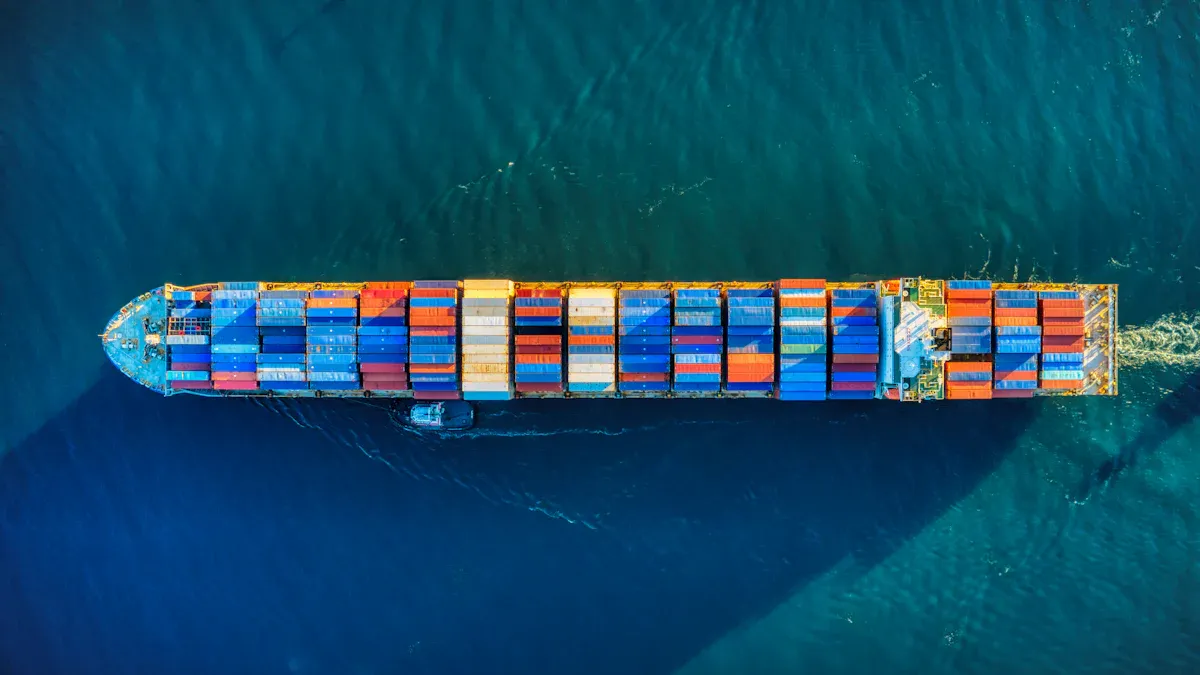
New regulations
You face new rules in 2025 that change how you account for ocean freight costs. The Ocean Shipping Reform Act (OSRA) gives the Federal Maritime Commission more power to address unfair charges and supply chain disruptions. This act helps create a more competitive and efficient shipping system. You must also follow new fee structures for Chinese-operated and Chinese-built ships. These fees increase over time and affect your budgeting.
Category | 2025 Fee (per NT/container) | 2028 Fee (per NT/container) |
|---|---|---|
Annex I (Chinese-operated ships) | $50 / NT | $140 / NT |
Annex II (Chinese-built ships) | $18 / NT or $120/container | $33 / NT or $250/container |
Regulatory changes require you to adjust your cost recording and reporting. You need to rethink your supply chain management and update your sustainability reports. These new rules can raise your operational costs and change your pricing structure.
Note: Stay informed about new regulations. This helps you avoid penalties and keeps your shipping cost accounting accurate.
Digital documentation
You must use digital documentation to meet 2025 requirements. Automated document generation reduces manual errors. Instant cross-border verification systems speed up customs processes. AI-powered compliance checking ensures your documents meet all rules. Blockchain technology secures document transfers and reduces fraud.
Technological Advancement | Description |
|---|---|
Automated document generation | Creates shipping documents quickly and accurately. |
Instant cross-border verification systems | Speeds up customs and improves accuracy. |
AI-powered compliance checking | Checks documents for regulatory compliance. |
Blockchain-enabled secure documentation | Transfers documents securely and builds trust. |
You need to prepare key documents like the Commercial Invoice, Bill of Lading, Certificate of Origin, and Packing List. Digital documentation improves compliance and efficiency. You get real-time visibility and reduce administrative burdens.
Tip: Use digital systems to minimize errors and simplify compliance.
Automation tools
Automation tools help you manage shipping cost accounting with ease. You can choose from platforms like Descartes Systems Group, FourKites, Project44, and Freightos WebCargo. These tools offer routing, tracking, documentation, and exception alerts.
Descartes Systems Group: Routing, compliance, and tracking.
FourKites: Tracking, alerts, and documentation.
Project44: Predictive ETAs and documentation.
Freightos WebCargo: Quoting, booking, and rate management.
Automation tools improve billing accuracy, manage exceptions, and ensure you follow carrier contracts. You reduce data duplication and increase transparency in your financial transactions. Automated record keeping and audit trails make compliance reporting simple.
Alert: Automation saves time and lowers risk. You keep your records complete and ready for audits.
Simplifying your shipping cost accounting process
Essential checklists
You can make your shipping cost accounting easier by using a checklist for every shipment. A checklist helps you catch mistakes and keeps your records consistent. When you follow a checklist, you make sure every freight bill meets the same standards. You also save money and build better relationships with carriers.
Here are key items to include in your checklist:
Verify the service and check the origin and destination.
Mark invoices that differ by more than 5% for review.
Automate rate matching to keep billing accurate.
Set a policy for accessorial charges and direct audits.
Use machine learning to spot exceptions in real time.
Track recovery and disputes automatically for fast claims.
Check all freight charges, including base rates and surcharges.
Set automated rules for invoice approval.
Analyze audit results to find ways to save money.
Keep records safe and organized for compliance.
Tip: Standardizing your audit process with a checklist helps you find errors and keeps your cost accounting reliable.
Mistakes to avoid
You can avoid common mistakes by staying alert and following best practices. Many businesses miss errors because they do not check freight bills closely or use manual paperwork. Mistakes often happen when departments work in silos or when staff do not know freight billing rules.
Common mistakes include:
Duplicate invoices
Incorrect freight rates
Wrong shipping classification
Tax and tariff errors
Incorrect discounts
Mileage mistakes
Wrong surcharges or accessorial fees
You should plan shipments early, compare quotes, and keep all documents ready. Always declare the true value of your goods and check weights and dimensions. Use automation to reduce paperwork and catch errors quickly. Centralize your freight data and run regular audits to keep your records clean.
Recommended resources
You can use helpful resources to keep your shipping cost accounting simple and accurate. Try these strategies:
Link every transaction to a job or project for better tracking.
Use standard names for vendors and jobs to avoid confusion.
Automate tasks like invoice uploads and currency conversions.
Review your budget versus actual costs often.
Store all documents in one shared system.
Tracking data in real time and integrating your systems helps you see trends and spot problems early. Machine learning tools can find and fix errors before they grow. These resources make your process easier and help you stay up to date with best practices.
You can simplify ocean freight shipping cost accounting by tracking every cost, choosing the right method, and using digital tools. Understanding each cost and new regulations helps you plan your budget and follow the rules.
Cost Component | |
|---|---|
Maintenance | Accurate budgeting and safety compliance |
Labor | Affects costs and labor law compliance |
Insurance | Risk management and industry standards |
Regulatory Compliance | Must include in budgets |
Geopolitical Events | Can disrupt routes and raise costs |
Environmental Regulations | Prevents unexpected expenses |
Regular audits and accurate records keep your process strong.
Staying informed helps you avoid delays and extra costs.
Smart planning leads to better budgeting and compliance.
FAQ
How do you track all ocean freight costs for each shipment?
You list every cost, such as freight charges, port fees, and surcharges. You use a checklist and accounting software. You review invoices and records often. This helps you avoid missing any expense.
What is the best way to allocate shipping costs to products?
You choose a method that fits your business. You can use weight, value, or quantity. Many companies use a hybrid approach. You keep your records clear and accurate.
How do new 2025 regulations affect your shipping cost accounting?
You must update your records to include new fees and rules. You use digital tools to track changes. You stay informed about updates from shipping authorities.
Which software helps you manage ocean freight costs?
You can use platforms like Zencargo, Freightos, or Kuebix. These tools automate data entry, track shipments, and generate reports. You choose software that matches your business needs.
What mistakes should you avoid in shipping cost accounting?
You check for duplicate invoices, wrong rates, and missing fees. You use automation to catch errors. You audit your records regularly. This keeps your accounting reliable.
See Also
Maximize Shipping Savings with Premier Global Logistics FTL Services
Effortless Cross-Border Freight Solutions on the West Coast
Coast-to-Coast Ocean Freight Export Services by PGL
Enhancing International Operations Through Innovative Logistics Solutions
Streamlining USA Supply Chains with American Logistics Solutions
