How to Understand International Freight Regulations Easily
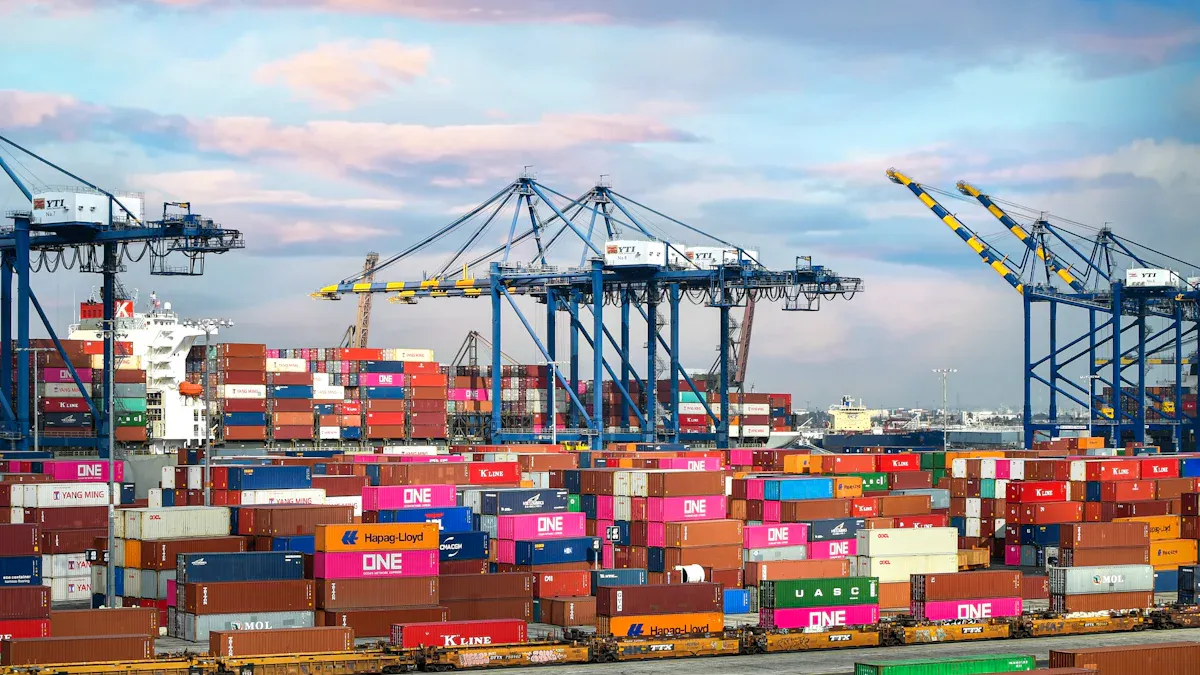
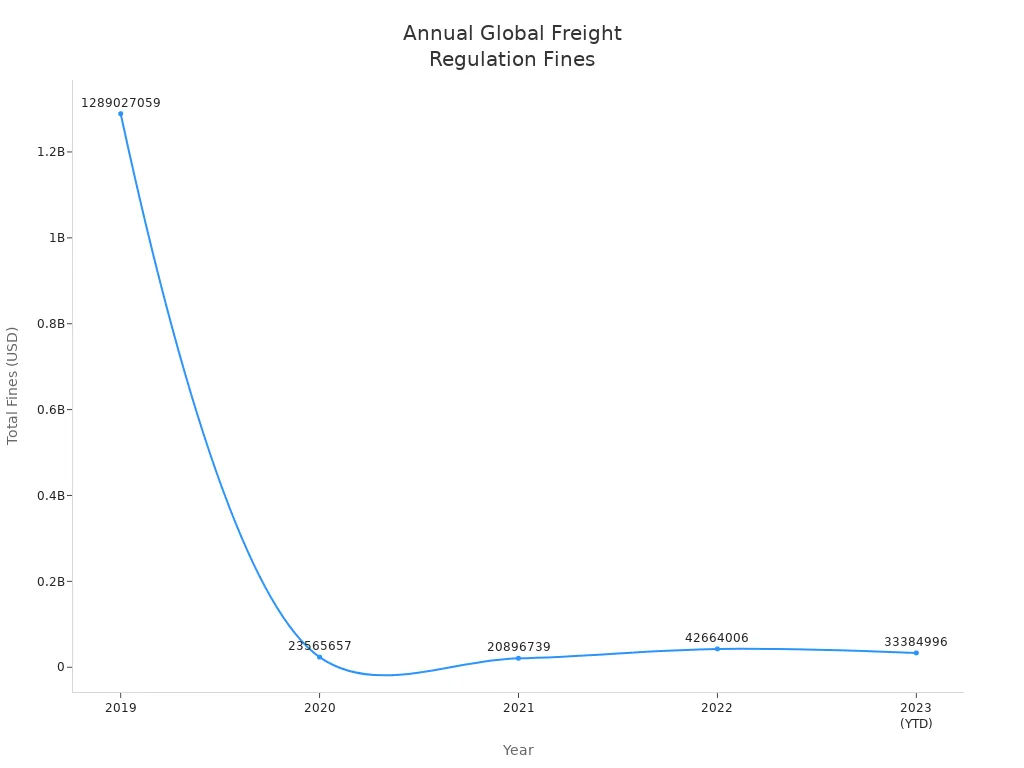
To understand international freight regulations fast, pay attention to the main parts. These are customs procedures, safety standards, documentation, sanctions, and environmental requirements. Use checklists to help you remember important steps. Trusted online resources can give you good information. Ask professionals for help if you are confused. Following the rules keeps you safe from big mistakes. In 2022, global businesses paid over $42 million in fines for not following the rules, as shown below.
Year | Total Fines (USD) |
|---|---|
2023 (YTD) | $33,384,996 |
2022 | $42,664,006 |
2021 | $20,896,739 |
2020 | $23,565,657 |
2019 | $1,289,027,059 |
If you ignore compliance, you may face delays. You could lose shipments and pay expensive penalties.
Key Takeaways
Learn the main parts of international freight regulations. These include customs procedures, safety standards, documentation, sanctions, and environmental requirements.
Use checklists to remember important steps. Make sure you have all needed documents before shipping.
Keep up with changes in regulations to avoid delays and penalties. You can join workshops or training sessions to learn more.
Work with a freight forwarder to make following the rules easier. This helps you manage risks and keeps shipping smooth.
Following the rules keeps your business safe from fines. It also helps your business work better and makes customers happy.
What Are International Freight Regulations?
Definition and Scope
International freight regulations are rules for moving goods between countries. These rules cover many steps in shipping, like loading, moving, and delivering products. You must check what goods you send, how you pack them, and the paperwork you use. The scope is wide. It includes details like the size and chemicals in your products. Some items are not allowed. Customs uses special numbers to track goods. Your product descriptions must match what customs wants. Here is a table showing the main parts of the scope:
Description | |
|---|---|
Technical Characteristics | Includes physical dimensions, chemical composition, etc. |
Excluded Products | A defined list of products that are not covered by the scope. |
U.S. Classification Numbers | Current 10-digit classification numbers under which products may be entered. |
Important Considerations | Scope should accurately reflect the product and be enforceable by customs. |
Types of Regulations (Global, Regional, Country-Specific)
International freight regulations have three main types. Global rules come from groups like the United Nations and International Maritime Organization. These set safety and environmental standards for shipping worldwide. Regional rules apply to groups of countries, like the European Union. They focus on customs and trade rules shared by those countries. Country-specific rules are different for each nation. For example, the USA has strict rules for dangerous materials. The EU has strong container safety laws. You must follow each country’s customs steps and paperwork to avoid delays and fines.
Global logistics regulations include trade agreements like NAFTA and the EU, which influence customs and import/export procedures.
Each country has its own customs regulations, which can include specific tariffs, duties, and documentation requirements.
Compliance with local shipping documentation is essential to avoid penalties and ensure smooth operations.
Who Must Comply?
If you work in international freight forwarding, you must follow these rules. This includes freight forwarders, exporters, importers, and anyone who helps move goods. You need to know the laws for shipping goods between countries. Not following the rules can cause big problems. You could get fined, lose your right to ship, or face lawsuits. Trade compliance matters for everyone in the supply chain. By following the laws, you protect your business and keep shipments moving.
Why International Freight Regulations Matter
Business and Legal Impact
You should know that these rules affect your business every day. Logistics is more than just moving things. It is important for your money. The way you ship goods can change your costs. How you group cargo and plan customs also matters. These choices can help your company do better than others. If shipping prices go up, you might make less money. This can happen if there are not enough containers or if there are political problems. Many companies have paid more and changed their plans because of these issues. To keep your business strong, you must follow trade rules and learn about new forwarding laws.
Risks of Non-Compliance
Not following the rules can hurt your business. You could have many problems, such as:
Breaking customs rules
Getting into fights with others
Paying fines and extra charges
Shipments being late
Losing or having goods held
Cargo getting stolen or broken
Facing political or computer threats
Dealing with dangers or pirates
Getting into legal or money trouble
If you do not follow the rules, you could lose shipments. You might pay fines or hurt your business name. Your teams must know the risks and do the right things.
Benefits of Following Rules
When you follow the rules, you get many good things. Here is a table that shows the main benefits:
Benefit | Description |
|---|---|
Your shipments follow the law, so you avoid fines and delays. | |
Cost savings | A freight forwarder can help you save money and pick good routes. |
Risk management | You can use insurance and tracking to keep your goods safe. |
Efficient logistics management | You can focus on your work while your freight forwarder handles the shipping. |
Tip: Following the rules makes your supply chain work better. You get faster service, less waste, and happier customers. A good freight forwarder helps protect your business and keeps shipping smooth.
Key Areas of International Freight Shipping Compliance
Customs and Import/Export Rules
You need to know customs rules to ship goods between countries. Every country has its own way to clear shipments. You should check the rules before you send anything. The table below shows the main customs rules you will see:
Rule Type | Description |
|---|---|
Import/Export Regulations | These rules protect local companies and make trade fair. If you break them, you get delays and fines. |
Tariffs and Duties | Each country has different tariffs. For example, India’s is 5.9%. Australia’s is 0.8%. |
Free Trade Agreements (FTAs) | These deals lower tariffs. USMCA helps Canada and Mexico pay less to import. |
Customs Valuation | Customs uses invoice prices. The EU follows WTO rules. |
Additional Taxes | Some countries add taxes like VAT or GST. Australia adds 10% GST to most imports. |
Quotas | Some goods have limits. The US limits how many textiles can come in. |
Non-compliance Consequences | If you break the rules, you can get fined or lose your goods. In the UK, fines can be £5,000. |
You need papers like invoices, packing lists, airway bills, and licenses. |
You must get all the right papers and follow each country’s customs steps. A freight forwarder can help you with customs and stop mistakes.
Transportation and Safety Standards
You have to follow safety rules when shipping goods. Groups like the International Maritime Organization and International Civil Aviation Organization make these rules. The table below shows who makes the rules and what they do:
Organization | Role in Transportation Safety Standards |
|---|---|
IMO | Makes the IMDG Code for dangerous goods at sea. |
ICAO | Gives safety rules for air shipping. |
UN Sub-Committee | Makes rules for all ways to move goods. |
You also need to follow the IATA Dangerous Goods Regulations for air and the IMDG Code for sea. These rules help keep your cargo safe and easy to track.
Cargo Security and Anti-Smuggling
Keeping cargo safe is very important. You should use strong screening, good packaging, and special seals. Teach your team to spot problems and follow customs steps. If you skip these, you could get in trouble, pay fines, or hurt your business name.
Documentation and Record-Keeping
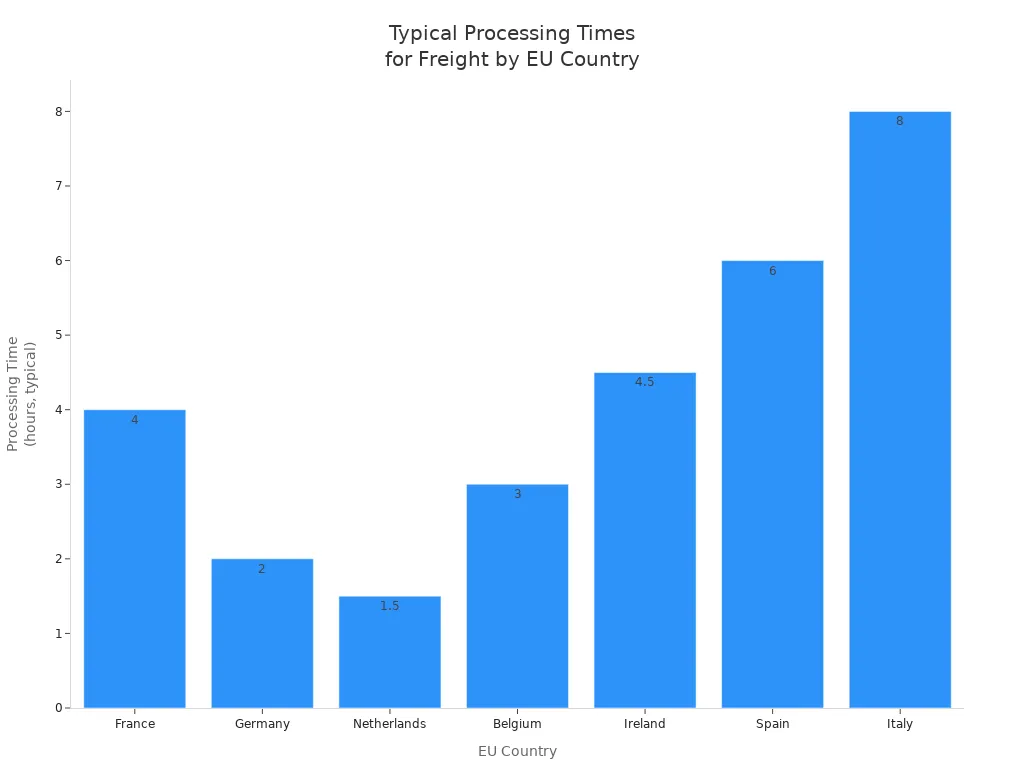
You need to have all the right papers for shipping. Get invoices, packing lists, bills of lading, and certificates of origin ready. Every country has its own rules. For example, France and Germany want you to tell them before you ship. The chart below shows how long shipping takes in different EU countries:
Keep your records for years in case you get checked by customs.
Sanctions and Export Controls
You must check for sanctions and export controls before you ship. These rules can stop your cargo from moving. Check your customers, know what you are shipping, and get licenses if you need them. A freight forwarder can help you avoid sending goods to banned people and keep your business safe.
Environmental and Sustainability Rules
You need to follow green rules when shipping goods. Use cleaner fuel and tell how much you pollute. The World Shipping Council wants to cut pollution and save animals. These rules can cost more, but they help you meet world standards and make shipping better.
Tip: Work with a freight forwarder to help you follow the rules, move cargo, and keep your shipping smooth.
How to Comply with International Freight Regulations
Step-by-Step Compliance Process
You can follow simple steps to meet international freight regulations. This helps you avoid mistakes and keeps your shipping smooth. Here are the main things you should do:
Learn how to use HS codes. Know what tariffs mean for your products. These codes tell customs what you are shipping.
Make sure all your documents are right and finished. Check your invoices, packing lists, and certificates before you send anything.
Follow every import and export rule for each country. See if you need special licenses or permits for your cargo.
Use free trade agreements when you can. These deals can lower your costs and make shipping easier.
Look at your costs before you ship. This helps you plan your money and avoid surprises.
Manage risks by checking for restricted items. Make sure your cargo is safe. Use tracking to watch your shipments and see where they are.
Tip: Work with a freight forwarder who knows the rules. They can help with customs, paperwork, and tracking. This makes it easier to follow the rules and keeps your shipping on track.
Common Mistakes to Avoid
Many companies make the same mistakes with international freight shipping. You can avoid problems if you know about these errors:
Using the wrong HS code. If you do, you may pay the wrong duties or get fined.
Sending documents that are not correct or not finished. Missing or wrong information can stop your cargo and cost more money.
Giving the wrong customs value. If you forget some costs, you may get fined.
Not following trade agreement rules. If you do not check the rules, you can miss savings or get penalties.
Keeping bad records. Messy files can slow down checks and make customs look at you more.
Note: You should teach your team about compliance. Good training helps you avoid these mistakes and keeps your shipping safe.
Staying Updated on Regulation Changes
International freight rules change a lot. You need to stay informed to keep your shipping and forwarding legal. Here are some good ways to stay updated:
Best Practice | Description |
|---|---|
Keep learning | Hold workshops every few months to teach your team about new rules. |
Make a compliance team | A special team can cut mistakes by half and protect your business and customers. |
Train and update often | Companies that train often break fewer rules and are ready for changes. |
You should also watch for updates from the International Maritime Organization, International Air Transport Association, and local groups. These groups share new rules for cargo, tracking, and shipping. A freight forwarder can help you get the latest news and keep your shipping legal.
Callout: Staying updated helps you avoid delays, protect your business, and see your supply chain better.
Useful Resources for International Freight Forwarding
Recommended Websites and Guides
There are many websites that can help you learn. Start with the International Air Transport Association and International Maritime Organization. These sites share news about forwarding rules and cargo safety. The World Customs Organization gives guides about customs and import and export steps. If you need country rules, check your local customs authority’s website. For American rules, use the U.S. Customs and Border Protection site. These resources show you how to manage cargo, follow laws, and track shipments.
Tip: Save these websites so you can find answers fast when you have questions about freight.
Checklists and Templates
Checklists help you keep your forwarding process easy. A checklist should include documents like commercial invoices, packing lists, and bills of lading. It also reminds you to check cargo labels and get needed licenses. Many freight forwarder websites give free templates for these forms. You can download them to save time and stop mistakes. Some freight management software has digital checklists and tracking tools. These tools help you see your shipments in real time and lower the risk of missing steps.
Checklist Item | Why It Matters |
|---|---|
Commercial Invoice | Shows cargo value and details |
Packing List | Lists items in each shipment |
Bill of Lading | Proves cargo ownership |
Export/Import Licenses | Needed for some products |
Professional Support and Training
You can ask a freight forwarder for help if you are not sure about forwarding rules. These experts know how to handle cargo, paperwork, and customs. They can teach you about tracking and cost control. Many companies offer online training for international freight forwarding. You can join webinars or take short courses to learn new rules and best ways to work. Training helps you avoid mistakes and keeps your forwarding business strong.
Note: Training often helps you stay updated and makes it easier to manage cargo and forwarding with confidence.
You can follow international freight regulations by using trusted resources. Check for updates often so you do not miss changes. Here are some steps to help:
Look at customs clearance rules and keep your papers right.
Find out how each rule changes your shipping steps.
Watch for new global transportation news.
Check your freight forwarding partners and know what they do.
Learning all the time helps you stop mistakes and keeps shipments moving. Reviewing rules often keeps your business safe and helps your partners trust you.
FAQ
What documents do you need for international freight shipping?
You need a commercial invoice, packing list, bill of lading, and certificate of origin. Some shipments need extra licenses or permits. Always check the rules for the country you are shipping to.
How can you stay updated on changing freight regulations?
Tip: Sign up for updates from the International Maritime Organization (IMO) and International Air Transport Association (IATA). Go to webinars and read news from your local customs authority.
What happens if you use the wrong HS code?
You might have shipment delays, pay extra duties, or get fines. Customs could hold your goods. Always check your HS codes before you ship.
Do you need a freight forwarder to comply with regulations?
You do not have to use one, but a freight forwarder makes things easier. They help with paperwork, customs, and tracking. This lowers your chance of making mistakes.
Are there special rules for shipping hazardous materials?
Yes. You must follow strict packaging, labeling, and paperwork rules. Use the IMDG Code for sea and IATA DGR for air shipments. Safety is most important with hazardous goods.
See Also
Simplifying Cross-Border Freight on the West Coast
Key LCL Shipping Steps for Panama Exports by Premier
Crucial Strategies for Effective Global Logistics Management
Enhancing International Operations with Innovative Logistics Solutions
