7 Best Practices to Streamline US Business Export Logistics
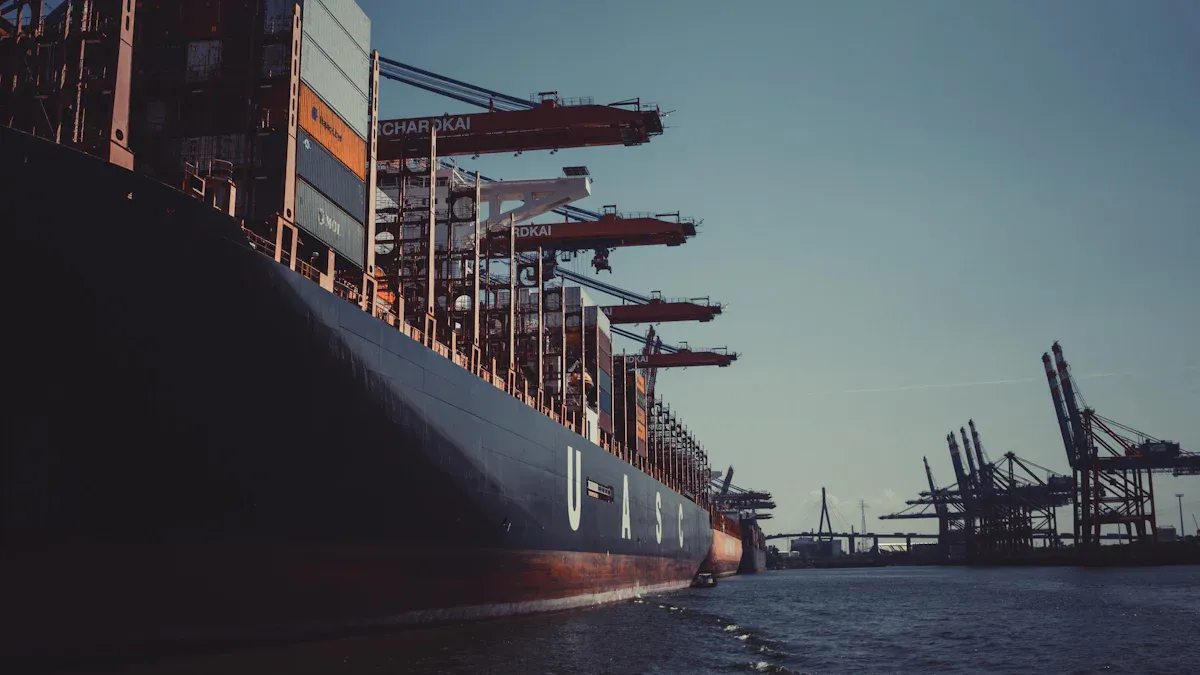
Efficient export logistics lets you keep costs low and shipments on schedule. You can see real savings when you optimize container space, improve on-time delivery, and consolidate freight. The table below shows how simple changes can cut expenses:
Strategy | Cost Reduction Impact |
|---|---|
Optimizing container utilization | |
Improving on-time delivery | Can reduce logistics costs by up to 4% |
Freight consolidation | Reduces costs by 20% to 40% |
Negotiating better rates | Savings of $50,000 to $100,000 annually |
When you follow us business export logistics best practices, you boost reliability and keep your business competitive.
Key Takeaways
Optimize container space to reduce shipping costs by up to 167%. Efficient use of space leads to significant savings.
Master compliance by understanding key export laws and avoiding common errors. This prevents costly fines and delays.
Streamline export documentation by preparing essential papers accurately. Proper documentation speeds up customs clearance.
Choose reliable freight forwarders with strong expertise and a global network. This ensures smooth shipping and compliance.
Diversify suppliers to strengthen your supply chain. This reduces risks and enhances your ability to negotiate better deals.
Master Compliance and Regulations
Key Export Laws and Agencies
You must understand the main agencies that enforce export laws in the United States.
The Department of Commerce—Bureau of Industry and Security (BIS) oversees most goods exported from the U.S. and enforces the Export Administration Regulations (EAR).
The State Department—Directorate of Defense Trade Controls (DDTC) regulates exports of defense articles and services.
The Department of the Treasury—Office of Foreign Assets Control (OFAC) enforces economic and trade sanctions.
Tip: Build a strong export compliance program. This helps you avoid costly mistakes and keeps your shipments moving.
Common Compliance Errors
Many exporters make simple mistakes that lead to big problems.
Incorrect goods classification can cause fines and shipment delays.
Incomplete documentation often results in delays at ports.
Problems with export license applications may lead to penalties and damage your reputation.
You risk serious consequences if you ignore these errors.
Seagate paid a $300 million fine for violating sanctions.
British American Tobacco faced a $508 million penalty for trading with North Korea.
Microsoft received a $3.3 million penalty for export control violations.
TE Connectivity Corporation paid $5.8 million for shipping to restricted Chinese firms.
Criminal violations can mean fines up to $1 million per violation and prison time. Civil penalties can reach $500,000 per violation.
Compliance Tools and Resources
Digital tools make compliance easier and safer.
Specially Designed Decision Tool
Strategic Trade Authorization (STA) Compliance Tool
Consolidated Screening List Tool
Export Compliance Program (ECP) Audit Module
These tools help you classify products, manage licenses, and screen shipments. Export compliance software can automate license applications, simplify product classification, and keep records secure. You improve efficiency and reduce risk when you use these resources as part of us business export logistics best practices.
Streamline Export Documentation
Essential Documents
You need to prepare several key documents before you ship goods overseas. These papers help you clear customs and prove your shipments meet legal requirements.
Export licenses
Destination control statements
Certificates of origin
Other documents as needed for your destination
An export license gives you permission from the government to send certain products to specific countries. You may need this license for some shipments, especially if your goods have special uses or go to restricted places. Some countries ask for a certificate of origin. This document shows where your goods came from. You often get it signed by a chamber of commerce or a consulate office.
Common Paperwork Mistakes
Mistakes in your paperwork can slow down your shipments or even stop them at the border. You should watch out for these common errors:
Incomplete or missing documents
Incorrect product descriptions
Errors in quantity and weight details
Missing or incorrect signatures
Not understanding importer or exporter responsibilities
If you leave out important details or forget a signature, customs may hold your shipment. Wrong product descriptions can cause confusion and delays. Always check your paperwork before you send it.
Digital Document Solutions
Digital tools help you manage export documents faster and with fewer mistakes. Automation of workflows cuts down on human error and lowers costs. You can store all your documents in one place, making it easy to find what you need. Real-time insights let you see the status of your paperwork and fix problems quickly. These solutions support us business export logistics best practices by improving accuracy and speeding up your export process.
Optimize Warehousing Operations

Efficient Storage Practices
You can speed up your export process by using smart storage methods. Organize your warehouse so workers can find goods quickly. Place high-demand items near shipping areas. Use clear labels and signs to guide staff. Just-in-time inventory helps you avoid delays and keeps your space clear. When you use automation tools like RFID tags, you track goods as they move. This reduces mistakes and saves time. A well-planned layout makes order picking faster and cuts down on walking. You also lower the risk of handling errors when everything has a set place.
Tip: Review your warehouse layout every few months. Small changes can make a big difference in how fast you process orders.
Quick access to goods means you ship faster.
Better inventory management prevents overstocking and stockouts.
Organized storage reduces mistakes and keeps your team safe.
Inventory Management Tools
You need the right tools to keep track of your products. Advanced inventory systems give you real-time updates on stock levels. These tools help you spot problems before they slow you down. Warehouse Management Systems (WMS) let you see where every item is stored. You can use these systems to plan shipments and avoid last-minute surprises. Automation also helps you fill orders faster and with fewer errors. When you know what you have and where it is, you meet delivery deadlines more easily.
Reducing Handling Delays
Handling delays can hurt your export schedule. Smart inventory systems let you monitor shipments and stock in real time. Logistics software helps you plan routes and schedules. Good communication between your warehouse and transport teams keeps everyone on track. Modern WMS tools cut down on human errors and speed up workflow. You should also check all paperwork before shipping. This avoids border delays. Work with skilled freight forwarders and customs brokers to handle rules and paperwork. Always have a backup plan for strikes or bad weather.
You follow us business export logistics best practices when you use these warehousing strategies. You keep your shipments moving and your customers happy.
Select Reliable Freight Forwarders
Qualities to Look For
You need to choose freight forwarders who help your business grow and keep shipments on track. Industry leaders use several criteria to find the best partners. Here are the top qualities you should look for:
Comprehensive service range that covers all shipping needs.
Global network for smooth international operations.
Strong expertise in regulations and compliance.
Advanced technology for tracking and managing shipments.
Insurance and risk management to protect your goods.
Excellent customer service for quick problem-solving.
Cost-effectiveness to keep expenses low.
Proven experience and a solid track record.
Flexibility and scalability to handle changes in demand.
Commitment to sustainability.
Local expertise for navigating regional rules and customs.
Tip: Always ask about a freight forwarder’s experience with your target markets. This helps you avoid delays and costly mistakes.
Vetting and Evaluation
You need to evaluate freight forwarders before you trust them with your shipments. Use these methods to check their performance and reliability:
Method | Description |
|---|---|
Customer Satisfaction | Use surveys, feedback forms, and on-time delivery metrics to see how well they serve clients. |
Cost Efficiency | Compare rates and fee transparency. Look for strategies that help you save money. |
Compliance and Risk Management | Check if they follow laws and safety rules. Review their certifications and audit results. |
Innovation and Technology | See if they use modern tools and analytics to improve service and adapt to changes. |
Relationship and Collaboration | Measure how responsive and flexible they are. Ask other stakeholders for feedback. |
You can use these methods to find partners who support us business export logistics best practices.
Leveraging Local Expertise
Local freight forwarders offer many benefits for your export logistics. You gain access to specialized knowledge about customs and trade laws. They help you avoid penalties and keep your shipments moving. Local experts have strong relationships with carriers, so you get better rates and faster shipping routes. Their networks make logistics smoother and help you solve problems quickly.
Local forwarders know U.S. export laws and customs protocols.
They handle documentation accurately and ensure compliance.
Their connections with carriers and officials speed up shipping.
You save money by avoiding extra fees and fines.
They manage logistics operations, making your work easier.
You get real-time updates and better control over your supply chain.
Their risk management strategies protect your cargo and minimize losses.
Note: Working with local experts helps you respond quickly to disruptions and keeps your export process efficient.
Use Tracking Technology

Real-Time Shipment Visibility
You can improve your export process by using real-time shipment tracking. This technology lets you see where your goods are at every step. You get updates as your shipment moves from your warehouse to your customer. Only about 25% of suppliers use real-time shipment tracking technology. Many US exporters still do not use these tools. When you use real-time tracking, you give your customers accurate updates. This reduces worries about delays. You also build trust because your customers know you will keep them informed.
Real-time shipment visibility provides accurate updates, which reduces uncertainties associated with shipment delays.
Improved communication through real-time tracking builds trust and confidence among customers.
Proactive updates keep customers informed at every stage, enhancing their overall experience and satisfaction.
Tip: Share tracking links with your customers. This helps them follow their orders and feel more confident about your service.
Overcoming Tracking Challenges
You may face some challenges when you start using shipment tracking technology. Demand can change quickly, making it hard to manage resources. Sometimes, routes are not efficient, which wastes time and money. Traffic and other delays can make delivery schedules unreliable. Last-mile delivery can be tricky because you must plan for many different destinations and tight delivery windows.
Tight delivery windows create pressure to meet customer expectations for timely deliveries.
Route optimization is necessary to navigate complex urban environments effectively.
Diverse delivery destinations require flexibility and adaptability in logistics planning.
You can solve these problems by choosing tracking tools that offer route planning and real-time updates. Work with your logistics team to review data and adjust your plans as needed.
Recommended Platforms
Many platforms can help you track shipments. Look for tools that give you real-time updates, easy-to-read dashboards, and alerts for delays. Some popular options include:
Platform | Key Features |
|---|---|
FourKites | Real-time tracking, predictive ETAs |
Project44 | Global visibility, analytics |
Descartes MacroPoint | Carrier integration, live alerts |
Shipwell | Automated workflows, shipment status |
You should pick a platform that fits your business size and needs. Using tracking technology is one of the us business export logistics best practices that helps you stay ahead and keep your customers happy.
Diversify Suppliers and Plan Shipments
Benefits of Supplier Diversification
You can protect your business by working with more than one supplier. When you rely on a single source, you risk delays if something goes wrong. By diversifying, you build a stronger supply chain that can handle surprises. You also gain more power when you negotiate prices. Suppliers compete for your business, so you get better deals. If a natural disaster or political issue affects one supplier, you can switch to another quickly. This keeps your operations running smoothly.
Benefit | Description |
|---|---|
Diversification helps control fluctuations in tariff rates and enhances resilience in uncertain times. | |
Expediency | Changing suppliers is quicker than relocating production for tariff relief. |
Better negotiation power | Multiple suppliers provide leverage in price negotiations, ensuring competitive pricing. |
You avoid large-scale impacts from disruptions.
You build resilience and adapt to changes.
You ensure continuity in your operations.
Scheduling Shipments in Advance
You can save money and time by planning your shipments early. When you schedule ahead, you use your resources better and avoid last-minute problems. Companies like Hardie’s Fresh Foods improved delivery capacity by 14% and cut driver costs by 12% with smart planning. Gallagher Pools saved over 8,000 miles and 24 driving hours each month for every driver by optimizing routes. Route optimization tools help you deliver more without adding trucks or drivers. Modern logistics platforms predict delays and help you choose the best delivery times.
Tip: Use digital tools to plan shipments and track deliveries. This helps you avoid costly mistakes and keeps your customers happy.
Minimizing Supply Chain Disruptions
You can lower risks by using several smart strategies. Explore different trade routes and shipping partners to avoid problems in high-tariff regions. Invest in digital solutions like analytics and AI to spot issues before they happen. Build inventory buffers in key markets to handle sudden spikes in tariffs. Assess your supply chain exposure by analyzing import data and checking product classifications. Estimate costs for different scenarios and plan how to respond.
Strategy | Description |
|---|---|
Diversifying Logistics Routes | Explore alternative trade routes and shipping partners to reduce dependency on high-tariff regions. |
Investing in Digital Solutions | Utilize advanced analytics and AI to predict disruptions and optimize logistics. |
Building Inventory Buffers | Maintain higher inventory levels in key markets to mitigate unexpected tariff spikes. |
Robust contingency plans help you deal with disruptions. These plans should cover small problems and big crises. Clear steps keep your business moving.
You follow us business export logistics best practices when you diversify suppliers, plan shipments early, and prepare for disruptions. These steps help you build a reliable and flexible export process.
US Business Export Logistics Best Practices Summary
Process Optimization Tips
You can boost your export logistics by focusing on process optimization. Start with route optimization. Choose the best delivery paths to save time and money. Use advanced tracking technology like GPS and IoT. These tools let you monitor your goods in real time and react quickly to changes. Streamline your warehouse operations by improving how you receive, store, and ship products. This reduces errors and speeds up order fulfillment.
Other smart steps include:
Mode optimization: Pick the right transportation mode for each shipment.
Load optimization: Fill containers efficiently to cut costs.
Inventory optimization: Keep the right products in stock to meet demand without overstocking.
When you use these techniques, you make your export process faster and more reliable.
Communication Across Stakeholders
Clear communication keeps your export logistics running smoothly. You should share updates with your team, suppliers, and customers. Use digital platforms to send real-time alerts about shipment status. Hold regular meetings to review progress and solve problems together. Good communication helps you spot issues early and fix them before they grow. When everyone knows their role, you avoid confusion and delays.
Tip: Set up a central dashboard where all stakeholders can track shipments and share important documents.
Risk Management and Insurance
Managing risk protects your business from unexpected losses. You need the right insurance for your shipments. The most important types include:
Cargo insurance covers your goods if they get lost, stolen, or damaged during transit.
Credit insurance protects you if a foreign buyer does not pay.
Political risk insurance helps if political events disrupt your shipments.
Product liability insurance covers legal costs if your products cause harm.
Review your insurance policies often. Make sure they match your current needs and cover all possible risks.
You get the best results when you combine process optimization, strong communication, and risk management. Integrate all these us business export logistics best practices to build a reliable and efficient export operation.
You gain measurable benefits when you follow us business export logistics best practices.
Benefit | Description |
|---|---|
Exporting to higher price markets boosts your profits. | |
Improved Liquidity | Better payment terms increase your cash flow. |
Enhanced Competitiveness | Competing globally makes your business stronger. |
Avoid common pitfalls like customs errors and poor planning. Use regular audits, staff training, and technology to ensure compliance. Start with pre-shipment preparation and clear communication. Take action now to build a reliable export process and grow your business.
FAQ
What documents do you need for US export shipments?
You need an EEI, export license, destination control statement, and certificate of origin. Check your product and destination for extra requirements. Always review each document for accuracy before shipping.
How can you avoid common export compliance mistakes?
You should use digital compliance tools. Train your team regularly. Review product classifications and licenses before shipping. Keep records organized and up to date.
Why should you work with a reliable freight forwarder?
A reliable freight forwarder helps you avoid delays and mistakes. You get expert advice on customs and regulations. Your shipments move faster and cost less.
What technology helps you track shipments?
You can use platforms like FourKites, Project44, or Shipwell. These tools give you real-time updates, alerts, and easy dashboards. You see where your goods are at every step.
How does supplier diversification protect your business?
Supplier diversification reduces risk. If one supplier has problems, you switch to another quickly. You keep your supply chain strong and avoid major disruptions.
See Also
Key Strategies for Effective Management of Global Logistics
Enhancing International Operations Through Innovative Logistics Solutions
Streamlined Supply Chain Solutions for U.S. Logistics Optimization
Crucial LCL Shipping Guidelines for Panama Exports by Premier Logistics
Reliable Air Freight Services for U.S. Exports by Premier Logistics
