Understanding the Fundamentals of Warehouse Logistics and Management
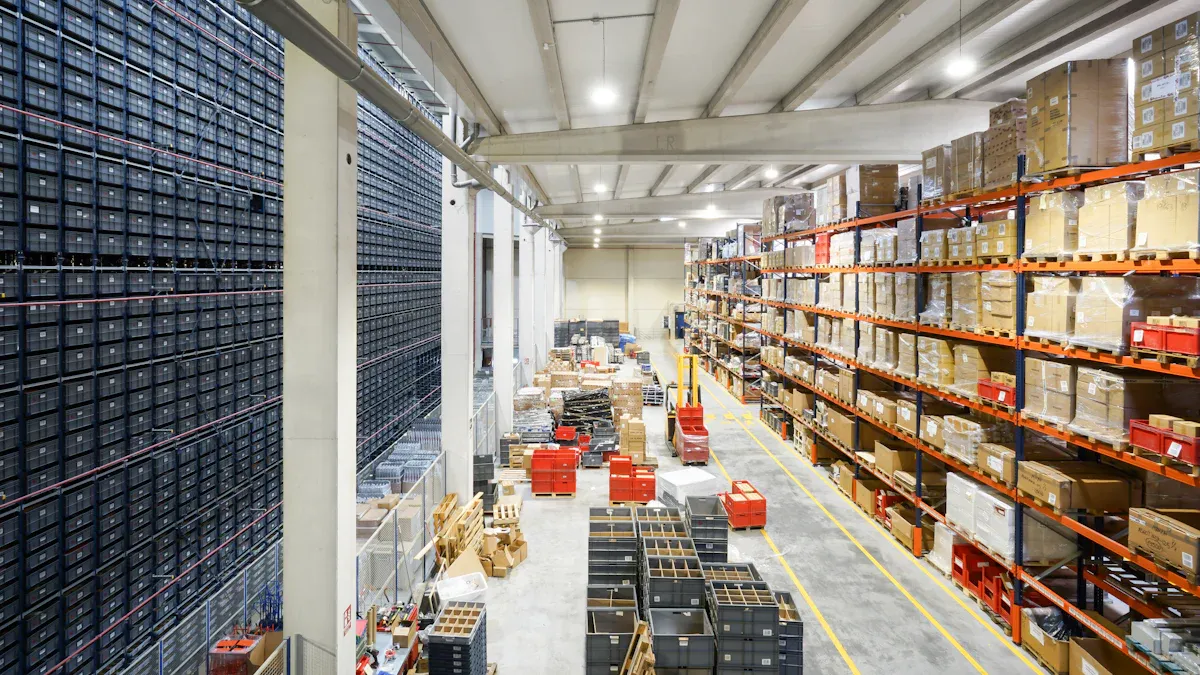
You manage warehouse logistics and management by focusing on precise inventory tracking, safe storage, and fast order fulfillment. These principles help you keep products secure and deliver goods on time. Today, you see digitalization and AI transforming how you work. AI uses robotics and predictive analytics to boost accuracy and efficiency.
The global warehousing market reached USD 1.01 trillion in 2023.
It may grow to USD 1.08 trillion in 2024 and reach USD 1.73 trillion by 2030.
This warehouse logistics guide helps you understand how technology and smart resource use shape modern operations.
Evidence | Description |
|---|---|
AI in Warehouse Management | AI brings robotics, analytics, and computer vision, giving you better accuracy and speed. |
Impact on Inventory Management | AI predicts demand and optimizes stock, helping you avoid shortages and excess. |
Key Takeaways
Effective warehouse logistics ensures safe storage and quick delivery of products. Focus on precise inventory tracking to avoid mistakes.
Utilize technology like AI and automation to improve accuracy and efficiency in warehouse operations. This can significantly reduce errors.
Plan your warehouse layout strategically to maximize space and boost productivity. A well-organized space speeds up order fulfillment.
Regularly assess your inventory control methods to keep your warehouse efficient. Choose the right method based on your product types.
Prioritize safety and compliance in your warehouse. Following regulations protects workers and helps avoid costly accidents.
Warehouse Logistics Guide: Core Concepts
What Is Warehouse Logistics?
You manage warehouse logistics by organizing the storage, movement, and flow of goods. This process helps you keep products safe and ready for delivery. You focus on efficient storage, handling, and movement so you can distribute items quickly.
You handle activities like inventory management, order picking, packing, and shipping.
You make sure goods stay protected and conserved until they reach customers.
You use warehouse logistics to manage both physical products and digital records.
Tip: When you use a warehouse logistics guide, you learn how to organize your space and track your inventory. This helps you avoid mistakes and keep your business running smoothly.
Key Functions of Warehouse Management
You perform several key functions in warehouse management. These tasks help you keep your warehouse organized and efficient.
You manage inventory to know what you have and where it is.
You optimize storage so you use space wisely.
You fulfill orders by picking and packing items quickly.
You coordinate distribution to get products to customers on time.
You process transactions to keep records accurate.
Principle/Practice | Description |
|---|---|
You organize inventory for easy access, efficient picking, and timely replenishment. | |
Order Processing | You record all warehouse activities, including receiving, picking, packing, and shipping. |
Stock Level Maintenance | You balance inventory costs with customer service to meet demand without extra stock. |
Transaction Streamlining | You connect warehouse management with sales orders for better inventory allocation and fulfillment. |
Transparency through Innovations | You use IoT sensors, predictive analytics, and AI for better visibility in your operations. |
Warehouse Layout Design | You plan your layout to boost productivity and maximize space. |
You use inventory management software with real-time tracking. This improves accuracy and helps you avoid stockouts and overages. You keep reliable records, which saves time and makes your work easier.
Why Warehousing Matters
You need warehousing to keep your supply chain strong. Warehousing helps you reduce costs and improve order accuracy. You store inventory safely, which lowers expenses for space and equipment. You also cut costs for holding inventory, such as interest and insurance.
Benefit | Description |
|---|---|
You minimize expenses for space and equipment. | |
Reduce inventory carry costs | You lower costs for holding inventory, like interest and insurance. |
Improve accuracy and availability of inventory | You manage inventory better, which reduces extra costs. |
Reduce shipping and transportation costs | You optimize logistics, so you spend less on shipping. |
Manage increased sales and order fulfillment | You handle more sales and fulfill orders quickly. |
You use a warehouse logistics guide to improve order processing and delivery speed. When you organize your warehouse and use technology, you reduce errors and deliver orders faster. This helps your brand reputation and lowers your costs.
Note: Accurate inventory tracking and secure storage are essential. They help you avoid lost sales and keep customers happy. You make better decisions when you have reliable records.
You see digitalization and AI changing how you work. You use sensors and analytics to get real-time updates. This helps you plan better and respond quickly to changes. You also focus on cost awareness, so you use your resources wisely.
Warehousing in the Supply Chain
Distribution Hub Role
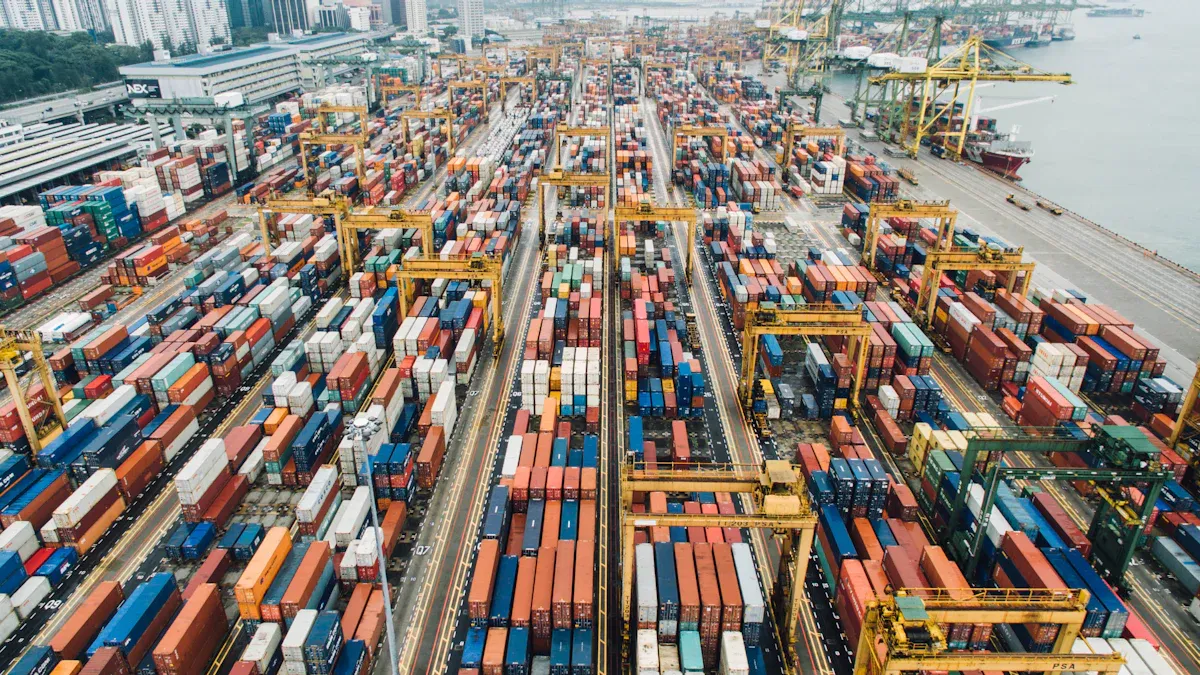
You rely on warehouses as more than just storage spaces. They act as strategic hubs that connect manufacturing with distribution. Warehouses serve as local distribution centers, creating a vital link between suppliers, manufacturers, and customers. When you choose warehouse locations near major customer clusters, you reduce transit times and meet demands for faster delivery. This approach helps you balance supply and demand, boost fulfillment speed, and lower operational risks.
Warehouses support reverse logistics, allowing you to handle returns and exchanges efficiently.
They help you respond quickly to changes in demand or disruptions.
Here is how warehouse location affects your distribution efficiency:
Evidence Type | Description |
|---|---|
Importance of Warehouse Location | Choosing fulfillment centers close to major customer clusters ensures orders ship faster and more cheaply. |
Faster Delivery Times | Placing inventory closer to end customers leads to shorter shipping distances and quicker delivery windows. |
Lower Transportation Costs | Proximity to suppliers and distribution nodes reduces fuel usage and freight expenses. |
Improved Operational Efficiency | Local warehouses allow for leaner inventory levels and smoother logistics coordination. |
Greater Flexibility and Resilience | A well-planned warehouse network can adapt to demand surges or disruptions, providing scalability. |
Integration with Suppliers and Transport
You improve supply chain visibility by integrating warehouse operations with suppliers and transportation providers. Vendor-managed inventory (VMI) lets suppliers manage stock, making your supply chain more efficient. Open communication and seamless system integration are key for VMI success.
You ask suppliers for detailed shipment information and accurate labeling.
You work with suppliers on merchandising and procurement to ensure compliance.
You use transportation management systems (TMS) for real-time visibility, helping you make better decisions during demand changes.
Effective supply chain visibility depends on seamless data integration and communication among all stakeholders. Technologies like IoT devices and RFID give you access to current inventory levels, production statuses, and shipment tracking. This continuous view helps you avoid risks and respond quickly to problems.
Evidence Description | Key Points |
|---|---|
Effective supply chain visibility relies on seamless data integration and communication among all stakeholders. | Integration ensures access to accurate and up-to-date information, fostering collaboration and data-driven decisions. |
Leveraging technologies like IoT devices and RFID allows for real-time data exchange. | Provides access to current inventory levels, production statuses, and shipment tracking. |
Impact on Customer Service
You see a direct link between warehouse performance and customer satisfaction. Accurate order picking and fast cycle times lead to happier customers. When you deliver orders on time, you build trust and loyalty.
Speed and accuracy of fulfillment shape customer experiences.
Regular surveys help you understand how customers feel about delivery time and accuracy.
Improving cycle time boosts satisfaction.
Here are some key metrics that affect customer satisfaction:
Metric | Impact on Customer Satisfaction |
|---|---|
Ensures correct items are shipped, preventing complaints and returns. | |
Picking Accuracy | High accuracy leads to fewer errors in shipments, enhancing satisfaction. |
Cycle Time | Faster processing times lead to happier customers and lower costs. |
On-Time Delivery | Timely deliveries are crucial for customer satisfaction. |
You use a warehouse logistics guide to organize your operations and improve these metrics. This helps you deliver better service and keep customers coming back.
Essential Warehouse Operations

Receiving and Inventory Control
You start warehouse operations by receiving goods. You check each shipment for quality, especially if you handle perishable, fragile, or high-value items. You use barcode scanners or RFID readers to match product codes and quantities with your records. This step helps you spot mistakes right away and keeps your inventory accurate.
Conduct quality checks before accepting goods.
Create a process for handling missing or damaged items.
Keep detailed records of any issues to improve supplier performance.
Set up clear return and credit steps to avoid delays.
Store inventory in the right place to boost efficiency.
You can use an ERP system with warehouse management features to automate tasks. Mobile devices help you access data in real time and reduce errors. Data analytics lets you track important metrics and find ways to improve. Mobile technology and automation can boost your productivity by 25% and accuracy by 50% compared to manual work.
Tip: Over 90% of warehouse managers plan to use mobile technology soon. Automation gives you real-time updates and fewer mistakes.
Picking, Packing, and Shipping
You pick, pack, and ship orders every day. A well-organized warehouse speeds up picking. You group items logically and label aisles and bins clearly. You choose the right packaging to keep items safe and use boxes that fit the order size to save on shipping.
Batch picking groups orders to cut travel time.
Serpentine picking follows a weaving path for big orders.
Cluster picking lets you pick for many orders at once.
Zone picking assigns areas to workers for faster results.
Evidence Description | Impact on Picking and Packing Speed |
|---|---|
Boosts throughput and capacity. | |
Automated picking systems increase speed and accuracy. | Reduces mistakes and raises productivity. |
Robots and GTP systems move inventory quickly. | Fulfills orders faster. |
Value-Added Services
You can offer extra services to stand out. These include reworking products, labeling, screening for defects, repacking, and postponement services. You might also provide kitting, assembly, bundling, and quality control.
Value-added services improve customer satisfaction and loyalty.
They give customers more choices and custom solutions.
Fast, accurate order fulfillment meets customer expectations.
Personalized packaging creates a strong brand experience.
Easy returns build trust and keep customers coming back.
Value-added services help you meet industry standards and make your supply chain more efficient.
Inventory Strategies and Optimization
Inventory Control Methods
You use inventory control methods to keep your warehouse organized and efficient. These methods help you track products, reduce mistakes, and save money. You choose the right method based on your business needs and product types.
Method | Description |
|---|---|
FIFO | Ensures the oldest inventory is sold or used first, effective for perishable goods. |
Periodic Inventory Control | Commonly used by smaller businesses for its simplicity and ease of implementation. |
ABC Analysis | Categorizes inventory based on value and consumption, allowing prioritization based on demand. |
Economic Order Quantity | Calculates the ideal order quantity to minimize storage costs, effective for steady demand. |
Fast, Slow, Non-Moving | Classifies inventory by movement speed, providing insights on demand patterns. |
Vendor-Managed Inventory | Suppliers manage stock levels based on usage data, effective for high-volume items. |
Batch Tracking | Monitors inventory by lot or batch numbers, critical for regulated industries. |
Tip: You improve accuracy by using warehouse management systems and clear communication with suppliers. Real-time visibility helps you make quick decisions and avoid errors.
Seasonal and Demand Planning
You face changes in demand throughout the year. Planning for these changes keeps your warehouse running smoothly. You analyze past sales and market trends to predict busy seasons. You work with suppliers to secure enough stock before demand spikes.
Strategy | Description |
|---|---|
Early planning helps you anticipate peak seasons and prepare for demand changes. | |
Accurate Demand Forecasting | You use historical data and market trends to set safety stock levels and prevent running out of products. |
Supplier Collaboration | You talk with suppliers to keep your supply chain reliable and may pre-book orders for busy times. |
Data Analytics Utilization | You use analytics tools to spot customer demand patterns and adjust inventory levels as needed. |
You avoid stockouts and excess inventory by planning ahead and using data to guide your decisions.
Technology in Inventory Management
You rely on technology to boost efficiency and accuracy in your warehouse. Modern tools help you track inventory, forecast demand, and automate tasks. You use predictive analytics to get real-time insights and improve your planning. Autonomous mobile robots move products safely and quickly. Computer vision checks inventory and quality, reducing mistakes. Digital twins let you simulate warehouse operations for better optimization.
Technology | Description |
|---|---|
Predictive Analytics | Gives you real-time insights and accurate demand forecasts. |
Autonomous Mobile Robots | Moves inventory efficiently and safely without human help. |
Computer Vision | Automates inspection and quality control, lowering errors. |
Digital Twins | Creates virtual models for advanced planning and optimization. |
Warehouse management systems (WMS) give you real-time updates on stock levels. You use barcodes and RFID tags to track items and prevent stockouts. WMS integrates with other systems, keeping your records accurate and up-to-date.
You make better decisions and keep your warehouse running smoothly by using the latest technology.
Industry Needs and Equipment
Specialized Storage Solutions
You need the right storage solutions to keep your warehouse efficient. Different products require different types of warehousing. Here is a table that shows common storage options and their uses:
Type of Warehousing | Description |
|---|---|
Short-Term Warehousing | Storage for 90 to 120 days. Best for fast-moving or seasonal products. |
Long-Term Warehousing | Storage for more than 120 days. Good for slow-moving items. Focuses on security and pest control. |
Ambient Temperature Warehousing | Keeps a stable temperature (59°F to 77°F). Protects items from heat damage. |
Refrigeration and Freezer Warehousing | Maintains cold temperatures. Needed for perishable goods like food and medicine. |
You can improve space by using high shelving, mezzanine systems, and vertical lift modules. These solutions help you store more items without using extra floor space.
Automated storage and retrieval systems (AS/RS) give you higher storage density and faster access to goods.
A good storage system should be dense, dynamic, and flexible. This helps you use your warehouse space all year.
Material Handling Tools
You rely on many tools to move products safely and quickly. Some of the most common tools include:
Pallet trucks and hand trucks
Forklifts and side loader forklifts
Cranes and platform trucks
Conveyor belts and order picker forklifts
Automated Guided Vehicles (AGVs)
Ergonomic tools for picking
Mobile workstations
These tools help you lift, move, and organize goods. AGVs and conveyor belts can speed up your work and reduce heavy lifting.
Safety and Compliance
You must follow safety rules to protect workers and meet legal standards. New regulations require you to provide drinking water, rest breaks, and shaded areas to prevent heat illness. You also need to use personal protective equipment (PPE) that fits well and install fall protection systems.
Regulatory Change | Impact on Warehouse Operations |
|---|---|
Indoor Heat Illness Prevention | You must offer water, breaks, and shade. This changes how you plan work and choose equipment. |
PPE and Fall Protection Updates | You need the right safety gear and fall protection. This affects equipment design and selection. |
Expanded Injury/Illness Reporting | You must keep better records. This increases transparency and accountability. |
National Emphasis Program (NEP) | Safety inspections focus on your equipment and safety measures. You must follow strict protocols. |
Safety and compliance help you avoid accidents and keep your warehouse running smoothly.
You play a key role in keeping supply chains efficient with strong warehouse logistics and management. You boost accuracy and speed by using technology and smart planning. You protect your products and control costs with secure systems.
Review your warehouse layout and update your technology.
Train your team on safety and new tools.
Follow industry news to stay ahead.
Tip: Start with small changes, like adding barcode scanners or updating safety gear. You will see quick improvements.
FAQ
What is the main goal of warehouse logistics?
You aim to store products safely and move them quickly. You track inventory to avoid mistakes. You use technology to improve speed and accuracy. Your goal is to deliver orders on time and keep customers happy.
How does technology help in warehouse management?
You use barcode scanners, RFID tags, and warehouse management systems. These tools help you track inventory in real time. You reduce errors and save time. Automation lets you process orders faster and improve accuracy.
Why is safety important in warehouses?
You protect workers by following safety rules. You use personal protective equipment and install safety systems. You prevent accidents and keep your warehouse running smoothly. Safety helps you avoid fines and keeps your team healthy.
What are value-added services in warehousing?
You offer extra services like labeling, kitting, and quality checks. These services help you meet customer needs. You improve satisfaction and build loyalty. You stand out from competitors by providing custom solutions.
How do you choose the right storage solution?
You look at your product type and how long you need to store items. You pick short-term or long-term storage. You use refrigeration for perishable goods. You choose high shelving or automated systems to save space.
See Also
Key Strategies for Effective Global Logistics Operations
Optimized Inventory Management and Distribution Through Global Warehousing
Simplified Inventory Control and Distribution via Global Warehousing
