Freight Class 125 Density Requirements: LTL Shipping Guidelines
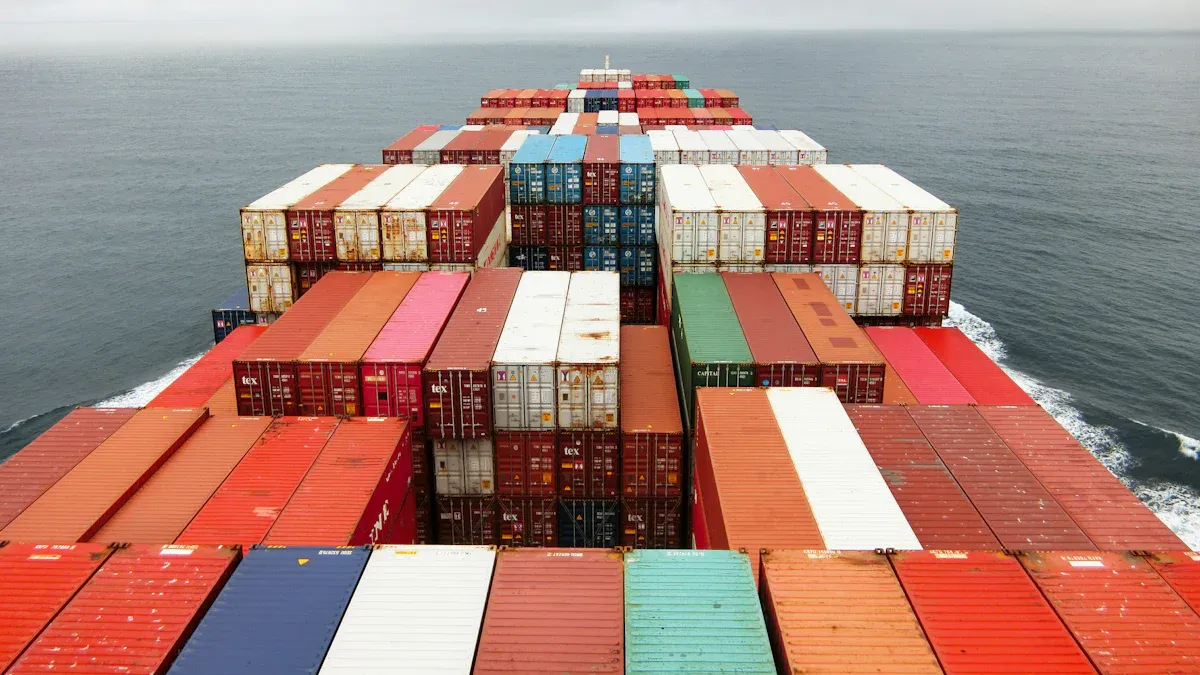
When shipping with LTL, it's crucial to adhere to freight class 125 density requirements. The appropriate density for this class ranges from 7 to 9 pounds per cubic foot. By meeting these requirements, you can avoid additional fees and ensure your freight is classified correctly. This category includes various types of freight, such as lightweight and fragile small household appliances. Refer to the table below for a quick reference:
Class | Density Range (lb/ft³) | Typical Commodities |
|---|---|---|
125 | 7–9 | Small household appliances |
Accurate measurement and proper packing of your freight help maintain the correct classification and facilitate smooth LTL shipments.
Key Takeaways
Freight class 125 needs a density from 7 to 9 pounds per cubic foot. Staying in this range helps you avoid extra charges.
You must measure and pack items the right way. Use strong boxes and tie pallets well to keep the right class.
Always look at the newest NMFC rules before you ship. This helps you follow the rules and save money on shipping.
If you make mistakes in density math, you may get extra fees. Check your numbers and measurements twice.
Good paperwork is very important. Keep notes of your measurements and use the right NMFC codes to stop billing problems.
What Is Freight Class 125 in LTL Shipping
NMFC System and LTL Freight Classes
It is important to know how the NMFC system works. The National Motor Freight Classification system puts freight into groups. These groups are based on density, stowability, handling, and liability. This helps you and carriers set prices and move LTL freight. Freight class 125 is in the middle of all the LTL classes. It includes things that are not very heavy but not very light. The NMFC has changed its rules to focus more on density. This makes picking the right freight class even more important for shippers.
Here is a simple chart that shows where freight class 125 fits in the LTL class list:
Class | Shipment Example | Weight Per Cubic Foot (Pounds) |
|---|---|---|
125 | Small household appliances | 7–8 |
You should always look at the newest NMFC rules before you ship. This helps you avoid mistakes and keeps your LTL shipping costs lower.
Typical Commodities and Applications
Freight class 125 density rules cover many types of freight. This class is often used for goods that are light or medium in weight but take up more space. Some common examples are:
Commodity Type | Description |
|---|---|
Bicycles | Light items that use more space, so they cost more to ship. |
Assembled office chairs | Need special packing to stop them from getting damaged. |
Crated electronic equipment | Not very dense, so they need good packaging to keep them from moving. |
You need to pay close attention to how you pack your items. Good packaging keeps your freight safe and helps you get the right class. The NMFC has rules that say you must pack things so they do not move or get broken during shipping. If you do not follow these rules, your shipment might be put in a different class, which can cost more money.
Tip: Always use strong boxes, secure pallets, and plenty of padding. This helps you meet freight class 125 density rules and keeps your LTL freight safe.
Freight class depends on what you are shipping and how you pack it. If you follow the right steps, LTL shipping is easier and you can avoid extra costs.
Freight Class 125 Density Requirements Explained
Density Range and Classification
You need to know the exact density range for freight class 125. The minimum density for this class is 7 pounds per cubic foot, and the maximum is 9 pounds per cubic foot. If your freight falls below the minimum density, it moves to a higher class, which usually means higher shipping costs. If your shipment goes above the maximum density, it drops to a lower class, which can lower your cost. You must measure your freight carefully to avoid mistakes.
Here is a table that shows how density affects freight class:
Density Range (lb/ft³) | Freight Class |
|---|---|
6 but less than 8 | 125 |
8 but less than 10 | 100 |
If your shipment does not meet the freight class 125 density requirements, you risk reclassification. Carriers may charge extra fees or delay your shipment. You should always check the minimum density before you ship. This helps you avoid problems and keeps your ltl freight moving smoothly.
Note: Accurate measurement is key. Use a tape measure and a scale to get the right numbers. Double-check your math before you book your ltl shipment.
Comparison with Other LTL Freight Classes
Freight class 125 sits between several other classes. Each class has its own minimum density range. Small errors in measuring density can move your shipment to a different class. This can change your shipping cost and cause billing issues.
Here is a table that compares the density ranges for common ltl freight classes:
FREIGHT CLASS | PCF RANGE (lb/ft³) |
|---|---|
100 | 9–10.5 |
125 | 7–8 |
150 | 6–7 |
175 | 5–6 |
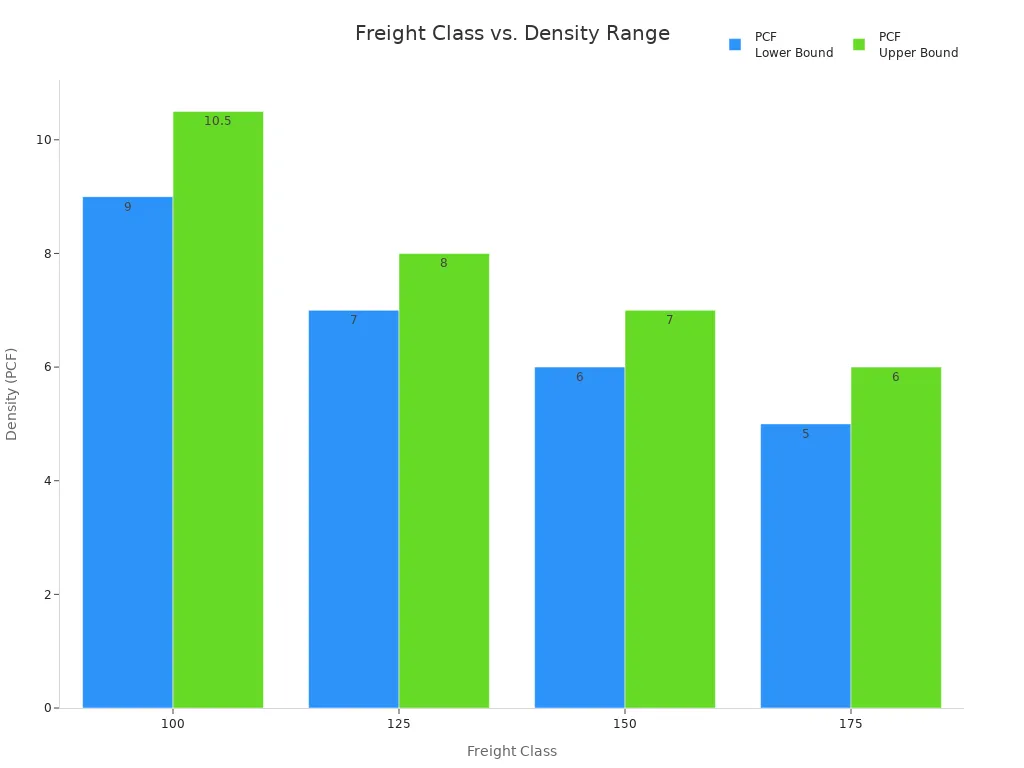
If you make a small mistake in your measurements, your freight might be misclassified. This can lead to extra charges and delays. For example, if you measure your shipment and get 6.9 lb/ft³ instead of 7, your shipment moves to class 150. This increases your cost. If you measure 8.1 lb/ft³, your shipment moves to class 100, which may lower your cost but could cause confusion if your paperwork does not match.
You must pay close attention to the minimum density for each class. Always round your measurements carefully and check your calculations. This helps you avoid reclassification fees and keeps your ltl shipments on track.
Tip: Use a calculator and write down your measurements. Double-check your numbers before you fill out your shipping documents.
Freight class 125 density requirements help you control your shipping costs and avoid problems. You need to know the minimum density for each class and measure your freight with care. This keeps your ltl freight moving without delays or extra fees.
How to Calculate LTL Freight Density

Knowing how to figure out LTL freight density helps you avoid mistakes. It also makes sure your shipment gets the right class. If you do the math right, your shipping costs stay steady. This also helps stop delays. Each step is important, so you should do them carefully.
Measurement Steps for LTL
You must measure your freight before you ship it. Every step changes your final density and your freight class. Follow these steps to get the right numbers:
Inspect Your Freight
Walk around your package or pallet. Check for damage or things sticking out. Make sure nothing hangs over the edge.Measure the Longest Points
Use a tape measure for length, width, and height. Include anything that sticks out, like pallets or cones. This helps you count all the space your freight uses.Record Dimensions
Write down your numbers in inches. For example, your pallet might be 44 inches long, 36 inches wide, and 48 inches tall.Weigh Your Shipment
Use a good freight scale. Weigh everything, including packaging and pallets. Getting the right weight is very important.Calculate the Volume
Multiply length, width, and height. This gives you the total cubic inches. For example:44 x 36 x 48 = 76,032 cubic inchesConvert to Cubic Feet
Divide the cubic inches by 1,728. There are 1,728 cubic inches in one cubic foot.76,032 ÷ 1,728 = 44 cubic feetDetermine Density
Divide the total weight by the cubic feet. For example, if your shipment weighs 600 pounds:600 ÷ 44 = 13.64 pounds per cubic footCalculate Freight Class
Use NMFC density rules to pick the right class. A density of 13.64 pounds per cubic foot is usually class 85. For class 125, your density should be between 7 and 9 pounds per cubic foot.
Tip: Always check your measurements and math twice. Small mistakes can change your class and make shipping cost more.
Density Calculation Formula
There is an easy formula to find your freight density. This formula shows why each measurement matters and how it changes your shipping class.
Step-by-Step Formula:
Measure length, width, and height in inches.
Multiply these numbers for total cubic inches.
Divide cubic inches by 1,728 to get cubic feet.
Weigh your shipment in pounds.
Divide weight by cubic feet for pounds per cubic foot.
Example Calculation:
Length: 44 inches
Width: 36 inches
Height: 48 inches
Weight: 600 pounds

Step 1: 44 x 36 x 48 = 76,032 cubic inches
Step 2: 76,032 ÷ 1,728 = 44 cubic feet
Step 3: 600 ÷ 44 = 13.64 pounds per cubic foot
Note: The density you find decides your freight class. If your density is not between 7 and 9 pounds per cubic foot, you cannot use class 125.
Common Pitfalls and How to Avoid Them
Many people make mistakes when measuring and figuring out freight density. These mistakes can cause extra fees or slow down your shipment. Here are some common problems and ways to fix them:
Inaccurate Measurements:
Guessing or rounding numbers can cause trouble. Always measure the longest points and include all packaging.Incorrect Weight:
Using a bad scale can give you the wrong weight. Always use a freight scale and include the pallet.Forgetting Packaging:
Not counting shrink wrap, pallets, or cones can lower your density. This can put you in the wrong class.Misclassifying Freight:
Picking the wrong class can cost you more money. Always use NMFC rules and check your math.
Alert: Check all your details before you send your shipment. Good information helps you avoid extra charges and keeps your LTL freight moving.
You can use technology to help with these steps. Many shipping tools and software can figure out your class fast. These tools check your volume and density, then pick the right class. Using these tools saves time and helps you make fewer mistakes.
If you follow these steps and use good tools, you can figure out freight class the right way. This keeps your shipping process easy and quick.
Why Density Matters in LTL Shipping
Impact on LTL Freight Costs
It is important to know how density changes shipping. Carriers want to use all the space in their trucks. They look for shipments that fit well and do not waste room. If your freight has higher density, you get a lower class. This means you pay less for shipping. If your freight has lower density, you get a higher class. This makes your shipping cost more money. Here is how density affects what you pay:
LTL carriers try to fill every truck as much as possible.
Shipments with higher density go into lower classes, so you pay less.
Shipments with lower density go into higher classes, so you pay more.
Carriers like dense freight because it saves them money.
Density does not just change the cost. Carriers might say no to freight that does not meet their rules. Insurance prices can change if your shipment is in a different class or density. If you follow the freight class 125 density rules, you can keep your costs low and avoid problems.
Tip: Always check your density before you book your LTL shipment. This helps you stop surprise charges.
Risks of Misclassification and Reclassification
If you pick the wrong class for your freight, you can have big problems. If you give the wrong density, you might get extra fees or have billing fights. Carriers check the class while your shipment is moving. If they find a mistake, they will change your shipment’s class. This can slow down your shipment and make it cost more.
Here are some risks if you use the wrong freight class:
Fights about bills with carriers
Extra fees for changing the class
Delays that mess up your schedule
Paying too much or too little, which hurts your budget
Bad relationships with carriers
"Picking the wrong class can mean surprise charges, delays, and chargebacks. Carriers check the class during shipping. If it is wrong, they may weigh and change your shipment. This can cause billing fights and hurt your relationship with carriers."
You should always learn the newest NMFC rules. This helps you avoid fines and keeps your LTL freight moving without trouble. Reporting the right density keeps your business safe from money and shipping problems.
Tips for Meeting Freight Class 125 Density Requirements
Packaging and Palletizing for LTL
You can meet freight class 125 density rules by packing and stacking your freight the right way. Good packaging stops damage and keeps your shipment in the correct class. Use strong boxes and make sure each box fits tightly. Try not to leave empty spaces inside the boxes. This helps stop boxes from moving during ltl shipping.
When you build your pallet, stack boxes to use the height. Keep the pallet between 160 and 180 cm tall. Do not let boxes hang over the edge. Overhang can cause problems with stowability and may change your freight class. Wrap your load with stretch film four to six times. Use cross-top straps to make the pallet more stable. Mark fragile items on every side. Use clear labels that show the bill of lading, address, purchase order, contact, and any special instructions.
Here are some best ways to pack and stack ltl freight:
Use strong packaging and fill empty spaces.
Wrap pallets with stretch film to keep them steady.
Stack boxes to use the height of the pallet.
Do not let boxes hang over the edge.
Mark fragile items and use clear labels.
These steps help you keep your density in the right range. They also help you avoid extra charges.
Role of Freight Brokers and Documentation
Freight brokers help with ltl shipping. They look at your shipment’s size, weight, and type to pick the right class. Brokers use freight class calculators to check if your freight meets density rules. This lowers the chance of extra fees and fights about shipping.
Good paperwork is very important too. Always measure your freight and write down the size and weight, including packaging. Use the right NMFC codes and put them on your bill of lading. Clear and correct paperwork helps stop billing problems and extra charges. If a carrier asks questions, your records can help you prove your case.
Tip: Keep all your shipment records and check your paperwork before you ship. This helps you avoid mistakes and keeps your ltl freight moving without trouble.
Common LTL Shipping Mistakes to Avoid
Errors in Density Calculation
You can have problems with ltl freight if you make mistakes when measuring or figuring out density. Many shippers use old numbers for size instead of checking each shipment. Some forget to add the pallet or packaging height, which makes the density too low. Others round their measurements too much, so they get the wrong class. Sometimes, people use tools that are not as good as the carrier’s equipment. Odd-shaped items also cause trouble if you treat them like normal boxes.
Using old sizes from past shipments
Not adding pallet or packaging height
Rounding numbers instead of using exact ones
Using tools that are not accurate
Treating odd-shaped freight like regular boxes
Tip: Always measure every shipment, even if it looks like one you shipped before. Small changes can change your density and affect your ltl freight class.
Solutions and Preventative Steps
You can stop these mistakes by doing a few easy things. First, check all your measurements twice. Measure two times and ask someone else to look at the numbers, especially for expensive freight. Take pictures and write down your measurements. These records help if someone asks about your freight class.
Make rules for how your team measures and weighs freight. Use a tape measure for size and a certified scale for weight. Always check your freight class before you give it to the carrier. Figure out the density and make sure the class is right before you set up pickup. This helps stop delays and extra fees from changing the class.
Note: The National Motor Freight Classification system helps you find the right class. Use freight calculators and ask people with experience if you need help.
Teach your team how to figure out pounds per cubic foot using the newest density chart. Make sure everyone knows how to measure and write down each shipment. Training and careful checks help you avoid expensive mistakes and keep your ltl shipments moving.
You must know and follow Freight Class 125 density rules. This helps you save money and avoid trouble with ltl shipping. Measure your freight carefully and pack it well. This keeps your shipment in the right class and stops extra charges. Try these simple steps:
Look at your paperwork, like the bill of lading.
Use tough boxes and put labels on each item.
Get your freight ready before the carrier comes.
To figure out your density, measure your shipment, find the volume, and divide the weight by the cubic feet.
Check your ltl freight density and paperwork two times before you ship.
FAQ
Why does density affect my freight class?
Density shows how much weight fits into a certain space. Carriers use density to decide your freight class. If you pack items tightly, you use space better and may pay less. Low density often means higher costs.
Why should I measure every shipment for ltl?
Each shipment can change in size or weight. Measuring every time helps you avoid mistakes. Accurate measurements keep your ltl freight in the right class and prevent extra charges or delays.
Why do carriers reclassify my shipment?
Carriers reclassify when your paperwork does not match the actual shipment. If your density or dimensions are wrong, they change the class. This can lead to extra fees and slow delivery.
Why is packaging important for freight class 125?
Proper packaging protects your goods and keeps them stable. Good packaging helps you meet density requirements for freight class 125. It also reduces the risk of damage and keeps your shipment in the correct class.
Why should I use a certified scale and tape measure?
Certified tools give you accurate numbers. Accurate weight and size help you find the right freight class. This prevents billing problems and keeps your shipments moving smoothly.
See Also
Rely On PGL For Secure HAZMAT Freight Transportation
Discover PGL's Mastery In LTL And FTL Shipping
Select LTL, FTL, Or Drayage With PGL For Trucking
Key LCL Shipping Steps For Panama By Premier Global Logistics
Flexible East Coast LTL Trucking By Premier Global Logistics
