The 7 Essential Supply Chain Steps: A Comprehensive Guide for Domestic Logistics
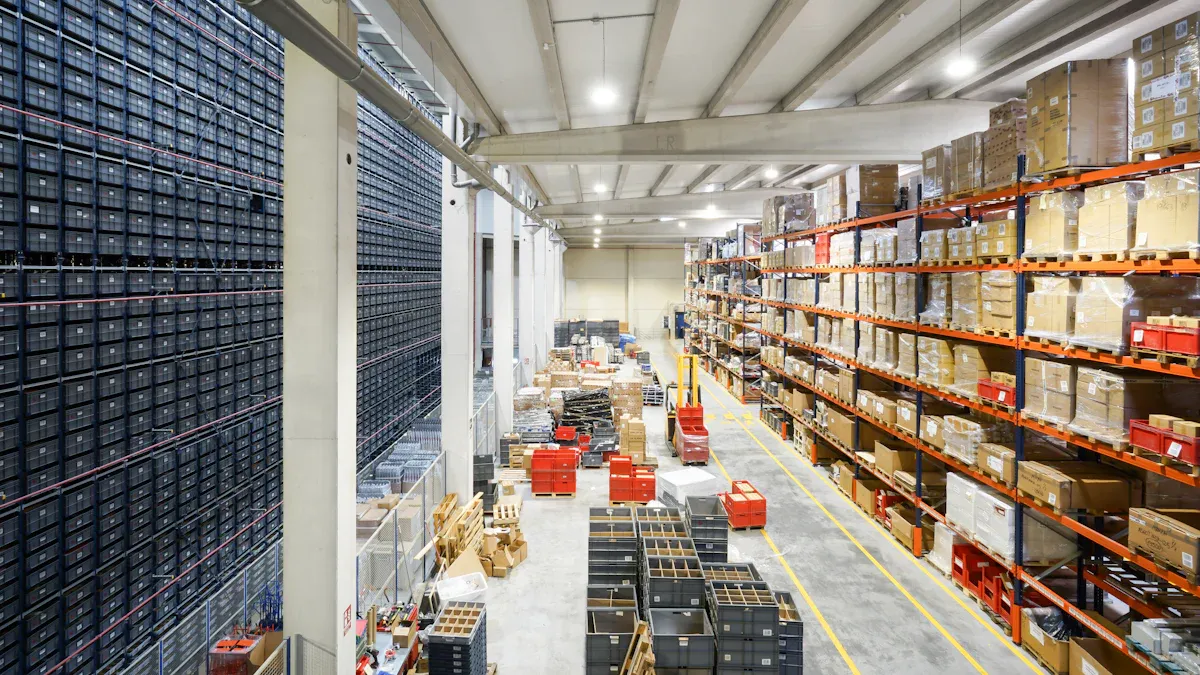
Domestic logistics is more than moving a shipment from one address to another. Behind a successful delivery is a sequence of interconnected supply chain activities that determine how goods are received, stored, processed, transported, and delivered.
Understanding these steps is important for manufacturers, distributors, retailers, e-commerce businesses, wholesalers, and companies managing regular domestic freight. When each stage is properly coordinated, shipments can move efficiently while transportation costs, inventory risks, and delivery delays are reduced.
Although supply chains vary by industry and shipment type, most domestic logistics operations can be understood through seven essential steps:
1. Planning and Order Management
2. Sourcing and Procurement
3. Inbound Transportation and Receiving
4. Warehousing and Inventory Management
5. Order Processing and Fulfillment
6. Domestic Transportation and Distribution
7. Final-Mile Delivery and Returns
These steps are closely connected. A problem at one stage can create delays and additional costs throughout the rest of the supply chain.
What Are the 7 Supply Chain Steps?
A simplified domestic supply chain can be represented as:
Planning → Procurement → Inbound Logistics → Warehousing → Fulfillment → Distribution → Final Delivery
The process does not always follow a perfectly linear path. Goods may move between warehouses, undergo transloading, be consolidated or deconsolidated, or be returned to an earlier stage because of inventory or delivery issues.
Nevertheless, the seven-step framework provides a practical way to understand how domestic logistics works.
Step 1: Planning and Order Management
The first step is determining what needs to be moved, where it needs to go, when it is needed, and how much inventory is required.
Supply chain planning may involve:
· Demand forecasting
· Inventory planning
· Order forecasting
· Transportation planning
· Warehouse capacity planning
· Delivery scheduling
· Supplier coordination
· Customer demand analysis
Good planning helps businesses avoid two expensive problems: carrying too much inventory and running out of inventory.
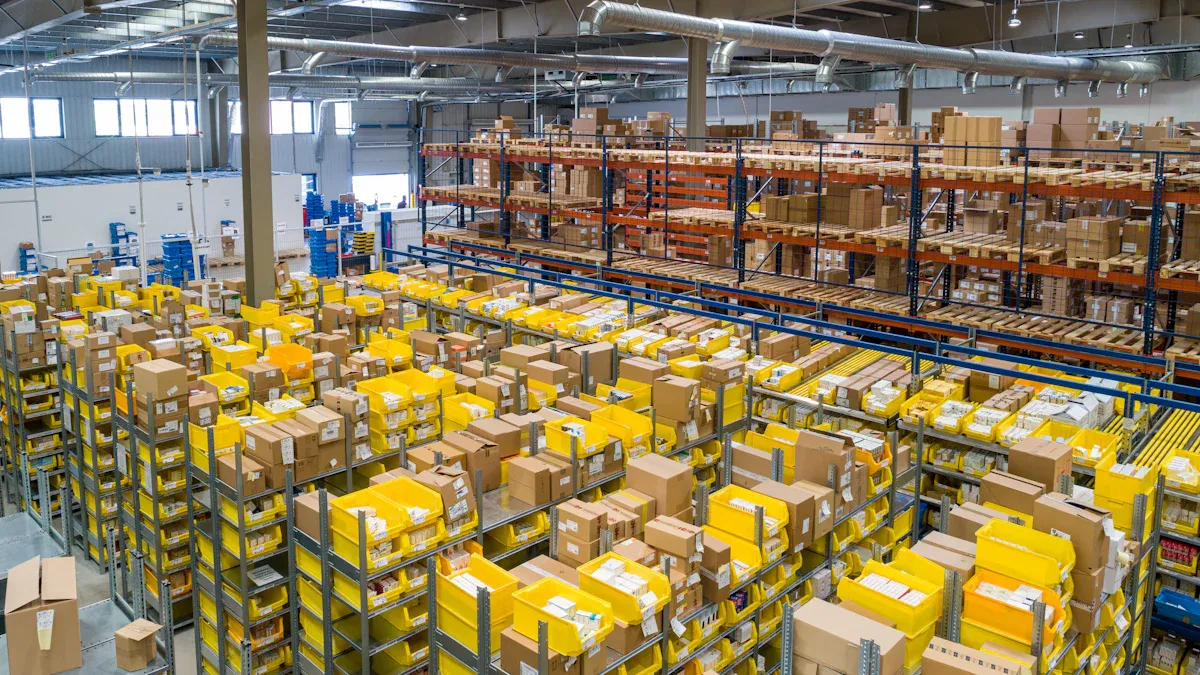
Why Planning Matters
Suppose a retailer expects demand for 10,000 units but orders only 6,000. Inventory may run out before the next replenishment shipment arrives.
On the other hand, ordering 15,000 units without sufficient demand can increase:
· Storage costs
· Inventory carrying costs
· Handling requirements
· Obsolescence risk
· Capital tied up in inventory
Transportation planning is equally important.
A shipment that must arrive at a distribution center by Friday cannot simply be dispatched whenever convenient. The transportation schedule needs to account for transit time, receiving appointments, warehouse capacity, and potential delays.
Step 2: Sourcing and Procurement
Once demand has been planned, businesses need to obtain the products, components, raw materials, or other goods required for operations.
Procurement includes activities such as:
· Supplier selection
· Purchase orders
· Quantity planning
· Pricing negotiations
· Production scheduling
· Supplier communication
· Quality requirements
· Delivery scheduling
For domestic supply chains, suppliers may be located within the same state, elsewhere in the country, or across multiple regions.
The distance between suppliers and buyers directly affects transportation planning.
A supplier located several states away may require long-haul trucking, rail transportation, intermodal transportation, or a combination of modes.
Procurement and Logistics Are Connected
Procurement decisions should not be made based only on product price.
A supplier offering a lower unit cost may create higher logistics expenses because of:
· Longer transportation distances
· Smaller shipment quantities
· Less flexible delivery schedules
· Higher minimum order quantities
· More frequent expedited shipments
The total landed or delivered cost is therefore often more useful than the purchase price alone.
Step 3: Inbound Transportation and Receiving
After goods are purchased, they need to move from the supplier to the next point in the supply chain.
This stage is known as inbound logistics.
Depending on the shipment, transportation may involve:
· Full truckload
· Less-than-truckload
· Parcel transportation
· Intermodal freight
· Rail
· Air freight
· Local pickup and delivery
For larger shipments, transportation may also involve container drayage and transloading when imported cargo enters the domestic supply chain through a port.
Receiving the Shipment
Transportation does not end when a truck reaches the warehouse.
The receiving process may include:
1. Checking the shipment against the purchase order
2. Inspecting packaging
3. Counting products
4. Recording received quantities
5. Identifying damaged goods
6. Updating inventory records
7. Moving goods to storage or fulfillment areas
Accurate receiving is essential because inventory records depend on what actually arrives.
If 1,000 units are recorded in the system but only 950 were physically received, the discrepancy can create problems later when customer orders are fulfilled.
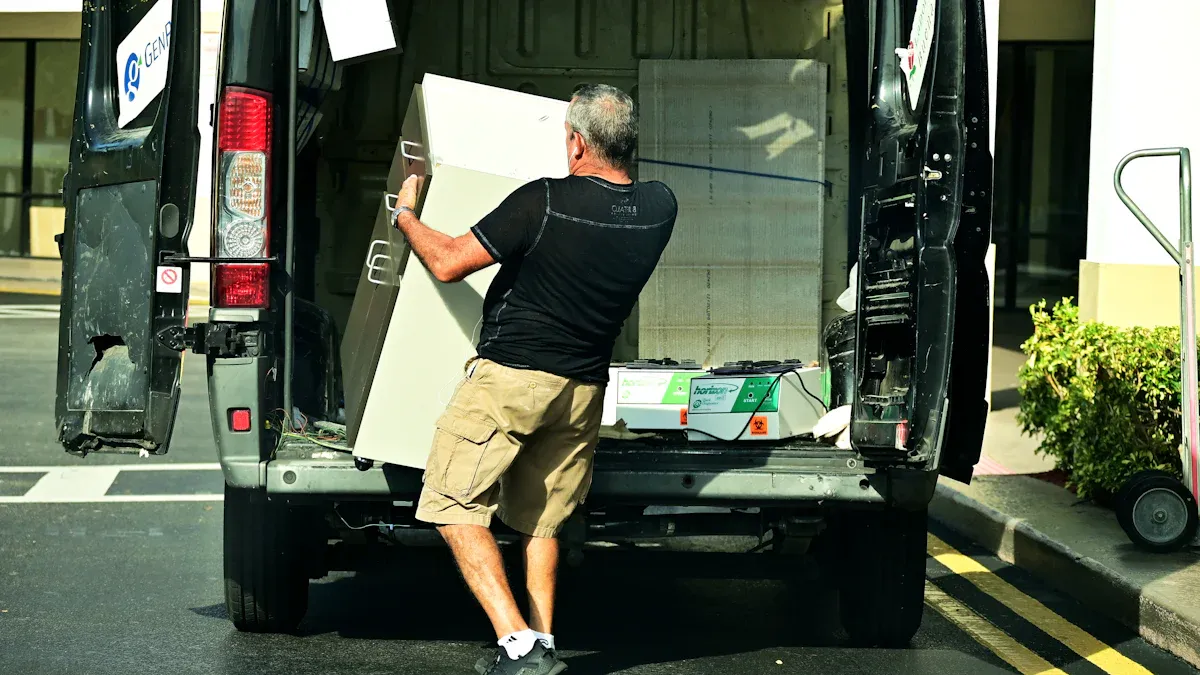
Step 4: Warehousing and Inventory Management
Once goods have been received, they may be stored in a warehouse or distribution center until needed.
Warehousing can involve much more than simply putting products on shelves.
Typical warehouse activities include:
· Put-away
· Inventory counting
· Storage
· Replenishment
· Picking
· Packing
· Labeling
· Cross-docking
· Transloading
· Inventory control
Inventory Management
Inventory management determines how much product is available and where it is located.
Businesses may track:
· SKU numbers
· Quantity
· Warehouse location
· Batch or lot information
· Product status
· Receiving dates
· Expiration dates where applicable
· Reserved inventory
· Available inventory
Accurate inventory information allows businesses to make better purchasing and transportation decisions.
Cross-Docking
Cross-docking is a specialized logistics strategy in which incoming goods are transferred toward outbound transportation with little or no long-term storage.
For suitable products, cross-docking can reduce:
· Storage time
· Handling
· Warehouse space requirements
· Inventory carrying costs
It works particularly well when inbound and outbound transportation schedules are tightly coordinated.
Step 5: Order Processing and Fulfillment
When a customer or business unit places an order, the supply chain moves into the fulfillment stage.
Order fulfillment generally includes:
Order Received → Inventory Check → Picking → Packing → Labeling → Shipment Preparation
The warehouse identifies the required products, picks them from inventory, prepares them for transportation, and creates the necessary shipping information.
Picking Methods
Different warehouses use different picking strategies.
Common approaches include:
· Single-order picking
· Batch picking
· Zone picking
· Wave picking
The appropriate method depends on order volume, product characteristics, warehouse layout, and technology.
Packing and Labeling
Proper packaging protects goods during transportation.
Labels also need to contain accurate information so that the shipment can be sorted and routed correctly.
Errors at this stage can lead to:
· Misdeliveries
· Re-labeling
· Returns
· Customer complaints
· Additional transportation costs
A supply chain can therefore be highly efficient upstream and still fail because of poor fulfillment execution.
Step 6: Domestic Transportation and Distribution
After an order is prepared, it enters the transportation and distribution stage.
This may be the most visible part of logistics, but it depends heavily on everything that happened earlier.
Domestic transportation can involve:
· Full truckload shipping
· Less-than-truckload shipping
· Parcel delivery
· Intermodal transportation
· Regional trucking
· Drayage
· Dedicated delivery
· Expedited transportation
Full Truckload
Full truckload transportation is generally suitable when a shipment occupies most or all of a trailer or when the shipper wants dedicated capacity.
It can provide more direct transportation with fewer intermediate handling points.
Less-Than-Truckload
LTL transportation consolidates freight from multiple shippers into shared transportation capacity.
It can be useful for shipments that are too large for parcel delivery but do not require a full truck.
However, because freight may pass through multiple terminals, handling and transit time can differ from dedicated truckload transportation.
Drayage
Drayage is the short-distance movement of freight, particularly containers, between ports, terminals, rail facilities, warehouses, and other nearby locations.
It plays an important role in connecting international transportation with domestic supply chains.
For example:
Port → Drayage → Transloading Facility → Domestic Trucking → Distribution Center
The international shipment may have already completed its ocean transportation, but domestic logistics still has several steps remaining.
Step 7: Final-Mile Delivery and Returns
The final-mile stage is the last transportation segment between a distribution point and the recipient.
Depending on the shipment, the destination may be:
· A household
· A retail store
· A business
· A construction site
· A fulfillment location
· A customer pickup point
Final-mile delivery is often one of the most operationally complicated parts of the supply chain.
Why Final-Mile Delivery Is Challenging
The final delivery route can be affected by:
· Traffic
· Delivery density
· Weather
· Address accuracy
· Building access
· Customer availability
· Delivery windows
· Parking limitations
· Signature requirements
For residential delivery, individual stops can be geographically dispersed.
For commercial delivery, receiving appointments and operating hours can introduce additional constraints.
Returns and Reverse Logistics
The supply chain does not necessarily end when a product is delivered.
If a customer returns a product, the goods may need to move through a reverse logistics process:
Customer → Return Transportation → Receiving Facility → Inspection → Restocking, Repair, Recycling, or Disposal
Reverse logistics can significantly affect total supply chain costs, especially for businesses with high return rates.
How the 7 Supply Chain Steps Work Together
The seven steps should not be viewed as independent departments.
They form an interconnected system.
For example:
Demand Forecast → Purchase Order → Supplier Shipment → Warehouse Receiving → Inventory Storage → Customer Order → Fulfillment → Transportation → Final Delivery
If procurement orders the wrong quantity, inventory management is affected.
If receiving records incorrect quantities, fulfillment may promise products that are not actually available.
If fulfillment uses incorrect shipping information, transportation may result in a delivery exception.
If transportation is delayed, customer delivery is affected.
This interconnected structure is why supply chain management requires coordination across multiple functions.
Domestic Supply Chain Example
Consider a business importing products and selling them to customers across the United States.
A simplified logistics flow could be:
International Supplier → U.S. Port → Customs Clearance → Terminal → Drayage → Warehouse → Inventory Storage → Order Fulfillment → Domestic Transportation → Final Delivery
Each stage has a specific role.
The port handles the arrival of international cargo.
Customs clearance addresses import requirements.
Drayage connects the port or terminal with a nearby warehouse.
The warehouse receives and stores the products.
Fulfillment prepares individual customer orders.
Domestic transportation moves those orders toward their destinations.
Final-mile delivery completes the process.
A delay at any point can affect downstream operations.
How Technology Supports Supply Chain Management
Modern logistics increasingly depends on digital systems to connect the seven steps.
Common technologies include:
· Warehouse management systems
· Transportation management systems
· Enterprise resource planning systems
· Barcode scanning
· RFID
· GPS tracking
· Electronic proof of delivery
· Inventory management platforms
· Automated sorting systems
· Data analytics
Shipment Tracking
Tracking systems allow businesses to monitor shipment progress and identify exceptions.
For example, a shipment may generate status events such as:
Picked Up → In Transit → Arrived at Facility → Departed Facility → Arrived at Destination → Out for Delivery → Delivered
These updates can help logistics teams determine whether a shipment is progressing normally.
Inventory Visibility
Inventory systems can show where products are located and how much stock is available.
Better visibility helps businesses make decisions about:
· Replenishment
· Warehouse allocation
· Transportation
· Customer orders
· Safety stock
Common Domestic Supply Chain Problems
Even well-designed supply chains can experience disruptions.
Transportation Delays
Traffic, weather, equipment shortages, and capacity constraints can extend transit times.
Inventory Inaccuracy
Incorrect inventory records can lead to stockouts or excess inventory.
Warehouse Congestion
Insufficient warehouse capacity or poor workflow design can slow receiving and fulfillment.
Poor Shipment Planning
Inaccurate demand forecasts can create unnecessary expedited transportation or excessive inventory.
Delivery Exceptions
Incorrect addresses, access problems, recipient availability, or damaged shipments can interrupt final delivery.
Communication Gaps
When procurement, warehouse, transportation, and customer-service teams operate with incomplete information, problems can multiply quickly.
How to Improve Domestic Logistics Efficiency
Improving supply chain performance requires looking at the entire process rather than optimizing only one step.
Improve Forecasting
Better demand forecasts help businesses plan inventory and transportation more accurately.
Consolidate Shipments When Practical
Combining compatible shipments can improve transportation utilization and reduce unnecessary trips.
Optimize Warehouse Layout
Frequently handled products can be positioned to reduce travel time and improve picking efficiency.
Maintain Accurate Inventory
Regular cycle counting and accurate receiving procedures can reduce inventory discrepancies.
Monitor Carrier Performance
Useful metrics include:
· On-time pickup rate
· On-time delivery rate
· Transit time
· Damage rate
· Claims rate
· Cost per shipment
· Exception frequency
Use the Right Transportation Mode
Not every shipment needs the fastest available transportation.
Businesses should balance:
Cost + Transit Time + Reliability + Shipment Requirements
Using expedited transportation for every shipment may solve delivery problems while creating a different problem on the accounting side.
Key Supply Chain Metrics
Businesses can use several metrics to evaluate domestic logistics performance.
On-Time Delivery
Measures the percentage of shipments delivered within the agreed delivery window.
Order Cycle Time
Measures the time between order placement and fulfillment or delivery.
Inventory Turnover
Indicates how efficiently inventory is being used and replenished.
Order Accuracy
Measures how often customers receive the correct products and quantities.
Transportation Cost per Unit
Helps businesses evaluate the efficiency of transportation spending.
Warehouse Productivity
Can include metrics such as orders processed per labor hour or units picked per hour.
Perfect Order Rate
Measures how often an order is delivered accurately, on time, without damage, and with the correct documentation.
Frequently Asked Questions
What are the 7 essential supply chain steps?
A practical seven-step framework is planning and order management, sourcing and procurement, inbound transportation and receiving, warehousing and inventory management, order processing and fulfillment, domestic transportation and distribution, and final-mile delivery and returns.
Is transportation the same as logistics?
No. Transportation is one component of logistics. Logistics also includes activities such as warehousing, inventory management, order fulfillment, receiving, and delivery coordination.
What is the most important step in the supply chain?
There is no single universally most important step. Supply chain performance depends on how well the different stages work together. Poor planning, inaccurate inventory, inefficient transportation, or weak final-mile execution can all create significant problems.
Where does warehousing fit into the supply chain?
Warehousing generally sits between inbound receiving and outbound fulfillment. It provides storage, inventory control, order preparation, and other services that connect supply with customer demand.
What is the role of drayage in domestic logistics?
Drayage connects major transportation nodes over relatively short distances, particularly ports, rail terminals, container yards, warehouses, and transloading facilities. It is especially important when international freight transitions into the domestic supply chain.
What is reverse logistics?
Reverse logistics manages the movement of goods from the customer or downstream location back toward a warehouse, manufacturer, repair center, recycling facility, or other destination.
How does technology improve supply chain management?
Technology improves visibility, inventory accuracy, shipment tracking, warehouse productivity, transportation planning, and exception management. It also allows different supply chain functions to share information more efficiently.
How can businesses reduce domestic logistics costs?
Common strategies include improving demand forecasting, optimizing inventory, consolidating compatible shipments, selecting appropriate transportation modes, improving warehouse efficiency, reducing delivery failures, and monitoring carrier performance.
Final Takeaway
The domestic supply chain is a connected system rather than a collection of isolated transportation activities.
The seven essential steps can be summarized as:
1. Plan demand and orders
2. Source and procure goods
3. Manage inbound transportation and receiving
4. Store and control inventory
5. Process and fulfill orders
6. Transport and distribute goods domestically
7. Complete final-mile delivery and manage returns
Each stage affects the next. Efficient procurement cannot compensate for poor warehouse operations, and excellent transportation cannot completely solve inaccurate inventory or incorrect order information.
For businesses operating domestic or international supply chains, the most effective approach is to evaluate the entire flow from supplier to final customer. By improving visibility, coordinating transportation and warehousing, maintaining accurate inventory, and managing exceptions proactively, businesses can create a supply chain that is more reliable, cost-efficient, and responsive to changing demand.
See Also
Enhancing Global Operations Through Innovative Logistics Strategies
PGL's Miami Warehouse Solutions Ensure Rapid East Coast Shipping
Simplifying Supply Chain Management With American Logistics Expertise
Understanding B2B Warehousing And Distribution By Premier Global Logistics
Optimizing East Coast Imports With Premier Global Logistics Solutions

