What Are the Most Advanced IT Solutions for Logistics in 2025

Logistics leaders in 2025 rely on advanced it solutions for logistics such as artificial intelligence, machine learning, real-time visibility, predictive analytics, and IoT integration. These tools optimize processes and cut operational costs while boosting supply chain efficiency. Companies adopting these technologies often see faster delivery times and fewer manual errors. Over half of logistics organizations report cost savings from digital supply chain processes, while automation and digital workflows can reduce operational expenses by up to 70%. Adopting these innovations also presents challenges, including data integration and workforce adaptation.
Key Takeaways
Advanced IT solutions like AI and machine learning help logistics companies make smarter decisions and reduce costs.
Blockchain technology enhances transparency and trust in the supply chain by providing secure, real-time tracking of goods.
IoT-enabled tracking offers continuous visibility into asset locations, helping companies prevent loss and optimize resources.
Robotics and automation in warehouses improve order accuracy and speed, leading to better customer satisfaction.
Investing in employee training is crucial for adapting to new technologies and ensuring a skilled workforce in logistics.
Advanced IT Solutions for Logistics
AI and Machine Learning
AI and machine learning stand at the core of advanced it solutions for logistics in 2025. These technologies help companies make smarter decisions and automate complex tasks. Logistics providers use machine learning algorithms to optimize delivery routes, which reduces fuel consumption and shortens delivery times. AI-driven predictive maintenance uses IoT sensors to monitor vehicle health, lowering repair costs and minimizing downtime. In warehouses, AI-powered robotics speed up order fulfillment and improve accuracy.
Route optimization leads to fuel savings of over 15% each year.
Predictive maintenance reduces breakdowns by 30% for freight carriers.
AI-driven warehouse automation cuts issue resolution times to just 30 minutes.
Demand forecasting improves prediction accuracy by about 8%, reducing stock shortages.
E-commerce fulfillment centers avoid shipping delays by repositioning high-risk products in advance.
Feature | Benefit |
|---|---|
Enhanced Logistics Forecasting | Improved demand prediction accuracy, reducing overstocking and understocking, optimizing inventory. |
Strategic Asset Positioning | Optimal placement of warehouses and distribution centers, reducing carrying costs. |
Optimized Linehaul and Last-Mile | Reduced fuel consumption and shorter delivery times, enhancing customer satisfaction. |
Warehouse Automation | Streamlined order fulfillment processes, improving efficiency and accuracy in inventory management. |
DHL uses forecasting models that predict shipment volumes with up to 95% certainty. Accurate shipping time predictions help companies plan better routes, which lowers costs and improves delivery speed. These advanced it solutions for logistics drive efficiency and reliability across the supply chain.
Data Analytics and Predictive Tools
Data analytics and predictive tools play a vital role in advanced it solutions for logistics. Companies use real-time data to optimize transportation networks and manage inventory more effectively. By 2025, half of logistics companies are expected to use analytics for route optimization. Predictive analytics help organizations reduce excess inventory costs by up to 25% and improve on-time delivery performance by up to 15%.
Evidence Type | Description |
|---|---|
Route Optimization | 50% of logistics companies are predicted to use data analytics for optimizing transportation networks by 2025. |
Inventory Management Improvement | 76% of logistics professionals consider data analytics essential for effective inventory management. |
Predictive Analytics Impact | Organizations implementing predictive analytics see 15-25% reductions in excess inventory costs and 10-15% improvements in on-time delivery performance. |
Dynamic route optimization allows vehicles to adapt to traffic and weather in real time.
Predictive maintenance systems monitor vehicle health, reducing downtime and maintenance costs.
Companies using predictive analytics with automated machine learning report a 35% reduction in supply chain disruptions.
These advanced it solutions for logistics help companies respond quickly to changes, avoid disruptions, and deliver better service to customers.
Blockchain for Transparency
Blockchain technology has become a key part of advanced it solutions for logistics. It provides a decentralized and secure ledger that records every transaction and movement of goods in real time. All stakeholders in the supply chain can access the same information, which builds trust and speeds up decision-making. Blockchain creates tamper-proof records and enables real-time tracking, reducing counterfeiting and improving efficiency.
With blockchain, every transaction is transparent and traceable. All parties can track products at any moment, which enhances the traceability of goods throughout the supply chain. This visibility fosters trust among stakeholders, as they can rely on the accuracy and legitimacy of the data being shared.
Benefit Type | Description |
|---|---|
Blockchain's distributed ledger secures real-time logistics information, preventing tampering. | |
Fraud Prevention | The system minimizes fakes, ensuring only original items circulate in the supply chain. |
Improved Efficiency | Smart contracts automate processes, reducing workloads and costs, leading to faster deliveries. |
Cost Reduction | Automation cuts down on paperwork and administrative tasks, saving time and money. |
Enhanced Transparency | Provides end-to-end visibility, allowing for quicker identification of issues and compliance. |
Blockchain adoption leads to fewer disputes, faster deliveries, and lower administrative costs. These benefits make blockchain a powerful tool in the suite of advanced it solutions for logistics.
Smart Transportation Systems

Autonomous Vehicles and Drones
Autonomous vehicles and drones have become essential in modern logistics. These technologies streamline last-mile delivery and improve long-haul trucking efficiency. Companies use autonomous vehicles to reduce labor costs and optimize fuel use. Drones deliver packages quickly, often in under an hour, and produce fewer carbon emissions than traditional vehicles.
Drones lower delivery costs by reducing the need for large fleets.
Autonomous vehicles operate around the clock, increasing resource utilization.
Both technologies help companies meet the demand for faster shipping and improved customer satisfaction.
Note: Companies must address regulatory and safety challenges. Rules for autonomous vehicles and drones differ by country and region. Liability, insurance, and infrastructure needs also require careful planning.
Challenge | Description |
|---|---|
Complex Regulatory Frameworks | Regulations for AVs vary significantly across countries, complicating international deployment. |
Liability and Insurance Considerations | Determining responsibility in accidents involving AVs remains a legal gray area. |
Infrastructure Needs | Both drones and AVs require specific infrastructure to operate effectively, such as charging stations. |
IoT-Enabled Tracking
IoT-enabled tracking gives logistics companies live, continuous visibility into asset locations. Smart sensors track trucks and containers, helping companies deploy resources more efficiently. Over 70% of logistics firms in Western Europe use IoT for fleet tracking, warehouse automation, and predictive analytics.
IoT devices provide geolocation updates to prevent loss, theft, and delays.
Real-time data collection and analysis help companies optimize their processes.
Continuous monitoring improves asset management and reduces operational risks.
IoT-enabled tracking stands out as one of the advanced it solutions for logistics, connecting technologies to the internet for better decision-making.
Dynamic Fleet Management
Dynamic fleet management systems optimize routing and scheduling, ensuring timely deliveries. These systems use real-time tracking to monitor driver behavior and vehicle health. Companies benefit from cost reduction through proactive maintenance and improved safety records.
Fleet management systems help companies comply with industry regulations.
Real-time tracking allows immediate action for unsafe driving.
Proactive maintenance avoids high costs from emergency repairs.
Evidence Description | Value | |
|---|---|---|
Fuel cost reduction in e-commerce last mile delivery | 30% | |
Improvement in performance due to truck route optimization | 33% | |
Reduction in delivery times with routing solutions | 25% |
Dynamic fleet management supports operational efficiency and cost savings, making it a key part of advanced it solutions for logistics.
Warehouse Automation and Robotics
Robotics in Warehousing
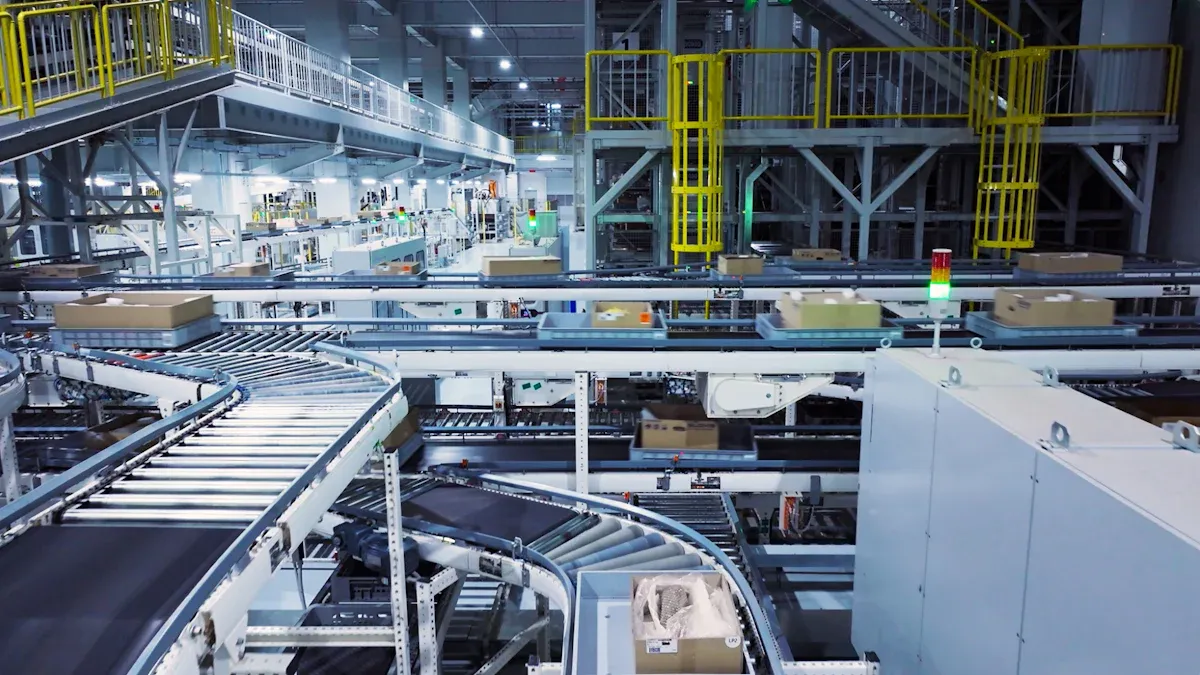
Robotics in warehousing has transformed logistics operations in 2025. Companies deploy collaborative robots, or cobots, to work alongside human staff. Autonomous mobile robots (AMRs) navigate warehouses independently, handling repetitive tasks. These technologies optimize order fulfillment and adapt quickly to changing demands.
The AI in logistics market is projected to reach $20.8 billion in 2025, growing at 45.6% annually.
AI algorithms can reduce picking times by up to 30% through dynamic inventory optimization.
Predictive demand forecasting helps reduce stockouts and overstock by 25–40%.
Companies using warehouse robotics often see a 20% ROI within two years.
IoT sensors can cut unplanned downtime by up to 70% with predictive maintenance.
Robotic systems achieve order accuracy rates as high as 99.9%. AMRs transport goods two to three times faster than human workers. Robotic arms process up to 600 items per hour. Automation streamlines inventory management and boosts order picking accuracy.
Note: Robotics allow warehouses to operate around the clock, increasing fulfillment speed and reducing errors.
Robotic Process Automation (RPA)
Robotic Process Automation (RPA) automates repetitive digital tasks in logistics. RPA software handles order entry, invoicing, and shipment tracking. Companies benefit from lower labor costs, fewer errors, and faster processing. RPA enables logistics providers to handle higher volumes and improve accuracy.
Description | |
|---|---|
Lower Labor Costs | Reduction in workforce expenses |
Fewer Errors | Decrease in mistakes and rework |
Faster Processing | Increased speed of operations |
Higher Volumes | Ability to handle more transactions |
Better Accuracy | Improved precision in tasks |
Reduced Fines | Lower penalties due to compliance |
Improved Loyalty | Enhanced customer retention |
Scalable Resource Use | Flexibility in resource management |
Payback Period | Typically ranges from 12 to 18 months |
Cloud-Based Logistics Platforms
Cloud-based logistics platforms support scalability and collaboration. These platforms provide real-time data access, improving transparency among supply chain partners. All parties can share updates instantly, which enhances communication and speeds up problem resolution.
Cloud solutions scale with business growth or seasonal demand surges.
Logistics companies can add new carriers and partners easily.
Platforms allow for customization, supporting cost control and budget management.
Cloud supply chain software integrates planning, procurement, and shipping workflows. This integration keeps stakeholders aligned and reduces miscommunication. Flexible resource management ensures logistics providers can meet changing demands efficiently.
Sustainability and Customer Experience
Logistics companies in 2025 prioritize sustainability and customer experience as core business drivers. Advanced IT solutions enable organizations to reduce environmental impact and deliver superior service. These technologies support green practices and real-time communication, helping companies meet regulatory standards and customer expectations.
Green Logistics Practices
Companies use innovative IT solutions to implement green logistics practices. They optimize packaging, manage returns, and electrify fleets to lower emissions. AI-driven systems control warehouse environments, reducing energy consumption. Many organizations track key performance indicators to measure progress in sustainability.
Practice | Description |
|---|---|
Packaging-to-product ratio | Reduces filler material and optimizes box sizes, minimizing fuel use during transportation. |
Reverse logistics | Enables return, refurbishment, and recycling of goods, reducing landfill waste. |
Vertical racking | Improves warehouse space use and throughput, lowering environmental impact. |
AI-driven HVAC systems | Maintains temperature consistency, lowering energy bills by up to 40% each year. |
Electrifying delivery fleets | Uses renewable energy charging stations to minimize supply chain emissions. |
Carbon offset programs | Engages in sustainable practices, such as hydrogen and biofuel vehicles. |
Tracking KPIs | Measures energy use, CO₂ emissions, and water consumption for accountability. |
Integration of renewable energy | Solar panels offset up to 70% of energy needs, enhancing warehouse management. |
AI in logistics | Intelligent automation reduces human error and machine downtime, optimizing energy use. |
Innovative technologies | New business models enhance efficiency and reduce emissions. |
Logistics companies minimize their carbon footprint by using alternative fuels like biodiesel and electricity.
The transportation sector reduces global emissions through these initiatives.
Real-Time Visibility for Customers
Brands build credibility by offering live tracking and transparency. Customers who track packages live are 50% more likely to reorder, which increases retention and encourages referrals. Real-time updates reduce uncertainty and build trust. Proactive communication transforms negative experiences into loyalty opportunities.
Teams anticipate shipment delays and take corrective action before customers are affected.
Network stability improves, enabling better decision-making.
Transparency helps manage expectations and reduces late delivery penalties.
E-Commerce Integration
Integrating e-commerce platforms with logistics IT systems improves efficiency and customer satisfaction. Automation speeds up order processing and delivery. Real-time updates on order status enhance the buying experience. Streamlined fulfillment reduces errors and saves time.
Automatic inventory and shipping updates minimize manual input.
Seamless integration allows immediate order processing after purchase confirmation.
International logistics features simplify customs and duties, supporting global shipping.
Adoption Challenges and Industry Trends
Cybersecurity and Data Privacy
Logistics companies face growing cybersecurity threats as they adopt advanced IT solutions. Attackers target supply chains with sophisticated tactics. The number of third-party breaches has doubled year over year, and supply chain attacks have increased by 2,600% since 2018. IoT devices, expected to reach 32.1 billion by 2030, create a large attack surface. Ransomware now uses double and triple extortion methods, making recovery more difficult.
Threat Type | Evidence |
|---|---|
Third Party Breaches | 100% year over year increase in third party breaches (Verizon DBIR 2025) |
Supply Chain Attacks | 2,600% more organizations affected since 2018 |
IoT Device Vulnerabilities | 32.1 billion IoT devices projected by 2030 |
Ransomware Evolution | Double and triple extortion tactics now common |
Companies respond by implementing strict access controls, encrypting sensitive data, and complying with regulations like GDPR and CCPA. They minimize data collection and manage third-party vendors to ensure cybersecurity protocols. Regular security audits help identify vulnerabilities. Data privacy remains essential for maintaining customer trust and avoiding legal penalties.
Integration with Legacy Systems
Integrating new IT solutions with legacy systems presents significant challenges. Many companies encounter data format conflicts and real-time data exchange issues, which can cause delays. Outdated systems often lack modern safeguards, increasing security risks. Logistics leaders address these obstacles by focusing on mission-critical processes first and balancing quick wins with long-term transformation.
Identify mission-critical processes for modernization.
Use middleware solutions to connect legacy and modern systems.
Conduct pilot programs to test integration before full deployment.
Manage budget and risk with a phased approach.
Companies that modernize legacy systems improve efficiency and reduce operational risks. Middleware and pilot programs help minimize disruptions during transitions.
Workforce Upskilling
The shift to advanced IT solutions requires a skilled workforce. Employees often feel anxious about learning new technologies, and managers worry about workflow disruptions. Logistics companies invest in structured upskilling through e-learning platforms, live workshops, and certification programs. They focus on training in data analytics, AI tools, and digital solutions.
Upskilling Strategy | Description |
|---|---|
Continuous Learning Culture | Incentives like tuition reimbursement encourage professional development. |
Online Training Platforms | Flexible skill acquisition through Coursera, Udemy, and LinkedIn Learning. |
Partnerships with Educational Institutions | Tailored training programs designed with technical schools and universities. |
To future-proof logistics teams, companies must anticipate future needs and prioritize ongoing training. Cross-functional teams encourage collaboration between technology and operations, building a digital workforce ready for tomorrow’s challenges.
Advanced IT solutions continue to reshape logistics in 2025. Companies gain efficiency, transparency, and customer satisfaction by adopting robotics, blockchain, artificial intelligence, IoT, and cloud logistics. To maximize benefits, logistics leaders should:
Evaluate current technology and identify areas for improvement.
Set clear goals for delivery accuracy, cost reduction, and warehouse efficiency.
Compare performance metrics to industry standards and close gaps.
Metric Type | Description |
|---|---|
Customer Satisfaction Metrics | |
Operational Efficiency | Measures order speed and route optimization. |
Competitive Differentiation | Assesses market share growth and adaptability. |
Staying informed about new trends helps companies remain competitive and future-ready.
FAQ
What is the biggest benefit of using AI in logistics?
AI helps companies make faster decisions. It improves route planning and reduces delivery times. Many logistics teams see fewer errors and lower costs. AI also predicts demand, which helps manage inventory better.
How does blockchain improve supply chain transparency?
Blockchain creates a secure record of every transaction. All partners can see the same data. This reduces fraud and builds trust. Companies can track products from start to finish.
Are autonomous vehicles safe for logistics operations?
Autonomous vehicles use sensors and cameras to avoid accidents. Companies test these vehicles in many conditions. Safety standards continue to improve. Most experts believe autonomous vehicles will reduce human errors.
Why do logistics companies use IoT devices?
IoT devices track shipments in real time. They send updates about location and condition. This helps companies prevent loss and delays. IoT also supports better planning and resource use.
What challenges do companies face when adopting new IT solutions?
Companies often struggle with system integration and data security. Employees need training to use new tools. Upgrading old systems can take time. Careful planning helps reduce these challenges.
See Also
Transforming Global Operations With Innovative Logistics Strategies
Key Strategies For Effective Management Of Global Logistics
PGL's Miami Warehouse Solutions Ensure Quick East Coast Deliveries
Enhancing Global Efficiency Through Point-to-Point Logistics Systems
Simplifying Supply Chain Optimization With American Logistics Solutions
