How to Achieve Supply Chain Excellence in 2025

You achieve supply chain excellence by aligning your supply chain with your business goals and using proactive management. Today, rapid market changes make this more urgent.
You improve efficiency and adaptability.
You anticipate disruptions and act quickly.
You use technology for better forecasting.
Supply chain excellence strategies help you stay competitive and resilient.
Key Takeaways
Align your supply chain with business goals to improve efficiency and adaptability.
Use technology and data analytics to anticipate disruptions and make informed decisions.
Build strong supplier relationships through open communication and trust to enhance collaboration.
Supply Chain Excellence Strategies
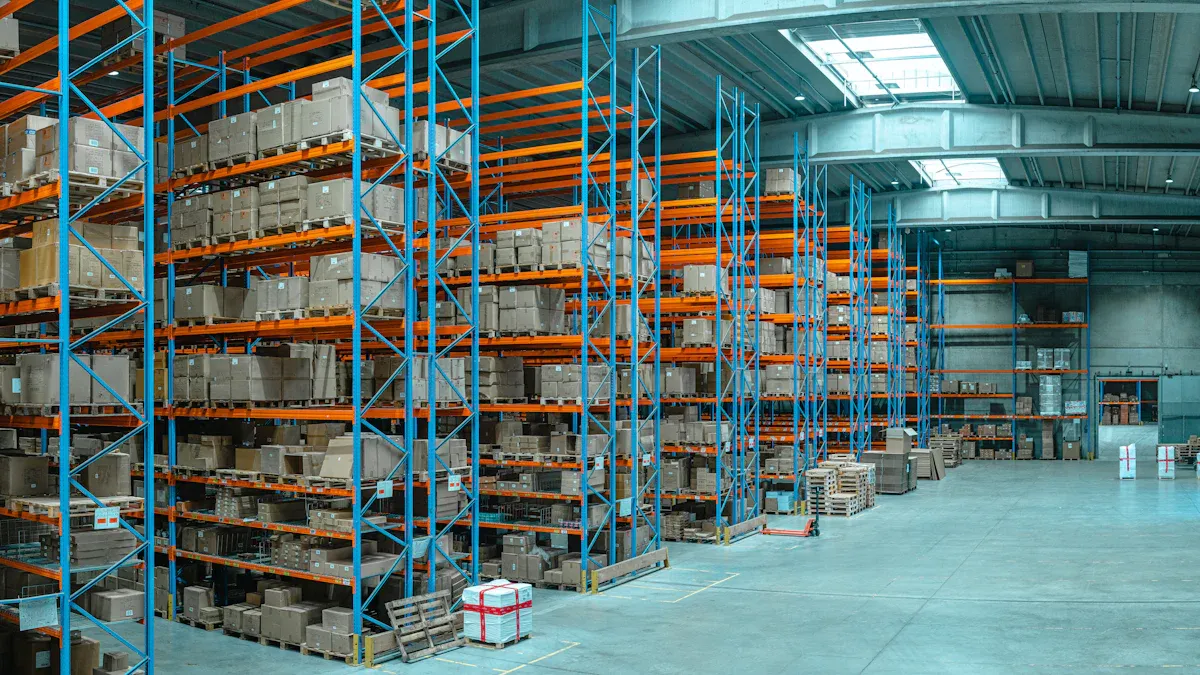
Strategic Planning
You need a strong plan to guide your supply chain. Start by choosing a framework that fits your industry and goals. Many leading companies use frameworks like demand-driven, agile, lean, circular, resilient, collaborative, or digital. Each one has a unique focus and works best for different industries.
Framework Type | Definition | Best Suited Industries | Example |
|---|---|---|---|
Demand-Driven | Adjusts to customer preferences and local demand trends. | Consumer electronics, retail, food | McDonald’s changes menus based on customer trends. |
Agile | Responds quickly to changes in demand or supply. | Technology, fashion, FMCG | Zara’s fast-fashion model adapts quickly. |
Lean/Integrated | Reduces waste and boosts efficiency. | Automotive, consumer goods, electronics | Toyota’s system cuts waste and keeps quality high. |
Circular | Focuses on recycling and reuse. | Sustainability-focused | IKEA recycles and refurbishes furniture. |
Resilient | Builds buffers and diversifies to handle disruptions. | Pharma, healthcare, food supply chains | Pharma firms increased safety stock during the pandemic. |
Collaborative | Shares information among all partners. | Aerospace, consumer goods, electronics | P&G shares forecasts with suppliers. |
Digital | Uses technology for real-time control and visibility. | Most industries | Modern ERP systems track supply chain activities instantly. |
You should define clear Key Performance Indicators (KPIs) before you start. KPIs help you measure progress and spot problems early. Hold regular meetings to review your progress. This keeps your team focused and helps you adjust your plan when needed.
Tip: Use data analytics to monitor trends and predict changes. This helps you stay ahead of disruptions and adapt your strategy quickly.
Communication & Collaboration
Good communication keeps your supply chain running smoothly. You need to share information with your team, suppliers, and partners. In 2025, many companies use advanced platforms to make this easier.
Platform | Key Features | Benefits |
|---|---|---|
OpenBOM | Real-time data sharing, mobile access | Better supplier interactions and quick decisions |
10X ERP | Cloud-based, real-time data, easy integrations | Improved teamwork and access to information |
Coupa | Procurement, inventory, AI insights | More efficient operations and faster responses |
FourKites | Real-time logistics visibility, shipment tracking | Smooth communication and higher efficiency |
When you collaborate well, you see the whole supply chain clearly. You can solve problems before they grow. Sharing forecasts and sales data helps you plan better and avoid running out of stock or having too much inventory. You also learn more about your customers and their needs.
Note: Do not confuse sharing information with true collaboration. Real collaboration means working together to solve problems and reach goals.
Supplier Relationships
Strong supplier relationships are key to supply chain excellence strategies. You build trust by working together and communicating openly. Use technology like Supplier Relationship Management (SRM) systems to track performance and keep everyone accountable.
Key Factor | Description |
|---|---|
Collaboration | Build trust and reward teamwork. |
Communication | Be transparent and address issues quickly. |
Technology | Use SRM systems for structure and visibility. |
Data Literacy | Make decisions based on clear data. |
Systems Thinking | Understand how each part affects the whole chain. |
Recognition of Collaboration | Celebrate joint achievements in reviews. |
Operating Cadence | Hold regular meetings to keep everyone on track. |
You should measure supplier performance with clear KPIs. Track on-time delivery, defect rates, compliance, cost savings, risk scores, responsiveness, lead times, innovation, and customer service. These metrics help you spot problems and improve together.
On-time delivery rate shows if suppliers meet deadlines.
Defect rate tells you about product quality.
Compliance rate checks if suppliers follow rules.
Cost savings show value from supplier initiatives.
Supplier risk score helps you avoid risky partners.
Responsiveness measures how fast suppliers solve issues.
Lead times track how long orders take.
Innovation counts new ideas or products from suppliers.
Customer service measures support quality.
Sourcing Diversification
You lower risk by using more than one supplier or sourcing from different regions. This makes your supply chain stronger and more flexible. If one supplier has a problem, you can switch to another.
However, you must watch for common challenges:
Quality risks: New suppliers may not meet your standards.
Financial risks: Some suppliers may not be stable.
Subcontracting risks: You may not see who is actually making your products.
To manage these risks, set clear quality checks and review financial health before adding new suppliers. Use technology to track all suppliers and their subcontractors. Regular audits help you catch problems early.
Tip: Sourcing diversification is a core part of supply chain excellence strategies. It helps you adapt to changes and recover from disruptions faster.
You can achieve supply chain excellence strategies by combining strong planning, open communication, trusted supplier relationships, and smart sourcing. Use technology and data to guide your decisions and stay ahead in a changing world.
Technology, Optimization, and Resilience

Automation & AI Integration
You can boost your supply chain by using automation and AI. As of 2025, 57% of companies have started to use AI in their supply chain operations. AI helps you cut transportation costs by up to 30%. It can lower inventory by 25% and improve forecast accuracy by 75%. Lenovo used AI to increase production line capacity by 19%. AI finds bottlenecks and gives warehouse managers tips to work faster. McKinsey found that AI can lower logistics expenses by 15%. Machine learning helps you spot demand changes and plan better.
Tip: Automation and AI make your supply chain smarter and more flexible.
Labor & Cost Optimization
You need to manage labor and costs to stay competitive. Use these strategies:
Strategy | Description |
|---|---|
Improve productivity | Make your team work more efficiently. |
Workforce planning | Put workers where they are needed most. |
Shift scheduling | Plan shifts to match busy times. |
Implement automation | Use machines to do simple tasks. |
You can segment your supply chain by demand and product type. Nearshoring helps you respond faster, even if costs go up. Digital tools give you better visibility and control.
Risk Management & Adaptability
You must prepare for risks and adapt quickly. Digital transformation and data tools help you see problems early. Work closely with suppliers and customers. Use supply chain mapping and cybersecurity to protect your business. Diversify suppliers and use new technology to stay strong. Track supplier reliability, financial health, and operational performance.
Continuous Improvement
You should always look for ways to improve. Use methods like Kaizen, Kanban, Six Sigma, Value Stream Mapping, and the 5 Whys. Check your KPIs often to see if you meet your goals. High-performing teams use data to make smart changes. Continuous improvement is a key part of supply chain excellence strategies.
Note: Regular reviews help you find problems and fix them before they grow.
You gain supply chain excellence by using smart planning, strong supplier relationships, and technology. Companies see real results:
Case Study | |
|---|---|
Retail giant | Fewer order errors, better inventory, stronger sales forecasts, higher ROI |
Manufacturing giant | Fewer non-compliant buys, better supplier use, faster procurement, higher ROI |
Continuous improvement and digital tools help you work faster and respond quickly. You connect people, data, and actions in real time. Partnerships with supply chain experts make your processes agile and adaptive. Start now to build a resilient supply chain.
FAQ
What is the first step to improve my supply chain in 2025?
You should set clear goals and choose a framework that fits your business. This helps you focus your efforts and measure progress.
How does technology help my supply chain?
You use automation and AI to track shipments, predict demand, and reduce costs. Digital tools give you real-time data for faster decisions.
Why should I diversify my suppliers?
You lower your risk when you use multiple suppliers. If one has a problem, you can switch quickly and keep your business running.
See Also
Connecting Warehouses To Enhance Supply Chain Efficiency With PGL
Key Strategies For Effective Management Of Global Logistics
Simplifying Supply Chain Optimization In The USA With Logistics
Enhancing International Operations Through Innovative Logistics Solutions
PGL’s Knowledge Ensures Smooth Operation Of America’s Supply Chains
