Delivered Duty Paid explained for international shipping in 2025
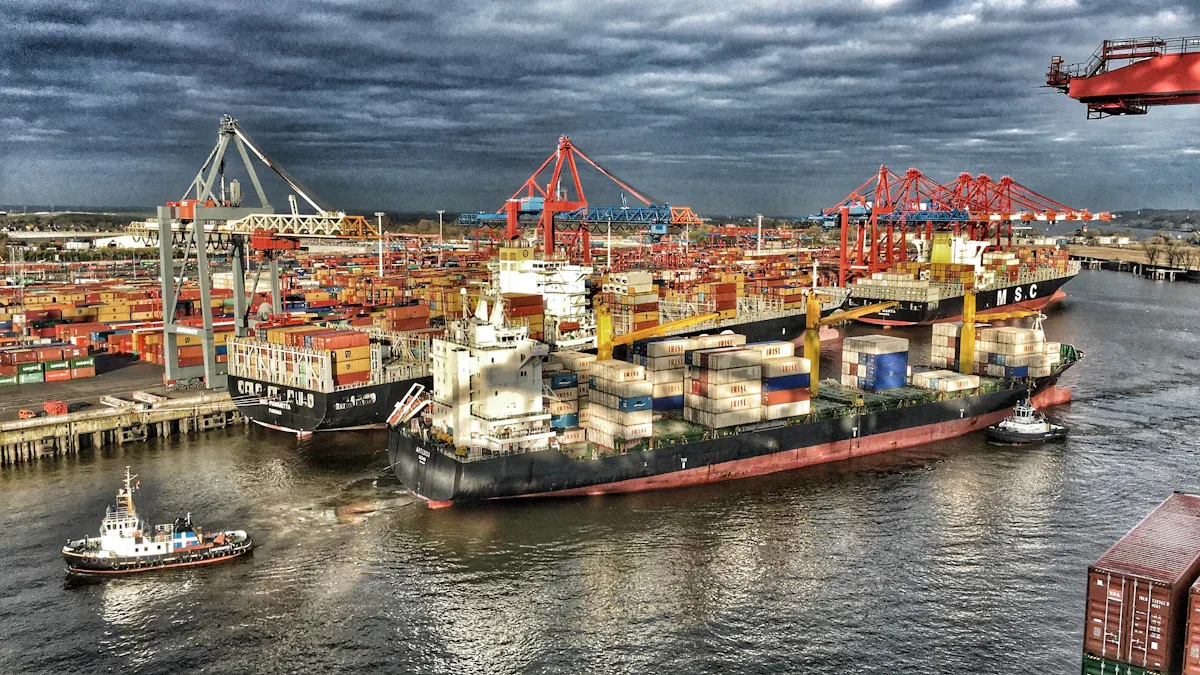
Delivered duty paid explained: You agree to buy goods where the seller handles every step of delivery, including shipping, customs, duties, and taxes, until you receive the goods. This makes your role simple and reduces your risks. In 2025, you need to understand DDP because it affects your costs, compliance, and business success.
You manage fewer financial responsibilities.
Your company can avoid hidden costs and improve profits.
DDP helps you compete in markets with strict trade regulations.
Many U.S. importers now choose DDP since it simplifies logistics and lowers unpredictability.
Key Takeaways
DDP simplifies international shipping by having the seller manage all costs, including customs duties and taxes, until delivery.
As a buyer, your responsibilities are minimal; you only need to receive and unload the goods, reducing your risk and stress.
Choosing DDP helps avoid hidden fees and provides clear, upfront pricing, making budgeting easier for your business.
Work with a customs broker to ensure smooth clearance and compliance, preventing unexpected delays or costs.
Evaluate your shipping needs carefully to determine if DDP is the best option for your business, especially if you want to avoid customs paperwork.
Delivered Duty Paid Explained
DDP meaning in shipping
You may wonder what delivered duty paid explained means in international shipping. This term, often shortened to DDP, sets clear rules for who handles each part of the shipping process. According to the International Chamber of Commerce, DDP means the seller must deliver the goods and transfer the risk of loss or damage to you when the goods are at your disposal at the agreed point in the destination country.
The seller takes care of all steps, from export paperwork to final delivery.
You receive the goods only after the seller pays all duties, taxes, and fees.
The seller is also accountable for managing all customs clearance processes, which involve handling import duties, taxes, and VAT applicable in the buyer’s country.
You do not need to worry about hidden costs or surprise fees. The seller manages every detail until you get your shipment. This makes delivered duty paid explained as a way to reduce your risks and simplify your import process.
Here is a quick look at the main responsibilities:
Role | Responsibilities |
|---|---|
Seller | - Handle all export documentation and ensure goods are ready for shipping. |
- Arrange and pay for main transport to the buyer’s country. | |
- Take care of all import duties, taxes, and customs clearance upon arrival. | |
- Arrange final delivery to the buyer’s specified location. | |
Buyer | - Receive goods at the designated delivery location. |
- Ensure readiness for receipt, unloading, and storage of delivered goods. | |
- Provide necessary support or documentation for customs processing, if requested by the seller. |
How DDP works in practice
You can follow a clear process when you use DDP for your shipments. Here is how delivered duty paid explained works step by step:
Shipment Initiation and Agreement: You and the seller agree to use DDP in your sales contract. You both specify the exact delivery point in your country.
Export Clearance & Origin Transport: The seller prepares the goods for shipment. The seller packs the goods, completes export documents, and handles export clearance.
Main Transport: The seller arranges and pays for the main transport to your country. This could be by sea, air, or land.
Import Clearance: The seller manages all customs clearance processes. This includes handling import duties, taxes, and VAT in your country. The seller also obtains any necessary export licenses, fulfills customs formalities, and pays for government inspections.
Final Delivery: The seller arranges delivery to your specified location. You must be ready to receive and unload the goods.
You will need to provide support or documents if the seller requests them for customs processing. Your main job is to receive and unload the goods at the delivery point. You may need to pay for unloading, but the seller covers all other costs.
Here are some documents you may see in a DDP shipment:
Documentation Type | Description |
|---|---|
Commercial Invoice | A document detailing the sale between buyer and seller. |
Transport Documents | Includes bills of lading or airway bills for shipment. |
Permits or Certificates | Any necessary import permits or certificates required by law. |
Under DDP, the buyer's responsibilities are minimal compared to the seller's extensive obligations. The buyer must receive and unload the goods at the designated location, ensuring they are prepared for the receipt and handling any unloading fees that may arise.
When you choose DDP, you get a simple and predictable shipping process. Delivered duty paid explained gives you peace of mind because the seller handles almost everything.
Seller vs Buyer: DDP
Seller’s responsibilities
When you choose DDP, the seller takes on almost every task in the shipping process. You can expect the seller to handle each step from packing to delivery at your location. Here is what the seller must do:
Pack goods according to your country’s standards.
Obtain all export licenses, permits, and customs documents.
Load goods onto the first carrier and pay for loading.
Arrange domestic transport to the port or terminal in their country.
Complete export customs clearance and pay any export duties or taxes.
Book and pay for the main international transport, whether by air, sea, rail, or road.
Insure the goods during transit (recommended, but not required).
Manage import customs clearance, including all duties, taxes, and compliance with local rules.
Cover inland transport in your country to the final delivery point.
Pay for unloading at your premises if your contract specifies it.
The seller’s responsibilities under DDP go far beyond other Incoterms. You do not need to worry about customs, taxes, or shipping arrangements.
Here is a quick comparison of seller responsibilities under DDP and other Incoterms:
Responsibility | DDP (Delivered Duty Paid) | Other Incoterms (e.g., FOB, CFR) |
|---|---|---|
Shipping and Freight | Seller covers all costs | Buyer may cover some costs |
Customs Clearance | Seller handles all aspects | Buyer responsible for import |
Payment of Duties and Taxes | Seller pays all duties and taxes | Buyer pays import duties |
Insurance | Usually provided by seller | Varies by agreement |
Final Delivery | Seller ensures delivery | Buyer may handle delivery |
Buyer’s responsibilities
Your role as the buyer is simple when you use DDP. You have minimal involvement in shipping and customs. Here is what you need to do:
Receive the goods at the agreed delivery location.
Unload the goods if your contract requires it.
Provide any documents or support the seller requests for customs processing.
DDP places maximum responsibility on the seller. You benefit from reduced risk and a predictable shipping process.
The delivered duty paid explained approach lets you focus on your business while the seller manages the complex logistics.
DDP Costs & Risks

What costs are included
When you use DDP, you know exactly what you will pay. The seller covers almost every cost until you receive your goods. This makes your budgeting easier and helps you avoid surprises.
Here is a table that shows the main costs included in a DDP agreement:
Cost Type | Description |
|---|---|
Shipping Arrangements | Seller handles all shipping steps. |
Import Customs Fees | Seller pays all import customs fees. |
Export and Import Costs | Seller covers both export and import costs. |
Duties and Taxes | Seller is responsible for all duties and taxes. |
Transportation Costs | Seller pays for transport to your location. |
Government Inspections | Seller pays for any required inspections. |
Proof of Delivery | Seller provides proof that goods arrived. |
Damage or Loss in Transit | Seller covers any damage or loss before delivery. |
You do not need to pay extra at delivery. The seller includes all these costs in the price. This gives you predictable costs and a smooth experience.
Customs duties and taxes can make DDP more expensive for the seller. Sellers must calculate these charges carefully. You benefit from this because you do not face extra fees at delivery. The seller takes on the risk of higher costs and complex calculations.
DDP gives you convenience and transparency. You know the total cost before you buy.
Risk transfer point
In a DDP shipment, the seller holds all risk until the goods reach your location. If something happens during shipping, the seller must fix the problem or cover the loss. You only take on risk after you receive the goods at the agreed place.
This risk transfer point is important. It means you do not worry about damage or loss during transit. The seller must clear the goods for import and handle all legal steps. If the contract is not clear, legal problems can happen. You should make sure your contract explains every detail to avoid disputes.
You can see delivered duty paid explained as a way to protect your business from unexpected risks and costs.
DDP vs Other Incoterms
DDP vs DAP
You may wonder how DDP compares to DAP, or Delivered at Place. Both terms help you understand who pays for what in international shipping. With DDP, the seller handles everything, including import duties and taxes. With DAP, the seller brings the goods to your door, but you pay the import duties and taxes.
Here is a table to help you see the differences:
Responsibility | DDP (Delivered Duty Paid) | DAP (Delivered at Place) |
|---|---|---|
Seller's Responsibilities | - Covers all costs until delivery, including duties and taxes. | - Responsible for delivery to buyer's premises. |
Buyer's Responsibilities | - Receives goods without additional costs. | - Responsible for import duties, fees, and taxes. |
You can also compare the costs:
Feature | DDP (Delivered Duty Paid) | DAP (Delivered at Place) |
|---|---|---|
Import Duties & Taxes | Paid by Seller | Paid by Buyer |
Customs Clearance | Seller’s responsibility | Buyer’s responsibility |
Cost to Buyer | Usually higher (all-in) | Often lower, but with added fees later |
Tip: If you want a simple process with no surprise fees, DDP is the better choice. If you want to save money and can handle customs, DAP may work for you.
DDP vs CIF
You may also hear about CIF, or Cost, Insurance, and Freight. This term is different from DDP. With CIF, the seller pays for shipping and insurance to the port, but you handle customs, duties, and delivery from the port to your location.
Here is a quick comparison:
Aspect | Delivered Duty Paid (DDP) | Cost, Insurance, and Freight (CIF) |
|---|---|---|
Cost Responsibility | Seller covers all costs until delivery, including duties. | Seller covers costs up to port; buyer handles import duties. |
Point of Transfer | Delivery at the destination. | Goods transferred at the port. |
Risk Transfer | Risk shifts upon delivery. | Risk shifts when goods pass the ship's rail. |
Documentation | Includes customs clearance and delivery documents. | Focuses on transport and insurance documentation. |
Applicability | Suitable for any mode of transport. | Primarily for maritime or inland waterway transport. |
You get more convenience with DDP, but you pay a higher price. CIF gives you more control, but you must handle customs and pay duties yourself.
Pros of DDP:
No customs or tax headaches for you.
Transparent, all-inclusive pricing.
Good for small-to-medium importers.
Cons of DDP:
Higher per-unit price.
Less control over shipping.
When to choose DDP
You should choose DDP when you want a stress-free shipping experience. DDP works best if you do not have experience with customs or want to avoid the risk of extra fees. This option helps you focus on your business while the seller manages all the details.
Think about these factors before you decide:
Your knowledge of local regulations
Your company’s size and resources
How much control you want over shipping
Your risk tolerance
The complexity of your shipment
Delivered duty paid explained gives you a clear way to avoid surprises and keep your shipping process simple.
DDP Tips for 2025
Key considerations
When you choose DDP for your shipments in 2025, you need to plan carefully. You want to avoid surprises and keep your costs under control. Here are some important points to remember:
Make sure your contract clearly states who pays tariffs and taxes. Reference common Incoterms so everyone understands their responsibilities.
Work with a customs broker to help clear goods in the destination country. Good partners can make delivery smoother.
Calculate import duties at checkout. This helps you prevent unexpected costs and gives your customers a better experience.
Tell your customers about all fees upfront. No surprise fees means happier buyers.
Test fulfillment networks in different regions. This helps you manage tariffs and find the best shipping options.
Consider setting up regional warehouses. You can streamline shipping and avoid customs delays.
Here is a table showing key benefits of using DDP:
Benefit | Description |
|---|---|
Upfront Duty Calculation | Import duties are calculated and collected at checkout, preventing surprises |
No Surprise Fees | Customers see all fees before buying, improving trust |
Avoid Customs Delays | DDP reduces the risk of customs delays and package abandonment |
Tip: You can specify DDP excluding VAT or other taxes to lower your tax exposure. Set clear payment terms to recover costs like import taxes.
Common pitfalls
You may face challenges when you use DDP. Sellers often lose control over customs processes. If you misestimate duties or taxes, you risk financial losses. Sometimes, sellers and buyers do not agree on customs declarations or tariff payments. This can lead to fraud or mistakes, such as undervaluing goods.
Watch out for these common mistakes:
Hidden costs like wrong HTS classification, local brokerage fees, or fuel surcharges. Request code matches from the HTS database and confirm all-inclusive terms in writing.
Not understanding DDP terms. This can lead to unexpected fees and penalties.
Failing to comply with customs regulations. You must ensure accurate customs declarations.
Hidden Cost Type | Prevention Tip |
|---|---|
Wrong HTS Classification | Request code match from HTS database |
Local Brokerage Fees | Confirm 'all-inclusive' terms in writing |
Surcharges (Fuel, GRI) | Ask for a frozen quote for 30+ days |
Note: Successful international sourcing means you must evaluate suppliers and manage risks. Do not rely only on delivered duty paid explained. Always check compliance and contract details.
You now understand that Delivered Duty Paid (DDP) gives you a clear set of rules for international shipping. The seller handles customs, duties, and delivery, while you focus on receiving your goods. Knowing each party’s role helps you avoid disputes and keeps your business running smoothly.
Choose DDP if you want to skip customs paperwork and hidden costs.
Work with a trusted freight forwarder for better results.
Consult shipping experts to manage risks and ensure compliance.
Review your shipping needs before you decide on DDP or another Incoterm.
FAQ
What does DDP mean for importers in 2025?
You let the seller handle all shipping, customs, and taxes. You only need to receive and unload the goods. This makes your costs clear and your process simple.
Who pays customs duties and taxes under DDP?
You do not pay these fees. The seller covers all customs duties, taxes, and import charges before you get your goods.
Can you use DDP for any type of product?
You can use DDP for most products. Some countries restrict certain items or require special permits. Always check local rules before you ship.
What documents do you need for DDP shipments?
You usually need a commercial invoice, transport documents, and any required import permits. The seller provides these, but you may need to help with local paperwork.
Is DDP more expensive than other shipping terms?
You often pay a higher price for DDP. The seller includes all costs in the final price. You avoid surprise fees and get a smoother shipping experience.
See Also
Maximize Savings With Nationwide FTL Shipping Solutions
Efficient Import Warehousing And Delivery On The East Coast
Experience Quick And Easy Shipping With Port-Side Support
Key LCL Shipping Steps For Successful Panama Exports
Enhancing International Operations Through Innovative Logistics Strategies
