What Drives the Cost of Expedited Shipping in 2025

If you want a package delivered fast in 2025, you notice several things make prices go up. The speed you need, how far your package travels, its weight and size, and the delivery deadline all matter. Your choice of carrier, market changes, weather, and customs rules also play a big part. Take a look at this recent table showing how FedEx and UPS adjust rates for air and ground shipping during busy periods:
Carrier | Effective Dates | Air/Expedited Cost | Ground Residential Cost | Ground Economy Cost |
|---|---|---|---|---|
FedEx | Oct 27 - Nov 23, 2025 | $1.05 | $0.40 | $2.20 |
Nov 24 - Dec 28, 2025 | $2.10 | $0.65 | $3.55 | |
Dec 29, 2025 - Jan 18, 2026 | $1.05 | $0.40 | $2.20 | |
UPS | Oct 26 - Nov 22, 2025 | $1.10 | $0.40 | N/A |
Nov 23 - Dec 27, 2025 | $2.05 | $0.60 | N/A | |
Dec 28, 2025 - Jan 17, 2026 | $1.10 | $0.40 | N/A | |
USPS | Oct 5, 2025 - Jan 18, 2026 | N/A | N/A | N/A |
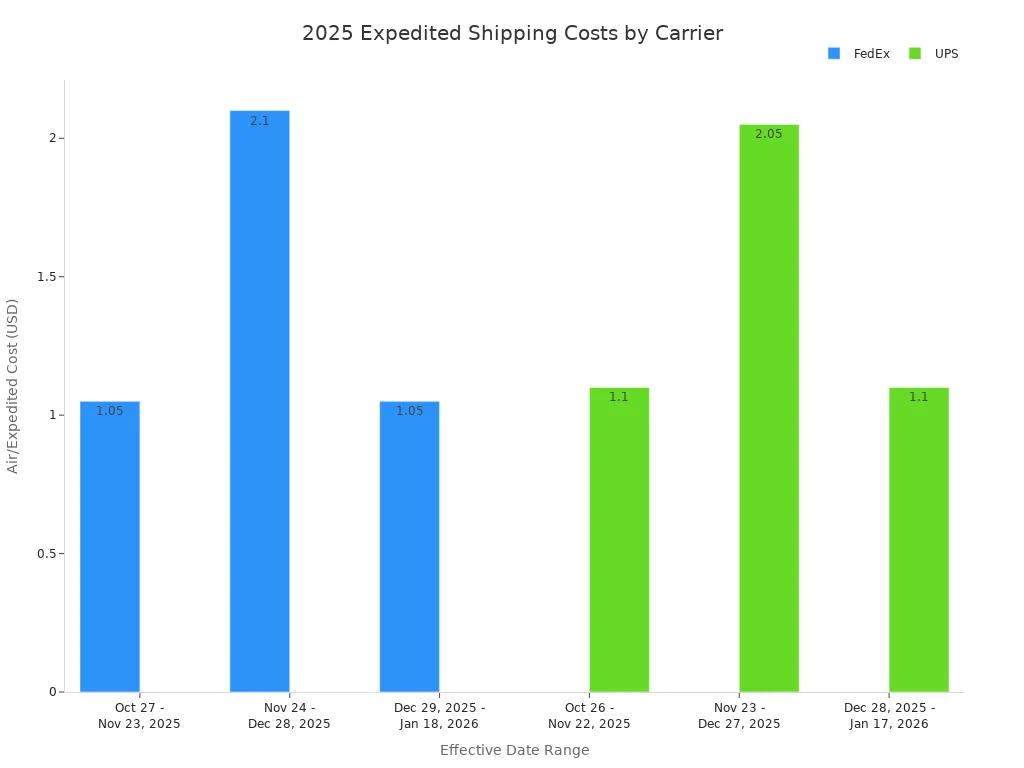
You can see how delivery speed, fuel prices, extra services, and supply market changes shape your costs. If you want a deeper expedited shipping cost analysis, keep reading to learn what drives these numbers and what you can do about them.
Key Takeaways
Urgency drives up shipping costs. Expect higher fees for faster delivery, especially during busy seasons.
Shipping distance matters. Longer distances increase costs, so plan routes wisely to save money.
Package size and weight impact pricing. Right-sizing your packaging can lead to significant savings.
Choosing the right carrier is crucial. Compare rates between national and regional carriers to find the best deal.
Stay informed about market trends. Economic changes, weather, and customs can affect shipping costs, so adapt your strategies accordingly.
Expedited Shipping Cost Analysis

Speed and Urgency
When you need something delivered fast, you pay more. Carriers like UPS and FedEx have raised fuel surcharges, payment processing fees, and late payment penalties in 2025. These extra charges show how urgency drives up prices. If you ship during busy times, FedEx adds demand surcharges and special fees. You see higher costs when you want your package to arrive quickly, especially during peak seasons.
UPS adds fuel surcharges and late payment penalties for urgent shipments.
FedEx uses demand surcharges during high-demand periods.
Expedited shipping cost analysis shows urgency is a top reason for price increases.
Shipping Distance and Destination
How far your package travels changes the price. If you ship across the country or overseas, costs go up. Carriers look at mileage, weight, and urgency. Short trips under 250 miles may have a minimum charge, while longer hauls use per-mile rates. Market conditions like fuel prices also affect what you pay.
Factor | Description |
|---|---|
Weight | |
Mileage | Costs are calculated based on the distance to the destination. |
Urgency | Expedited services for same-day shipping are more expensive. |
Market Conditions | Fuel prices and demand can influence shipping costs, with surcharges based on diesel averages. |
Length of Haul | Short-haul shipments (under 250 miles) may have a minimum charge rather than a per-mile rate. |
If you ship to remote areas or internationally, customs and weather can also slow things down and add extra fees.
Package Weight and Dimensions
The size and weight of your package matter a lot. Heavier and larger boxes cost more to ship. Carriers use dimensional weight pricing, which means oversized packages get penalized. If you right-size your packaging, you can save 15-25% on shipping costs. Smaller, lighter packages move faster and cost less.
Right-sizing packaging can save you money.
Expedited shipping cost analysis shows weight and size are key cost drivers.
Delivery Timeframe
If you want your package in one to three days, you pay a premium. Expedited shipping promises faster delivery than standard shipping, which usually takes three to seven days. This speed boosts customer satisfaction but increases costs. Retailers often set minimum order amounts for free or discounted shipping. You can also negotiate with carriers or use technology to find better rates.
Delivery Time | Cost |
|---|---|
1–3 Days | Higher |
You can lower costs by distributing inventory closer to customers or using smart shipping software.
Carrier and Service Selection
Your choice of carrier changes your shipping bill. National carriers like DHL, FedEx, and UPS have raised rates by 5–6% in 2025. Regional carriers may offer rates 10–35% lower in their zones. Multi-carrier software helps you pick the best option for each shipment, saving you money.
Carrier | Service Type | Weight Range | Surcharge (per package) |
|---|---|---|---|
DHL | Parcel Ground & Expedited | All weights | $0.62–$0.67 |
DHL | Parcel Plus (Ground & Expedited) | 0–25 lbs | $0.62–$1.57 |
DHL | Parcel Expedited Max | 0–25 lbs | $0.62–$1.07 |
DHL | Return & International Products | All weights | $0.30–$6.50 |
Tip: USPS is usually cheaper for small packages. For heavy or urgent shipments, FedEx and UPS ground options often give you better rates, especially with discounts from shipping platforms.
Mode of Transportation
How your package travels affects the price. Air freight is the fastest but costs two to four times more than ground shipping. If your delivery is less urgent, ground transportation saves you money. Many businesses use multimodal transport, combining air, ground, and sometimes sea. This method reduces costs by bundling different legs of the journey under one contract and speeds up customs clearance.
Evidence Type | Description |
|---|---|
Cost Efficiency | Multimodal transport reduces overall costs by consolidating multiple legs of a journey under one contract, avoiding duplicate fees. |
Reliability | Coordinated scheduling across modes ensures faster handovers and fewer delays, which is crucial for industries reliant on just-in-time production. |
Documentation | A single multimodal transport document minimizes paperwork, reducing disputes over liability and accelerating customs clearances. |
Volume and Frequency
If you ship a lot and do it often, you can negotiate better rates. Carriers reward businesses with bulk discounts for high shipping volumes. When you show a consistent shipping pattern, you can lock in long-term contracts and protect yourself from price spikes. Expedited shipping cost analysis proves that volume and frequency help you manage expenses and keep costs steady.
Note: Shipping more often gives you leverage to ask for lower rates and better terms.
Market and External Influences
Economic and Market Conditions
You see shipping costs change when the economy shifts. If fuel prices rise or supply chains slow down, you pay more for fast delivery. Carriers watch lead times and supplier options closely. They use tracking technology to spot delays and switch transport modes when needed. Quick responses from suppliers and logistics partners help keep your shipments moving. Take a look at this table to see how these factors affect your shipping experience:
Factor | Description |
|---|---|
Lead Time Variability | Tracking the time it takes for goods to move helps spot delays and adapt quickly. |
Supplier Diversification | Using more suppliers lowers the risk of delays from one source. |
Real-Time Visibility | Tracking technology lets you react fast to shipping issues. |
Transportation Flexibility | Switching transport modes keeps your supply chain agile. |
Customs & Compliance Efficiency | Smooth customs clearance saves time and money. |
Supplier Responsiveness | Fast responses from partners help avoid delays. |
Seasonal and Industry-Specific Demand
Shipping costs spike during busy seasons. You notice higher prices around holidays and special sales events. Carriers add peak surcharges, and these can triple or quadruple your costs if you ship a lot. FedEx and UPS raise fees for big packages and high volumes. The U.S. Postal Service and regional carriers also add their own surcharges. Planning ahead and forecasting demand helps you manage these costs.
FedEx and UPS increase fees for large shipments.
USPS and regional carriers set their own surcharges.
Smart forecasting and planning help control expenses.
Weather and Transportation Disruptions
Bad weather can slow down your shipments and raise costs. Winter storms often delay ground shipping by 2-3 days and expedited services by 1-2 days. In 2025, you might see shipping costs jump 10-25% during severe weather because carriers need to move packages faster and have fewer options. Coastal regions face hurricanes and port closures, while storms disrupt roads and railways. Rerouting ships and trucks adds more delays.
Tip: Watch the weather forecast and adjust your shipping plans to avoid costly delays.
Customs and Regulatory Factors
Customs rules and border controls have become stricter in 2025. You now pay extra duties and fees on low-value shipments because the de minimis exemption is gone. Accurate paperwork and compliance matter more than ever. If you miss a detail, you risk delays and higher costs. Smooth customs clearance helps keep your expedited shipping cost analysis on track and saves you money.
2025 Trends in Expedited Shipping Costs
Automation and Technology
You see automation everywhere in shipping now. Robots move packages in warehouses. AI picks the fastest routes for trucks and planes. These tools cut down on mistakes and speed up deliveries. Carriers use predictive analytics to plan for busy times, which means you get more complex pricing, like peak season surcharges. You need to keep up with these changes if you want to stay competitive.
Warehouse robots and AI-driven route optimization make shipping faster and cheaper.
Autonomous vehicles and drones help lower costs and improve delivery speed.
New technology means you must adjust your strategies to keep your edge.
Sustainability Initiatives
You notice more companies care about the environment. They use electric trucks and plan smarter routes to save fuel. These choices help you save money and follow new rules. Take a look at how sustainability affects costs:
Cost-Saving Area | Description |
|---|---|
Better fuel efficiency and alternative fuels lower costs. | |
Regulatory Compliance Costs | Green practices help you avoid fines and extra fees. |
Operational Streamlining | Efficient logistics cut delays and improve delivery times. |
You also see more crowdsourced delivery and last-mile network designs. These changes make shipping greener and sometimes cheaper.
Supply Chain Resilience
You want your packages to arrive on time, even when things go wrong. Companies use technology to track shipments and fix problems fast. They improve packaging and work with other businesses to share resources. Governments invest in better roads and ports.
Port congestion can slow down deliveries and raise costs.
Trade policy changes make shipping routes more complicated.
When demand is high and supply is low, prices go up.
You can use supply chain visibility tools and warehouse automation to lower your shipping costs. These strategies help you adjust quickly and avoid expensive mistakes.
Changing Consumer Expectations
You expect fast, cheap, and flexible shipping. Most shoppers want two- or three-day delivery. Many will pay more for eco-friendly options. If you face delays or high costs, you might switch brands. Here are some facts:
Statistic | Value |
|---|---|
True | |
75% of shoppers expect items delivered within 24 hours | True |
80% of customers have abandoned carts due to unexpected delivery costs | True |
66% of US consumers are willing to pay more for sustainable products | True |
You see how consumer demands push companies to improve speed, lower costs, and offer greener choices. Expedited shipping cost analysis shows that meeting these expectations is key to staying ahead.
Managing and Reducing Expedited Shipping Costs
Carrier Negotiation
You can lower your shipping costs by talking directly with carriers. Ask for better rates, especially if you ship often or in bulk. Many businesses get discounts by comparing different carriers and choosing the best fit. You might find smaller carriers offer more flexible deals. Outsourcing to third-party fulfillment centers can also help you score better rates.
Research and negotiate with carriers for lower prices
Compare shipping options for cost-effectiveness
Partner with smaller carriers for flexibility
Outsource to fulfillment providers for bulk discounts
Technology for Cost Efficiency
Smart technology makes shipping easier and cheaper. You can use a Transportation Management System (TMS) to compare rates in real time. AI-powered route optimization helps you pick the fastest and cheapest path for each package. If you ship during off-peak times, you avoid high surcharges.
Tip: Audit fuel surcharges often. You might catch mistakes and save money.
Use TMS for predictive analytics and rate shopping
Optimize routes with AI for real-time savings
Ship during off-peak times to avoid extra fees
Packaging Optimization
Right-sizing your packaging saves you money. If you use boxes that fit your products, you avoid paying for empty space. Carriers charge by dimensional weight, so bulky packages cost more. Divide your destinations into zones to cut costs.
Optimize packaging to avoid unused space
Calculate dimensional weight before shipping
Use prepaid shipping labels for consistent volume
Offer free shipping for larger orders
Planning for Seasonal Peaks
You can plan ahead for busy seasons like holidays. Analyze micro-trends and demand patterns instead of guessing. If you increase lead times, carriers have more time to optimize routes, which lowers your rates.
Note: Early planning helps you avoid last-minute surcharges.
Ship during off-peak times
Increase lead times for lower urgent freight costs
Forecast demand to manage expenses
Data-Driven Decision Making
You can use data to make smarter shipping choices. Track your shipping costs and look for patterns. Regularly review your processes and improve them. Zone optimization and continuous improvement help you keep costs down.
Divide destinations into zones
Assess and optimize shipping processes
Use data to spot savings opportunities
You’ve seen how urgency, distance, package size, carrier choice, and market changes drive expedited shipping costs in 2025. External factors like weather and customs also play a big role.
Stay alert to new trends like automation and sustainability.
Use smart strategies to keep your shipping expenses in check.
Remember, when you understand what affects your costs, you make better decisions and save more money.
FAQ
What is the biggest factor in expedited shipping costs?
You pay more for speed. The faster you want your package delivered, the higher the cost. Carriers charge extra for urgent deliveries, especially during busy seasons.
How can you save money on expedited shipping?
Tip: Use smaller boxes and ship in bulk.
You can also compare rates from different carriers. Try to plan ahead and avoid last-minute shipments.
Do weather and customs delays always increase your costs?
Not always, but they often do. Bad weather or customs checks can slow things down. Carriers may add surcharges or reroute packages, which can raise your final bill.
Are regional carriers cheaper than national ones?
Regional carriers often offer lower rates for local deliveries. You might save 10–35% compared to big carriers like FedEx or UPS, especially if you ship within certain zones.
See Also
Enhancing East Coast Import Storage And Distribution With PGL
Prepare For The Holiday Rush With PGL's Logistics Services
Simplifying Supply Chain Management With American Logistics Solutions
