How to Prepare Export Documentation for International Shipments
Getting export documentation right is key when you ship goods internationally. Mistakes in paperwork can cause delays, extra costs, or even stop your shipment. Accurate export processes and documentation help you avoid customs problems and keep your business moving.
Tip: Checklists make sure you do not miss important steps. Talk with your importer or freight forwarder if you have questions.
Common issues include missing details, typos, or using the wrong forms. You can prevent these by following a simple, step-by-step approach:
Accurate documents speed up customs clearance.
Comprehensive product information, like correct HS codes, is necessary.
Errors often lead to delays or inspections.
Key Takeaways
Accurate export documentation is crucial. It prevents delays and extra costs during international shipments.
Use checklists to ensure all necessary documents are included. This helps avoid missing paperwork and keeps your export process organized.
Stay informed about customs regulations. Regularly check for updates to avoid compliance issues and potential penalties.
Verify buyer and product information thoroughly. This reduces the risk of mistakes and ensures smooth transactions.
Utilize digital tools for document management. They can automate processes, improve compliance, and enhance communication.
Export Processes and Documentation Overview
Key Steps in Export Processes
You need to follow several steps when you prepare for international shipments. Each step helps you move your goods safely and legally across borders. Here is a simple outline of the main steps:
Conduct market research to understand your target country.
Construct an export plan that fits your business goals.
Prepare export documentation for your shipment.
Manage logistics and shipping to arrange transport.
Navigate customs and duties to clear your goods.
Tip: You should always talk with your importer or freight forwarder. They can help you understand local rules and avoid mistakes. Tools like FedEx International Shipping Assist can guide you through the process.
Role of Export Documentation
Export documentation plays a key role in international trade. You use these documents to prove the legality and safety of your goods. Common documents include commercial invoices, packing lists, certificates of origin, and export licenses. These papers help you meet customs and trade authority requirements. When you prepare export processes and documentation correctly, you avoid fines and delays. Your shipment moves faster and you keep your business running smoothly.
Customs regulations control how goods enter and leave a country. You must follow health and safety standards. Proper export processes and documentation help your goods pass through customs checkpoints without problems. This keeps your shipments on schedule.
Digital tools and platforms make export processes and documentation easier. Here is a table showing how these tools help you:
Benefit | Description |
|---|---|
Automation | Automates document generation, reducing time spent on paperwork. |
Compliance | Ensures documents meet international standards, facilitating customs clearance. |
Communication | Improves coordination among all parties through centralized channels. |
Integration | Combines different export tasks into one system, lowering human error. |
Record-keeping | Provides strong record-keeping for audits and planning. |
You can use these tools to save time and reduce mistakes. They help you keep your export processes and documentation organized and up to date.
Gathering Shipment Information
Product and Buyer Details
You need to collect accurate product and buyer information before you start your export processes and documentation. This step helps you avoid mistakes and delays. Start by checking the buyer’s address and location using online tools like Google Maps. Look at the buyer’s website and company details to make sure they are real. Ask for important documents, such as export-import licenses, to confirm their business status.
Follow these steps to verify your buyer and product information:
Check the buyer’s address and location online.
Review the buyer’s website and company details.
Request export-import licenses and other key documents.
Look at the buyer’s export shipment data to see their trade history.
Contact the commerce office in the buyer’s country for extra confirmation.
You can also use customs data to check if the buyer has a good record of importing similar products. This helps you focus on real buyers and avoid middlemen. When you match your product to the buyer’s needs and check their import volumes, you can spot serious buyers and avoid one-time deals.
Shipping Terms and Country Requirements
You must understand the shipping terms and the rules for each country. Shipping terms, like Incoterms, tell you who pays for shipping, insurance, and customs fees. Each country has its own rules for imports. Some countries have strict controls or need special licenses.
Here is a table showing some key country-specific requirements:
Requirement Type | Description |
|---|---|
Embargoed Countries | Countries like Cuba, Iran, North Korea, Syria, and Sudan need special import/export licenses. |
Restricted Party Screening | You cannot ship to people or companies on US government lists without a license. |
Export License Review | Some items need an export license based on where they go, their value, or who will use them. |
Valuation | You must give a real value for your goods. Every country needs at least a $1 value. |
Note: Always check the latest rules for your destination country. This helps you avoid problems at customs.
Essential Export Documents Checklist
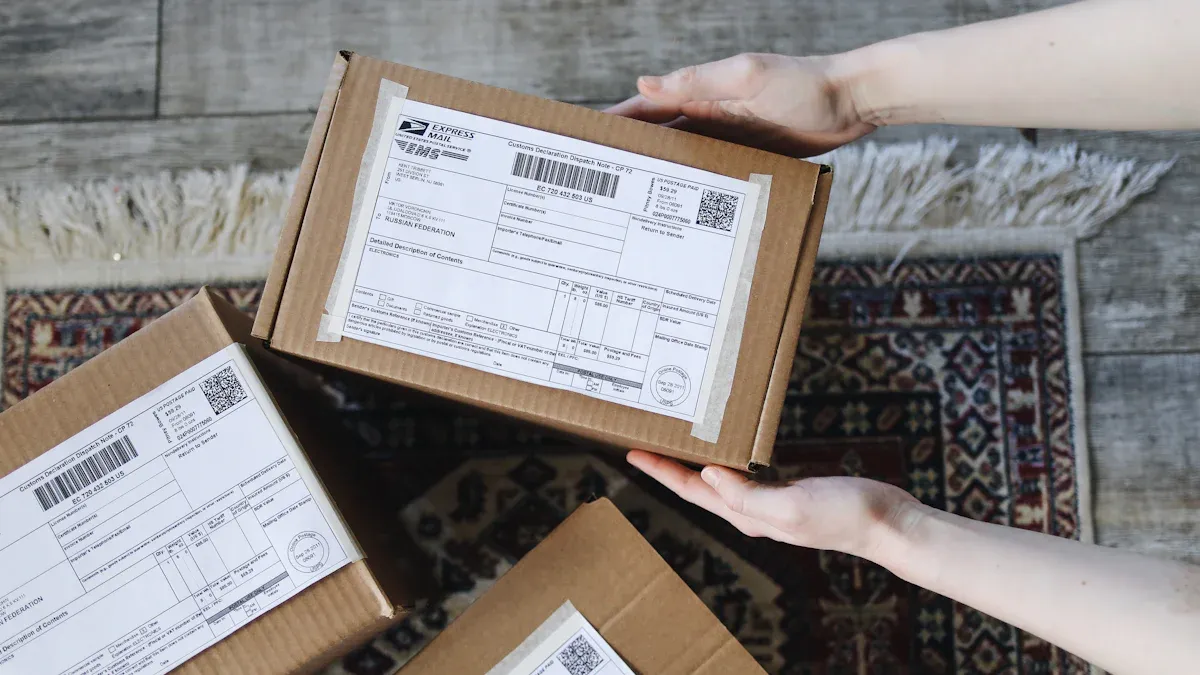
When you ship goods internationally, you must prepare several key documents. These papers help you prove ownership, show the value of your goods, and meet customs rules. If you miss even one, your shipment can get delayed or stopped. You can use a checklist to make sure you include every required document.
Here are the most common export documents you need for most international shipments:
Commercial Invoice
Bill of Lading
Certificate of Origin
Packing List
Customs Declaration Forms
Proforma Invoice
Export or Import Licenses
Letters of Credit
Tip: Always use a checklist before you ship. This helps you avoid missing paperwork and keeps your export processes and documentation on track.
Commercial Invoice
You must include a commercial invoice with every international shipment. This document acts as a bill for the goods you sell. Customs officials use it to check the value, type, and origin of your products. The commercial invoice also helps your buyer pay you.
A complete commercial invoice should include:
Your company name, website, and logo
The buyer’s name, address, and contact details
Ship-to information (if different from the buyer)
A detailed description of each item, including materials used
The country of origin for each product
The HS Code (Harmonized System) or HTS Code for each item
The ECCN (Export Control Classification Number), if needed
Quantity and unit of measure
Unit price and total price
Currency used for the transaction
Custom clearance information
Incoterms (who pays for shipping, insurance, and customs)
The date and place of sale
Your signature, title, and the date of signing
Note: Customs officials check every detail. Even small mistakes can cause delays or fines.
Bill of Lading
The bill of lading is a key shipping document. It serves as a contract between you and the carrier. It also proves who owns the goods during transport. You must choose the right type of bill of lading for your shipment.
Here is a table showing the main types of bills of lading and when you need each one:
Type of Bill of Lading | Description | When Required |
|---|---|---|
Straight Bill of Lading | Non-negotiable; receipt and contract without title transfer | Domestic shipments |
Order Bill of Lading | Negotiable; allows ownership transfer by endorsement | Most international shipments |
Sea Waybill | Similar to straight bill; used for ocean freight | Ocean freight shipments |
Clean Bill of Lading | Shows goods received in good condition | When cargo is undamaged |
Dirty Bill of Lading | Notes damage or issues with the cargo | When cargo has problems |
Master Bill of Lading | Issued by the shipping carrier; can be HBL or MBL | Freight forwarders or NVOCC operators |
Inland Bill of Lading | For land transport before reaching the port | When cargo travels by land first |
Multimodal Bill of Lading | Covers multiple transport modes under one contract | Shipments using different transport methods |
You must match the bill of lading to your shipment type. For most international shipments, you will use an order bill of lading.
Export License and Certificates
Some goods need special licenses or certificates before you can export them. These rules protect national security and public safety. You must check if your product, buyer, or destination country has extra requirements.
Common export licenses and certificates include:
Export License: Needed for shipments to embargoed countries like Cuba, Iran, North Korea, and Syria.
End User Certificate: Required if your product goes to a restricted user or for military use.
Product-Specific Certificates: Some goods, such as chemicals or high-tech equipment, need extra paperwork even if they seem harmless.
Requirement | Description |
|---|---|
Export License | Needed for embargoed countries, regardless of product type |
End User Restrictions | Needed if the buyer is on a restricted list or for military use |
Product-Specific Rules | Chemicals, electronics, and other sensitive goods may need extra certificates or licenses |
Alert: If you export controlled goods without the right license, you can face heavy fines or lose your export rights.
Why Use an Export Documents Checklist?
You can avoid most export problems by using a checklist. This tool helps you:
Make sure you complete and submit all paperwork on time
Catch missing fields or errors before you ship
Prevent shipment delays and compliance issues
Stay organized and consistent with your export processes and documentation
If you double-check your checklist before you ship, you lower your risk of missing a critical document. Customs officials are strict. Even small mistakes can lead to penalties or delays. You can also use electronic systems to help you keep track of your documents.
Remember: Accurate export documentation keeps your shipment moving and protects your business.
Completing Export Documents
Filling Out Key Forms
You need to fill out export forms with care. Customs officials check every detail. If you make mistakes, your shipment can get delayed or stopped. You should always review your forms before you submit them.
Here are the most common errors people make when filling out export forms:
Underestimating the value of goods
Using the wrong HS code
Entering the incorrect recipient address
Adding wrong or missing contact information
Inputting incorrect AES (Automated Export System) information
Not labeling hazardous materials properly
Attaching the form or barcode incorrectly
Ignoring specific import-export laws
Assuming your goods qualify for duty-free treatment
Tip: Double-check every field on your forms. Use official sources to confirm HS codes and addresses. Ask your freight forwarder if you are unsure about any details.
Customs authorities use advanced tools to verify your documents. AI-powered systems can spot errors and check for missing information. Officials look at your MRN or ITN numbers, compare exporter and consignee records, and confirm HS codes using official tariff schedules. Even small mistakes can cause big problems at customs.
You should always match your product details, values, and codes to what is listed in official documents. If you label hazardous materials, use the correct symbols and follow safety rules. Attach forms and barcodes in the right place on your shipment.
Note: Customs officials rely on accurate export documents. Careful checks help you avoid delays and fines.
Submission and Record Keeping
You must submit your export documents to customs authorities on time. You need to follow best practices to keep your shipment moving and stay compliant with the law.
Here are the best practices for submitting export documents:
Create a strong compliance program with clear rules and regular training.
Stay updated on changes in customs regulations.
Conduct regular audits to find and fix problems.
Keep all documents accurate and up to date.
Use digital platforms to automate compliance tasks and reduce errors.
Alert: Inaccurate or late submissions can lead to penalties or shipment delays.
After you submit your documents, you need to keep records for at least five years. U.S. regulations require you to keep export records for five years from the date of export, license expiration, or transaction completion. This rule applies to agencies like U.S. Customs and Border Protection (CBP), Bureau of Industry and Security (BIS), and the Census Bureau.
Retention Requirement | Description |
|---|---|
Minimum Retention | 5 years from the latest of the date of export, re-export, transaction termination, or receipt of boycott-related request. |
Governing Agencies | U.S. Customs and Border Protection (CBP), Bureau of Industry and Security (BIS), Census, etc. |
You should store your records securely. Keep both hard copies and electronic files. Use locked cabinets or rooms with restricted access for physical records. For digital files, use secure servers or cloud storage with encryption and access controls. Make sure your records are easy to find if you need them for an audit.
Keep complete records, including scanned copies and originals.
Store physical records in secure locations with alarms or locks.
Use encrypted cloud storage for digital files.
Limit access to records to authorized staff only.
Set up a records management policy for creating, storing, and disposing of documents.
Audit your storage methods regularly to ensure compliance.
Tip: Good record keeping protects your business and helps you pass audits. You can avoid legal trouble by following these rules.
Customs officials may check your records during audits. They look for accurate details and proper retention. If you keep your documents organized and secure, you make the process easier for everyone.
Remember: Careful submission and record keeping help you avoid delays, fines, and compliance issues. You keep your business safe and your shipments moving.
Compliance and Best Practices
Timely Submission
You must submit your export documents on time. Late paperwork can cause serious problems for your shipment. Customs officials may delay your goods, and you might face extra costs or disputes with your partners. The table below shows what can happen if you do not submit your documents promptly:
Consequence | Description |
|---|---|
Delays | Late submission can lead to shipment delays, affecting the entire supply chain. |
Additional Costs | Incorrect or missing paperwork can incur extra charges for inspections, storage, and late fees. |
Potential Disputes | Discrepancies in documentation can result in disputes over who is responsible for additional charges. |
Tip: Set reminders for all your export deadlines. Double-check your paperwork before you send it.
Staying Updated with Regulations
International trade rules change often. You need to stay informed about new laws, especially in areas like sustainability, AI, and digital privacy. You can use several methods to keep up with these changes:
Monitor specialized websites for updates.
Follow regulators on social media.
Subscribe to industry newsletters.
Engage with regulators and participate in industry groups.
You should also talk with your buyer and freight forwarder early in the process. They can help you understand which documents you need. Use import controls screening tools and contact government resources, such as the U.S. Commercial Service, for help with import barriers.
Common Mistakes to Avoid
Exporters often make mistakes that lead to delays or penalties. You can avoid these problems by knowing what to watch for. Here are some of the most frequent errors:
Mistake Type | Consequence |
|---|---|
Damaging penalties, restrictions on business, shipment delays, and harm to reputation. | |
Errors in classification | Incorrectly describing goods can lead to penalties and shipment delays. |
Documentation errors | Inaccurate or incomplete documentation can result in customs audits and fines. |
Failure to adhere to customs requirements | Non-compliance can lead to significant penalties and delays in shipment. |
Other common mistakes include poor recordkeeping, misclassification of goods, inaccurate valuation, and missing security filings. You should always check your documents for accuracy and keep good records.
Alert: Penalties for non-compliance can reach up to $1 million per violation and may include criminal charges or even imprisonment.
You can prepare export documentation by following clear steps and using checklists. Accurate paperwork, like commercial invoices and packing lists, keeps your shipments on track. Regular training and technology tools help you avoid mistakes.
Review every detail before you submit.
Use cloud storage to keep documents safe.
Stay updated with trade agencies and industry groups.
Experts manage all essential export documentation to guarantee compliance with regulations and facilitate smooth transactions, ensuring that shipments traverse customs effortlessly.
If you work with freight forwarders or export advisors, you get tailored advice and reduce the risk of errors.
FAQ
What is the most important export document?
The commercial invoice is the most important document. Customs officials use it to check the value and details of your goods. You must fill it out accurately to avoid delays.
How long should you keep export records?
Record Type | Retention Time |
|---|---|
Export Documents | 5 years |
You must keep all export records for at least five years. This helps you pass audits and follow legal rules.
Do you need an export license for every shipment?
You do not need an export license for every shipment. You only need one if your goods, buyer, or destination country has special rules or restrictions.
What happens if you make a mistake on your export forms?
Customs may delay your shipment.
You might pay extra fees.
Officials could fine you.
Always double-check your forms before you submit them.
See Also
Key LCL Shipping Steps for Panama Exports with Premier
Navigating the LCL Export Process in Panama with Premier
Reasons to Select Premier Global Logistics for Exports
Simplified U.S. Air Freight Export Solutions by Premier
Comprehensive Ocean Export Services for FCL and LCL from U.S.
