What Are the Key Principles of Distribution and Logistics Management
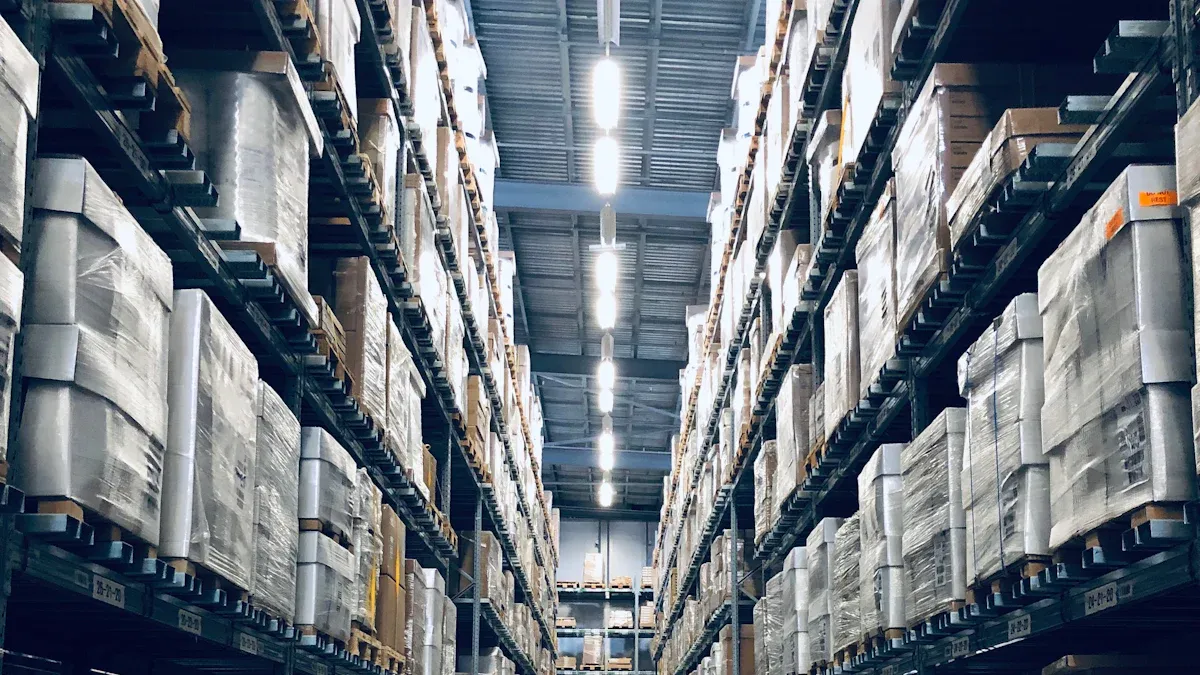
You can build strong logistics by following five key distribution and logistics management principles: Planning, Procurement, Production, Placement, and Performance. These steps help you create a smooth and reliable supply chain.
Companies with effective logistics often see up to 15% higher profits.
Timely and complete deliveries boost customer trust and loyalty.
High service levels mean happier customers and more repeat business.
Using this structured approach helps you adapt to changes and keep operations efficient.
Key Takeaways
Follow the five key principles: Planning, Procurement, Production, Placement, and Performance to build an effective supply chain.
Use technology like AI and IoT for real-time tracking and inventory management to enhance efficiency and reduce costs.
Maintain strong relationships with suppliers to improve performance and reduce risks in your supply chain.
Optimize your logistics network by strategically placing distribution centers to cut transit times and lower costs.
Regularly track key performance indicators (KPIs) to measure success and identify areas for improvement.
Core Distribution and Logistics Management Principles
The five distribution and logistics management principles—Planning, Procurement, Production, Placement, and Performance—form the foundation for successful supply chain operations. These principles help you achieve goals like inventory optimization, cost efficiency, timely delivery, risk management, and technology integration. When you apply these principles, you build a supply chain that adapts to changes and meets customer needs.
Planning
Planning sets the stage for every step in logistics. You need to predict demand, organize resources, and create strategies that guide your supply chain. Leading companies use several planning strategies to improve customer satisfaction and reduce waste. You can see how these strategies work in the table below:
Strategy | Description |
|---|---|
Improved Customer Satisfaction | Ensures timely delivery and accurate fulfillment of orders. |
Sustainability | Optimizes transportation routes to lower fuel use and emissions. |
Predicts future customer needs to align production and inventory. | |
Tactical Planning | Turns big plans into daily logistics actions, like managing transportation and inventory. |
Implementation Planning | Sets up infrastructure and resources for logistics strategies. |
Execution | Handles daily logistics tasks, such as shipping and order fulfillment. |
Monitoring and Control | Tracks logistics performance and makes adjustments as needed. |
Review and Optimization | Regularly checks operations to find ways to improve efficiency. |
Data Analytics | Uses data to forecast demand and optimize routes. |
Collaboration with Suppliers | Builds strong relationships for better forecasting and inventory management. |
Investment in Technology | Uses advanced tools like warehouse and transportation management systems. |
Flexibility | Adapts to changing market conditions and customer needs. |
Centralized Logistics Planning | Keeps a clear overview of the supply chain for better coordination. |
Third-Party Logistics Providers | Partners with experts to focus on core business strengths. |
Lean Principles | Cuts waste and improves processes for better customer value. |
Automation | Speeds up operations and reduces errors with automated systems. |
Accurate demand forecasting helps you manage inventory, lower costs, and keep customers happy. When you align supply with demand, you avoid waste and make sure deliveries arrive on time.
Procurement
Procurement focuses on getting the right materials and products for your supply chain. You need to choose reliable suppliers, negotiate good deals, and make sure you have backup plans for disruptions. Here are some best practices you can use:
Diversify suppliers to avoid risks from relying on one source.
Improve communication with suppliers to manage expectations.
Use technology and automation to boost efficiency.
Increase supply chain visibility to track components.
Invest in backup inventory for supply delays or demand spikes.
Apply predictive analytics to spot and adjust for possible disruptions.
Supplier relationship management helps you cut costs and improve performance. When you work closely with suppliers, you can streamline operations and reduce delays. Studies show that better negotiation and supplier interactions can lower costs by up to 12.7%. Strong supplier relationships also make your supply chain more resilient and responsive.
Production
Production involves making products and getting them ready for delivery. You need to plan and schedule operations to use resources efficiently and meet demand. Advanced planning tools, like material requirements planning (MRP), help you spot bottlenecks and use production capacity wisely.
You can use these techniques to improve production:
Automation, such as barcoding and robotics, reduces errors and speeds up processes.
Lean manufacturing principles help you cut waste and shorten cycle times.
Develop a lean production system to make operations faster.
Streamline order entry and shipping to reduce delays.
Just-in-time production keeps inventory low and cuts costs. When you receive goods only as needed, you use less warehouse space and working capital. You must have good risk management and contingency plans, because low inventory can stop operations if problems arise.
Placement
Placement means choosing the best locations for warehouses, distribution centers, and products. You need to think about transportation routes, customer markets, and costs. The table below shows key factors to consider:
Factor | Description |
|---|---|
Proximity to suppliers | Reduces transportation costs by choosing locations close to suppliers. |
Transportation routes | Ensures easy access to major routes for efficient distribution. |
Customer markets | Places facilities near key customers for better service. |
Real estate costs | Evaluates costs for potential facility locations. |
Labor availability | Considers local workforce for smooth operations. |
Transportation connectivity | Assesses access to different transportation options. |
Capacity for growth | Plans for future expansion to meet rising demand. |
Compliance with regulations | Makes sure facilities follow local laws to avoid issues. |
When you place distribution centers close to customers, you speed up deliveries and lower costs. Shorter distances mean faster shipping and fewer delays. You also build customer trust with on-time deliveries and reliable service.
Effective product placement grabs attention and connects with your target audience. You should analyze customer demographics and shopping patterns to match placement with their needs.
Performance
Performance measures how well your logistics operations work. You need to track key metrics to find areas for improvement. Common metrics include:
Metric | Description |
|---|---|
Carrier Performance Tracking | Monitors transportation issues like shipment damages. |
Inventory Accuracy | Checks if warehouse data matches actual inventory. |
Customer Fill Rate (Third Party) | Measures how well third-party providers meet client orders. |
Cost of Shipment per Product | Calculates transportation cost for each product shipped. |
On-Time Final Delivery | Tracks if deliveries arrive on schedule. |
Cost Per Pound | Measures total cost by weight moved to spot buying patterns. |
On-Time Shipping | Checks if shipments leave the warehouse on time. |
Continuous improvement helps you optimize logistics. When you review operations and make changes, you boost efficiency and customer satisfaction. You also encourage innovation and reduce waste. Involving employees in decision-making increases productivity and helps your company adapt to new trends.
By following these distribution and logistics management principles, you build a supply chain that is efficient, cost-effective, and focused on customer needs.
Channel Network Design and Physical Distribution
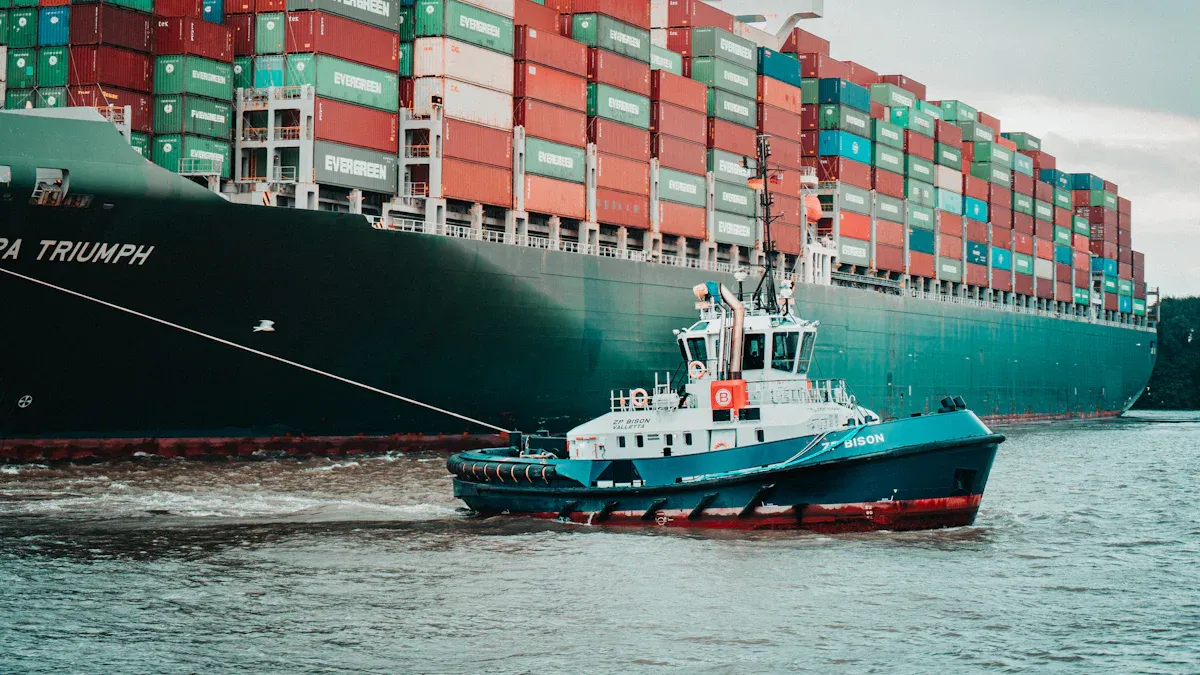
Channel Selection
You need to choose the right channels to move your products from the warehouse to your customers. The best channel depends on your product type, business goals, and customer needs. Use these steps to select the most effective distribution channels:
Align with product type. Simple products often work well with indirect channels, while complex products may need a direct approach.
Balance cost and control. Direct channels give you more control but cost more. Indirect channels save money but may affect customer experience.
Look for scalability and technology. Pick channels that can grow with your business and use technology to boost efficiency.
Study competitors and industry trends. Learn from others to stay competitive.
Match your long-term goals. Make sure your channel supports your goals, like brand loyalty or market growth.
Your channel choice affects logistics costs and service levels. For example, using third-party logistics or marketplace channels can change your costs and how fast you deliver. You need to weigh these factors to find the best fit for your business.
Network Optimization
You can improve your logistics network by using technology and smart planning. Modern supply chains use data analysis to make better decisions. Many companies now use distributed networks to respond quickly to customer needs. Scalability helps you adjust to market changes.
Place distribution centers and warehouses in strategic locations to cut transit times and lower transportation costs.
Store goods in the best locations and use efficient routes to shorten delivery times.
Companies that optimize their routes can reduce costs by 20% to 30%.
Tip: Use technology to track shipments and analyze routes. This helps you spot problems and make quick changes.
Physical Distribution Strategies
You can manage multi-channel logistics with different inventory systems:
Centralized inventory pools stock in one place for better control but may risk stock imbalances.
Decentralized inventory keeps separate stock for each channel, which allows for tailored levels but can raise costs.
Hybrid systems combine both for flexibility and balance.
Use data analytics and market research to find the best channels. Invest in technology and infrastructure to support your operations. Always aim for a seamless customer experience across all channels.
Physical distribution ensures products arrive on time and in good condition. This is key for customer satisfaction and loyalty. A well-managed system lowers costs and helps you reach your business goals. When you follow the distribution and logistics management principles, you build a strong and flexible supply chain.
Inventory and Cost Efficiency
Inventory Optimization
You can improve your logistics by using smart inventory optimization techniques. These methods help you keep the right amount of stock, reduce waste, and meet customer needs. Here are some of the most effective techniques:
Real-time inventory tracking uses barcode scanners, RFID tags, and IoT sensors to give you accurate stock updates.
Demand forecasting and planning lets you use past sales and market trends to predict what customers will want.
Inventory segmentation groups your products by value and how fast they move, so you can control them better.
Just-In-Time (JIT) inventory aligns deliveries with actual demand, which lowers storage costs.
Automation and AI integration helps you automate tasks, reduce errors, and boost efficiency.
ABC analysis lets you focus on the most valuable items.
Vendor-managed inventory (VMI) allows suppliers to manage stock for you.
Economic order quantity (EOQ) helps you order the right amount to minimize costs.
If you keep service levels high, you need more safety stock to avoid running out during busy times. Lower service levels can cut costs but may lead to stockouts and unhappy customers.
Cost Control
You can lower logistics expenses without hurting service quality by following proven cost control methods:
Maintain visibility of your supply chain.
Consolidate purchases for better deals.
Streamline warehouse processes.
Work with trusted suppliers.
Use smart packaging solutions.
Leverage volume discounts.
Implement a multi-carrier strategy.
Strengthen returns management.
Tip: Optimizing your warehouse network and staying up-to-date on carrier pricing can help you save even more.
Risk Management
Managing risk keeps your supply chain strong during disruptions. Leading companies use several strategies to reduce risk:
Strategy | Description |
|---|---|
Watch for new risks and adjust your plans as needed. | |
Diversification of Suppliers | Use more than one supplier to avoid big problems if one fails. |
Nearshoring | Move production closer to your market to cut transportation risks. |
Inventory Management | Keep the right amount of stock to buffer against delays. |
Use of Technology | Track supply chain performance and risks in real time. |
You can also follow the PPRR model: Prevention, Preparedness, Response, and Recovery. Train your team, get everyone involved, and review your risk plans often. This way, you can bounce back quickly from any disruption.
Technology Integration and Performance Monitoring

Technology in Logistics
You can transform your logistics operations by using the latest technology. Tools like artificial intelligence, IoT, and automation help you track shipments, manage inventory, and optimize routes. These technologies make your supply chain faster and more reliable. The table below shows how different technologies improve logistics:
Technology | Description |
|---|---|
Real-time inventory tracking | AI-powered IoT gives you accurate stock levels and shipment updates, so you avoid running out. |
Route optimization | AI finds the best transportation routes, which lowers costs and speeds up delivery. |
Improved transparency | GPS and RFID let you see where goods are at every step. |
Autonomous mobile robots (AMRs) | AMRs move and store goods in warehouses quickly and safely. |
Predictive analytics | Helps you forecast demand and manage inventory, reducing waste. |
Blockchain | Secures and tracks goods and transactions across your supply chain. |
You can also use robotic process automation to handle repetitive tasks. Drones and autonomous vehicles help you deliver products faster. These tools lower costs and help you make better decisions with real-time data.
Tip: Technology not only speeds up your logistics but also helps you go green by reducing waste and fuel use.
Performance Metrics
You need to track the right key performance indicators (KPIs) to see how well your logistics work. KPIs connect your data to your goals. They help you spot problems and improve your service. Here are some important KPIs you should monitor:
Goal | KPIs |
|---|---|
Reduce shipping costs | Cost per unit shipped, outbound freight costs, invoice accuracy, year-over-year cost changes |
Manage freight rates | Fuel efficiency, average transportation cost per mile, perfect order percentage |
Improve service performance | On-time pickup and delivery, OTIF (on-time-in-full), damage rate, average loading times |
Vendor and carrier compliance | Billing accuracy, load acceptance rate, routing guide compliance |
You should choose KPIs that match your business goals. Review them often to keep your logistics on track.
KPIs help you measure success and find areas to improve.
They give you a clear picture of your logistics performance.
Different goals need different KPIs, so update them as your business grows.
Continuous Improvement
You can make your logistics better by using continuous improvement methods like Lean and Six Sigma. These methods help you find waste, fix problems, and improve quality. The table below shows how they benefit your operations:
Benefit | Description |
|---|---|
Efficiency Improvements | Streamline your supply chain and boost productivity. |
Cost Reduction | Cut waste and save money by fixing inefficiencies. |
Quality Enhancement | Reduce errors and make your products more consistent. |
You should involve your team in finding ways to improve. Review your processes often and use data to guide your changes. Small improvements add up over time and help you stay ahead in a fast-changing market.
Note: Continuous improvement keeps your logistics flexible and ready for new challenges.
You can build a strong supply chain by using distribution and logistics management principles. When you combine planning, technology, and performance monitoring, you create a system that adapts and grows. Many companies show how these strategies work:
Company | |
|---|---|
UPS | Supported healthcare logistics during the pandemic, achieving significant turnover. |
XPO Logistics | Built long-term client relationships with flexible staffing and solutions. |
FedEx | Used efficient pricing models to handle outsourcing. |
DHL | Outsourced logistics to reduce costs and meet customer needs. |
DSV | Adapted technology for different logistics modes. |
You gain many benefits when you apply these principles:
Enhanced customer satisfaction
Strong partnerships
Try these steps to make your logistics better and keep your customers happy.
FAQ
What is the main goal of logistics management?
You want to deliver products to customers quickly and safely. Logistics management helps you lower costs, improve service, and keep your supply chain running smoothly.
How does technology improve logistics?
Technology gives you real-time tracking, faster deliveries, and better inventory control. Tools like AI and IoT help you make smart decisions and avoid mistakes.
Why is inventory optimization important?
Inventory optimization helps you keep enough stock without wasting money. You avoid running out of products and reduce storage costs. This keeps customers happy.
What are the benefits of using multiple distribution channels?
You reach more customers and offer flexible delivery options. Multiple channels help you grow your business and respond to market changes.
How can you measure logistics performance?
You track key performance indicators (KPIs) like delivery speed, cost per shipment, and order accuracy. These numbers show you where to improve and help you reach your goals.
See Also
Key Strategies for Effective Global Logistics Operations
The Role of Direct Logistics in Enhancing Global Efficiency
Optimized Inventory Management Through Leading Global Logistics Warehousing
Understanding Top East Coast B2B Logistics and Distribution Solutions
Enhancing Global Operations with Cutting-Edge Logistics Solutions
