How to Achieve Operational Success in Logistics Distribution
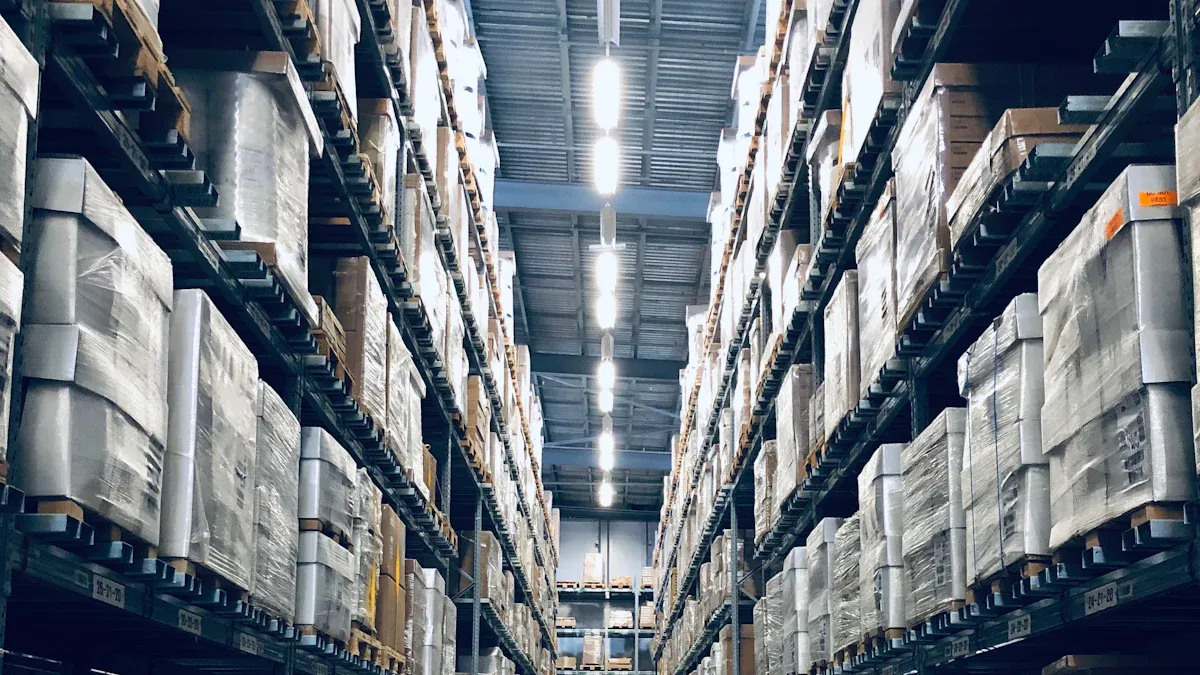
Operational success in logistics distribution forms the backbone of business growth, efficiency, and customer satisfaction. You shape customer experiences every day by focusing on accurate orders and timely deliveries. High order accuracy and on-time delivery build trust and loyalty among your customers. The table below shows how key logistics metrics connect to satisfaction:
Metric | Impact on Customer Satisfaction |
|---|---|
Order Accuracy | Directly affects satisfaction and return rates. |
On-Time Delivery | Critical for loyalty and meeting expectations. |
Inventory Turnover | Influences costs and customer relationships. |
You can drive stronger results by aligning logistics operations with business goals and adapting to changes in the market.
Key Takeaways
Streamline your logistics processes to boost efficiency and cut costs. Assess current operations to identify areas for improvement.
Identify and address bottlenecks in your supply chain early. Common issues include supplier delays and sudden demand surges.
Implement standard operating procedures (SOPs) to create consistency and reduce errors. This helps maintain quality and speeds up training.
Use key metrics to measure progress and guide decisions. Focus on metrics like order accuracy and on-time delivery to enhance customer satisfaction.
Invest in technology and automation to improve speed and accuracy. Tools like Warehouse Management Systems can streamline operations and reduce costs.
Streamline Logistics Processes
You can boost efficiency and cut costs by streamlining your logistics processes. Start by assessing your current operations. Look for areas that slow down your workflow or increase expenses. When you align logistics processes with your business strategy, you set your company up for long-term success. This approach helps you deliver products on time, keep customers happy, and build a strong reputation.
Identify Bottlenecks
Bottlenecks can slow down your entire supply chain. You need to spot these issues early to keep your operations running smoothly. Here are some common bottlenecks in logistics:
Cause | Description |
|---|---|
Supplier Issues | Unreliable suppliers and long lead times can halt production, affecting the entire supply chain. |
Logistical Challenges | Transportation delays and poor infrastructure can disrupt the flow of goods, causing costly slowdowns. |
Demand Surges | Sudden increases in consumer demand can overwhelm supply chains, leading to inventory and capacity issues. |
By identifying these bottlenecks, you can take action to prevent delays and extra costs.
Standardize Procedures
Standard operating procedures (SOPs) help you create consistency and reduce mistakes. When everyone follows the same steps, you lower the risk of errors and speed up training for new team members. SOPs also help you:
Maintain quality and streamline daily tasks.
Meet safety standards and pass inspections.
Scale your operations without losing control.
Spot and fix problems faster during busy times.
Tip: Clear procedures make it easier to train staff and keep your operations running smoothly, even as your business grows.
Continuous Improvement
You should always look for ways to improve your logistics processes. Small changes can add up to big savings and better efficiency. Here’s how continuous improvement helps:
Avoids major disruptions by making gradual changes.
Saves money and boosts productivity over time.
Keeps your business running while you improve.
For example, companies have sped up packing by redesigning boxes, grouped similar orders to cut labor, and used lean practices to process more orders at a lower cost. These steps help you serve customers better and keep your business competitive.
Achieving Operational Success in Logistics Distribution
Key Metrics for Operational Success
You need to measure your progress to achieve operational success in logistics distribution. Tracking the right metrics helps you see what works and where you can improve. Top-performing companies use these key metrics to guide their decisions:
Metric | Description |
|---|---|
Perfect Shipment Measurement | Percentage of orders delivered without errors. |
On-Time Delivery Adherence | Percentage of deliveries made on or before the promised date. |
On-Time-In-Full (OTIF) | Incidence of customers receiving their complete order on time. |
Customer Satisfaction Score (CSAT) | Customer satisfaction measured through post-delivery surveys. |
Cost per Delivery | Total delivery costs divided by the number of completed deliveries. |
Order Status Monitoring | Real-time tracking of order statuses to reduce delays. |
Freight Payment Accuracy | Accuracy of freight bills to spot billing errors. |
Inventory Turnover | Speed at which inventory is sold and replaced. |
Cycle Times | Time taken to complete logistics processes. |
Picking Accuracy | Accuracy of order picking to ensure correct items are delivered. |
You can use these metrics to set goals and track your progress. Many companies collect benchmark data and compare their results to industry standards. This process, called gap analysis, helps you find areas where you can improve. You can also investigate the root causes of any gaps and use performance variation analysis to spot best practices among your teams.
Tip: Start with a few key metrics. Track them regularly and share the results with your team. Celebrate wins and work together to fix problems.
Aligning Supply Chain with Business Goals
Operational success in logistics distribution depends on how well your supply chain supports your business goals. You need to make sure everyone works toward the same objectives. Here are some steps you can take:
Set clear goals so your team knows what to aim for.
Prioritize supply chain objectives that support your business strategy.
Structure your supply chain to meet the needs of your industry.
Assess and adjust your operations regularly to stay aligned with your goals.
Outsource certain tasks to experts when needed.
You can also ask yourself these questions to check your alignment:
Does your company have an operations strategy that supports your business goals?
Does your operations strategy match your business strategy?
Are your supply chain capabilities strong enough to give you a competitive edge?
Studies show that companies with strong supply chain alignment see better profits and respond faster to market changes. For example, Gligor et al. (2021) found that good relationships with suppliers help companies perform better. Green et al. (2019) and Liu et al. (2013) both showed that focusing on the market and customers leads to better supply chain practices and more value for your customers.
Note: Regular reviews help you spot changes in the market and adjust your supply chain before problems arise.
Scaling Logistics Operations
As your business grows, you need to scale your logistics operations to keep up with demand. Operational success in logistics distribution means you can handle more orders without losing quality or speed. Here are some best practices:
Optimize your warehouse layout to boost productivity and cut costs. Use a Warehouse Management System (WMS) for better control.
Build strong partnerships with reliable logistics providers. These partners give you flexibility and expertise.
Use data-driven decision-making. Analytics tools help you monitor key metrics and make smart choices.
Focus on customer service. Set clear standards, use customer service technology, and ask for feedback.
Align your operations with your strategic goals. Review your logistics regularly to make sure they support your business.
Managing risks is also important when you scale. You should:
Conduct risk assessments to find weak spots in your supply chain.
Develop contingency plans for possible disruptions.
Build strong relationships with suppliers and diversify them to avoid dependency.
Use Just-In-Time (JIT) inventory practices to control costs.
Rely on historical data and predictive analytics to forecast demand.
Investing in logistics technology, such as management systems and analytics programs, can improve inventory visibility and efficiency. These tools help you automate tasks, optimize shipping, and manage inventory levels. You can also partner with third-party logistics providers for scalable solutions.
Callout: Scaling your logistics operations is not just about handling more orders. It is about keeping your service quality high as you grow.
By following these steps, you can achieve operational success in logistics distribution and prepare your business for future growth.
Technology and Automation

Technology shapes the future of logistics distribution. You can use new tools to improve speed, accuracy, and customer satisfaction. Let’s look at how you can use technology and automation to boost your operations.
Warehouse Management Systems
A Warehouse Management System (WMS) helps you control every part of your warehouse. You can track inventory in real time, automate tasks, and reduce mistakes. A WMS also helps you make better decisions by giving you clear data. Here are some key benefits:
Benefit Type | Description |
|---|---|
Operational Cost Reduction | A WMS streamlines workflows and automates processes, lowering costs. |
Inventory Accuracy | Real-time tracking keeps your stock levels correct and reduces errors. |
Order Fulfillment Speed | Faster picking and packing means quicker deliveries and fewer mistakes. |
Data-Driven Optimization | Insights from data help you improve productivity and cut waste. |
Scalability | A WMS grows with your business, handling more orders without extra labor. |
You will also see improved customer satisfaction and a stronger brand reputation. Greater inventory accuracy means fewer stock problems and happier customers.
Real-Time Tracking
Real-time tracking gives you and your customers up-to-the-minute updates on shipments. You can see where goods are at any moment. This transparency builds trust and helps you solve problems fast. Real-time tracking systems:
Provide accurate updates every few minutes, making deliveries more reliable.
Let customers track their shipments, reducing anxiety and support calls.
Help you spot delays and fix them before they become bigger issues.
Allow you to optimize routes and speed up delivery times.
When customers know exactly where their orders are, they feel valued and are more likely to return.
Automating Tasks
Automation changes how you work in logistics. You can use robots and smart systems to handle repetitive jobs. This leads to faster order picking and packing, with robots working 24/7 and following instructions with almost perfect accuracy. Here is how automation impacts your operations:
Impact Area | Description |
|---|---|
Increased Productivity | Automated systems work around the clock, finishing tasks faster than people. |
Lower Error Rates | Standardized tasks mean fewer mistakes and returns. |
Flexibility for Demand | Automation lets you scale up during busy seasons without hiring more workers. |
Reduced Training Costs | Less need for training saves time and money. |
You can also use artificial intelligence and machine learning to predict demand and improve routes. Automation and robotics help you fill orders faster and with fewer errors. Research shows that automation can boost labor productivity by up to 30 percent and cut staffing needs for routine tasks by 40 percent.
Tip: Start small with automation and grow as your business needs change. Even simple changes can make a big difference in your daily operations.
Warehouse Optimization
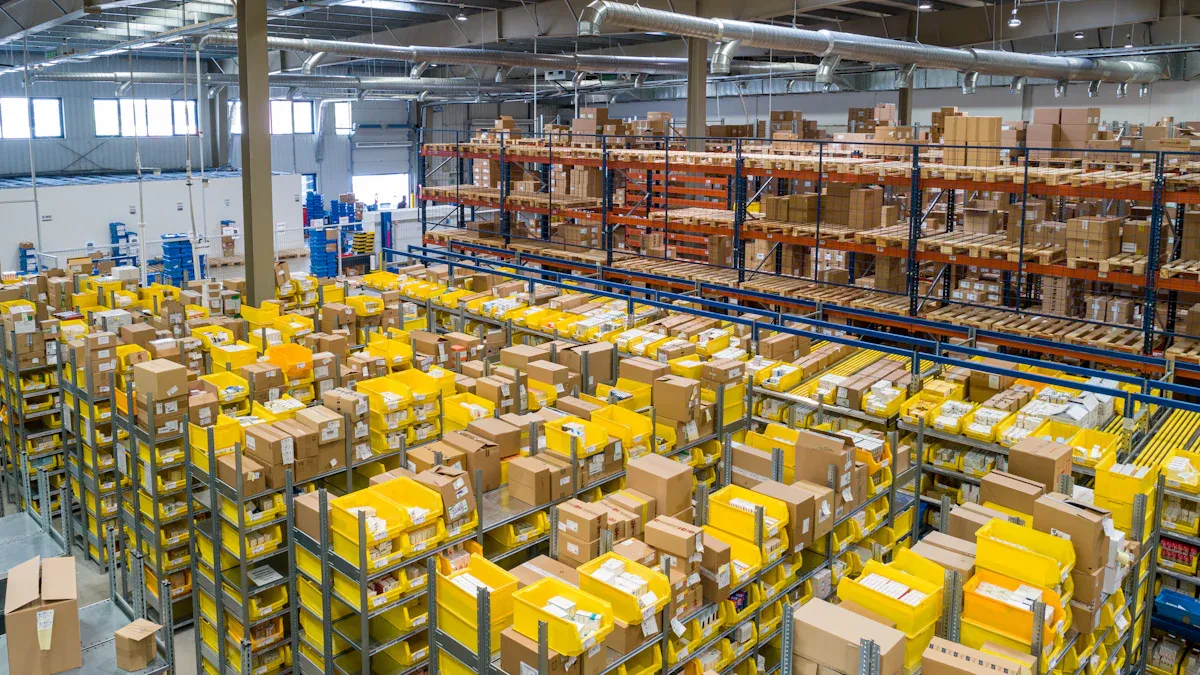
Efficient Layout Design
You can boost warehouse performance by choosing the right layout. Each design offers unique benefits and challenges. The table below shows common layouts and their effects:
Layout Design | Benefits | Considerations |
|---|---|---|
Flow-Based Layout | Reduces travel time, supports efficient workflows | May cause congestion if not planned well |
Cross-Docking Layout | Speeds up order fulfillment, lowers holding costs | Needs strong coordination and communication |
Block Stacking Layout | Uses floor space well, easy access | Higher risk of product damage, harder tracking |
Mezzanine Layout | Adds storage without expanding footprint | Higher upfront costs, structural limits |
Random Storage Layout | Adapts to changing inventory, shortens travel | Needs good inventory system and trained staff |
AS/RS Layout | High-density storage, less labor needed | Requires big investment and maintenance |
You can also use multi-tier setups or narrow-aisle racking to maximize space. Automation changes layouts by allowing ultra-narrow aisles and better traffic control. With real-time data, you can keep improving your warehouse flow.
Inventory Management
You need to keep the right amount of stock. Too much inventory ties up money and raises costs. Too little leads to stockouts and unhappy customers. Advanced inventory systems help you find the right balance. These systems use analytics to study sales trends, lead times, and supplier performance. You can plan better and react faster to changes in demand.
Predictive tools help you move from guessing to planning.
Real-time insights let you adjust your strategy quickly.
You make smarter buying decisions and avoid costly mistakes.
Tip: Use inventory analytics to spot slow-moving items and adjust your orders before problems grow.
Picking and Packing
Picking and packing affect both speed and accuracy. You can choose from several strategies:
Batch Picking: Pick many orders at once to save time.
Zone Picking: Assign pickers to zones for higher accuracy.
Wave Picking: Pick orders in groups based on shipping times.
The table below compares these methods:
Picking Strategy | Best For | Pros | Cons |
|---|---|---|---|
Batch Picking | Moderate volume | Cuts travel time, more picks per hour | Needs sorting after, risk of errors |
Zone Picking | High volume | Pickers become experts, fast picking | Needs good coordination, special tools |
Wave Picking | Very high volume | Matches shipping windows, efficient | Complex planning, needs strong WMS |
Packing also matters. Using the right carton size cuts waste and lowers shipping costs. Stocking a few standard box sizes helps you pack faster and more efficiently.
Partnerships and People
Strong partnerships and skilled people drive success in logistics. You need both to keep your operations running smoothly and to grow your business.
Building Long-Term Relationships
Long-term partnerships with suppliers and carriers help you build a reliable supply chain. When you work closely with your partners, you gain many benefits:
You get better service during busy times.
Problems get solved faster.
You can negotiate better contract terms.
Communication improves, making it easier to adjust plans quickly.
Shipments move more smoothly and on time.
Trust grows, which helps everyone work toward shared goals.
When you treat suppliers as strategic partners, you build mutual respect. This shared commitment leads to better teamwork and stronger results.
Investing in Personnel
Your team is your most valuable asset. Investing in training and development helps your workers grow and keeps your business competitive. Here are some ways you can support your team:
Offer sector-based training programs to boost skills and earnings.
Provide clear information about your company’s vision and goals.
Encourage upskilling and reskilling so your team can handle new challenges.
Focus on leadership skills and career development to show appreciation.
Use e-learning to reach all employees, even those without desks.
Many workers, especially younger ones, want chances to grow. When you invest in your people, you build loyalty and improve performance.
Communication and Collaboration
Clear and open communication is key in logistics. It helps everyone stay on the same page and respond quickly to changes.
Transparent communication gives you better visibility into your supply chain. Real-time updates and teamwork lead to higher efficiency and happier customers.
Service quality improves.
Teams can manage logistics processes before problems get bigger.
When everyone shares information, you can solve issues faster and keep your customers satisfied.
Data-Driven Decisions
You can achieve operational success in logistics by making decisions based on data. When you use data, you spot problems early and find new ways to improve your supply chain. Data-driven decisions help you stay ahead of the competition and meet customer needs.
Monitoring KPIs
Tracking key performance indicators (KPIs) gives you a clear picture of your logistics performance. You should focus on the most critical KPIs to measure your progress and spot areas for improvement. Here are some important KPIs to monitor:
Shipping Time: Measures how long it takes to send an order from your warehouse to the customer.
Order Accuracy: Shows the percentage of orders filled without mistakes.
Perfect Order: Tracks orders delivered without any issues.
On-Time In-Full: Measures orders delivered on time and complete.
Lead Time: Tells you how long suppliers take to deliver products.
Inventory Accuracy: Checks if your records match your actual stock.
Inventory Turnover: Counts how often you sell and replace inventory.
Customer Backorder Rate: Shows how often you cannot fill customer orders due to low stock.
Tip: Review your KPIs often. Share results with your team to keep everyone focused on improvement.
Analyzing Trends
You can use trend analysis to predict future needs and avoid problems. By looking at past data and current market trends, you spot patterns in your operations. This helps you plan for busy seasons and adjust your inventory levels. Trend analysis also lets you:
Prepare for changes in demand.
Reduce risks from sudden market shifts.
When you act on these trends, you keep your supply chain running smoothly and avoid costly surprises.
Forecasting Demand
Accurate demand forecasting helps you plan your resources and avoid stockouts or excess inventory. You can use different methods to predict demand:
Method Type | Description |
|---|---|
Qualitative Methods | Use expert opinions, market surveys, and customer feedback. |
Quantitative Methods | Analyze past data with statistics and math models. |
Hybrid Methods | Combine both approaches for better accuracy. |
You can also use machine learning and predictive analytics to find patterns in large data sets. Cloud-based forecasting tools let your team work together in real time. Integrated technology stacks bring all your supply chain data into one place for easier forecasting.
Note: The right forecasting method helps you make smart decisions and keeps your logistics operations efficient.
You can achieve operational success in logistics distribution by focusing on process efficiency, technology, warehouse optimization, strong partnerships, and data-driven decisions. Companies like Amazon and Walmart have improved delivery speed and reduced costs by optimizing their logistics. UPS saved millions by using smart route planning. Common challenges include rising costs, inventory issues, delivery delays, and labor shortages:
Challenge | Description |
|---|---|
Rising Costs | Higher shipping costs can impact profits. |
Inventory Management Issues | Poor tracking leads to lost sales and cash flow problems. |
Delivery Delays | Lack of real-time tracking causes customer dissatisfaction. |
Labor Shortages | Staffing gaps reduce efficiency and service quality. |
Review your current operations and start making small changes. Continuous improvement helps you adapt and stay ahead in a changing market.
FAQ
What is the most important metric in logistics distribution?
You should focus on on-time delivery. This metric shows if you meet customer expectations. It also helps you spot delays and improve your process.
How can you reduce errors in order picking?
Train your team well and use clear procedures. You can also use barcode scanners and a warehouse management system. These tools help you catch mistakes early.
Why should you use real-time tracking?
Real-time tracking lets you see where your shipments are at any moment. You can solve problems faster and keep your customers informed.
How do you handle sudden changes in demand?
Use demand forecasting tools. These tools help you plan for busy times. You can adjust your inventory and staff before problems start.
See Also
Key Strategies for Effective Global Logistics Operations
Transforming International Operations Through Innovative Logistics Solutions
Enhancing Global Efficiency With Point-to-Point Logistics Systems
Optimizing Inventory and Distribution Using Global Logistics Warehousing
Simplifying Inventory and Distribution Through Global Logistics Warehousing
