Pharmaceutical Cold Chain Logistics Made Simple for Everyone

You rely on medicines to keep you healthy. Some medicines, like vaccines, must stay cold from the moment they are made until they reach you. This careful handling is called pharmaceutical cold chain logistics. Temperature control keeps medicines safe and effective.
In 2022, 35% of pharmaceutical products needed cold chain logistics.
Experts predict that about 50% of new medicines will need cold storage in the next five years.
Key Takeaways
Pharmaceutical cold chain logistics ensure that temperature-sensitive medicines, like vaccines, remain safe and effective from production to delivery.
Maintaining the correct temperature is crucial; even small deviations can damage medicines and pose health risks.
Real-time monitoring systems track temperatures during transport, alerting staff to any issues that could compromise medicine quality.
Proper packaging, such as insulated boxes and gel packs, helps maintain the right temperature and protects medicines during shipping.
Following strict regulations and best practices in cold chain logistics safeguards patient health and ensures the effectiveness of medicines.
Cold Chain Basics
What Is the Cold Chain?
You might wonder what happens to your medicine before it reaches your hands. The cold chain is a special process that keeps temperature-sensitive medicines, like vaccines, safe from the moment they are made until you use them. Pharmaceutical cold chain logistics make sure these products stay at the right temperature every step of the way. This process follows strict rules and standards to protect the quality and safety of your medicine.
Note: If the cold chain breaks, medicines can lose their power or even become unsafe.
Here is a table showing the main temperature ranges for different types of pharmaceutical products:
Storage Type | Temperature Range (°C) | Temperature Range (°F) |
|---|---|---|
Freezer | -25 to -10 | -13 to 14 |
Refrigerator | +2 to +8 | +36 to +46 |
Cold | at or below +8 | at or below +46 |
Cool | +8 to +15 | +46 to +59 |
Controlled Room Temperature | +20 to +25 | +68 to +77 |
Ultra Cold Storage | -80 to -20 | -112 to -4 |
Cryogenic Storage | below -150 | below -238 |
Why Temperature Control Matters
You need to know why keeping the right temperature is so important. If medicines get too hot or too cold, they can stop working. Sometimes, they can even become harmful. For example, a study found that a hepatitis B vaccine lost its strength when stored below 2 degrees Celsius. In some places, more than 40% of medical refrigerators were too cold for safe storage.
If the temperature goes outside the safe range, several problems can happen:
Evidence Type | Description |
|---|---|
Product Damage | About 20% of temperature-sensitive healthcare products get damaged during distribution. |
Financial Loss | The industry loses over $15 billion each year from temperature problems. |
Regulatory Risks | Companies can face big risks if they do not follow the rules for safe storage and transport. |
In California, a clinic found freezing temperatures in a vaccine fridge. Over 1,500 families had to get their children revaccinated.
In Ohio, about 2,000 patients needed new H1N1 shots because of bad storage.
These mistakes can cost hundreds of thousands of dollars and put your health at risk.
Pharmaceutical cold chain logistics protect you by making sure your medicine stays safe and effective from start to finish.
Pharmaceutical Cold Chain Logistics Process
Manufacturing and Storage
You start the journey of medicine at the manufacturing facility. Here, strict rules keep your medicine safe. Each area in the facility has a special job. The table below shows how these areas work together to protect your medicine:
Area/Practice | Description |
|---|---|
Cold Room | Maintains a temperature between 2°C and 8°C for product stability. |
Quarantine Area | Separates incoming products until inspected by quality team. |
Released Area | Stores products that have passed inspection and are ready for dispatch. |
Rejected Area | Contains batches that have failed inspection. |
Recalled Area | Keeps recalled products. |
Locked Area | Restricted access for authorized staff to store sensitive products. |
Sampling Room | Sealed room for testing starting chemicals. |
Dangerous Goods Storage Area | Special conditions for storing dangerous goods. |
Compliance with Regulations | Adherence to GMP, GWP, and various regulatory standards like 21 CFR Part 210/211 and USP guidelines. |
You see that these areas help keep medicines at the right temperature and away from anything that could harm them. Facilities follow important rules, such as 21 CFR Part 210/211 for good manufacturing practices and USP <1079> for proper storage and shipping. These rules make sure your medicine stays safe before it leaves the factory.
Transportation Methods
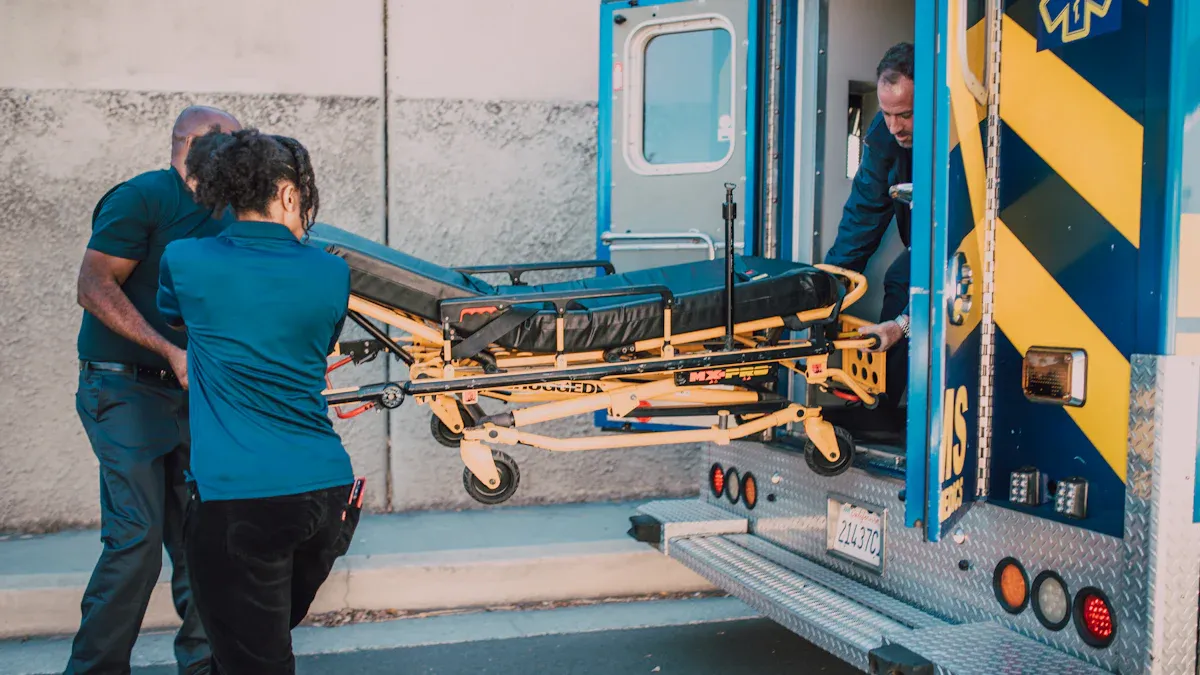
Once your medicine leaves the factory, it needs to travel safely to the next stop. Refrigerated vans play a key role in pharmaceutical cold chain logistics. These vans keep medicines cold, especially for injectable and biological drugs. You can find two main types of vans:
Type of Refrigerated Van | Description |
|---|---|
Integrated Refrigeration System | Uses mechanical refrigerators to keep the cargo area cool, no matter the weather outside. |
Insulated Vans | Uses thick insulation to slow down temperature changes, best for short trips or mild climates. |
These vehicles have special features to protect your medicine:
Feature | Description |
|---|---|
Keeps a steady temperature, usually from -20°C to 8°C, to protect medicine effectiveness. | |
Refrigeration Units | Spreads cold air evenly, so no part of the cargo gets too warm or too cold. |
Monitoring Systems | Uses real-time sensors to alert drivers if the temperature changes, so they can act quickly. |
Insulated packaging also helps during transport. This packaging keeps medicines at the right temperature, even if the outside air gets hot or cold. For example, insulated boxes can keep cool products between +2°C and +8°C, frozen items at -18°C to -20°C, and room-temperature products under +15°C to +25°C. This careful control means your medicine stays safe and effective during the journey.
Tip: Real-time monitoring systems track temperature every step of the way. If something goes wrong, drivers and staff get alerts right away.
Delivery to Patients
The last step in pharmaceutical cold chain logistics is getting the medicine to you. This step is called last-mile delivery. You need special care here because even a small mistake can ruin the medicine. Companies use several best practices to protect your health:
Use integrated sensors for real-time temperature tracking.
Choose insulated boxes, gel packs, or phase-change materials to keep the right temperature.
Pick packaging based on the medicine’s needs and how long it will travel.
Use temperature data loggers to record the temperature during the trip.
Train staff to load and unload quickly, so the medicine does not get too warm or cold.
Prepare backup power sources in case of equipment failure.
Plan for emergencies with clear steps to protect the medicine.
Insulated shipping boxes and gel packs work well for keeping medicines between 2°C and 8°C. Phase-change materials help keep a steady temperature for longer trips. Real-time tracking and data loggers give you proof that your medicine stayed safe until it reached you.
Note: Continuous monitoring and proper packaging protect your medicine from the factory to your hands.
Pharmaceutical cold chain logistics use advanced vehicles, smart packaging, and real-time monitoring to make sure your medicine stays safe from start to finish. You can trust that every step in the process puts your health first.
Key Technologies and Components

Temperature-Controlled Equipment
You see many types of equipment working together to keep medicines safe. Some tools use power, while others rely on insulation. Here are the main types you might find in pharmaceutical cold chain logistics:
Dry ice keeps products very cold, around -80°C, and works well for shipping.
Gel packs help maintain temperatures between 2°C and 8°C for chilled medicines.
Eutectic plates act as reusable cold sources for refrigerated units.
Liquid nitrogen reaches extremely low temperatures, about -196°C, for special biological cargo.
Quilts provide insulation and buffer temperature changes during transport.
Reefers are special vehicles or containers that circulate cold air and keep a steady temperature.
You can choose between active and passive cooling methods. Active systems use electricity to control temperature precisely, making them great for high-value or sensitive cargo. Passive systems use insulation and cold packs, which cost less and need little maintenance. The table below shows how these two methods compare:
Feature | Passive Cooling | Active Cooling |
|---|---|---|
Energy Use | Zero operating power | Needs electricity for fans and pumps |
Noise & Vibration | Silent | Some noise and vibration |
Temperature Control | Limited by outside conditions | Precise, can go below outside temps |
Complexity & Maintenance | Simple, low upkeep | More parts, higher maintenance |
Cost | Low upfront and operating | Higher initial and running costs |
Reliability | High, few moving parts | Depends on motor and pump lifespan |
Monitoring Systems
You need to track temperature at every step. Modern systems use high-precision sensors that spot even tiny changes. Cloud-based monitoring lets you check shipment data from anywhere. Predictive analytics can warn you if a problem might happen, so you can act fast.
IoT-based monitoring systems now play a big role. These systems track temperature and humidity all the time. They send automatic alerts if something goes wrong, helping you prevent spoilage. Many companies see these systems as essential for keeping products safe and meeting rules. The market for these smart monitors keeps growing, showing how important they are for the future.
Packaging Solutions
Packaging protects your medicine from damage and keeps it at the right temperature. You find many types of packaging, each with its own benefits:
Packaging Type | Benefits | Purpose in Integrity Maintenance |
|---|---|---|
Blister packs | Blocks moisture, gives single doses | Keeps medicine stable and safe |
Bottles | Shields from light, uses moisture-absorbing packs | Prevents reactions and keeps quality |
Tamper evident parts | Shows if someone opened the package | Ensures you get safe, untouched medicine |
Child-proof design | Stops children from opening | Protects young users |
Ergonomic design | Easy to handle for everyone | Helps you take medicine correctly |
Clear labeling | Easy-to-read instructions | Makes sure you use medicine the right way |
During the COVID-19 vaccine rollout, companies used insulated containers with real-time sensors. These tools made sure vaccines stayed at the right temperature, showing how smart packaging and technology can work together to keep medicines safe.
Smart packaging now uses sensors to track temperature, humidity, and location. This helps you spot problems early and fix them before the medicine spoils. These advances help reduce waste and keep your medicine safe from start to finish.
Challenges and Solutions
Common Issues
You face several challenges when handling temperature-sensitive medicines. Many products react to moisture, air, light, or heat. You must keep them in cool, dry places to protect their quality. Some medicines, like vaccines and biologics, need strict temperature control. For example, you must keep vaccines between 2°C and 8°C. Other medicines require freezing at -20°C or even lower. If the temperature changes during transport, the medicine can lose its power.
Delays in delivery can also cause problems. Time-sensitive cargo needs fast handling. Even a short delay can make a medicine unsafe. Temperature excursions—when the temperature goes outside the safe range—happen in about 1–5% of global shipments. These events put product integrity at risk.
You must also follow strict rules. Carriers need to keep detailed temperature logs. If you do not follow these rules, you could face fines or lose your shipping license. Different countries have different regulations, which makes international shipping even harder. Accurate documentation is necessary, but it can be a lot of work without the right tools.
How Problems Are Solved
You can use several smart solutions to keep medicines safe:
Dedicated transportation networks: Specialized refrigerated trucks and air freight keep products at the right temperature.
Real-time monitoring: Sensors track temperature and send alerts if something goes wrong. You can act quickly to fix problems.
Advanced packaging solutions: Insulated boxes and phase change materials help maintain the correct temperature during transit.
Regulatory expertise: Teams who know the rules help you stay compliant and avoid costly mistakes.
Strategic planning: Early planning helps you spot risks and prevent issues before they happen.
Regulatory guidelines set clear standards for handling and shipping. By following these rules, you protect patient safety and keep medicines effective from start to finish.
You can trust that these solutions work together to solve the most common cold chain problems and keep your medicine safe.
Importance for Patient Safety
Medicine Quality
You trust that your medicine will work as your doctor expects. Cold chain logistics help keep that promise. When you store and transport medicine at the right temperature, you protect its quality and strength. If the temperature changes too much, the medicine can lose its power or even become unsafe.
Here is how cold chain systems help maintain medicine quality:
Benefit | How It Helps |
|---|---|
Reduces the likelihood of product exposure outside required temperature ranges | Preconditioned gel packs keep medicine stable during transit. |
Enhances system performance during temperature spikes | Stress-tested gel packs prevent the medicine from getting too warm or too cold. |
Supports documentation required for regulatory audits | Traceable processes show that your medicine meets safety standards. |
You should know that the CDC recommends storing most vaccines and drugs between +2°C and +8°C. Even a short time outside this range can cause the medicine to lose its strength. Refrigeration stops the medicine from breaking down. If the medicine gets too warm, it can become unstable and not work as it should. Strict temperature control keeps your medicine safe and effective until you need it.
Protecting Health
Your health depends on safe and effective medicine. Cold chain logistics play a big role in this. They protect sensitive drugs, like vaccines and biologics, from damage. Even small temperature changes can make these medicines less effective.
Cold chain systems keep biopharmaceuticals safe, which directly protects your health.
Large molecule drugs need steady temperatures to work well.
Different cold supply chains—refrigerated, frozen, or cryogenic—protect drugs at the right temperatures.
New tools, like real-time monitoring and smart sensors, help keep medicine safe during shipping.
If the cold chain fails, your medicine may not work. This can lead to treatment failures or even harm. Many vaccines and drugs need strict temperature control to stay effective. Improper storage can cause loss of potency and put your health at risk. Cold chain logistics help you get the safe, high-quality medicine you deserve.
You see how pharmaceutical cold chain logistics use smart technologies and careful steps to keep your medicine safe. Real-time tracking, insulated packaging, and strict temperature control protect medicine quality. Regulatory bodies like the FDA and EMA set rules to prevent product damage. The market keeps growing, with new solutions making delivery faster and safer.
Key Insights | Details |
|---|---|
Market Size in 2024 | |
Projected Size by 2034 | $137.13 billion |
Fastest Growing Segment | Vaccines |
Cold chain systems help you get reliable medicine, even in remote places.
New tools and sustainable packaging improve safety for patients everywhere.
You can trust these systems to protect your health around the world.
FAQ
What happens if medicine gets too warm or too cold?
You risk losing medicine strength or safety if it leaves the right temperature range. Some medicines may not work at all. Always check storage instructions and ask your pharmacist if you have questions.
How do you know if medicine stayed cold during shipping?
You can look for temperature indicators or data loggers in the package. Many companies use real-time tracking. If you see a warning label or broken seal, do not use the medicine. Contact your pharmacy for help.
Why do some medicines need special packaging?
Some medicines react to heat, cold, or moisture. Special packaging, like insulated boxes or gel packs, keeps them safe. This helps protect your health and ensures the medicine works as expected.
Can you store vaccines in a regular home fridge?
You should not store vaccines in a regular home fridge. Home fridges often have temperature changes. Vaccines need steady, controlled temperatures. Pharmacies and clinics use special medical refrigerators for this reason.
See Also
Reliable Cold Chain Storage Solutions Along The Eastern Seaboard
Safeguard Your Goods With Temperature-Sensitive Shipping Services
Climate-Controlled Warehousing Options Available In South Florida
Simplifying Supply Chain Management With American Logistics Services
