How to Optimize Pre-retail Logistics Upstream Processes in 2025
You face a fast-changing retail landscape in 2025. Pre-retail logistics upstream optimization gives you the tools to meet new demands. Retailers now use AI to improve supply chain efficiency and risk management. Many companies choose automation and digitalization to reduce manual work and speed up delivery.
Companies focus on resilience and flexibility to handle disruptions, while real-time data helps you spot bottlenecks and adjust quickly. You gain a competitive edge by working closely with suppliers, using advanced analytics, and embracing smarter systems.
Process | Benefit |
|---|---|
Automation | Faster data capture, fewer manual errors |
Digital Collaboration | Better supplier communication, faster action |
Key Takeaways
Embrace automation and digital tools to speed up logistics and reduce errors. This leads to faster deliveries and better inventory management.
Use process mapping to identify inefficiencies in your logistics. Spotting bottlenecks helps you streamline operations and improve overall efficiency.
Collaborate closely with suppliers through real-time data sharing. This enhances communication and helps prevent stock shortages or overstock situations.
Implement smart inventory flow management techniques. These methods can significantly reduce costs and improve sales by keeping stock levels optimized.
Focus on continuous improvement and sustainability. Regularly review your performance metrics and adopt eco-friendly practices to enhance your logistics operations.
Mapping Upstream Processes
Key Activities in Pre-retail Logistics
You need to understand each step in your logistics chain to improve efficiency. Start by listing the main activities that happen before products reach the retail floor. These activities often include receiving goods, sorting, labeling, and preparing shipments. Dynamic truck loading and stackability play a big role in this stage. When you load trucks in a smart way, you use space better and reduce transportation costs. Stackability helps you fit more items in each shipment, which means fewer trips and faster delivery.
Here is a simple table showing key activities and their impact:
Activity | Impact on Efficiency |
|---|---|
Receiving Goods | Speeds up initial handling |
Sorting and Labeling | Reduces errors |
Dynamic Truck Loading | Maximizes space usage |
Stackability | Lowers shipping frequency |
Shipment Preparation | Improves delivery speed |
Identifying Inefficiencies
You must spot problems that slow down your logistics process. Process mapping helps you see each phase of your operations. When you create a visual map, you highlight where manual work causes delays. This method gives you a clear overview and helps you find bottlenecks.
Common inefficiencies in pre-retail logistics upstream optimization include:
Poor coordination and communication between teams.
Inadequate inventory management, which leads to shortages or extra stock.
Manual and inconsistent processes that cause errors.
Inefficient route planning for trucks.
Lack of real-time data and analytics.
Inflexible infrastructure that cannot grow with your needs.
Vendor and supplier mismanagement, which increases costs.
Tip: Use process mapping and regular performance checks to find and fix these issues. Analyze your data and key performance indicators to make smart decisions.
When you focus on pre-retail logistics upstream optimization, you improve speed and accuracy. You also prepare your business for future growth.
Technology for Pre-retail Logistics Upstream Optimization
Automated Labeling and Touchscreen Kiosks
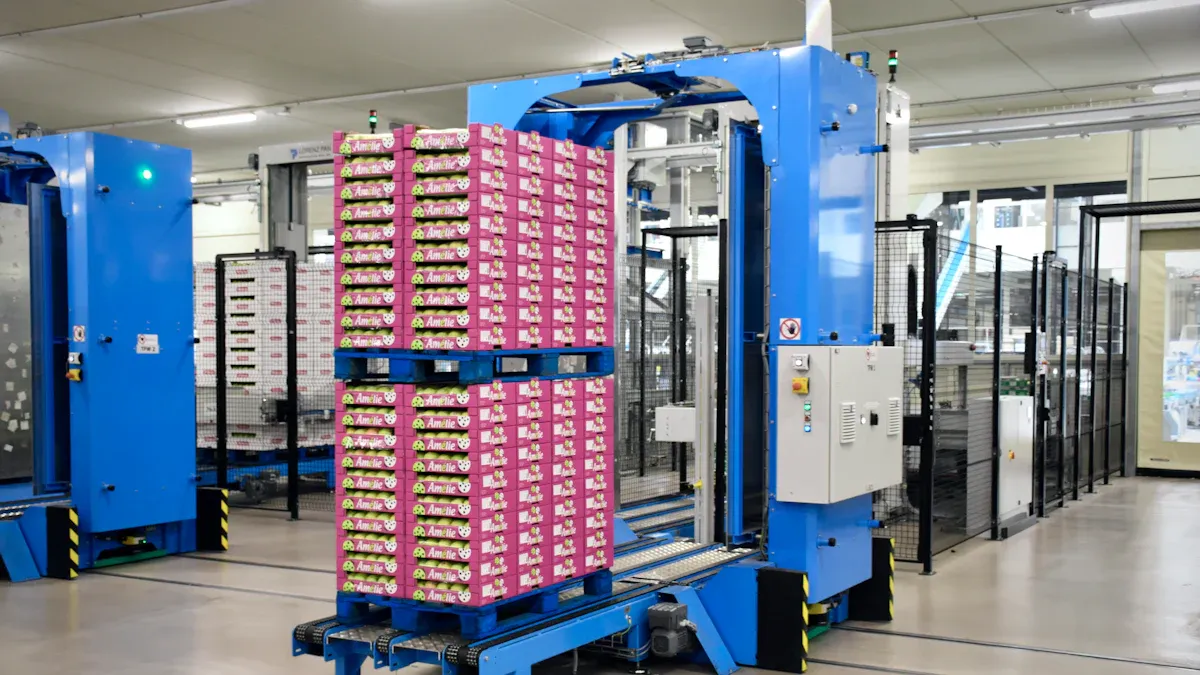
You can transform your logistics operations by using automated labeling and touchscreen kiosks. These tools help you reduce manual work and improve accuracy. Touchscreen kiosks now have interfaces that feel like smartphones, making them easy for anyone to use. You can customize the software to fit your retail needs, and connect the kiosks to printers and scanners for faster processing.
Touchscreen kiosks let you offer contactless shopping, which many customers expect in 2025.
You can optimize your labor by reducing the need for large front-end staff.
AI-powered kiosks recommend products based on customer preferences, creating a personalized experience.
Kiosks help you connect online and offline shopping, making your business more flexible.
Retailers like Walmart use kiosks for online order pickups and self-checkouts. This speeds up service and reduces wait times. Decathlon uses kiosks for inventory checks and digital payments, which improves efficiency and customer satisfaction.
Automated labeling systems work with kiosks to create a quality control dashboard. You can track products and spot errors before they reach the store. This reduces the movement of imperfect goods and saves you time and money.
Tip: Train your team to use these new systems. You can create 'automation champions' who help others learn and adapt. This makes the transition smoother and increases adoption rates.
Digital Connectivity and Data Analytics
You need strong digital connectivity and data analytics to succeed in pre-retail logistics upstream optimization. Start by identifying and consolidating your most important data sources. This gives you access to both upstream and downstream information. You should develop a data governance framework to improve data quality and standardization.
IoT sensors help you track assets and monitor transportation conditions with precision.
RFID and NFC tags give you real-time visibility into product movements.
GIS and GPS data let you optimize routes and track assets.
Big data analytics help you make better decisions. You can use predictive analytics to forecast demand and prescriptive analytics to choose the best actions. These tools let you spot trends and respond quickly to changes.
Web-based supply chain management systems play a key role in pre-retail logistics upstream optimization. You can connect kiosks to these systems for better inventory data flow and accuracy. Automation of labeling creates a dashboard for quality control, which minimizes the movement of imperfect goods. Streamlining manual processes reduces errors and waste, making your logistics more efficient.
Benefit | Description |
|---|---|
Enhanced Data Visibility | Connecting kiosks to web-based systems improves stock inventory data flow and accuracy. |
Improved Quality Control | Automation of labeling creates a quality control dashboard, minimizing the movement of imperfect goods. |
Automation of Manual Processes | Streamlining processes reduces errors and waste, enhancing overall efficiency in logistics. |
You must help your workforce adapt to these changes. Some employees may worry about job loss or feel unsure about new technologies. You can support them with training programs and clear communication about role changes. When you involve your team and create automation champions, you increase success and make everyone feel valued.
Note: Technology helps you work faster and smarter. You can use these tools to improve accuracy, reduce costs, and deliver products to stores more quickly.
Supplier Collaboration Strategies
Communication and Data Sharing
You can master supplier relations by focusing on clear communication and sharing data. When you and your suppliers exchange information in real time, you make better decisions about inventory and shipments. This helps you predict demand and avoid stockouts. You also align product availability across channels, which creates a smooth shopping experience for your customers.
Here are some ways strong communication and data sharing improve your logistics:
You gain visibility across retailers and suppliers, which helps you manage manufacturing and inventory.
You prevent overstock and shortages by tracking inventory levels together.
You coordinate supply chain operations, leading to faster order fulfillment.
Benefit | Explanation |
|---|---|
Enhanced Demand Forecasting | Shared data lets you forecast demand more accurately and reduce waste. |
Efficient Supply Chain Ops | Collaboration leads to smoother operations and better order fulfillment. |
Real-time visibility helps you optimize stock levels and avoid excess inventory. |
Many retailers face obstacles such as communication gaps, misaligned goals, and fragmented data. You can overcome these by setting up regular meetings and using cloud-based systems for updates. When you keep the conversation open, you solve small problems before they grow.
Tip: Use a single platform for all supplier communication. This keeps everyone on the same page and builds trust.
Joint Process Improvement
You and your suppliers can work together to improve processes. When you share goals and review performance, you find new ways to boost efficiency. Joint improvement efforts help you meet sustainability demands and lower costs.
Best Practice | Description |
|---|---|
Agree on shared quality targets, such as reducing defects and closing corrective actions quickly. | |
Regular, objective reviews | Hold formal reviews using data from quality management systems. |
Transparent communication | Use cloud-based tools for feedback and updates. |
Foster improvement | Invite suppliers to suggest changes and share ideas for better quality. |
Studies show that companies who collaborate with suppliers see lower transport costs and better economic performance. Sharing operational costs and working together on environmental practices also lead to greater efficiency. When you build partnerships based on trust and transparency, you create value for everyone.
You can use these strategies to support pre-retail logistics upstream optimization. By working closely with suppliers, you improve speed, reduce costs, and meet customer expectations.
Inventory and Transportation Optimization
Inventory Flow Management
You can improve your supply chain by managing inventory flow with smart techniques. Perpetual inventory systems give you real-time updates by syncing sales, receiving, and transfers. This helps you track costs and align with your business goals. Warehouse flow design lets you move older lots and fast-selling items quickly, which reduces travel time and keeps aging stock safe. Cycle counts and spot checks help you catch errors and keep your data accurate. Asset tracking solutions show you machine health and part usage, so you buy only what you need.
Technique | Description |
|---|---|
Perpetual Inventory Systems | Synchronizes point-of-sale activity, receiving, and transfers for real-time updates, aligning with business goals for accurate cost tracking. |
Warehouse Flow Design | Prioritizes older lots and fast-moving items to reduce travel time and protect aging stock. |
Cycle Counts and Spot Checks | Validates system data through regular checks, ensuring accuracy and identifying discrepancies. |
Asset Tracking Solutions | Provides real-time insights into machine health and part usage, aligning procurement with actual capacity. |
When you use these methods, you see big improvements. You can cut overstock and stockouts by up to 30%. Shelf clutter drops by 20%. Category sales can rise by 5%. These results show how strong inventory flow management supports pre-retail logistics upstream optimization.
Metric | Result |
|---|---|
Reduction in overstock and stockouts | Up to 30% |
Reduction in shelf clutter | Up to 20% |
Increase in category sales | 5% |
Tip: Set up regular cycle counts and use asset tracking to keep your inventory accurate and your costs low.
Efficient Shipment Scheduling
You can save money and shorten lead times by scheduling shipments efficiently. Good shipment scheduling means you plan routes and keep vehicles in top shape. Transport management systems help you see all your shipments and make quick decisions. You can coordinate resources and avoid delays.
Modern tools make scheduling easier. Automated shift filling finds the right workers when someone is absent. Geolocation features track drivers and help you plan routes based on their location. Flexible notification systems send alerts for schedule changes. Self-service tools let workers manage their own schedules, which saves time. Skill and certification tracking ensures you assign the right people to each job. AI-powered schedule optimization uses data to build smart staffing patterns. Predictive absence management spots attendance problems before they happen. Gig economy integration lets you mix full-time and on-demand workers to handle busy times. Wearable technology tracks worker location and fatigue. Augmented reality interfaces help with training and visualizing schedules.
Tool/Technology | Description |
|---|---|
Automated Shift Filling | Automatically identifies qualified workers for coverage during absences to prevent disruptions. |
Geolocation Features | Uses location-aware apps to track driver locations and optimize scheduling based on proximity. |
Flexible Notification Systems | Sends push notifications for critical schedule changes and alerts to workers promptly. |
Self-Service Capabilities | Allows workers to manage their schedules, reducing administrative burden and increasing satisfaction. |
Skill and Certification Tracking | Maintains records of worker qualifications to ensure proper assignment to specialized roles. |
AI-Powered Schedule Optimization | Utilizes AI algorithms to create effective staffing patterns based on operational data. |
Predictive Absence Management | Employs machine learning to identify potential attendance issues proactively. |
Gig Economy Integration | Blends full-time employees with on-demand workers to manage volume fluctuations. |
Wearable Technology | Integrates devices to track worker location and monitor fatigue levels in real-time. |
Augmented Reality Interfaces | Provides AR applications for visualizing schedules and training for specialized tasks. |
Note: Use technology to keep your shipments on track and your team ready for any changes.
Continuous Improvement and Metrics
KPIs for Upstream Logistics
You need to track the right key performance indicators (KPIs) to measure your progress in pre-retail logistics upstream optimization. These KPIs help you see where you stand and where you can improve. Use the table below to understand the most important metrics:
KPI | Description |
|---|---|
DIF | Delivery in Full |
DOT | Delivery on Time |
DIFOT | Delivery In Full on Time |
Cost as a percentage of sales | Logistics cost compared to total sales |
Inventory stock turns in Days | How often you replace inventory in a set period |
You can also look at industry benchmarks to set your goals. For example, Uniqlo has a design-to-delivery cycle of just 13 days. Some companies have reduced lead times by 70 days, while others have improved logistics KPIs by 15% and increased productivity by 20% through automation. Tracking lead times and cost savings gives you a clear picture of your success.
Tip: Review your KPIs every month. This helps you spot trends and make quick changes.
Feedback Loops and Sustainability
You can use feedback loops to drive continuous improvement. These loops let you adjust your processes in real time. When you get immediate feedback, you can fix problems before they grow. Analytics and feedback loops also help you make better decisions and keep improving your logistics.
Immediate feedback loops let you adjust quickly.
Ongoing analytics improve your decision-making.
Continuous improvement keeps your processes up to date.
Sustainability is now a key part of logistics. You can use route optimization software to cut fuel use. Modernize your fleet with fuel-efficient or electric vehicles. Switch to alternative fuels like LNG or biodiesel. Use eco-friendly packaging and right-size your packages to reduce waste. Reusable packaging systems also help the environment.
Description | |
|---|---|
Route Optimization Software | Cuts fuel use by finding efficient delivery paths |
Fleet Modernization | Uses newer, cleaner trucks |
Alternative Fuels | Lowers emissions with LNG, CNG, or biodiesel |
Electric Vehicles (EVs) | Good for short-range deliveries |
Eco-friendly Packaging | Uses recyclable or biodegradable materials |
Right-sizing Packages | Reduces waste by matching package size to product |
Reusable Packaging Systems | Uses containers that can be cleaned and reused |
You can measure your return on investment by picking high-value projects, using ready-made software, and building a culture of innovation. Automated quotes, real-time tracking, and easy system integration also save time and money.
Note: When you focus on continuous improvement and sustainability, you make your logistics "Retail Ready" for the future.
You can achieve strong results in pre-retail logistics upstream optimization by focusing on these actions:
Use AI for predictive analytics to manage inventory and transportation.
Invest in workforce development to build a culture of efficiency.
Apply logistics planning software for demand forecasting.
Immediate adoption of automation and technology brings faster delivery, better inventory management, and improved cash flow. Supplier collaboration helps you adapt to market changes. Recent case studies show:
Metric | Result |
|---|---|
Logistics cost reduction | |
SKU volume reduction | 20% |
Transportation cost reduction | 33% |
OTIF rate | 90%+ |
Start using these best practices now to succeed in 2025.
FAQ
What is pre-retail logistics upstream optimization?
Pre-retail logistics upstream optimization means you improve the steps before products reach stores. You use technology, better planning, and teamwork with suppliers to make these steps faster and more accurate.
How does automation help my logistics process?
Automation helps you reduce manual work and errors. You can use machines and software to sort, label, and track products. This saves time and money.
Tip: Start with automated labeling and digital kiosks for quick results.
Why should I collaborate with suppliers?
You build strong supplier relationships to share data and solve problems together. This teamwork helps you avoid delays and shortages.
Benefit | Result |
|---|---|
Faster delivery | Fewer delays |
Lower costs | Less waste |
What are the most important KPIs to track?
You should track delivery in full, delivery on time, and inventory turns. These KPIs show how well your logistics work.
Delivery in Full (DIF)
Delivery on Time (DOT)
Inventory Stock Turns
See Also
Enhancing Global Operations Through Creative Logistics Strategies
Leading Logistics Services for Efficient East Coast Imports
Simplifying Supply Chain Management With U.S. Logistics Innovations
