Top Technologies Transforming Supply Chain Management in 2025

You see rapid changes in the way supply chains work because new technologies transforming supply chain management are shaping the future. Many business leaders and supply chain professionals need smarter tools to keep up with rising demands. Some of the most widely adopted solutions include:
Artificial intelligence and machine learning help you predict trends and automate tasks.
Blockchain increases trust and security in tracking products.
Sustainable supply chain practices lower environmental impact.
Last-mile delivery innovations, such as drones, speed up shipments.
Autonomous warehousing uses robotics to make storage and shipping faster.
You need to act quickly to stay ahead. These innovations boost efficiency and help your supply chain become more resilient.
Key Takeaways
Embrace AI and machine learning to enhance demand forecasting and automate tasks, leading to reduced costs and improved efficiency.
Utilize blockchain technology to increase transparency and security in your supply chain, ensuring trust among partners and customers.
Adopt IoT devices for real-time tracking and monitoring, which helps prevent delays and optimize delivery routes.
Integrate APIs for seamless data sharing, allowing for faster order fulfillment and better inventory management.
Focus on sustainability by tracking carbon emissions and using renewable energy, which not only meets regulations but also enhances your brand image.
Technologies Transforming Supply Chain Management
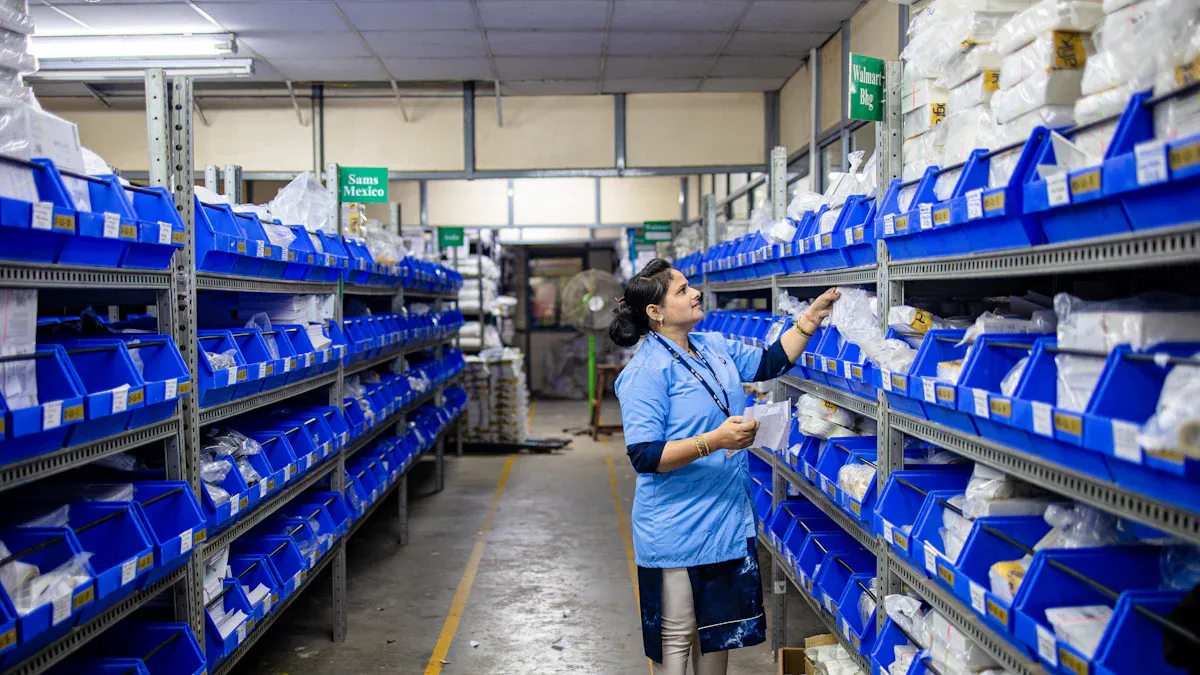
You see a new era in supply chain management as technology changes the way you work. In 2025, you rely on a range of powerful tools to keep your business efficient and resilient. These technologies transforming supply chain management help you make better decisions, reduce costs, and respond quickly to market changes. The most impactful solutions include artificial intelligence, advanced analytics, the Internet of Things, and digital integration through APIs.
AI and Machine Learning
You use AI and machine learning to predict demand, automate tasks, and solve complex problems. From 2020 to 2025, more companies have adopted these technologies transforming supply chain management. You now see AI and machine learning as essential for improving efficiency and resilience. These tools help you forecast demand with greater accuracy, so you can manage inventory and react to changes in the market.
Machine learning models can reduce forecasting errors by up to 50%.
AI-powered forecasting can cut errors by 30 to 50% in your supply chain network.
Better accuracy means you lose fewer sales due to out-of-stock items, with a 65% reduction in lost sales.
You also lower warehousing costs by 10 to 40%.
The total impact of AI in supply chain planning and manufacturing is estimated at $1.2 to $2 trillion.
You see that AI and machine learning are no longer optional. They are now core technologies transforming supply chain management.
Advanced Analytics
You depend on advanced analytics to turn data into insights. These tools help you spot trends, plan for the future, and make smarter choices. In 2025, you have access to powerful platforms such as SAP SCM, Oracle SCM Cloud, Blue Yonder, Kinaxis RapidResponse, Infor Nexus, Manhattan Active Supply Chain, E2open, Logility, and Anaplan. Each platform offers unique features for demand forecasting, logistics, and scenario planning.
Advanced analytics let you act before problems grow. You can find inefficiencies, reduce waste, and save money.
You improve demand forecasting, so production matches real needs.
Real-time data analysis helps you optimize delivery routes and cut fuel costs.
Predictive modeling lets you plan for transportation costs and capacity limits.
Prescriptive analytics give you automated recommendations, making your decisions faster and more accurate.
When you connect analytics with freight audit systems, you spot cost leaks and keep your finances in check.
These technologies transforming supply chain management help you stay ahead in a fast-moving world.
Internet of Things (IoT)
You use IoT devices to track goods, monitor conditions, and keep your supply chain visible at all times. IoT connects your systems, giving you real-time updates on every shipment. This technology helps you prevent delays, protect sensitive cargo, and optimize delivery routes.
Description | |
|---|---|
Seamless Integration | IoT connects with ERP, logistics, and telematics for a full view of goods. |
Continuous Visibility | GPS and Bluetooth keep you updated, no matter where your goods travel. |
Adaptive Tracking | Devices send more updates during transit and save power when still. |
Real-time Monitoring | You track temperature and humidity, which is vital for cold chain goods. |
Optimized Delivery | Real-time data helps you choose the best routes for your fleet. |
Tampering Detection | Alerts warn you about unauthorized access or stops. |
Predictive Analytics | IoT forecasts delays or equipment failures before they happen. |
IoT stands out as one of the key technologies transforming supply chain management by giving you control and visibility from start to finish.
APIs and Digital Integration
You rely on APIs and digital integration to connect your systems and partners. APIs let you share data in real time, so your inventory stays up to date and orders move quickly. You can automate tasks like reordering and scheduling, which reduces errors and saves time.
APIs enable real-time data exchange, keeping inventory levels accurate.
Automated actions help you reorder stock and fulfill orders faster.
You build stronger relationships with suppliers and optimize delivery schedules.
Centralized data cuts out redundant steps and lowers costs.
APIs streamline processes like part search, quoting, and purchase order automation.
They allow different software systems to work together, making your supply chain more flexible.
When you use APIs, you speed up digital transformation and make your supply chain more agile.
You face some challenges, such as integrating data from many sources and choosing the right technology. Still, APIs and digital integration remain vital technologies transforming supply chain management in 2025.
Automation, Robotics, and Blockchain

Automation and robotics change the way you manage your supply chain. These tools help you work faster, lower costs, and reduce mistakes. You can use them to handle tasks that once took hours. Blockchain adds another layer by making your supply chain more open and secure. Together, these technologies transforming supply chain management help you build a smarter, safer, and more efficient operation.
Robotic Process Automation
You see more companies using robotic process automation (RPA) every year. By 2025, almost every supply chain will use RPA in some way.
Experts expect near-universal adoption within five years.
RPA helps you automate many tasks:
Order processing and invoice management
Inventory tracking and stock monitoring
Supplier and vendor management
Data entry and report generation
Shipping and logistics coordination
Customer service and support
You save time and reduce errors by letting RPA handle these jobs. This means your team can focus on more important work.
Advanced Robotics
Advanced robotics make your warehouse smarter and faster. Robots pick, sort, and pack orders with high speed and accuracy.
Automated systems cut order processing time, so you deliver faster.
AI-based robots improve picking and packing, which means fewer returns and happier customers.
Robots work all day, increasing how many orders you can fill.
Amazon uses advanced robotics to pick and sort orders, which helps them process orders quickly and keep customers satisfied.
Year | Market Size (USD) |
|---|---|
2025 | |
2034 | 246.02 Billion |
Robotics also help you lower labor costs. Automated sorters can cut sortation costs by 50%. You also get better inventory tracking and fewer mistakes.
Blockchain for Transparency
Blockchain gives you a clear view of your supply chain. Every transaction is recorded on a shared ledger. You and your partners see the same information, which reduces errors and miscommunication.
Blockchain lets you track products from start to finish.
The records cannot be changed, so fraud is almost impossible.
You meet rules and regulations more easily with a reliable audit trail.
More than half of the companies on Forbes’ Blockchain 50 list use blockchain to solve supply chain and logistics problems.
Blockchain replaces old paper processes, making your supply chain faster and safer. You can trust the data and prove where your products come from. This is one of the key technologies transforming supply chain management today.
Sustainability and Generative AI
Sustainability shapes how you manage your supply chain in 2025. You see new rules and consumer demands pushing you to act. Companies now use technology to track carbon emissions, use renewable energy, and make smarter decisions with generative AI.
Carbon Footprint Tracking
You need to know your supply chain’s carbon footprint. Tracking emissions helps you meet rules and show customers you care about the planet. Many companies track their direct emissions, but fewer can measure the full impact.
In 2025, only 38% of supply chain companies track their Scope 3 emissions.
More than 40% of companies track Scope 1 and 2 emissions, but far fewer can measure Scope 3 emissions accurately.
Tracking supply chain emissions is essential for sustainability. It helps you make sure your efforts to reduce carbon emissions work.
Accurate reporting lets you show you follow the rules and meet customer expectations.
New tools give you real-time data, so you can make quick decisions to cut carbon.
Sustainability is now a key force in how supply chains compete and grow. You turn your green goals into real action and improve efficiency.
Renewable Energy Integration
You can lower costs and help the environment by using renewable energy in your supply chain. Solar, wind, and other clean sources power your warehouses and transport.
Renewable energy can cut supply chain costs by 13%.
When you combine renewables with other strategies, you see a 22% cost benefit.
A resilient network with renewable energy can reduce carbon emissions by 28.5%.
Green supply chain management also improves your company’s image and meets new regulations.
Generative AI in Supply Chain
Generative AI changes how you plan and make decisions. You use it to forecast demand, manage inventory, and run real-time simulations. This technology links data from across your business, making your choices smarter and faster.
Application Type | Description |
|---|---|
Demand Forecasting | Optimizes demand forecasting, improving accuracy and speed. |
Inventory Planning | Helps manage inventory, reducing waste and shortages. |
Risk Management | Improves risk assessment and response. |
Autonomous AI Supply Chains | Moves you toward fully automated operations. |
Real-Time Scenario Simulations | Lets you test ideas and see results instantly. |
Hyper-Personalized Supply Management | Creates custom solutions for your customers. |
AI as Decision Partner | Acts as a partner in your decision-making process. |
You see companies like Walmart use generative AI to spot trends and create new products. Generative AI gives you instant answers, connects data, and makes your supply chain more resilient. You spend less time searching for information and more time making smart choices.
You see real results when you use new technology in your supply chain.
In 2025, 46% of small businesses reached service levels above 90%, showing better delivery and efficiency.
AI use jumped from 23% to 48%, and forecasting with AI grew from 52% to 63%.
Evidence | Description |
|---|---|
Competitive Edge | You adapt faster and use digital tools to stay ahead in your industry. |
Industry Winners | You lead the market when you connect supply chain innovation with new ideas. |
You stay competitive when you learn and adopt new solutions. Keep improving your skills and stay open to change.
FAQ
What is the biggest benefit of using AI in supply chain management?
AI helps you predict demand and automate tasks. You make faster decisions and reduce mistakes. This leads to lower costs and better customer service.
How does blockchain improve supply chain transparency?
Blockchain records every step of your product’s journey. You and your partners see the same data. This builds trust and stops fraud.
Why should you track your supply chain’s carbon footprint?
Tracking your carbon footprint helps you meet rules and show customers you care about the planet. You find ways to cut emissions and save money.
Can small businesses use these new supply chain technologies?
Yes! Many tools now work for small businesses. You can start with simple solutions like cloud software or basic automation. These help you grow and compete.
See Also
Enhancing Global Operations Through Innovative Logistics Strategies
Streamlined Supply Chain Solutions for USA Logistics Success
Key Strategies for Effective Management of Global Logistics
Boosting Global Efficiency With Point-to-Point Logistics Systems
