Types of Freight Transportation Explained Simply for You
You can choose from several types of freight transportation: road, rail, maritime, air, pipeline, and intermodal. Each option serves a unique role in moving goods. For example, intermodal transport reached a global market size of USD 42.9 billion in 2023 and is growing fast. Here is a quick look at recent market data:
Statistic | Value |
|---|---|
Global intermodal freight market size (2023) | USD 42.9 billion |
Projected market size (2030) | USD 93.51 billion |
CAGR (2024-2030) | 12.1% |
North America market share (2023) | 35.6% |
You will learn how each method works and what sets them apart. Use this guide to make smart choices for your shipping needs.
Key Takeaways
Understand the main types of freight transportation: road, rail, maritime, air, pipeline, and intermodal. Each method has unique strengths for different shipping needs.
Choose road freight for flexibility and quick deliveries. It works well for various cargo types and is ideal for medium and short distances.
Select rail freight for cost-effective transport of heavy or bulk items over long distances. It offers lower emissions and high cargo capacity.
Use maritime freight for large shipments that do not require fast delivery. It is the most economical option for global trade and bulk goods.
Opt for air freight when speed is essential. It is the fastest method for urgent shipments but comes at a higher cost.
Main Types of Freight Transportation
You can move goods in many ways. The main types of freight transportation include road, rail, maritime, air, and pipeline. Each method has its own strengths and best uses. You will see these methods explained in detail later, but here is a simple overview to help you get started.
Road Freight
Road freight uses trucks and vans to carry goods on highways and local roads. You can use this method for almost any kind of cargo. Road freight stands out for its versatility. You can ship perishable items, hazardous materials, oversized machinery, and fragile electronics. This method works well for both large and small shipments. You can rely on road freight for medium and short distances. It also helps you ensure timely deliveries.
Moves goods over medium and short distances
Handles both big and small shipments
Delivers a wide range of cargo types
Rail Freight
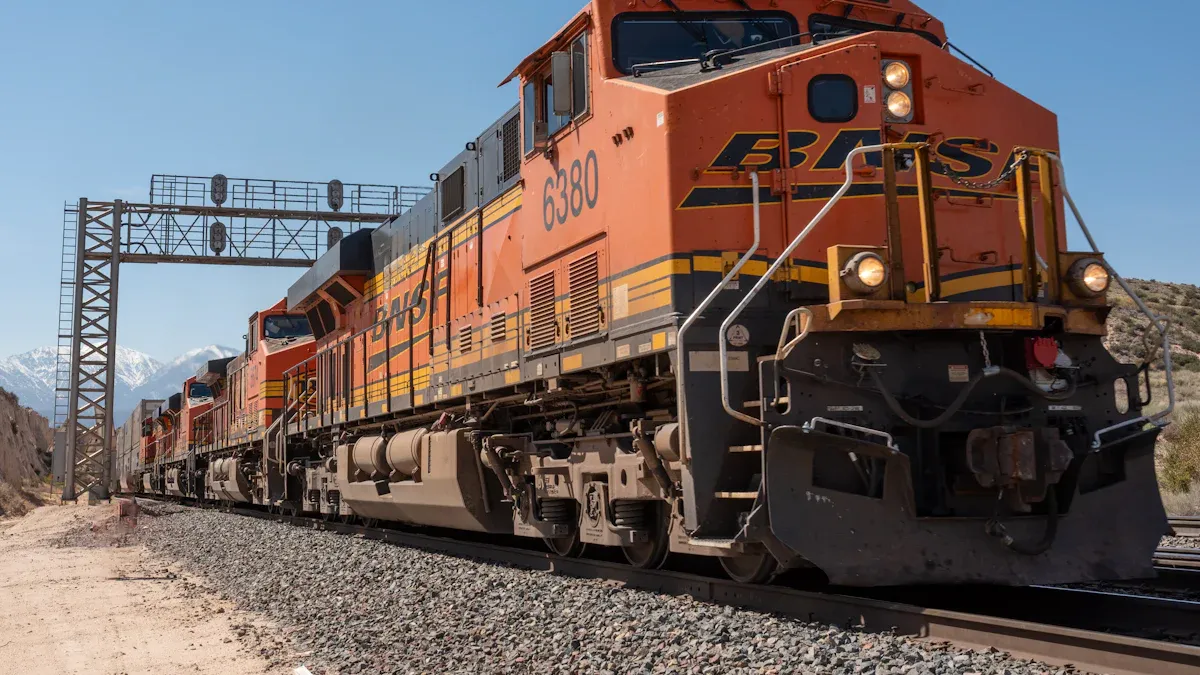
Rail freight uses trains to move large amounts of goods across long distances. You can count on rail freight for high cargo capacity and safety. It produces lower greenhouse gas emissions than trucks. Rail freight works best for heavy or bulk items, like coal, grain, or cars. You may find it less flexible than road freight because trains run on fixed tracks and schedules.
Tip: Rail freight is a good choice if you need to move a lot of goods at once and want to reduce your carbon footprint.
Here is a quick look at the main advantages and disadvantages:
Advantages of Rail Freight | Disadvantages of Rail Freight |
|---|---|
Lower greenhouse gas emissions | Limited flexibility in time and location |
High cargo capacity | Higher transport costs |
Safety (lower accident risk) | Noise emissions |
Plannability (fewer short-term delays) | Non-uniform standards across countries |
Intermodality (easy transfer) | Infrastructure challenges |
Maritime Freight
Maritime freight uses ships to move goods across oceans and rivers. This method handles most of the world’s trade. In fact, ships carry about 80% of global trade. In the United States, 69% of traded goods travel by water. You can use maritime freight for large and heavy items, like oil, coal, cars, and containers. This method works best for bulky shipments that do not need fast delivery.
Moves most of the world’s goods
Best for large, heavy, or bulk items
Takes longer but costs less for big shipments
Air Freight
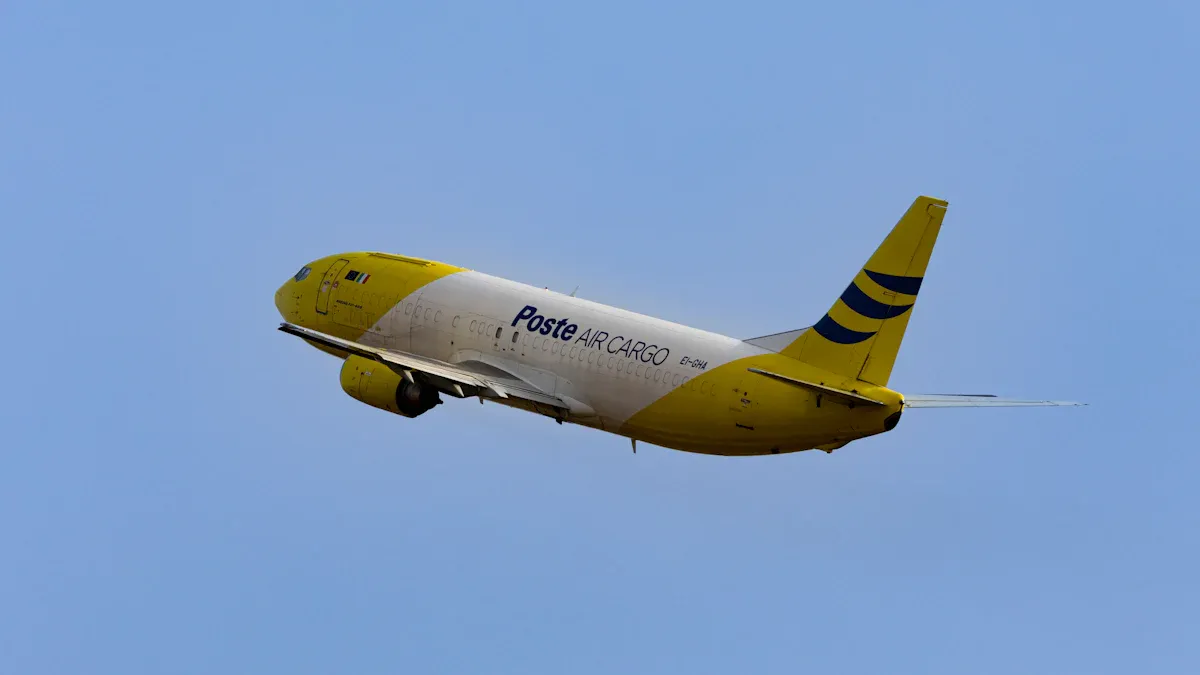
Air freight uses airplanes to deliver goods quickly. You can choose air freight when you need speed. This method is the fastest way to ship goods, especially for time-sensitive items. Air freight costs more than road or ocean shipping. You may use it for electronics, medical supplies, or urgent packages.
Best for urgent or valuable items
Costs more than other types of freight transportation
Pipeline Freight
Pipeline freight moves liquids and gases, like oil and natural gas, through pipes. You can use pipelines for steady, long-term transport. This method works best for products that flow easily. Pipelines run underground or above ground and connect production sites to factories or storage areas.
Note: Pipelines are not suitable for solid goods, but they offer a safe and efficient way to move energy resources.
You have now seen the main types of freight transportation. Each method fits different needs. In the next sections, you will learn more about how each one works and what makes them unique.
Road Freight Details
How Road Freight Works
You use road freight when you want to move goods by truck or van. This method gives you flexibility and direct delivery to almost any location. You can choose from many vehicle types, each designed for different cargo needs. Here is a table showing the most common vehicles you might see on the road:
Vehicle Type | Description |
|---|---|
Rigid Trucks | One-piece units with the cab attached to the cargo area, used for various cargo types. |
Articulated Vehicles | Prime mover and trailer, ideal for long-distance transport of large loads. |
Box Trucks | Enclosed vehicles for palletized goods and deliveries, suitable for short and long hauls. |
Curtain-sided Trailers | Versatile trailers for general freight, allowing easy loading/unloading of various goods. |
Flatbed Trucks | Open platform trucks for oversized cargo, used in construction and heavy transport. |
Tanker Trucks | Specialized for transporting liquids and gases, essential for fuel and chemical transport. |
Refrigerated Trucks | Equipped with refrigeration units for perishable goods, maintaining temperature during transport. |
Dump Trucks | Used for bulk materials, featuring a tilting bed for efficient unloading. |
Car Carriers | Multi-level trailers for transporting vehicles, offering protection for high-value items. |
You can find road freight routes almost everywhere, from city streets to highways that cross the country.
LTL (Less Than Truckload)
You use LTL shipping when your cargo does not fill a whole truck. Your goods share space with shipments from other customers. This option works well for small loads, usually between 6 and 12 pallets or less than 10,000 pounds. LTL costs less for small shipments, but delivery takes longer because the truck makes several stops at distribution hubs.
Tip: LTL is a smart choice if you want to save money and do not need fast delivery.
FTL (Full Truckload)
You choose FTL shipping when your cargo fills an entire truck. The truck picks up your goods and drives straight to the destination. FTL works best for large shipments or when you need faster delivery. You pay a door-to-door rate, often based on distance, weight, and market conditions.
Features
Road freight stands out among the types of freight transportation for its flexibility and reach. You can ship almost anything, from food to cars. Here is a quick comparison of LTL and FTL:
Shipment Type | Cost Structure | Delivery Time |
|---|---|---|
LTL | Shared-cost model based on freight class, distance, and weight. Cost-effective for small loads. | Slower due to multiple stops at distribution hubs. |
FTL | Door-to-door rate, priced by the mile. Costs vary by distance, weight, and route. | Faster as it goes directly to the destination. |
LTL shipments take longer because the truck stops at several hubs.
FTL shipments arrive faster since the truck drives straight to the drop-off point.
Road freight gives you door-to-door service and works for both short and long distances.
Rail Freight Overview
How Rail Freight Works
You use rail freight when you want to move large amounts of goods over long distances. Trains travel on a nationwide network of tracks and signals. Rail yards and dispatch centers manage train movement with remote controls and sensors. You see safety teams use drones and automated inspection tools to keep everything running smoothly.
Rail freight relies on powerful locomotives. These engines pull railcars designed for different types of cargo. You find boxcars for general goods, tank cars for liquids, and flatcars for heavy machinery. Workers plan and secure each load to prevent damage during transit. You must complete paperwork like waybills and customs forms to avoid delays.
Here is a simple list of steps you follow for rail freight shipping:
Measure and weigh your goods.
Fill out the required documentation.
Contact a rail freight service provider to book your shipment.
Schedule a pick-up date.
Load your goods onto the train securely.
Track your shipment for updates.
Clear customs for international shipments.
Component/Process | Description |
|---|---|
Infrastructure | Nationwide network of trains, tracks, and signals. |
Yards and Dispatch | Manage movement with remote control, sensors, and PTC. |
Safety Maintenance | Use of drones, detectors, and automated inspection tools for safety. |
Locomotives | Powerhouses of the rail network, equipped with sensors for monitoring performance. |
Railcars | Various types designed for different commodities, meeting strict safety standards. |
Loading Process | Careful planning and securing of goods to prevent damage during transit. |
Documentation | Necessary paperwork including waybills and customs forms to ensure compliance and prevent delays. |
Tip: You can ship bulk items like coal, grain, or cars with rail freight. This method works best for heavy loads and long distances.
Key Features
Rail freight stands out among the types of freight transportation for its cost-effectiveness and environmental benefits. You pay less per ton-mile compared to trucks. For example, rail direct costs about $70.27 per net ton, while over-the-road trucks cost $214.96 per net ton. Rail also produces fewer carbon emissions.
Rail Freight | Sea Freight | |
|---|---|---|
Cost | Higher upfront costs, cost-effective for medium-distance shipments | Generally cheaper for high-volume shipments |
Transit Time | Faster, averaging 15-20 days from China to Europe | Slower, averaging 30-45 days |
Cargo Volume | Limited capacity compared to sea freight | Dominates in cargo capacity, ideal for bulk |
Environmental Impact | More eco-friendly, lower CO₂ emissions | Higher emissions, but improving with technology |
Infrastructure Access | Dependent on rail infrastructure, limited in some regions | Broader global coverage, requires access to ports |
You get reliable service with fewer delays. Rail freight works well for scheduled shipments. You need access to rail infrastructure, which may not reach every location. Rail freight offers a safe and efficient way to move goods across countries and continents.
Maritime Freight Overview
How Maritime Freight Works
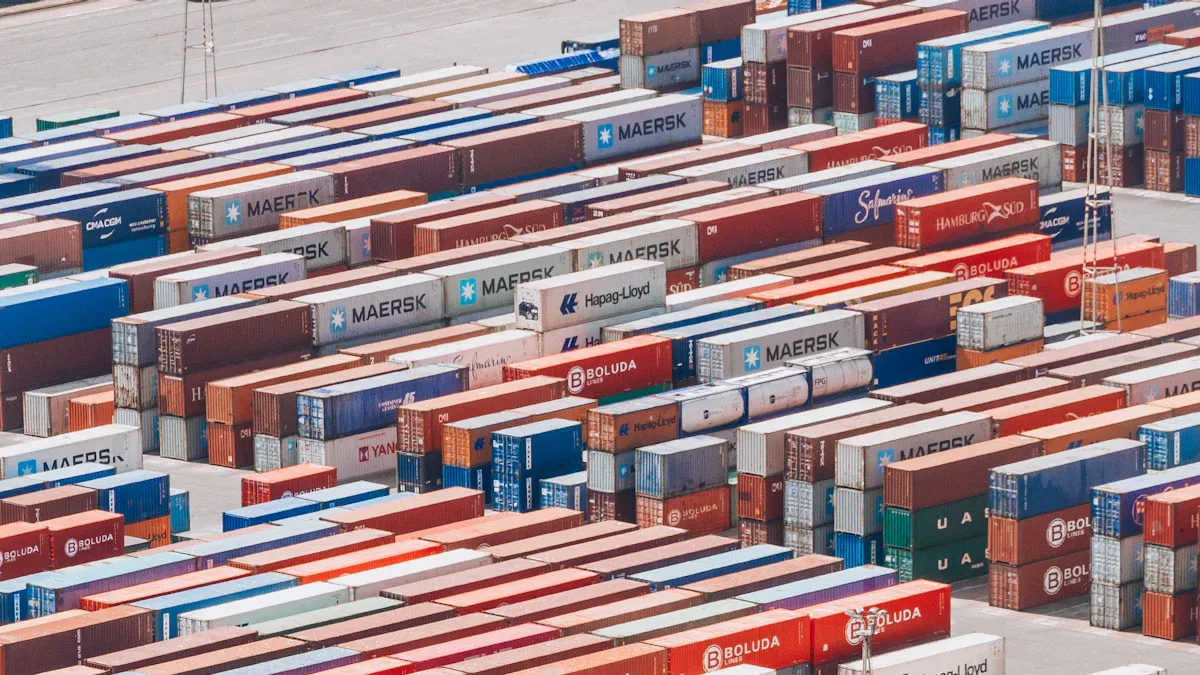
You use maritime freight when you want to move goods across oceans, seas, or rivers. Ships carry containers, bulk cargo, and even vehicles. You load your goods into containers at a port. Workers use cranes to lift containers onto ships. Ships follow set routes between major ports. You track your shipment using digital systems. When the ship arrives, workers unload the cargo and move it to trucks or trains for delivery.
You can ship almost anything by sea. Common items include oil, coal, electronics, and cars. Large ships, called container ships, carry thousands of containers at once. Bulk carriers move loose goods like grain or minerals. Tankers transport liquids such as oil or chemicals. You choose maritime freight for international trade and long-distance shipping.
Tip: You save money with maritime freight when you ship large or heavy items. This method works best for goods that do not need fast delivery.
Key Features
Maritime freight stands out among the types of freight transportation for its ability to move huge amounts of cargo. You pay less per unit compared to air or road freight. Ships travel slowly, but they carry more goods in one trip. You find maritime freight useful for global trade and bulk shipments.
Here are some key features:
Handles large and heavy shipments
Offers lower costs for big loads
Connects countries and continents
Works best for non-urgent deliveries
You also help the environment when you choose maritime freight. Ships produce fewer carbon emissions than planes or trucks. Look at this table to see how maritime freight compares to other methods:
Mode of Transport | Climate Impact (per tonne) | Emissions Type |
|---|---|---|
Air Freight | Highest | High-carbon emissions |
Road Freight | One-tenth of air freight | Significant carbon emissions |
Maritime Freight | Lowest | Low-grade diesel fuels, high air pollution in ports |
Note: Ships use low-grade diesel fuels. Ports can have high air pollution, but overall, maritime freight has the lowest climate impact per tonne.
You rely on maritime freight for most international shipments. This method supports global trade and helps you move goods efficiently.
Air Freight Overview
How Air Freight Works
You use air freight when you need to move goods quickly across long distances. This method stands out among the types of freight transportation for its speed and reliability. The air freight shipping process follows several clear steps. You can see how your shipment travels from origin to destination:
Book your shipment and arrange pickup. The carrier collects your goods and stores them until the flight date.
Prepare all required documents, such as the air waybill and customs permits.
Customs officials check your cargo to make sure it meets regulations and security standards.
Load your goods into the aircraft using special containers called Unit Load Devices (ULDs). Workers create a detailed manifest for tracking.
Your cargo travels by air to the destination. You can monitor and track your shipment during the journey.
At arrival, workers unload the cargo and check it against the manifest. Customs clearance happens at this stage.
The carrier delivers your goods to the final address and provides proof of delivery.
Tip: You can ship electronics, medical supplies, and urgent packages with air freight. This method works best for time-sensitive shipments.
Key Features
Air freight offers several important features that help you decide if it fits your shipping needs. You get the fastest delivery among all types of freight transportation. You can send goods almost anywhere in the world. Airlines follow strict schedules, so you can plan your shipments with confidence.
Fast delivery for urgent or high-value items
Reliable tracking and security
Global reach to major cities and remote areas
You need to know about some limits when shipping by air. Airlines restrict the size, weight, and type of cargo, especially hazardous materials. Here is a table showing some common restrictions:
Hazardous Material Class | Weight Limitations | Additional Restrictions |
|---|---|---|
Division 2.2 (non-flammable compressed gas) | Must be in inaccessible cargo compartment or special containers | |
Class 7 (radioactive) | Varies (e.g., 50.0 transport index for passenger aircraft) | Specific transport index limits apply |
Class 9 (miscellaneous) | No limitation on number of packages | N/A |
Note: You must follow airline rules for hazardous materials. Some items need special packaging or may not be allowed at all.
Air freight costs more than other shipping methods. You pay for speed and convenience. You can use air freight for small, valuable, or urgent shipments. If you need to move large or heavy items, you may want to choose another method.
Pipeline Freight Overview
How Pipeline Freight Works
You use pipeline freight to move liquids and gases over long distances. Pipelines carry oil, natural gas, water, and chemicals. You see these pipes run underground or above ground. They connect production sites to factories, refineries, and storage tanks. You do not need trucks or trains for this process. Pumps push the materials through the pipes at a steady speed. You can control the flow from a central location. Sensors and computers help you watch the system and keep everything safe.
Pipelines work day and night. You do not have to worry about weather delays or traffic jams. This method gives you a reliable way to move large amounts of product without stopping.
Key Features
Pipeline freight stands out among the types of freight transportation for its safety and efficiency. You can move huge volumes of liquids and gases with little human effort. You do not see many accidents because pipelines stay away from busy roads and cities. You also help the environment by reducing the number of trucks on the road.
You should know that pipeline operators follow strict rules to protect people and nature. They use strong materials and test the pipes before use. You see workers check the system all the time. They fix problems fast if something goes wrong. Here is a table that shows how companies keep pipelines safe and protect the environment:
Safety and Environmental Measures | Description |
|---|---|
Robust Inspection Programs | Pipeline operators maintain thorough inspection and maintenance programs to protect the environment. |
Continuous Monitoring | Highly-trained personnel monitor pipelines 24/7 to ensure safety and respond to emergencies. |
Environmental Impact Studies | Major pipeline projects require detailed studies of their environmental impacts, considering natural resources and wildlife. |
Restoration of Disturbed Land | Any land temporarily disturbed during construction is restored after pipeline completion. |
Use of Advanced Materials | Pipelines are constructed with durable materials and special coatings to resist corrosion. |
Rigorous Testing | Pipelines undergo high-pressure testing to ensure there are no leaks before operation. |
You can count on pipeline freight for steady, long-term transport. You do not need to load or unload trucks every day. This method works best for products that flow easily, like oil and gas. You see pipelines as a quiet but powerful part of the world’s shipping network.
Intermodal Freight
What Is Intermodal?
You use intermodal freight when you want to move goods using two or more types of freight transportation. You do not need to unload your cargo between each stage. Instead, you keep your goods in the same container as they travel by truck, train, or ship. This method helps you save time and protect your cargo from damage.
You might wonder how intermodal freight differs from multimodal freight. The main difference is in how you manage contracts and responsibility. Here is a simple table to help you see the difference:
Factor | Intermodal Transport | Multimodal Transport |
|---|---|---|
Contracts | Several contracts with different carriers | One contract for the entire trip |
Liability | Shared among carriers | Managed by one Multimodal Transport Operator (MTO) |
Coordination | Higher, since each stage is handled separately | Lower, as one operator manages everything |
You choose intermodal freight when you want more control over each part of your shipment. You can select the best carrier for every stage.
Advantages
Intermodal freight gives you many benefits when you ship goods over long distances. You can save up to 40% on shipping costs compared to using only road transport. You also help your company meet sustainability goals because intermodal shipping improves fuel efficiency and reduces emissions.
You can adjust your shipping plans based on market conditions. This flexibility helps you respond to changes quickly.
Here are some key advantages:
You reduce fuel expenses and minimize wear and tear on trucks.
You lower the risk of damage or loss because your goods stay in secure containers.
You switch between transport modes to avoid delays and keep your supply chain strong.
You support sustainability by optimizing fuel use and cutting your carbon footprint.
You get flexible options for different freight sizes and can adjust operations as needed.
Advantage | Description |
|---|---|
Cost Efficiency | Intermodal shipping can significantly reduce fuel expenses and minimize wear and tear on trucks. |
Enhanced Security | Reduces handling of goods, lowering the risk of damage or loss, and uses secure containers. |
Operational Flexibility | Allows switching between transport modes, adapting to disruptions and improving supply chain resilience. |
You see intermodal freight used for many types of freight transportation. This method helps you lower costs, protect your goods, and keep your shipping plans on track.
Freight Types Comparison
Speed and Cost
You need to think about speed and cost when you choose between the types of freight transportation. Some methods move goods quickly, while others save you money for large shipments. Here is a table that shows how each method compares:
Freight Mode | Speed | Cost per Unit |
|---|---|---|
Ocean | Slowest (weeks) | Lowest (bulk, long-distance) |
Road | Moderate (days) | Economical (short/medium-distance) |
Air | Fastest (hours/days) | Highest (urgent, high-value) |
Rail | Moderate (days) | Cost-effective (bulk, medium/long-distance) |
Pipeline | Continuous (steady) | Low (liquids/gases, long-term) |
Intermodal | Varies (depends on modes used) | Balanced (cost savings by combining modes) |
You save money with ocean and rail freight for big shipments. Air freight gives you speed for urgent deliveries, but you pay more.
Cargo Suitability
Each freight mode works best for certain types of cargo. You need to match your goods to the right method. Here is a quick guide:
Freight Mode | |
|---|---|
Road | FTL, LTL, last-mile delivery, short and medium distances |
Rail | Heavy bulk goods like coal, minerals, grain, chemicals |
Maritime | Large volumes, containers, bulk carriers, tankers |
Air | High value, low volume, time-sensitive goods |
Pipeline | Liquids and gases (oil, natural gas, chemicals) |
Intermodal | Containers moving across multiple modes |
You should pick air freight for electronics or medical supplies. Rail and maritime work well for bulk items like grain or oil.
Typical Uses
You see different industries use each freight mode for special needs. Here are some common examples:
Automotives: You ship cars and parts by rail, road, and maritime.
Chemicals: You move chemicals by pipeline, rail, and road.
Construction & Pulp/Paper: You use rail and road for heavy materials.
Energy: You transport oil and gas by pipeline and maritime.
Food & Agriculture: You use road, rail, and maritime for crops and food products.
You need to consider your destination, cost, flexibility, and safety when you choose a freight method. Each mode offers unique benefits for your business.
You can use this comparison to find the best option among the types of freight transportation for your cargo and delivery needs.
You have learned about road, rail, maritime, air, pipeline, and intermodal freight transportation. Each method offers unique strengths for your shipping needs.
Knowing the differences helps you refine your logistics strategy, lower costs, and improve efficiency.
You should consider speed, cost, distance, shipment size, and regulations when choosing a method.
Future Trend | Description |
|---|---|
Sustainability | Cleaner fuels and energy-efficient vehicles |
Technological Advancements | AI and automation for safer, faster shipping |
You can use online tools like Freightquote and Freightos to compare options. With this knowledge, you can make smart shipping decisions and feel confident about your choices. 🚚
FAQ
What is the fastest way to ship goods?
Air freight gives you the fastest delivery. You can send packages across the world in hours or days. Choose air freight for urgent or high-value items.
Which freight method costs the least?
Maritime freight usually costs the least for large shipments. You save money when you ship bulk goods over long distances by sea.
Can you combine different freight types?
Yes! Intermodal freight lets you use containers across trucks, trains, and ships. You do not need to unload your cargo between modes.
What goods travel best by pipeline?
You move liquids and gases, like oil and natural gas, by pipeline. Pipelines work best for steady, long-term transport of these products.
How do you track your shipment?
Most carriers offer online tracking tools. You enter your shipment number to see updates. You can follow your cargo from pickup to delivery.
See Also
Selecting LTL, FTL, Or Drayage Services With PGL
PGL Specializes in LTL and FTL Shipping Services
PGL Provides Quick and Adaptable Freight Solutions in Northeast
