How to integrate retail and logistics operations for maximum efficiency in 2025

Integrating retail and logistics operations shapes how you save costs and keep customers happy in 2025. Companies now see logistics costs make up 30% of delivery expenses. The global logistics market will reach $11.23 trillion this year. Most supply chain leaders, about 83%, focus on customer satisfaction. You can see real improvements when you use agile systems, transparent data, and collaborative planning:
Major retailers have cut order processing times by 25%.
Integrated supply chains lower inventory by 15% and speed up deliveries by 50%.
Stronger supplier relationships improve by 20% when you share information.
Key Takeaways
Integrating retail and logistics can reduce costs by 15-25%, helping businesses save money and use resources more efficiently.
Improved customer experience leads to higher satisfaction. Faster deliveries and accurate order fulfillment can boost client retention rates.
Real-time data sharing enhances visibility in the supply chain. This helps prevent missed deliveries and builds trust with customers.
Sustainability initiatives become easier with integration. Companies can track emissions and improve their environmental impact through better logistics.
Investing in technology and training your workforce is crucial. Automation and predictive analytics streamline operations and keep your team engaged.
Key Benefits of Integration
Cost and Resource Efficiency
When you focus on integrating retail and logistics operations, you unlock real savings and use your resources better.
You can monitor logistics metrics all the time, which helps you control costs and react quickly to changes.
AI-driven logistics management lets you cut out unnecessary shipments, so you spend less on transportation.
Centralized inventory visibility means you send the right products to the right place, reducing waste.
Many businesses see their total logistics costs drop by 15-25% after integration.
Customer Experience Enhancement
You want your customers to get their orders fast and without mistakes. Integrating retail and logistics operations helps you do this.
Here is how the numbers look:
Metric | Improvement Percentage | Description |
|---|---|---|
Order Fulfillment Rates | 20% | More orders filled in the first quarter. |
Delivery Accuracy | 95% | Almost all shipments tracked correctly. |
Reduction in Lead Times | 30% | Faster deliveries using predictive analytics. |
Client Retention Rates | N/A | More repeat customers with tailored services. |

You can see these results in real life. A mid-sized provider saw a 20% jump in order fulfillment rates after using integrated metrics. Another company cut stockouts by 25% and sped up fulfillment by 30% with AI forecasting.
Visibility and Transparency
When you integrate your systems, you gain clear visibility into every step of your supply chain.
Customers who track packages live are 50% more likely to order again.
Real-time data helps you work better with suppliers and couriers.
You reduce missed deliveries and lost shipments.
Live tracking builds trust and strengthens your brand.
IoT sensors and GPS tracking give you up-to-the-minute updates.
AI and blockchain tools help you predict delays and keep records secure.
You also make better decisions, spot problems early, and follow regulations more easily.
Sustainability Initiatives
Integrating retail and logistics operations supports your sustainability goals.
You get full traceability from raw materials to finished products.
You can measure emissions across your whole supply chain, including Scope 3 emissions.
Real-time data sharing turns suppliers into partners, making transportation and inventory more efficient.
You simplify sustainability management by building it into your daily processes.
Companies use sustainable sourcing, energy-efficient warehouses, and carbon offsetting to lower their carbon footprint.
Data analytics helps you track and reduce emissions, as seen with companies like Maersk and Amazon.
Tip: When you make your supply chain more transparent, you also make it greener and more efficient.
Integrating Retail and Logistics Operations: Key Strategies
System Agility and Risk Resilience
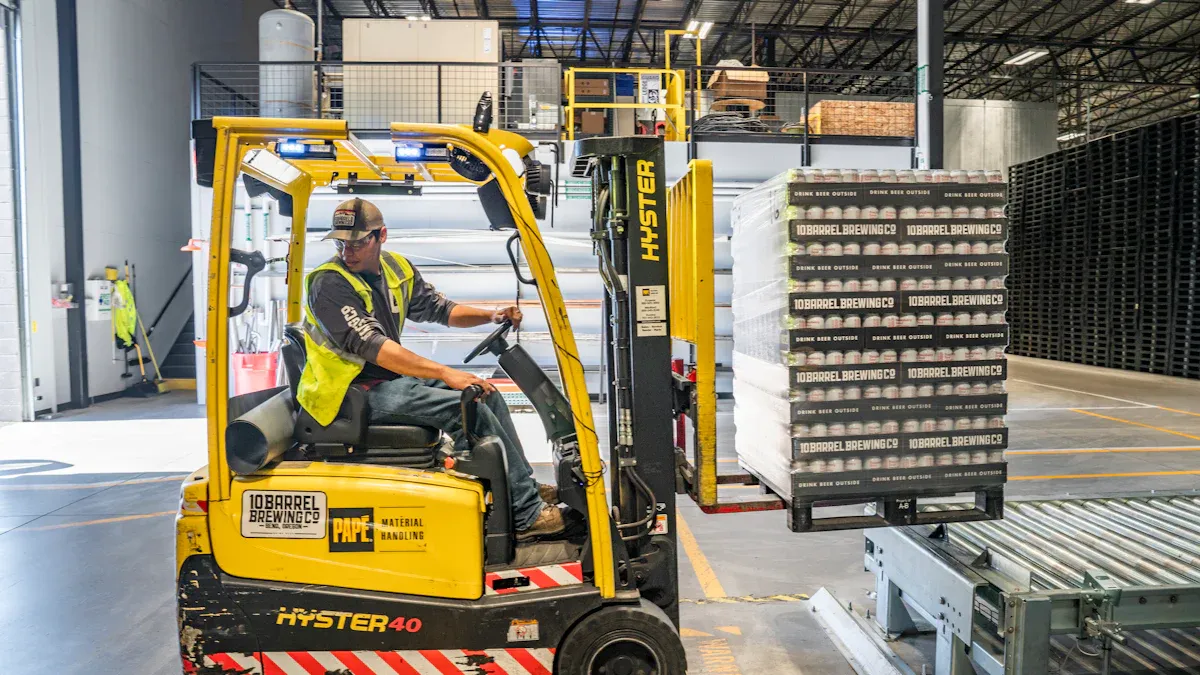
You need agile systems to keep up with changes in retail and logistics. When you build strategic partnerships, you create a stronger supply chain. Well-trained employees help you respond quickly to problems. IoT devices give you real-time data, so you see what happens at every step. Leading companies use predictive analytics and AI to manage deliveries and cut costs. You can match risk to your business goals and invest in technology to stay ahead. If you work with risk experts, you find solutions that fit your needs.
Tip: Use integrated ERP systems to connect your core functions. Many companies report faster decisions and smoother operations when they use these tools.
Here are steps you can follow to boost agility and resilience:
Invest in technology, but watch out for cyber risks.
Partner with experts who know your industry.
Data Sharing and Collaboration
Sharing data helps you make better decisions and avoid mistakes. When you use privacy-first sharing, you protect sensitive information. You can scale your operations by connecting with more partners. Shared insights let you target the right customers and manage stock better.
Evidence | Description |
|---|---|
AI classifies and enriches product data for thousands of categories. | |
35% fewer errors | Less manual correction and faster coordination. |
35% reduction in stockouts | AI-powered platforms connect sales data for better forecasting and logistics. |
Real-time data exchange gives you instant visibility. You track goods at every stage and adjust routes based on live updates. You manage inventory more efficiently and respond quickly to disruptions.
Real-time processing saves money and gets products to market faster.
Collaboration improves communication and reduces misunderstandings.
Quick responses keep your operations running smoothly.
Inventory and Fulfillment Optimization
You can optimize inventory by using demand forecasting. This method looks at past sales and trends to predict what you need. Safety stock acts as a buffer when demand spikes or supply chains slow down. ABC analysis helps you focus on your most valuable items. You find the best order size to keep costs low. The reorder point formula tells you when to buy more stock. Vendor managed inventory lets suppliers handle stock levels, which improves efficiency.
Technique | Description |
|---|---|
Demand Forecasting | Predicts future needs to avoid running out or having too much stock. |
Safety Stock Optimization | Keeps extra stock for emergencies. |
ABC Analysis | Focuses on high-value items. |
Optimal Order Quantity | Balances ordering and holding costs. |
Reorder Point Formula | Tells you when to order more. |
Vendor Managed Inventory (VMI) | Suppliers manage stock, which speeds up fulfillment. |
When you integrate retail and logistics operations, you improve fulfillment strategies. Advanced technology helps you track orders in real time. Automated inventory systems keep your stock levels accurate. You scale your business and meet customer expectations with speed and flexibility. Fulfillment becomes a key way to stand out from competitors.
Integrated systems help you grow and keep stock accurate.
Fast and flexible fulfillment meets customer needs.
Real-time tracking and automation improve your service.
Outsourcing and Third-Party Logistics
Outsourcing logistics to third-party providers gives you many benefits. You save money and gain access to experts. You can scale your business and stay flexible. Advanced technology, like warehouse management systems and transportation management systems, makes your logistics more efficient.
Advantages | Challenges |
|---|---|
Cost savings | Loss of control |
Potential hidden costs | |
Scalability | Dependency on third-party performance |
Flexibility | Integration challenges |
Access to advanced technology | Communication issues |
Third-party logistics providers manage warehousing, transportation, and inventory. You focus on your core business while they handle the rest. They position products closer to customers, which reduces shipping times and costs. These providers use sales data to predict future needs and help you manage inventory. They also make returns easier, which keeps customers happy.
Note: Outsourcing can lead to less control over your inventory and operations. You may face quality issues or delays if you do not monitor your providers closely.
You get expertise, cost savings, and better service levels. However, you must watch for hidden costs and make sure your systems work well with theirs. Good communication helps you avoid problems and keeps your supply chain strong.
Implementation Steps and Tools
Technology Solutions (TMS, WMS, IoT, AI)
You can boost your retail and logistics operations by using smart technology. Warehouse Management Systems (WMS) and Transportation Management Systems (TMS) help you track inventory and shipments in real time. IoT devices collect data from every part of your supply chain. AI-powered analytics let you predict demand and plan delivery routes.
AI agents work on their own, making quick decisions based on live data.
Robotics and autonomous vehicles move products faster and safer.
Drone delivery brings packages to customers quickly.
Cloud-based platforms like Logiwa connect your warehouse and order systems for better accuracy.
Tip: Workflow automation reduces manual errors and saves time, so your team can focus on important tasks.
Workforce Training and Change Management
Your team needs the right skills to use new technology. You should offer training programs that teach employees how to use digital tools. Address any worries about job changes and show how technology helps everyone.
Involve all team members in the change process to build trust and support.
Track collaboration to improve teamwork and resource use.
Encourage new ideas and continuous learning to keep up with market changes.
Best Practices | Benefits |
|---|---|
Comprehensive training | Higher engagement |
Stakeholder involvement | Smooth technology adoption |
Continuous improvement | Faster adaptation |
Gallup studies show that engaged employees improve customer experience and business results. When you support your team, you create a strong and agile operation.
Process Automation and Predictive Analytics
Automation makes your work easier and more accurate. You can use automated systems to manage inventory, process orders, and connect different software platforms.
Automation tracks inventory levels and prevents stockouts.
Real-time analytics help you make quick decisions.
Predictive analytics forecast customer needs and market trends.
Note: Predictive analytics helps you spot problems before they happen and keeps customers satisfied.
Follow these steps to get started:
Enhance store merchandising and inventory with real-time data.
Use customer data to offer better service.
Make mobile solutions part of your retail experience.
You can optimize your resources and deliver a better customer experience by combining automation and analytics.
Best Practices and Case Examples

Leading Retailer Success Stories
You can learn a lot from retailers who have integrated their logistics operations. These companies show how smart planning and technology make a big difference. The table below highlights two success stories:
Retailer | Key Achievements | Logistics Solutions Provided |
|---|---|---|
Cuisinart Outdoors | Scaled operations to handle a tenfold increase in volume during peak seasons. | Customized logistics solutions for multi-channel distribution. |
Reduce Everyday | Doubled handling capacity and reduced chassis days by nearly half. | Integrated logistics including warehousing and transportation. |
Cuisinart Outdoors managed to grow quickly during busy times. You see how they used custom logistics to support many sales channels. Reduce Everyday improved speed and efficiency by combining warehousing and transportation. These examples show that you can reach higher capacity and faster delivery with the right logistics strategy.
Lessons Learned and Recommendations
You can follow several best practices to improve your retail and logistics integration. Leading retailers learned important lessons during recent disruptions:
Resilience and agility help you adapt to changes.
Digital transformation lets you handle problems better.
Diversifying your supply chain lowers risk.
Focusing on sustainability reduces your carbon footprint.
Building strong partnerships boosts performance.
"We always wanted to control transportation if we could, because the suppliers would use our volume to leverage their transportation costs to give everyone else a lower price based on our scale." – Sultemeier, former Walmart executive
You also see new trends shaping the industry:
Embedded integration technology
Big data analytics
Collaborative robots
Autonomous vehicles
Sustainability
Supply chain as a service
Experts recommend that you:
Build data-driven operations with live resource sizing tools.
Review team performance using shopfloor data.
Investing in workforce training gives your team the skills to use new technology and follow best practices. Continuous improvement means you keep refining your processes and services, so your business stays strong and competitive.
You can boost efficiency by integrating retail and logistics operations. Use technology like AI and IoT to track inventory and shipments. Work closely with your partners to share data and solve problems faster. Keep improving your processes and train your team often.
Take time to review your current systems. Start with small changes and build on your success.
If you want to learn more, check out guides on supply chain management and digital transformation.
FAQ
What is retail and logistics integration?
You connect your retail and logistics systems. This helps you track products, manage orders, and deliver items faster. You see everything in one place.
How does technology improve retail and logistics efficiency?
Technology helps you automate tasks and track shipments. You use tools like AI, IoT, and warehouse management systems. These tools save time and reduce mistakes.
Why should you share data with logistics partners?
Benefit | Result |
|---|---|
Better planning | Fewer delivery delays |
Accurate stock | Less wasted inventory |
You share data to help everyone work together. This makes your supply chain stronger.
Can small businesses use integration strategies?
You can start with simple tools. Use cloud-based software and partner with third-party logistics providers. This helps you grow and serve customers better.
See Also
Enhancing Global Operations Through Innovative Logistics Solutions
Connecting Warehouses and Optimizing Supply Chains with PGL
Boosting Global Efficiency with Point-to-Point Logistics Systems
Premier Global Logistics: Optimizing East Coast Import Warehousing
Efficient Inventory Management and Distribution via Premier Global Logistics
